
polycarbonate greenhouses 19x8 - Best Deals in UK!
Showing the single result

Polycarbonate greenhouses 19×8 give you a broad growing space for vegetables, herbs and tender plants, with a practical footprint that suits serious gardeners who want room to organise crops, pots and benches without feeling cramped.
A 19×8 footprint that actually works hard
A 19×8 greenhouse sits in a very useful middle ground: large enough for proper growing zones, but not so huge that it becomes awkward to fit into a garden. That shape is often chosen by people who want a clear divide between seedling space, mature plants and a route to move around inside without stepping over trays every few minutes. It gives you a generous run of length for staging crops through the season, while the 8ft width still allows sensible benching on both sides, or a central path with growing space along the edges.
For buyers comparing greenhouse sizes, the 19×8 format stands out because it feels organised rather than oversized. It suits long, narrow plots and also sits neatly along a boundary or garden wall. If you are moving up from a smaller structure, the extra span can change how you garden: more tomatoes, more peppers, more overwintering space, and less need to shuffle plants about to make room.
Why polycarbonate changes the feel of the structure
Polycarbonate glazing is a big reason people choose this type of greenhouse. Compared with traditional glass, it tends to feel more forgiving in everyday use. The panels are lighter, which can make installation and handling easier, and the material is known for its impact resistance. That matters in exposed gardens, windy spots, or places where the greenhouse may face knocks from tools, pots or the odd branch. The sheet structure also helps diffuse light, so the inside can feel bright without such harsh direct glare.
Bestseller der Kategorie polycarbonate greenhouses 19x8
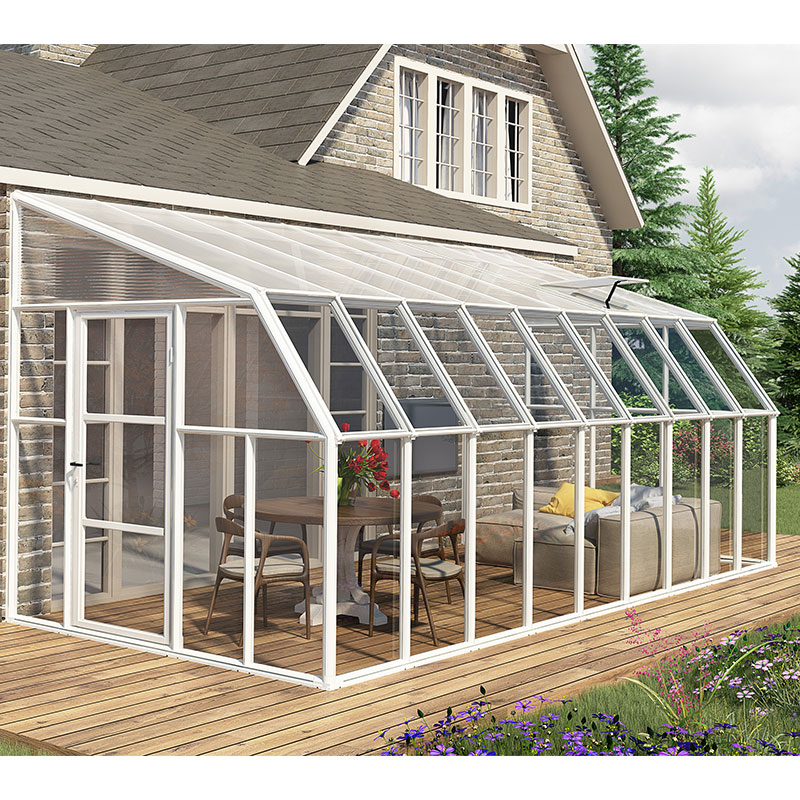
Another practical point is insulation. Polycarbonate usually offers better thermal performance than single glazing, which can help reduce sharp temperature swings inside the house. That does not make it a heated growing space on its own, of course, but it can support more even conditions for young plants and crops that dislike sudden chill. For many gardeners, that balance of light, strength and insulation is what makes polycarbonate a sensible pick for a 19×8 greenhouse.
Frames and forms: the shapes that matter
Within the polycarbonate greenhouse 19×8 category, the frame shape matters almost as much as the glazing. Different forms change headroom, rain run-off, internal layout and how the structure sits in the garden. The main styles you will usually see are:
- Gable roof greenhouses – familiar pitched roof design with good headroom and a classic look.
- Lean-to greenhouses – attached to a wall, useful where space is tight or where a sheltered position is preferred.
- Apex / ridge style – a straightforward peaked roof that gives a sensible balance of height and internal space.
- Quieter curved forms – where the roof shape is softened a bit, often reducing the boxy feel and helping water shed away.
In a 19×8 size, a pitched or apex form often feels more usable if you want taller crops, hanging baskets or staging at different levels. A lean-to can be a better fit where the garden layout leaves only one long edge available, or where the greenhouse is intended to sit beside a house wall. The difference is not just visual; it affects how you move inside and how much of the roof height is available near the centre and the sides. People sometimes focus only on length and width, but the internal profile changes the day-to-day experience quite a lot.
Single, twin-wall and multi-wall: not all polycarbonate is the same
When looking at polycarbonate greenhouse panels, the panel build is an important detail. There are a few common approaches, and each has a different feel in use:
- Single-sheet polycarbonate – thinner and lighter, with plenty of light transmission, but less insulating than multi-wall options.
- Twin-wall polycarbonate – a layered structure with an air gap, often chosen for better insulation and a more substantial feel.
- Multi-wall polycarbonate – more internal layers, generally aimed at improving thermal performance and rigidity.
For a 19×8 greenhouse, the panel type can influence how the space performs over cooler nights and early spring starts. A single-sheet setup may feel more open and bright, while a twin-wall or multi-wall design can offer a steadier internal climate. The choice usually comes down to whether you want to prioritise lightness, clarity or insulation. Some buyers assume thicker is always better, but that is not always the whole story; panel thickness and wall structure should be read alongside ventilation and frame strength, not on their own.
What makes the 19×8 size useful for different growers
The 19×8 format suits a lot of gardening setups because it gives room for different growing habits in one enclosure. If you raise bedding plants from seed, there is space for propagation benches and trays without blocking access to later crops. If you grow fruiting crops such as tomatoes or cucumbers, the length lets you run rows with support systems in place. If your focus is mixed growing, you can separate warm-loving plants from cooler-season seedlings more easily than in a compact greenhouse.
It also helps with practical staging. One end can be used for early sowing, another for mature plants, and a strip along the side can hold tools, trays or pots awaiting transplanting. This is where a 19×8 polycarbonate greenhouse earns its keep: not by being flashy, but by giving you a layout that reduces clutter and makes the routine feel less cramped. There is a certain ease to having enough span to make a path that is actually usable, not just there in theory.
Light levels, shade and the softer side of growth
One of the quieter benefits of polycarbonate glazing is the way it spreads light. Instead of a very sharp beam in one area and harder shadows in another, the light inside can feel more even. That can be helpful for young plants, delicate leaves and seedlings that might otherwise scorch more readily under intense direct glare. It does not remove the need for sensible placement, but it can make the growing space feel more balanced.
In a 19×8 greenhouse, that even light is useful because the larger the structure, the more obvious light differences can become from one end to the other. Diffused light can support more consistent conditions across the benching. If you plan to keep a mixed collection inside, this matters: one corner for propagating, one for growing on, and another for slightly more mature plants that still like protection. It is a small thing, but it often makes a greenhouse feel easier to use.
Strong enough for everyday garden life
Polycarbonate greenhouses are often chosen because they handle ordinary knocks better than glass. That includes the kind of everyday moments that happen in a working garden: a tray clipped by accident, a pot nudged against a panel, or wind-blown debris landing on the structure. It is not about being careless, just realistic. A greenhouse that can cope a bit better with the rough edges of garden life may feel less delicate to live with.
In the 19×8 category, the larger panel spans and bigger roof sections make frame rigidity and glazing choice worth checking. A good structure should feel steady when the wind picks up, especially if the greenhouse sits in a more open position. Buyers often compare thickness, but they should also look at how the frame supports the panels, how the roof is braced and how the structure is anchored. Those details are not glamorous, though they do matter when the weather turns.
Bench space, paths and the way the layout changes everything
What really separates a useful greenhouse from one that becomes messy is the internal arrangement. With polycarbonate greenhouses 19×8, there is enough width to try a few different layouts without losing access. You might choose:
- Double side benching with a central path for easy movement.
- Single side staging plus open floor space for taller crops or large containers.
- Mixed-level shelves for propagation alongside floor-grown crops.
- End-to-end zoning where one section is for sowing and another for growing on.
The advantage of the 19×8 footprint is that it supports more than one way of working. A narrower greenhouse can force a single layout, but this size gives a bit of freedom. That freedom helps if your gardening changes through the year. Spring may be dominated by seed trays and modules; summer by tomatoes and peppers; autumn by overwintering and storage. The greenhouse does not need to be rearranged from scratch each time, which is part of the appeal.
Comparing forms: tall, wide, curved or compact-feeling
Different greenhouse shapes alter how the 19×8 size behaves. A taller apex model gives more vertical space for cordons, hanging pots and airflow above head height. A lower profile design can feel neater in the garden and may sit more quietly against surrounding planting. A curved roof may soften the look and shed rain efficiently, while a straight-sided design can make bench placement simpler because the usable wall height is more predictable.
If you grow crops that climb, a taller centre line becomes useful. If your focus is mainly seed starting and lower-growing plants, a more compact-feeling profile might be enough. It is worth thinking about whether the greenhouse is for one style of gardening or several. The 19×8 size is adaptable, but the roof form decides how much of that adaptability is easy to use. That is a difference buyers sometimes miss when they compare only external dimensions.
Useful details buyers tend to check twice
When people look at polycarbonate greenhouse dimensions 19×8, certain details tend to matter more than they first appear:
- Door width and position – affects how simple it is to move trays, compost and larger pots in and out.
- Roof height – important for tall crops and for moving around comfortably.
- Panel thickness – linked to insulation and overall feel.
- Frame material – usually aluminium or another corrosion-resistant frame type, depending on the design.
- Ventilation openings – needed to release excess heat and keep airflow moving.
These points may sound technical, but they shape whether the greenhouse feels easy to live with. A structure can look suitable on paper and still feel awkward if the door is narrow or the headroom is limited near the sides. Likewise, a generous 19×8 footprint only pays off if the internal arrangement is comfortable to use. It is often the combination of dimensions and access that decides whether the greenhouse becomes a favourite working space.
Where polycarbonate earns its place in a working garden
The real charm of a polycarbonate greenhouse 19×8 is that it supports a lot of different gardening habits without demanding a rigid routine. You can use it for propagation in late winter, protection in spring, fruiting crops through summer and sheltering plants once the weather cools. The material suits this kind of varied use because it balances light transmission with a more reassuring level of durability than fragile glazing.
It is also a good fit for gardens where the greenhouse will not sit in a perfect, sheltered spot. Many buyers look at polycarbonate because they want something that feels practical rather than precious. That does not mean plain or dull; it means the structure is chosen with real use in mind. A 19×8 greenhouse gives enough room to garden properly, and the polycarbonate makes the job feel a bit less exposed, which is often what people are after when they move from wish-list thinking to an actual purchase.
Choosing with your crops in mind
The best way to judge a 19×8 polycarbonate greenhouse is to imagine what you will grow inside it. If you mainly raise seedlings, light diffusion and bench layout may matter more than extreme height. If you grow tomatoes, cucumbers or tall climbers, internal headroom and roof shape become more important. If you want mixed use, then flexibility matters most: enough width for access, enough length for staging, and a panel system that supports a stable growing environment through changing weather.
There is no single version that suits every garden, and that is part of the appeal. The category covers a range of forms, panel types and frame arrangements, so buyers can compare size, shape and glazing performance against how they actually garden. That makes the decision feel more grounded. Instead of buying space on spec, you are choosing a structure that matches the way you plan, sow, grow and rearrange through the year. And that is usually where a greenhouse starts to feel worth the footprint.
Small differences that can make a big purchase feel right
Sometimes the decision comes down to details that are easy to overlook at first. A slightly taller side wall can change where shelves sit. A more open apex can give better air circulation near the top. A twin-wall panel might feel better suited to earlier starts in the season, while a lighter polycarbonate sheet may suit gardeners who prioritise brightness and simplicity. None of these differences are abstract; they change how the greenhouse works on a Tuesday morning when you are shifting trays, checking stems and making space for the next batch.
That is why polycarbonate greenhouses 19×8 attract buyers who want a space that feels planned rather than improvised. The size gives room. The glazing gives a more composed growing environment. The shape decides how comfortable it is to use. Put together, those three things create a greenhouse that can handle serious growing without feeling overfussy. And for many gardens, that is exactly the right balance.
[Sassy_Social_Share]