
polycarbonate greenhouses 150 sq ft / 14 m² - Best Deals in UK!
Showing the single result

Polycarbonate greenhouses around 150 sq ft / 14 m² give a balanced growing space for tomatoes, salads, seedlings and overwintering, with light, warmth and tidy dimensions.
A practical footprint with proper growing room
A 150 sq ft / 14 m² greenhouse sits in a really useful middle ground: large enough to grow more than a few pots, yet not so vast that it takes over the whole plot. This size is often chosen by gardeners who want a proper working space for a mix of crops, but still need the greenhouse to fit neatly into a standard garden layout. It gives you room to separate crops a bit more sensibly, which matters when you are trying to keep tomatoes, cucumbers, young plants and overwintering specimens from feeling cramped together.
In practical terms, the footprint is big enough for beds, staging, hanging space and a clear aisle, depending on the layout. Some buyers want a greenhouse this size because it feels like a transition from hobby growing to something more organised. Others simply need more room than a small lean-to can give. Either way, 14 m² is the kind of size that starts to feel like a proper growing environment rather than a corner shelter.
Why polycarbonate changes the greenhouse experience
Polycarbonate glazing is the main reason these greenhouses appeal to so many buyers. Unlike glass, which gives a very traditional look, polycarbonate is lightweight and usually chosen for its practical balance of light transmission and insulation. In this size category, that matters a lot, because a larger greenhouse can lose heat faster if the covering is not doing its job properly.
Bestseller der Kategorie polycarbonate greenhouses 150 sq ft / 14 m²
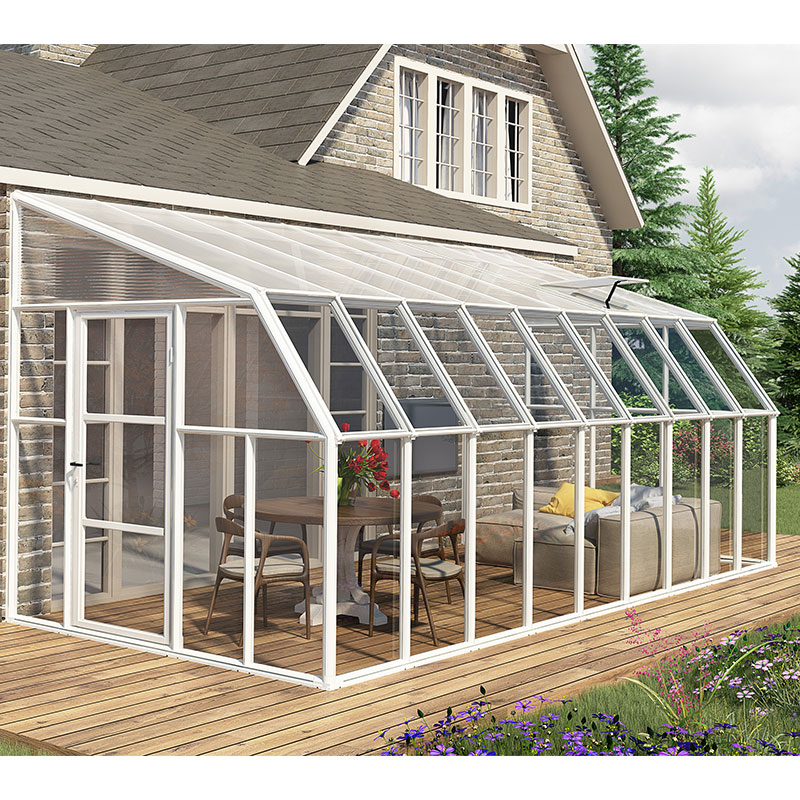
The material also tends to be more forgiving in everyday use. For households with children, pets, or a garden where things get moved around often, that can make the whole structure feel less fragile. It is not about making the greenhouse “tough” in a dramatic way, just more suitable for real garden life. Many people choose polycarbonate because it supports a broader season, helping to create a more stable environment for early sowings, tender crops and late-season growing.
Sheet styles: twinwall, multiwall and solid panels
Not all polycarbonate greenhouses feel the same. The differences often come down to the panel type, and that affects both performance and appearance.
- Twinwall polycarbonate has two layers with a small air gap, which helps with insulation while still letting in useful light.
- Multiwall polycarbonate has more internal layers, usually giving stronger insulation and a slightly more technical look.
- Solid polycarbonate is clearer and more glass-like in appearance, though it behaves differently in terms of light and heat.
For a 150 sq ft greenhouse, the choice between these options can change how the interior feels. Twinwall often suits gardeners who want a good all-rounder. Multiwall is appealing if you are aiming for more heat retention in a breezier site. Solid panels, on the other hand, may be chosen when visual clarity matters as much as function. None of them are the same, and that is exactly why comparing them matters before buying.
Different shapes and what they do for the space
The shape of a greenhouse can alter how the usable area works, even if the floor size is the same. With a 14 m² polycarbonate greenhouse, shape is not just a style choice; it affects how easy the interior is to organise and how the roof handles light and headroom.
- Victorian-style or ridge-and-furrow forms often suit gardeners who want a classic profile with a straightforward central walk-through.
- Lean-to greenhouses use a wall for support and can feel very efficient in smaller gardens, though 150 sq ft is quite generous for one.
- Freestanding rectangular greenhouses are usually the easiest for staging, rows of pots and growing trays.
- Gable-ended or high-roof designs improve headroom, which is useful for climbing crops and for people who dislike crouching all the time.
Rectangular layouts are often the easiest to furnish. You can create a practical rhythm of shelving, benching and crop rows without awkward dead corners. A taller roof can also make the greenhouse feel less boxed in, particularly if you plan to grow tall tomatoes or train vines. Shape really changes the experience, even when the square footage looks nearly the same on paper.
What 150 sq ft can actually hold
This size is often popular because it can support a more mixed growing plan. A 14 m² greenhouse can usually handle several distinct growing zones at once, which is useful if you do not want to keep everything in one place. You might use one side for propagation trays and seedlings, the centre for working space, and the opposite side for fruiting crops or display plants.
Buyers often look at this size when they want room for tomatoes, peppers, aubergines, cuttings, herbs and winter protection without overcrowding. It also suits gardeners who like to rotate crops through the season. One month it may be full of spring starts, the next it is carrying summer fruiting plants, and later still it can hold tender plants that need shelter before frost. That kind of flexibility is a big part of the appeal.
Light, warmth and the feel of the interior
Polycarbonate is often chosen because it softens light rather than throwing harsh glare across the whole structure. In a greenhouse of this size, that can make the interior feel more comfortable for both plants and people. Direct, sharp light can be useful in some situations, but diffused light is often easier on seedlings and leafy crops that dislike sudden intensity.
The internal climate also tends to feel more even, especially with multiwall or twinwall panels. The greenhouse can still warm up quickly in sun, of course, but the material often gives a bit more buffer than single-pane options. For gardeners thinking in terms of seasons rather than just weekends, that difference matters. It can make the greenhouse usable for a broader range of plants, and not only for summer cropping.
Entry styles, access and the working rhythm
Access is one of those things people sometimes overlook until the greenhouse is already standing in the garden. With a 150 sq ft structure, door placement and entrance width can shape how easy the whole setup is to use. A greenhouse this size may have single or double doors, and the difference is not only about comfort. It affects how easily you move trays, bags of compost and larger containers in and out.
A double-door opening can be useful if you are planning to wheel in a barrow or move larger plants around. A single door can still work well, especially if the interior is arranged in a disciplined way. The point is to think about the daily flow. When a greenhouse is properly sized but awkward to enter, it can feel smaller than it is. If the access suits the layout, the whole thing works more naturally.
Ventilation options and how they change the setup
Even though this is not about general maintenance, it is still worth comparing structural features that affect use. Vent options, roof angles and side openings influence how a greenhouse behaves in real growing conditions. In a 14 m² polycarbonate greenhouse, the difference between a basic structure and one with more built-in airflow can be noticeable in how comfortably crops sit through a warm spell.
Some designs lean towards roof vents, others combine roof and side ventilation, and some rely on a simpler arrangement. The important point is that a greenhouse this size is large enough to benefit from a more considered airflow pattern. With different crop zones inside, a bit of structural variation can help the space feel more balanced rather than stuffy or uneven.
Freestanding or against a wall: choosing the right type
One of the key differences in this category is whether the greenhouse stands alone or is attached to a wall. A freestanding greenhouse gives more freedom in placement and often offers better access on all sides. That works well in medium and larger gardens where the structure can become a focal growing space.
A lean-to polycarbonate greenhouse, by contrast, uses the warmth and shelter of a wall. It can be a smart choice where ground space is limited, but at 150 sq ft the format is already quite substantial, so it is usually selected deliberately rather than as a compromise. The two types serve different buyers. Freestanding models generally feel more versatile. Lean-to designs can feel more integrated with the home or garden wall, and sometimes more compact visually, even when the floor area is generous.
Layout ideas that make the space work harder
Because 14 m² gives you a bit of breathing room, the internal layout becomes part of the buying decision. Some gardeners want a clear central aisle with growing on both sides. Others prefer one side for benching and the other for taller plants. The greenhouse can also be divided into a propagation zone, a potting zone and a fruiting zone, although that depends on the exact shape.
- Central aisle layouts suit gardeners who want easy movement and a clean visual structure.
- Side-benching layouts leave the middle open for taller crops or large tubs.
- Mixed staging layouts work well for seed trays, small pots and temporary plant holding.
- Corner-use layouts help if the structure has a slightly unusual footprint or door position.
This is where the size becomes especially attractive. It is large enough to support a tidy system, but not so huge that every decision feels permanent. You can still shape it to match the way you grow. That flexibility is part of the buying appeal, and it is often what tips people towards this size after comparing smaller and larger options.
Insulation differences that matter in a real season
For many buyers, the attraction of polycarbonate is not a vague idea about “better performance”, but the more specific question of how the greenhouse behaves in spring and autumn. Double-layer or multiwall panels usually provide more insulation than a single sheet structure, which can help hold some warmth when the weather shifts quickly.
In a greenhouse of around 150 sq ft, that may translate into more usable shoulder-season growing. It is one of the reasons these greenhouses are often considered by gardeners who want to push sowing dates a little earlier or keep crops going a bit later. The result is not magic, just a more forgiving environment. And that can make a real difference when you are trying to stretch the season without adding unnecessary complication.
Appearance: modern, traditional or somewhere between
Polycarbonate greenhouses come in styles that can look quite different from one another. Some have a clean, modern profile with darker framing and clear lines. Others echo the more traditional greenhouse shape, especially when the roof pitch and framing are designed to resemble familiar garden glasshouses. This matters because a 150 sq ft structure is visible enough to shape the whole feel of the garden.
If you prefer a lighter visual presence, a greenhouse with diffused polycarbonate panels can appear less stark than a glass model. If you want the structure to become a feature, a more defined frame and taller roofline may suit better. Buyers do not always say it out loud, but looks do affect confidence. When a greenhouse feels like it belongs in the garden, it is easier to imagine using it often.
Who this size tends to suit
This category usually appeals to gardeners who already know they need more than a compact solution. It is a sensible fit for people growing a decent range of vegetables, for those with a serious seed-starting habit, or for anyone who wants a protected space for ornamentals and edibles together. It can also suit households that share the space, because 14 m² allows a bit of separation without requiring a huge footprint.
It is less about making a grand statement and more about getting a structure that can handle actual use. If you are comparing small hobby greenhouses with larger polytunnel-style spaces, this size sits in the middle in a useful way. It offers room without becoming too sprawling, and structure without feeling overly formal. That balance is often exactly what people are searching for, even if they only realise it after comparing a few options.
Useful buying points before choosing a model
When looking at polycarbonate greenhouses in this size range, a few details are worth comparing closely. They can change how the greenhouse feels in use, even if the basic dimensions are similar.
- Panel thickness affects insulation and the overall feel of the greenhouse.
- Roof height influences headroom and suitability for tall crops.
- Door width changes how easy it is to move trays and larger containers.
- Shape and wall height alter usable internal space and layout options.
- Frame style contributes to stability, appearance and the amount of interior clearance.
It is worth checking these things side by side rather than assuming every 150 sq ft model will work the same way. Two greenhouses may share the same floor size but feel completely different once you start placing shelves, staging and plants inside. That difference is often what decides whether a buyer ends up pleased or only partly satisfied.
A greenhouse size that gives room to grow into
Polycarbonate greenhouses around 150 sq ft / 14 m² are appealing because they offer enough space to be useful in many different ways without becoming unwieldy. The category includes different panel types, shape options and access layouts, so the right choice depends on how you actually grow, not just on the measurements. For many gardeners, that is the real attraction: a greenhouse with enough room to organise properly, enough structure to feel dependable, and enough flexibility to adapt as planting plans change through the year.
If you want a greenhouse that supports a richer mix of crops, creates clearer working zones and fits a serious growing routine without taking over the garden, this size is easy to put forward as a thoughtful choice. It is not about excess. It is about giving plants, tools and people a bit more breathing room, and that tends to show in how useful the space becomes.
[Sassy_Social_Share]