
polycarbonate greenhouses 110 sq ft / 10 m² - Best Deals in UK!
Showing the single result

Polycarbonate greenhouses 110 sq ft / 10 m² give you a compact, usable growing space for tomatoes, peppers, salads, seedlings and more, with light-diffusing panels, weather resistance and a size that fits many gardens.
Why 10 m² feels just right for serious growing
A 110 sq ft / 10 m² greenhouse sits in that useful middle ground where the space is small enough to place in a typical garden, yet large enough to feel properly productive. It is not a token structure for a few pots on a shelf; it gives room for staging, borders, paths, taller crops and a work area without turning the plot into a building site. For many buyers, this size is attractive because it can support a more varied planting plan than a mini greenhouse, but does not demand the footprint of a much larger walk-in house.
What makes this category especially interesting is how much the layout can change the way the space works. In 10 m², a lean-to profile, a classic apex frame or a low, compact tunnel shape all behave differently. The same floor area can feel generous or tight depending on the wall height, roof form, door opening and how the benches are arranged. So when people compare products in this range, they are not just comparing square metres; they are comparing the whole growing experience.
Polycarbonate panels: the quiet advantage behind the clear look
Polycarbonate greenhouses are chosen for a reason: the material brings together practical light transmission and a more forgiving structure than plain glass in many garden settings. In this size bracket, that matters a lot. A 10 m² house is often bought for family growing, seasonal vegetables or mixed planting, and the panels help create an even light level that suits young plants as well as mature crops. The light is softened rather than harsh, which can be useful for tender leaves and newly potted seedlings.
Bestseller der Kategorie polycarbonate greenhouses 110 sq ft / 10 m²
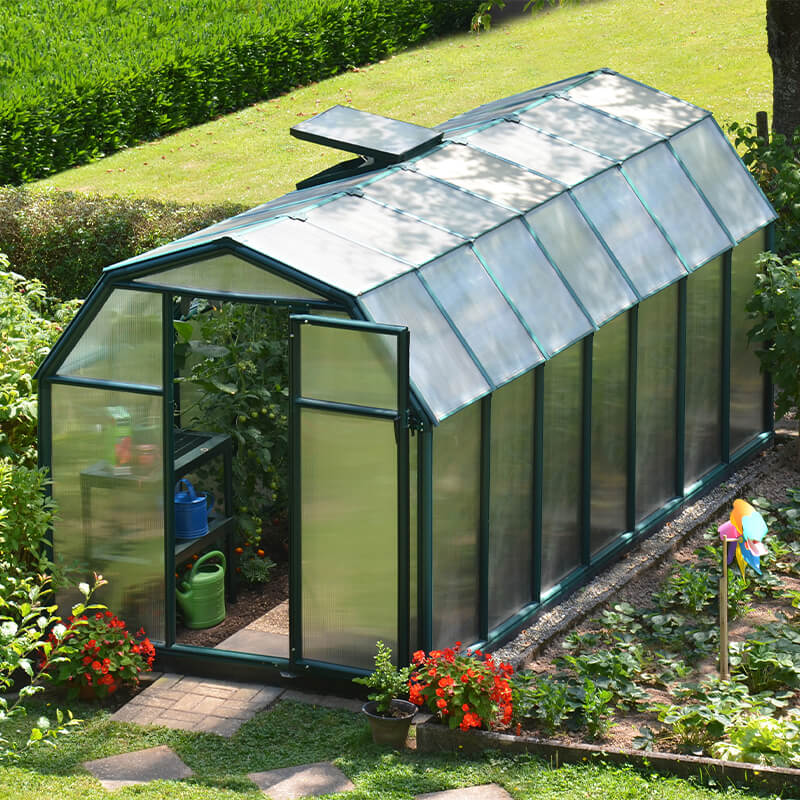
Compared with conventional glazing, polycarbonate often feels a bit less fussy in day-to-day use. It is generally associated with better impact resistance, which can be appealing if your site is exposed to falling debris, blustery weather or the occasional knock from a stray tool. That does not make it indestructible, of course, but it does explain why buyers often look for polycarbonate glazing when they want something that feels more reassuring in a normal garden rather than a sheltered show space.
Subtypes that change how the greenhouse works
Within the 10 m² greenhouse category, the subtype matters almost as much as the material. A few common formats stand out:
- Apex greenhouse designs, with a pitched roof, are often chosen when headroom and a familiar garden-house look matter.
- Lean-to greenhouses are useful where the structure can sit against a wall or fence, making the footprint feel more efficient.
- Tunnel-style polycarbonate greenhouses create a softer, more rounded form and can feel spacious for their size.
- Victorian-inspired styles may appeal to buyers who want a more decorative finish, even within a functional growing area.
- Half-height or shorter-wall versions can work where the garden has height restrictions or a more enclosed feel.
These subtypes are not only about looks. They affect circulation, crop height, the amount of useable bench space and how comfortable the house feels when you step inside. For example, an apex roof can give better overhead clearance for tall tomato cords, while a lean-to may fit a narrower garden and still leave a path free for access. A tunnel shape can be a good fit if the aim is to maximise the growing area with fewer hard corners. Each one has a different rhythm, and that is part of the buying choice.
Shape changes everything: apex, curved, lean-to and more
In a greenhouse of this size, shape is not a minor detail. It decides where the light lands, where you can stand upright, and how easily you can arrange the interior. An apex greenhouse usually gives a neat balance between height and width, which suits crops that climb. A curved roof can shed wind more smoothly and may create a softer interior line, though it gives a slightly different feel for hanging baskets or overhead support. A lean-to often makes the most of a narrow side return, while still providing a full growing environment.
There are also differences in how the roof shape works with the panels. Polycarbonate lends itself well to many of these forms because it can be used in structures where a lighter glazing choice is helpful. That is one reason why buyers comparing 10 m² greenhouses often look at the frame and roof together, rather than treating the panel material as the only deciding factor. The shape and the glazing should make sense as a pair.
What 110 sq ft can hold without feeling cramped
A greenhouse at 110 sq ft / 10 m² can handle a surprising amount if the layout is thought through. It is large enough for a mix of benching and floor-growing, or for one side to be set aside for staging trays while the other carries pots or crops. That flexibility is a major reason this size is popular with people who want to move beyond the “just a few herbs” stage and into a more structured growing plan.
The best setups in this category usually have a clear division between working space and growing space. That might mean a central aisle, shelving along one wall and open floor space for taller plants, or side benches with room beneath for storage boxes and pots. It helps to think in layers: seedlings at eye level, medium crops on benches, and larger specimens on the floor or in raised beds. In a 10 m² structure, that layering is what makes the house feel useful rather than cluttered.
Why polycarbonate suits mixed crops and changing seasons
One of the practical strengths of polycarbonate glazing is its fit for mixed planting. A 10 m² greenhouse is often used by gardeners who are not growing one crop only. You may have spring seedlings at one end, tomatoes and cucumbers in the middle, and overwintering containers at the other. The light diffusion of polycarbonate can help avoid sharp contrasts between bright and shaded zones, which matters when the house is packed with plants at different stages.
This is also why the category works well for people who shift between seasons. Early in the year, the structure can support propagation and sheltered starts. Later on, it becomes a warmer, more contained space for productive crops. The exact temperature performance depends on panel thickness and structure, but the broader point remains: polycarbonate suits a greenhouse that must do a bit of everything, instead of serving only as a decorative shelter.
Panel differences worth noticing before you buy
Not all polycarbonate greenhouse panels behave in quite the same way, and this is where careful shoppers save themselves disappointment. In broad terms, buyers often compare:
- Single-wall polycarbonate, which is lighter and simpler in build.
- Double-wall or twin-wall polycarbonate, which has a layered structure and tends to be chosen for better insulation characteristics.
- Clearer panels versus more diffused panels, depending on how much direct light or softened light is preferred.
- Thicker sheets versus slimmer sheets, with thickness often influencing the feel of sturdiness and thermal behaviour.
Within a 10 m² greenhouse, these differences are worth paying attention to because the structure is small enough for the panel choice to affect the whole experience. A panel that diffuses light more gently may be useful for young plants or high-summer sun, while a clearer finish may be preferred where maximum light matters. The key is matching the panel type to the way the greenhouse will actually be used, not just to what looks neat in a photo.
Useful buying tips for a compact but capable grow house
If you are comparing polycarbonate greenhouses 110 sq ft / 10 m², a few practical checks can help narrow the field. First, think about door placement and access. In a space this size, the door should support easy movement of trays, watering cans and crop supports. If the entrance is awkward, the greenhouse will feel smaller than it is. Second, consider the wall height and ridge height together. A house can have the right floor area but still feel cramped if the side walls are too low for the crops you want to grow.
Third, look closely at the balance between open floor and fixed fittings. Some buyers prefer more bench space; others want a mostly open interior for pots and bags of compost. Neither is wrong, but the difference affects how the 10 m² is used. Fourth, think about where the greenhouse sits in relation to sun and shelter. A compact polycarbonate house can be very productive, but the site should suit the chosen shape. A lean-to may work beautifully in a side garden, while an apex house may be a better fit if the structure needs to stand more independently.
For growers who want more than a starter house
This category is especially appealing to buyers who have outgrown a small propagation unit but do not want to jump straight to a large greenhouse. A 10 m² polycarbonate greenhouse gives room for a more intentional setup: a few dedicated crops, a better staging area, and enough interior width to make the house feel organised. It can support succession sowing, larger container plants and seasonal rotation without feeling like every square foot has to be packed.
That middle-sized feel is part of the appeal. It is practical without being plain, and it offers enough choice in layout to suit different gardening habits. Some people will use it mainly for food growing; others may want a place for ornamentals, cuttings and overwintering favourites. In both cases, the size gives breathing room, and the polycarbonate finish adds a sense of calm, filtered light that many gardeners find easier to work with than the sharper look of glass.
Small footprint, proper potential
When shoppers search for polycarbonate greenhouses 110 sq ft / 10 m², they are usually looking for a structure that feels balanced: not too large for the garden, but not so small that every tray becomes a squeeze. That is where this category earns attention. The size supports variety, the material supports practical use, and the shape choices let you match the structure to the garden rather than forcing the garden to fit the structure.
If you are weighing up the options, focus on the combination of shape, panel type, height and internal layout. Those are the details that decide whether the greenhouse feels like a sensible growing space or just another item in the corner. A well-chosen 10 m² polycarbonate greenhouse can make the difference between scattered pots and a proper, organised growing area that is ready for the seasons ahead.
In short: this category suits gardeners who want a practical size, flexible layout and the everyday advantages of polycarbonate glazing in a greenhouse that feels usable rather than oversized.
[Sassy_Social_Share]