
Playhouses with Apex Roof - Best Deals in UK!
Showing 1–12 of 21 results
-
18% OFF: 5’3×5’6 Shire Croft 2 Storey Kids Wooden Playhouse £739.9918%

-
15% OFF: 6′ x 10′ Traditional 2 Storey Kids Wooden Playhouse with Garage (1.83×3.05m) £2,019.0015%

-
14% OFF: 6′ x 6′ Shire Den Kids Wooden Playhouse (1.79m x 1.79m) £684.9914%

-
14% OFF: 4′ x 4′ Shire Hide Kids Wooden Playhouse (1.19m x 1.19m) £384.9914%

-
13% OFF: 6×5 Shire Pixie Kids Wooden Playhouse £469.9913%

-
12% OFF: 10′ x 8′ Traditional Swiss Cottage Kids Wooden Playhouse With Veranda (3.05mx2.44m) £2,719.0012%

-
12% OFF: 5×5 Shire Kitty Traditional Kids Wooden Playhouse £449.9912%

-
12% OFF: 5′ x 10′ Traditional 2 Storey Kids Wooden Playhouse with Garage (1.51×3.05m) £1,919.0012%

-
12% OFF: 6×5’6 Shire Cubby Traditional Kids Wooden Playhouse £484.9912%

-
11% OFF: 6′ x 4′ Shire Hobby Kids Wooden Playhouse (1.79m x 1.79m) £388.9911%

-
11% OFF: 8′ x 9′ Shire Lodge Kids Wooden Playhouse (2.39m x 2.69m) £1,549.0011%

-
11% OFF: 10′ x 10′ Traditional Swiss Cottage 2 Storey Kids Playhouse With Veranda £3,019.0011%

Playhouses with apex roof bring a familiar house-like shape to the garden, with extra headroom, clean lines, and a style that suits timber, compact spaces, and children’s imaginative play.
Why the Apex Shape Feels So Right
An apex roof is the classic pitched roof that rises to a centre ridge, creating a neat triangular profile. On a playhouse, that shape does more than look tidy. It gives the building a clear “little house” feel, which many children instantly recognise, and it also adds a sense of space inside. Compared with flatter roof styles, the apex format can make the play area feel less cramped, especially near the middle of the room.
For buyers, the appeal often comes from how naturally the shape fits into a family garden. It looks domestic without being fussy, so it can sit beside fences, planting, sheds, or larger outdoor structures without feeling out of place. A playhouse with apex roof usually gives a balanced appearance from the front and the sides, which matters if the building will be seen from the house as well as from the lawn.
What Sets Apex Roof Playhouses Apart
Not every playhouse has the same roofline, and that difference changes both the look and the feeling inside. An apex roof is recognisable because the two roof slopes meet at the top, forming the ridge. That creates a more traditional profile than a pent roof, which tilts in one direction only. It also tends to give a more defined internal ceiling shape, with the highest point running through the centre of the playhouse.
Bestseller der Kategorie Playhouses with Apex Roof
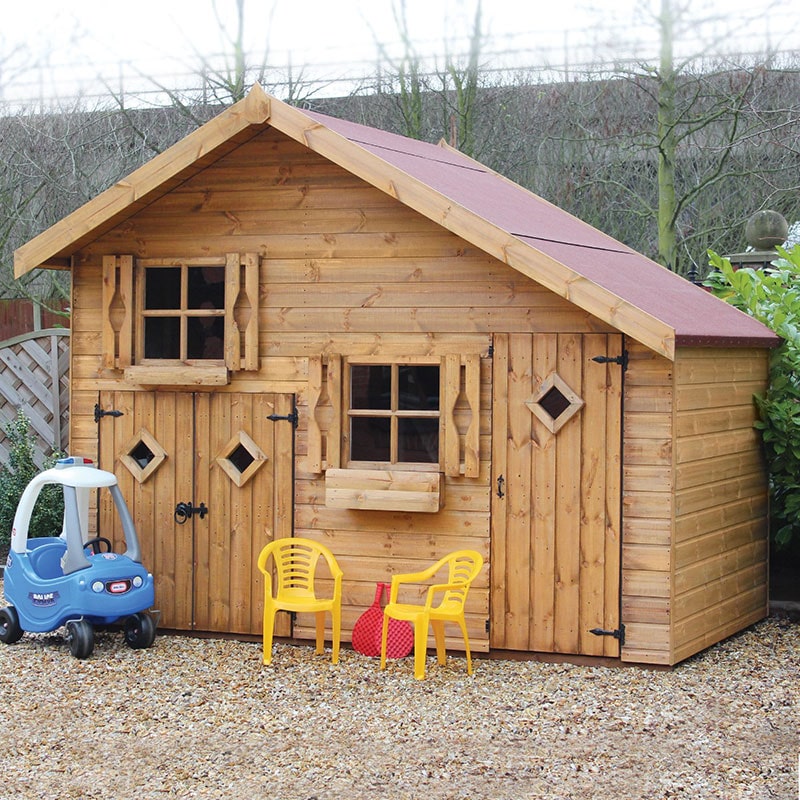
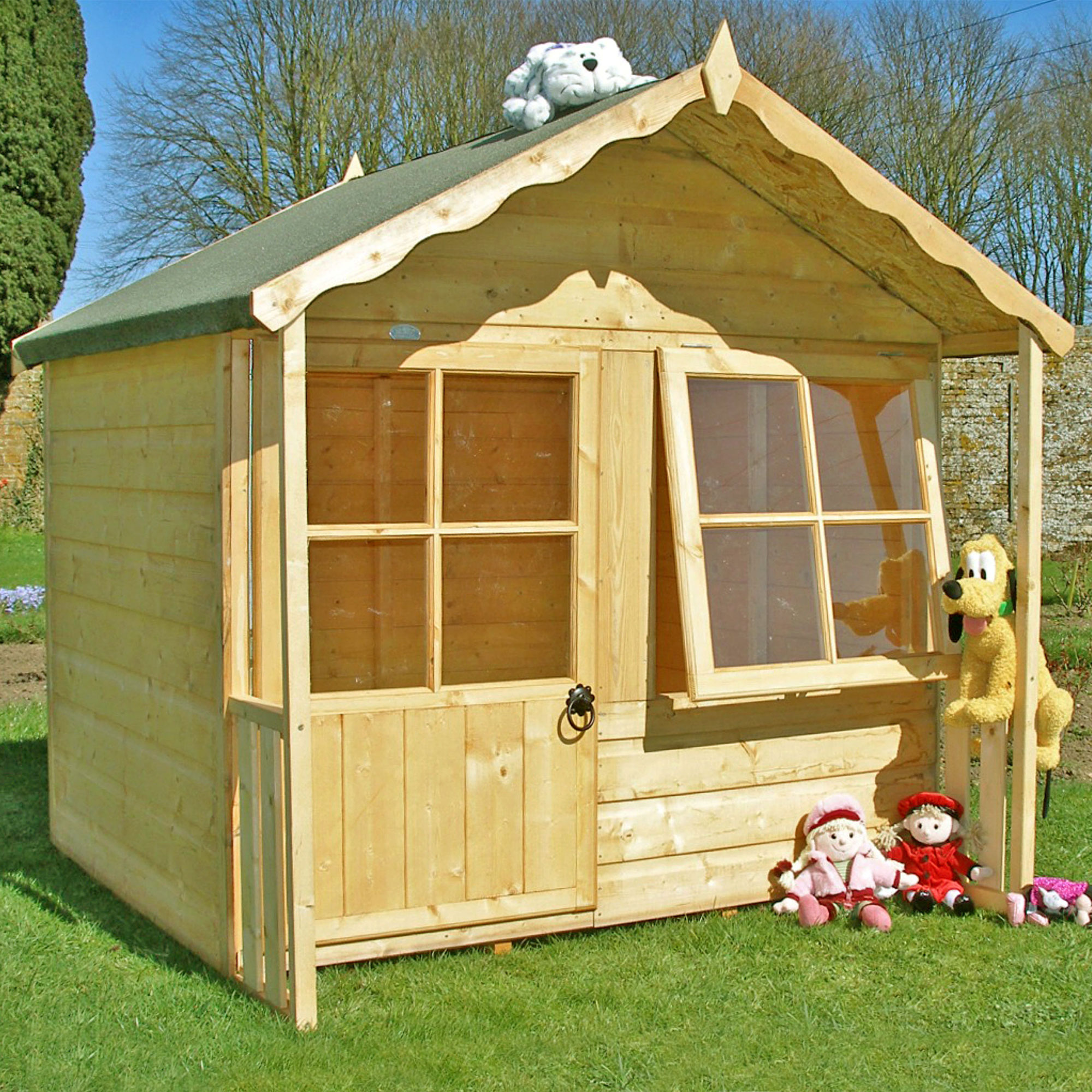
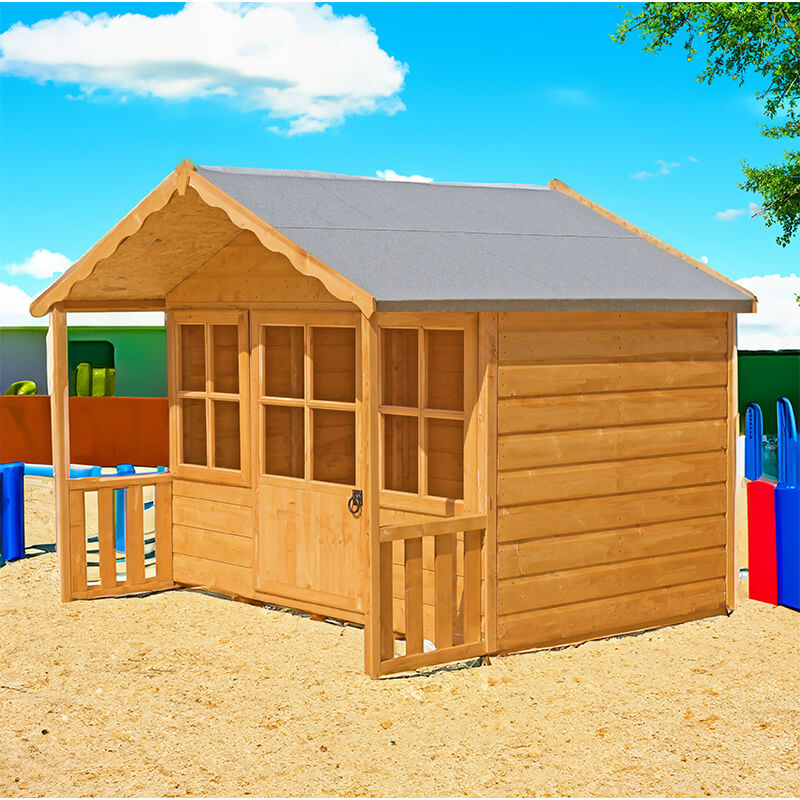
The result is a style that feels more architectural than a simple box. Children often read it as a proper house, shop, den, or hideaway, which can shape the kind of play that happens inside. Buyers who want a playhouse that looks like a small building rather than a toy often lean towards this roof form for that reason.
Different Types You’ll See in This Category
Within the apex roof playhouse category, there are several distinct forms. The differences are not just cosmetic; they affect how the playhouse suits a garden and how it feels to use.
- Classic timber apex playhouses – traditional square or rectangular formats with a pitched roof and familiar cottage look.
- Playhouses with veranda details – the apex roof is paired with a small covered front area, which adds character and a bit of sheltered space.
- Raised playhouses on stilts – the apex roof sits above a raised structure, creating a den-like area underneath, often better for uneven gardens.
- Compact apex models – smaller footprints designed for tighter spaces, still keeping the house-shaped roofline.
- Multi-window apex playhouses – extra window openings can make the inside feel brighter and more open, which changes the atmosphere quite a bit.
There are also subtle variations in the roof itself. Some apex roofs are fairly steep, giving a stronger triangular look. Others are gentler, which can help the playhouse sit more quietly in a garden setting. That slope difference is worth noticing, because it changes how much internal height is felt and how bold the structure appears from outside.
Form Matters: Square, Rectangular, and More
The roof shape is only part of the story. The base form of the playhouse changes how the apex roof performs visually. A square playhouse under an apex roof often looks balanced and compact, with a neat symmetry that suits smaller gardens. A rectangular playhouse usually gives more usable wall space inside, which can help if the aim is to fit in a little table, bench, or role-play counter.
Some apex roof playhouses are slightly deeper than they are wide, creating a more cabin-like feel. Others are broader at the front, which helps the entrance feel generous and makes the roofline more prominent. If you want a building that stands out as a focal point, a wider front elevation often does that without needing any extra decoration.
Why Families Often Choose Apex Over Flat or Pent Roofs
There are practical and visual reasons that keep apex roofs popular. The shape gives a stronger sense of shelter and definition, which many buyers associate with a proper garden building. It can also make the playhouse feel more open above head height, even when the footprint is modest.
Compared with a pent roof, which is sloped in one direction, the apex style usually feels more symmetrical and traditional. That may suit gardens where the owner wants a small house look rather than a modern shed-like appearance. Compared with a flat roof, the apex profile tends to offer more character and a less boxy silhouette. For many families, that means the playhouse looks more like part of the garden story rather than just an object placed in it.
There can be a difference in how children use the space too. A pitched roof often encourages a den, shop, cafe, or home corner style of play because it resembles the roofs seen in storybooks and real neighbourhoods. It’s a small thing, but it affects the mood inside.
Little Details That Change the Feel
Once you get past the roofline, the smaller design touches can make a big difference. Window shape, door style, ledges, and internal height all affect how an apex roof playhouse is experienced. A traditional half-glazed look gives a house-like impression, while plain cut-out windows feel more simple and playful. A stable-style or split door can make the frontage look more cottage-like. A full-height door gives easier access and a more open feel.
Some apex roof playhouses have decorative bargeboards at the gable ends. These are the boards that follow the triangle edge of the roof, and they can soften the outline or give it a more finished look. Others keep the roof edges plain and neat. Neither is better for everyone, but the choice changes the style a lot more than people expect.
Where the Apex Roof Really Helps
The pitched shape is not only about charm. It can help a playhouse feel less closed in, because the roof rises away from the side walls instead of hovering flat above them. For children who like to sit inside for longer stretches, that extra sense of volume can matter. It gives a bit of breathing room, even in a compact design.
It also suits gardens where the playhouse should feel like a proper feature. The apex roof can echo the lines of a home, garden studio, or small outbuilding, which helps the structure look intentional. If the playhouse will be seen from indoors, the familiar roof shape often reads better than an ultra-modern profile. It has a softer presence, and that can make the whole space feel more settled.
Useful Buying Points to Compare Before You Choose
When looking at playhouses with apex roof, it helps to compare a few key features rather than only the picture. These points can affect both how the playhouse fits the garden and how it will be used.
- Roof pitch – steeper roofs create a more pronounced house shape; gentler roofs look subtler.
- Footprint – square formats suit neat corners, while rectangular shapes can give more internal run.
- Wall height – a higher wall line can make the inside feel easier to use.
- Window layout – more openings can brighten the inside, but may reduce privacy for some play styles.
- Door style – half-door, split door, or full-height entry each gives a different feel.
- Veranda or porch area – adds a bit of threshold space and can change the whole front elevation.
- Garden position – the apex shape often looks best where the ridge can be seen clearly from the main viewing point.
Best Fits for Different Garden Set-ups
A compact apex roof playhouse can work well in a smaller garden because the roof gives height without needing a wide footprint. In a larger garden, the same shape can be used to create a more defined children’s corner, especially if it is placed where the roofline is visible against planting or fencing.
If the garden has a lot of straight edges, the triangular roof can soften the overall layout a bit. If there are already rounded shapes, arches, or curved borders, the apex style adds a stronger structure. That contrast can look really effective. Some buyers choose an apex roof specifically because it gives the playhouse a clear silhouette from a distance, which makes it easier to “read” in the garden.
Things That Make the Style Feel More Useful
For play, the best apex roof playhouses are often the ones that balance character with straightforward space. A good internal layout matters more than decorative extras, though a few details can help. A central ridge means the highest point sits where children are likely to stand or gather, which supports free movement in the middle. Side walls can then be used for seating, role-play corners, or simple furnishings.
If the playhouse has a broad frontage, the apex can look especially strong, because the roof shape has room to show itself. If the playhouse is narrower, the roof can make it feel taller and more substantial than the footprint suggests. That is one reason this roof style is so common: it adapts well to different sizes without losing its identity.
A Shape That Feels Familiar Straight Away
There is something reassuring about a little house with a pitched roof. Children often respond to that shape quickly because it matches the houses they draw, build from blocks, or see in stories. For adults, the same shape can feel tidy and considered. It avoids the “temporary toy” look and leans more towards a small outdoor building with purpose.
That blend of imagination and structure is what makes the category strong. It is playful without being overdone, and recognisable without looking plain. If you are comparing different playhouse roofs, the apex option often lands in the middle: not too modern, not too basic, and usually easy to place in a garden without clashing with the surroundings.
What to Look for in the Product Description
Because apex roof playhouses can vary quite a lot, the product description matters. Look closely for details about the roof angle, the floor plan, the number of windows, and whether there is any front overhang or porch area. A few descriptions mention the roofline clearly, but not all explain how that changes the inside, so it is worth reading between the lines a little.
Also note whether the playhouse is more cottage-like or cabin-like. The same roof shape can support both moods, depending on the wall proportions and opening styles. If the aim is a stronger “little home” look, a traditional frontage usually suits it. If the aim is a den or hideaway, a plainer design can work better. Little differences like that make the choice feel more personal, and often that is what buyers are really comparing.
Why This Category Keeps Drawing Attention
Playhouses with apex roof stay popular because they offer a clear visual identity, practical headroom, and a design language most people understand straight away. They are easy to imagine in the garden, easy to picture in use, and flexible enough to suit many layouts. Whether you want a compact hideout, a cottage-style feature, or a more open play space with a classic roofline, this category gives you a lot to work with without feeling complicated.
For many buyers, the appeal comes down to the shape alone: a simple pitched roof can do a surprising amount of work. It gives character, suggests space, and helps the playhouse feel like it belongs. And that, more often than not, is what makes the decision feel right.
[Sassy_Social_Share]