
Playhouses under £900 - Best Deals in UK!
Showing all 2 results
-
6% OFF: 6×6 Shire Stork Tower Kids Wooden Playhouse £815.996%

-
6% OFF: 5’3×5’6 Shire Croft 2 Storey Kids Wooden Playhouse £843.996%

Playhouses under £900 bring together timber, plastic and compact outdoor designs for families who want a proper garden hideaway without stretching the budget. Compare shapes, sizes and features here.
Big character, smaller spend
Playhouses under £900 are a neat way to add a proper play space to the garden without moving into high-end price territory. This category covers a wide mix of styles, from simple timber hideaways to more detailed designs with windows, doors, shutters and little pretend-home touches. The price point is especially useful if you want something that feels substantial, but still leaves room in the budget for garden furniture, a swing set, or just, you know, a bit of breathing room.
What makes this range interesting is the balance between size, finish and practicality. Some playhouses are made for younger children and keep the layout compact and low to the ground. Others are taller, with more of a mini-cottage feel and space inside for role play, books, toys or a small table. You also get different material choices, and that changes the look and the feel quite a lot.
Timber, plastic and the feel of the thing
One of the biggest differences in this category is the material. Timber playhouses usually have that familiar garden-building look, with natural texture and a design that sits nicely beside fencing, lawns and planting. They can look more “proper” in the garden, and many buyers like the way wood gives the playhouse a home-like feel rather than a toy-box feel. Plastic playhouses, by contrast, are often lighter in appearance and can be easier to position if you need to shift them around. They tend to suit smaller gardens or families who want something a bit more colourful and straightforward.
Bestseller der Kategorie Playhouses under £900
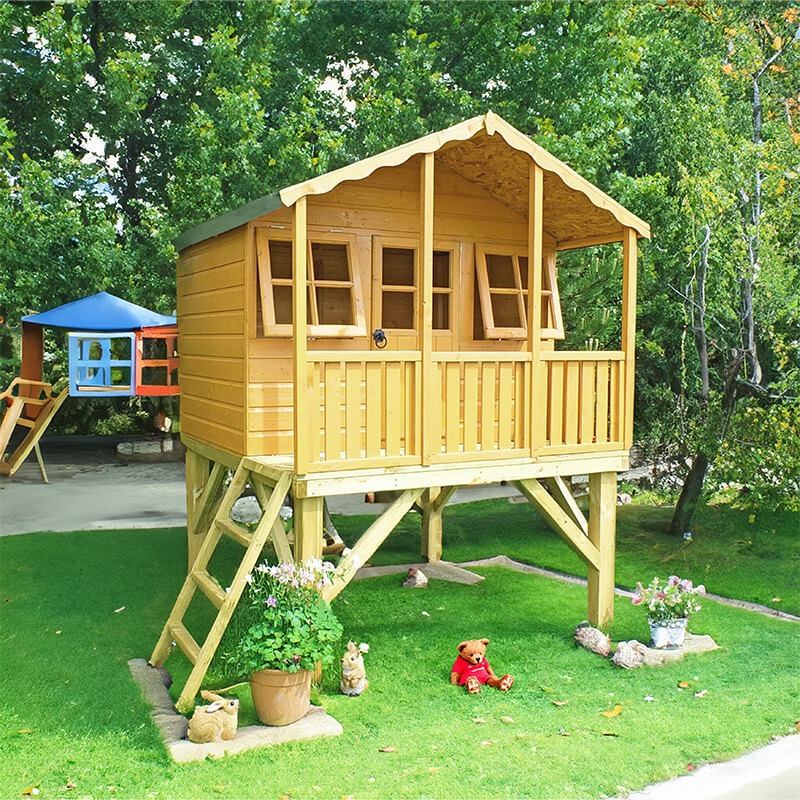
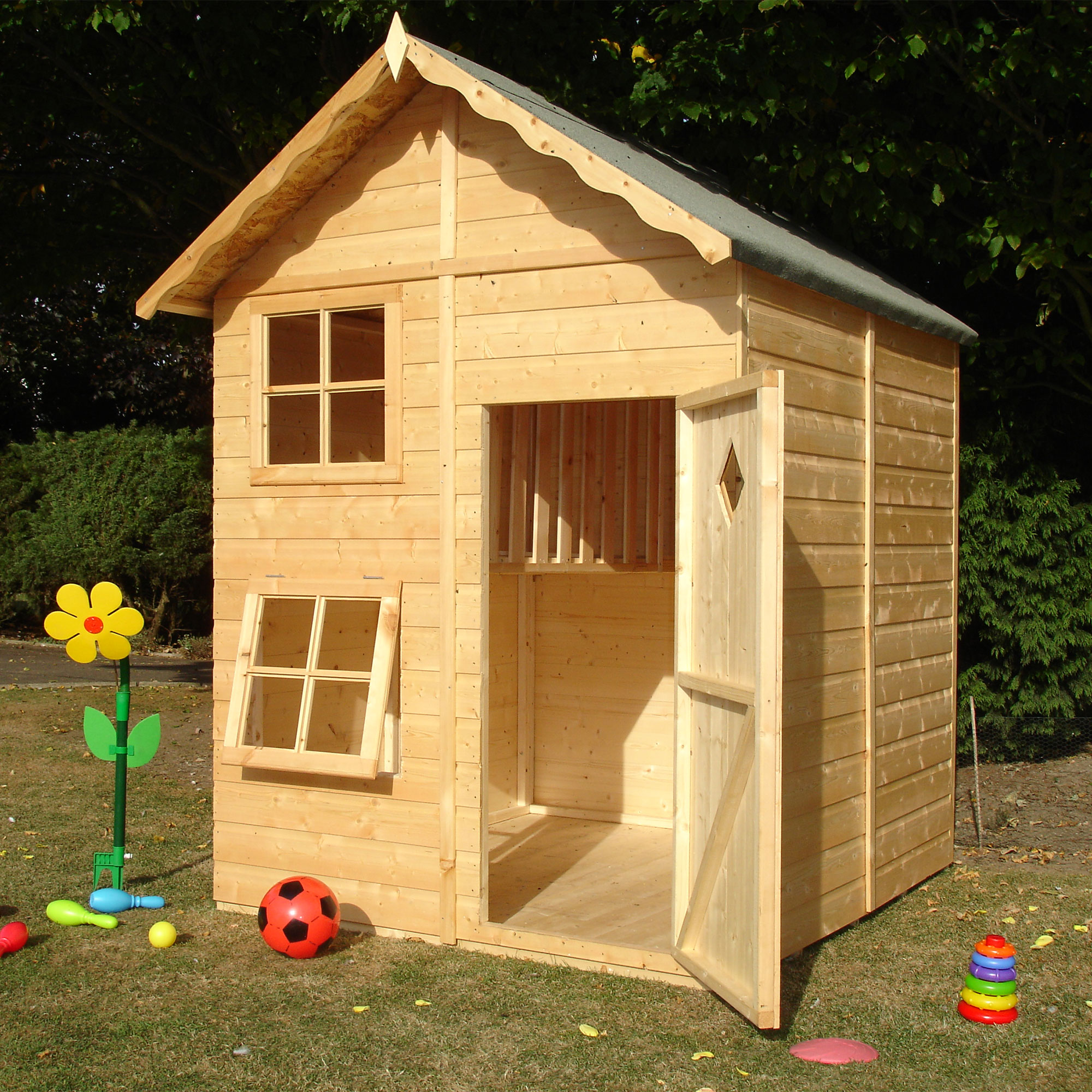
There are also differences in the way each material shapes the play experience. A timber playhouse often feels more enclosed and den-like, which can suit imaginative games like shop, cafe, post office or secret club. A plastic playhouse may have brighter features, rounded edges and a more open layout, which can be handy for younger children who want easy access and less fuss. Neither type is “better” in a blanket sense; it depends what kind of play you’re after.
Little cottages, tower shapes and open-front designs
The shape of a playhouse changes how it works in real life. A traditional cottage style usually has a pitched roof, door and windows, and often gives the most familiar garden look. These are popular because they feel like a miniature house, which helps children slip into pretend play very quickly. If you want something with a bit more presence, a tower-style playhouse can create a raised or layered look, though in this price range it is more often about a taller footprint or a compact elevated feel rather than a full climbing structure.
Then there are open-front playhouses, which are different again. These offer easier access and more visibility, so they can suit younger children or shared spaces where you want to keep an eye on things while still giving them their own corner. They don’t give quite the same enclosed “house” feeling, but they can work well for quick play and group games.
You’ll also see compact square or rectangular playhouses, which are useful when the garden is not huge. These tend to make the most of available floor space and are often easier to place against a fence or in a corner. If the garden is wider than it is long, a more open rectangular design can sometimes feel less cramped than a very deep house, so that’s worth thinking about before buying.
Features that make play more than just “a little house”
In this category, the details matter. Small features can change how children use the playhouse day to day. Working doors help create a proper entrance and exit point, which sounds simple but really shapes pretend games. Windows add light and interaction, letting children peek out, serve up pretend food, or wave to whoever is in the garden. Some designs include shutters or little decorative openings, which give the playhouse a more finished look and add to the make-believe feel.
You may also find veranda-style fronts or tiny porch areas. These are nice because they create an in-between zone, not quite inside and not quite out, which children often use as a shop counter, waiting area or “front step” for role play. A porch can make a compact playhouse feel a bit more generous, even if the internal space is not massive. And yes, for many families that extra edge of play space is the thing that tips the decision.
Why this price range works for many gardens
Under £900 sits in a sweet spot for buyers who want a meaningful garden feature without jumping into premium custom builds. It’s enough to open up a decent choice of sizes and styles, but still narrow enough to keep decisions manageable. In practical terms, this budget often gives you a playhouse that feels more like a garden structure than a small toy, which is useful if you want something that looks at home outside and doesn’t disappear visually once it’s in place.
Another advantage is flexibility. At this level, you can usually choose between different roof shapes, window layouts and proportions. That means you can match the playhouse to the rest of your outdoor setup, whether your garden has a neat patio, a lawn with borders, or a more compact urban layout. A smaller budget doesn’t have to mean a plain design; it often just means being a bit more selective about the features that matter most.
How to match the playhouse to the child, not just the garden
It helps to think about the age and play style of the children who’ll use it. For younger children, a lower entrance, simple layout and easy visibility can make the playhouse feel friendly rather than awkward. They often like spaces where they can get in and out without much effort, and where the inside isn’t too dark or too enclosed. For slightly older children, a more defined cottage shape with a proper door and windows can feel more like a real destination for games and made-up stories.
If more than one child will use it, look at the internal space and how the shape handles movement. A narrow house can still work, but if there’s going to be a lot of shared play, a wider footprint or a design with a front area may be more practical. That extra room can make all the difference when someone wants to “cook”, someone else wants to sit, and another child is busy acting like they own the place.
Fitting the style to the garden
Playhouses under £900 come in designs that suit different outdoor settings. A natural timber finish is often a strong fit for gardens with planting, decking or neutral furniture, because it blends in rather than shouting for attention. A more colourful plastic style can work well if your garden is already full of bright toys or if you want the play area to stand out as a distinct corner for children.
Roof shape matters too. A pitched roof gives a classic house silhouette and usually looks tidy from a distance. A flatter or more compact roofline can be better when you do not want the structure to dominate a smaller garden. The visual weight of the playhouse is worth considering; a bulky house can feel a bit much in a tight space, while a slimmer design may sit more comfortably beside sheds, borders or a patio edge.
Open play, private play and the difference between them
Some playhouses are built for open, social play, while others lean more towards private, enclosed play. An open design can encourage sharing, easy supervision and quick movement in and out. This is handy if the playhouse will sit near a seating area or if multiple children of different ages use the garden at once. It can also feel less formal, more like a play zone than a mini building.
By comparison, a more enclosed playhouse can create a genuine hideaway. Children often enjoy this because it gives them ownership of a small world. They can shut the door, rearrange toys, and use the space for long pretend games that carry on across the afternoon. If that kind of uninterrupted play matters, then a model with more sides, windows and a real room-like layout may suit better.
Useful things to look for before you choose
When comparing options, focus on the details that affect everyday use. Door height is a practical one, especially if you want the playhouse to stay comfortable as children grow. Window placement can affect light and visibility, and a well-balanced layout usually feels nicer inside than a design with too many solid panels. Footprint matters as well, because some playhouses look small from the outside but take up more garden space than expected once the roof overhang or porch is included.
You should also think about how the playhouse will be used alongside other garden features. If there is already a trampoline, climbing frame or seating area, a smaller cottage style may fit in better than a broad design. If the playhouse is going to be the main children’s feature, then a model with a little more presence can help anchor the space. It’s a bit of a balancing act, really.
Why children keep going back to them
The appeal of a playhouse is not just that it exists; it is that it becomes something else in the child’s head. One day it is a home, the next it is a shop, café, ticket office or base camp. That kind of flexible role play is a big part of the value here. A good playhouse supports stories rather than forcing one use, and that makes it stay interesting for longer.
Another reason they work so well is the sense of ownership. Children often treat the playhouse as their own small territory, and that can make even simple games feel more involved. A door to open, a window to serve through, a place to hide a toy or a snack table to perch at — these are small things, but they give the playhouse a proper role in the garden rather than leaving it as a decorative extra.
Choosing between compact and roomy layouts
If space is tight, a compact layout may be the better call. These tend to be easier to fit into corners, along fences or beside existing outdoor features. They can still offer plenty of play value if the shape is thoughtful and the doorway is easy to use. A compact playhouse is often enough when the main aim is imaginative play rather than big-group activity.
A roomier layout, on the other hand, gives more freedom inside. Children can sit together, move props around and use the space for longer stories without feeling crowded. It can also make the playhouse more useful as children get older. In this category, you are often choosing between convenience and internal generosity, and both have their place.
Simple buying tips that save a headache later
Before choosing, check the space available in the garden rather than just guessing from photos. A playhouse can look modest online and still feel quite substantial once positioned outdoors. It’s also worth thinking about where the entrance faces, because a door that opens onto a path, lawn or visible seating area usually feels more natural than one tucked awkwardly into a corner.
Also consider the kind of play you want to encourage. If the aim is quiet pretending, reading and sitting, then a closed cottage style may work best. If you want something that feels easy, bright and quick to use, an open-front or lighter design may suit more. There isn’t a wrong answer here, but matching the structure to the child’s habits makes the purchase feel a lot more sensible.
A category built for real family use
Playhouses under £900 offer a practical middle ground: enough choice to find a style that suits your garden, enough detail to keep children interested, and enough variation to compare shapes, materials and layouts properly. Whether you lean towards a timber cottage, a compact plastic house, a porch-front design or something more open and airy, this price range gives you room to choose with intent rather than just settling for the first option.
For families who want a garden feature that supports imaginative play, looks at home outdoors and keeps the budget in check, this category is worth a careful look. The right playhouse doesn’t need to be complicated; it just needs to feel like a place where stories can start, stop and carry on again tomorrow.
- Timber playhouses suit a more natural garden look and often feel like a proper little building.
- Plastic playhouses can be lighter, brighter and easier to place in compact spaces.
- Cottage styles give the classic house shape with doors, windows and a familiar feel.
- Open-front designs make access easier and work well for shared or younger-child play.
- Porch or veranda details add extra play space without needing a much bigger footprint.
- Compact layouts suit smaller gardens, while roomier layouts help with group play.
- Pitched roofs bring a traditional silhouette, while slimmer profiles can feel less bulky.