
Playhouses under £2500 - Best Deals in UK!
Showing the single result

Playhouses under £2500 bring proper garden play value with timber, plastic, tower and cottage styles, for climbing, role play and shared outdoor fun without stretching the budget.
More than a small shed with windows
A playhouse under £2500 is usually where the choice starts to feel properly interesting. At this price, you are no longer just looking at a basic box for toys; you can find multi-feature wooden playhouses, compact tower-style builds, little homes with shutters and flower-box details, and designs with extra room for climbing, pretending, hiding, or sitting out with a snack. That makes this category useful for families who want something that feels part of the garden rather than an item dropped into it.
The big difference here is the balance between size, design and usable features. Some playhouses are made to sit low and cosy, which suits smaller gardens or younger children. Others come with raised platforms, side ladders or slides, giving a more adventurous layout without moving into the much higher price bands. The under-£2500 range tends to offer a good middle ground: enough detail to feel special, but not so much that the layout becomes complicated or bulky.
Wooden, plastic, raised, and cottage-style: the main types
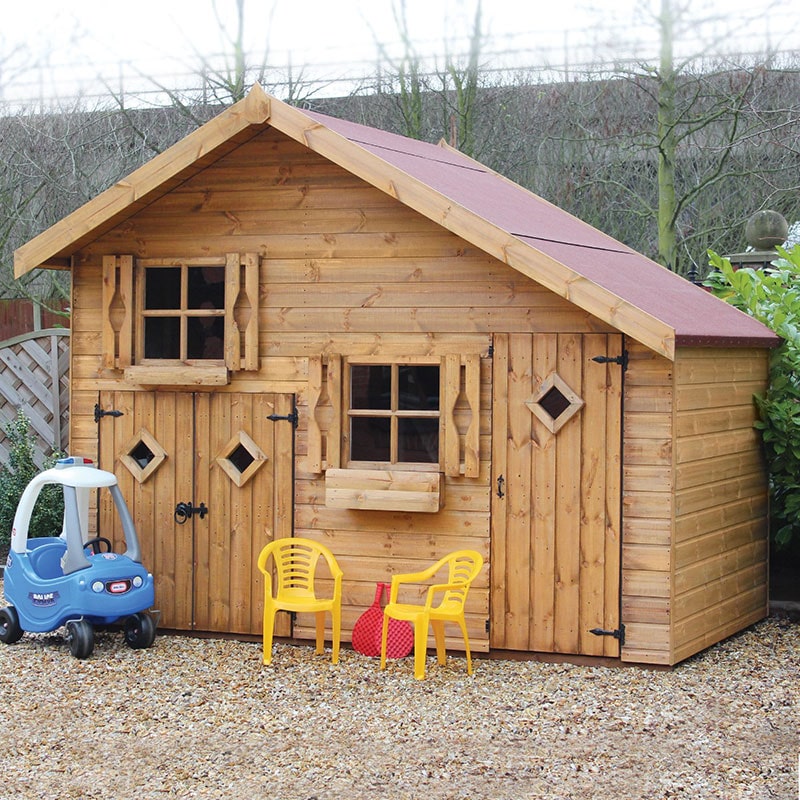
One of the clearest differences in this category is the material. Wooden playhouses are usually the most common choice under £2500, and for good reason. They tend to look more natural in a garden setting, can feel more like a little real home, and often come in a wider spread of shapes. You will see chalet-like forms, stable-style fronts, and simple gabled roofs that give a proper house shape without making the footprint too large.
Bestseller der Kategorie Playhouses under £2500
Plastic playhouses sit at the lighter, lower-maintenance end of the range. They often suit younger children because the edges, doors and internal space are usually simple and easy to use. They can also be easier to position if you want flexibility. The trade-off is usually appearance and scale: plastic designs are often less solid-looking and may feel more toy-like, which is fine if that is the aim.
Raised playhouses create a different experience altogether. Instead of sitting directly on the ground, they lift the play area up, sometimes with a small step ladder or a short staircase. This gives children a sense of a den above the lawn, and it can make the playhouse feel more like a lookout point or mini clubhouse. In this section of the market, raised designs often appeal to families who want a bit more excitement without going into full climbing-frame territory.
Cottage-style and traditional house-shaped playhouses are the ones that often catch the eye first. They usually include details such as windows, front doors, decorative roof lines or simple porch sections. These are good if you want the playhouse to work as part of imaginative play, because the shape itself suggests stories, rooms, visitors and daily routines. For children who like pretend shop, home, café or school games, this style fits naturally.
What you gain when the budget reaches this level
In the under-£2500 bracket, the difference is often in the feeling of a proper build. Materials can be sturdier, proportions more thoughtful, and the overall layout less cramped. That matters, because children do not only use playhouses for standing around inside them. They kneel, sit cross-legged, pass things through windows, lean on the walls, and make the space their own. A slightly better-sized or better-shaped design can make everyday play easier.
Another benefit is the chance to choose between compact playhouses for tight spaces and larger statement pieces that still stay within budget. If your garden is narrow, a tall but slim footprint can work well. If you have more room, a wider house with veranda-style frontage or side extension gives more flexibility for group play. This category often includes both, which is useful because not every family wants the same kind of layout.
There is also a difference in how these playhouses support different ages. Younger children often enjoy low steps, easy door access and cosy interior space. Older children may prefer a raised platform, a little extra headroom, or a design that feels like their own private place rather than a nursery-style toy. Under £2500, you can often find something that bridges that gap better than very basic budget models do.
Shapes that change how the play feels
The shape of a playhouse matters more than people expect. A square or rectangular playhouse usually gives the most straightforward interior space. It can be easier for children to arrange toys inside, and it often suits a smaller garden because the footprint is efficient. If the front is wide enough, it can feel open and social, with space for more than one child to gather without bumping into each other all the time.
Gabled or peaked-roof playhouses often look more like a “proper” house, and the roofline can give the whole item a neat, finished look. This can be important if you want the structure to sit nicely beside planting, paving or fencing rather than looking purely functional. Some families prefer this because it blends in better and feels less like a fixed toy.
Corner-style layouts are useful when garden space is awkward. They can tuck into an edge without dominating the centre of the lawn. These may not always be the first style people think of, but they can make a good use of limited space and still give children a shelter of their own.
Tower or loft-style forms bring height into the equation. Even when the actual play area is compact, the elevated position can make the playhouse more exciting. Children often like the idea of being “up high”, and a tower-style build can create that feeling without needing a huge floor area. The difference is not just visual; it changes the whole tone of play from cosy den to mini adventure post.
Little details that make a big difference
When browsing playhouses under £2500, it helps to look closely at the details rather than only the headline shape. Windows are one of the first things to notice. Open windows can make a playhouse feel airy and sociable, while shutter-style windows add a more classic look. Some designs keep windows low and simple, which works well for smaller children. Others have multiple openings, giving better visibility and a stronger sense of connection with the garden.
Doors are another important point. A wide, easy-to-use door can make a playhouse friendlier for younger children and reduce awkward climbing or squeezing. A smaller, cottage-like door creates a more storybook feel and can make the space seem private and special. Neither is “better” in every case; it depends on whether you want practical access or a more enclosed den-like atmosphere.
Verandas, porches and front decks are very handy features in this price range. They give children an extra zone to stand, sit, or set out small toys before moving inside. That tiny bit of extra space can change how the playhouse is used, especially when several children are involved. A porch also makes the item feel more like a miniature home rather than a plain box.
Slides and ladders tend to be the main difference between a simple playhouse and a more active one. If a design includes a slide, it usually adds a quick burst of movement to pretend play. If it has a ladder or steps, the play starts with a climb, which changes the feel again. Some families prefer this added activity, while others want the playhouse to stay calmer and more enclosed. Both approaches make sense, and the right answer depends on the children using it.
Which style suits which kind of garden
For a small garden, a compact wooden playhouse with a simple roof and modest footprint is often the easiest fit. Look for a layout that does not sprawl too much, and try to favour height over width if space is tight. That gives children a real play space without swallowing the whole lawn.
For a family garden with room to spare, a larger cottage style or raised design can work better because it gives children more ways to use it. In these settings, the playhouse can become a fixed part of the garden layout, almost like a little destination. It may sit near a patio, lawn edge or planted border, and that can make it feel more integrated.
If the garden already has a lot of visual detail, such as mature planting, a timber playhouse often looks calmer and more in keeping. If the space is more modern and simple, a cleaner-lined design may suit it better. The point is not to force the garden to fit the playhouse, but to choose a shape that sits well beside the rest of the space.
Why children keep going back to playhouses
The appeal of a playhouse is partly about ownership. Children like having somewhere that is theirs, even if it is only for pretend games. A playhouse can be a café at one moment, a hideout the next, and a quiet reading spot after that. That changeability is one of the strongest reasons families choose this category over a single-use outdoor toy.
Another reason is the way a playhouse supports group play. Some designs are cosy and best for one or two children, while others give enough room for friends or siblings to share the space without constant jostling. If children like acting out roles, serving pretend meals, or setting up “rules” inside their own little home, a playhouse gives that play a proper setting.
There is also a practical side: a good playhouse can keep children outside for longer because it gives the garden a sense of destination. It is not just an open area where they wander about; it is a place to go to. That can make outdoor time feel more focused and less random.
Useful buying tips without the fluff
Before choosing, think about the age range you want to suit. A low, simple playhouse may be ideal for toddlers and early years children, while a raised or more detailed design may feel better for older children who want more independence in play. It is worth matching the structure to how the children actually behave, not just how it looks in a photo.
Also consider how the playhouse will be used most often. If it will mainly be for imaginative home play, then windows, door shape and interior feel matter most. If movement is the focus, then a platform, steps or slide may be more important. Trying to get everything into one design can make it less practical, so it helps to decide what matters more.
Check the footprint and proportions. A playhouse can look small online and feel larger in the garden, or the other way round. A tall narrow design can suit a tighter spot, but a wider one may feel more usable inside. It is a good idea to picture where it will sit relative to fences, plants and seating areas before choosing.
And do not ignore the style of the roof and front face. These are not just decorative extras. They shape how the playhouse feels from inside and outside. A simple roofline can look neat and modern, while a pitched roof and traditional front can give a more classic garden-house feel. It’s one of those things people only notice after the fact, which is annoying, so better to think about it now.
How to spot the better fit in this price band
Within the under-£2500 range, the best choice is usually the one that balances space, appearance and the kind of play you expect. A simple cottage design may be better if you want lots of pretend play and an easy layout. A raised tower-style model may suit a child who likes a bit of height and movement. A plastic version may be enough if you want lighter, fuss-free use. A timber design may be the better fit if you want something more settled and garden-like.
It is also worth paying attention to whether the playhouse feels open or enclosed. An open design invites sharing and visibility. A more enclosed one creates a den effect, which some children love because it feels private and a bit secret. That difference can matter more than extras, because it changes the whole mood of the play.
In the end, playhouses under £2500 give you a broad and useful range: from neat cottages and compact den-style builds to raised structures with a little more adventure built in. The best part is that you do not have to choose between a simple toy and a grand garden feature. This category sits in the middle, where the playhouse can still feel thoughtful, attractive and genuinely used, not just looked at.
Small choices now, better play later
If you want a playhouse that gets used often, it helps to imagine the everyday moments first: who opens the door, where the toys go, how many children stand inside at once, whether they prefer climbing or staying low to the ground. Those details might seem minor, but they are what separate a good purchase from one that just looks nice for the first week.
That is why this category works so well for buyers comparing options carefully. You can find different forms, different feels, and different kinds of play value without moving beyond a sensible budget. And if the chosen design fits the garden and the children properly, it tends to earn its place quickly.
- Wooden playhouses for a more natural garden look and stronger cottage feel
- Plastic playhouses for lighter handling and simpler, younger-child use
- Raised or tower-style designs for height, adventure and lookout-style play
- Cottage and house-shaped models for pretend home, café or shop games
- Compact footprints for smaller gardens or tighter corners
- Verandas and porches for extra standing or sitting space
- Slides and ladders for more active play alongside the house layout