
Playhouses under £2000 - Best Deals in UK!
Showing all 2 results
-
12% OFF: 5′ x 10′ Traditional 2 Storey Kids Wooden Playhouse with Garage (1.51×3.05m) £1,919.0012%

-
11% OFF: 8′ x 9′ Shire Lodge Kids Wooden Playhouse (2.39m x 2.69m) £1,549.0011%

Playhouses under £2000 bring together timber play, compact garden design and practical value: from simple cottages to tower styles, choose a child-friendly space that fits your plot, budget and how the family plays.
Garden play, scaled for real budgets
Choosing a playhouse under £2000 gives you room to look at proper timber builds, thoughtful roof shapes and more usable interiors, without moving into the very top end of the market. This price band often suits families who want something that feels like a real feature in the garden rather than a flimsy add-on. It is a good middle ground: more character than a very basic plastic unit, but still within a budget many buyers can plan for.
What makes this category useful is the mix of size, shape and play style. Some playhouses are made for tucked-away corners, others are meant to stand out as the main feature on a lawn or patio edge. You will see differences in footprint, roof height, window layout, raised platforms and the amount of interior space available. Those details matter because they shape how the playhouse feels on day one and how long it stays useful as children grow.
What sits inside this price range
In the under-£2000 bracket, you will usually find timber playhouses with a more solid look, and sometimes designs that borrow from summer-house or cottage styling. The material, joinery and finish level can vary a fair bit, so it helps to compare the build rather than just the picture. A neat roofline or cute frontage might catch the eye, but the real difference often lies in how much space is inside and how the structure is put together.
Bestseller der Kategorie Playhouses under £2000
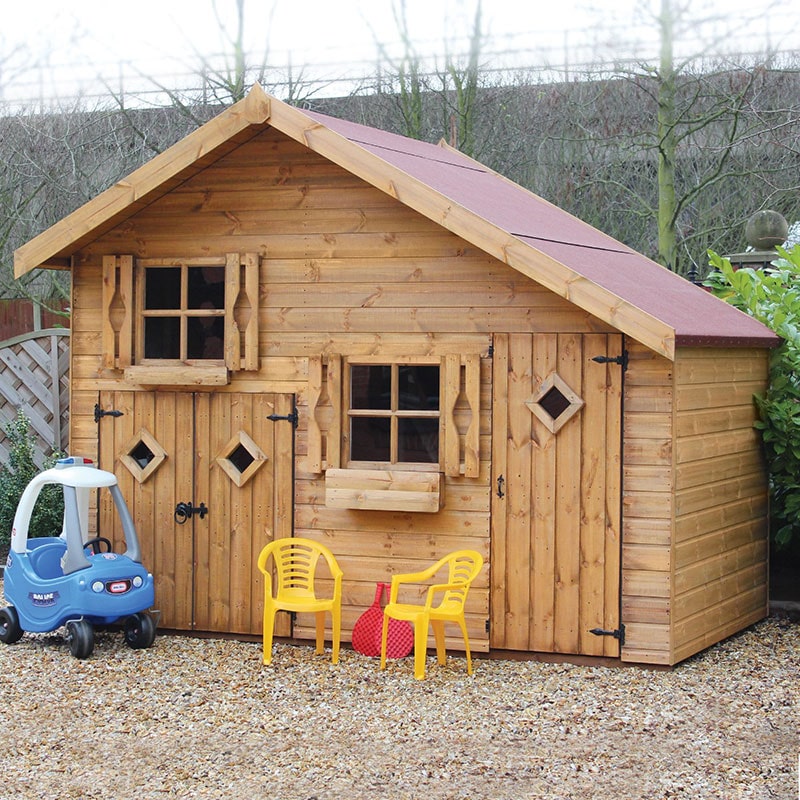
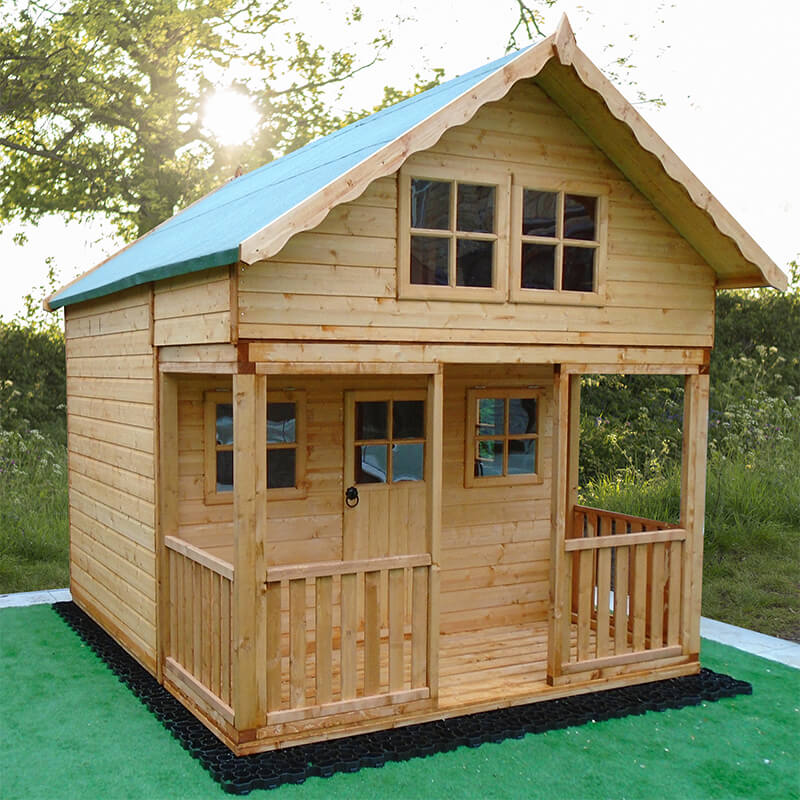
Common forms in this category include:
- Cottage-style playhouses with pitched roofs, small windows and a homely look.
- Tower playhouses that add height and a more adventurous feel, often with a platform or small deck.
- Cabin-style designs with straighter lines and a slightly more modern shape.
- Two-level or lofted styles where a raised section gives a sense of a little hideout above the ground.
- Corner playhouses shaped to fit tighter gardens or make use of awkward spaces.
Each type creates a different kind of play. A cottage style often suits imaginative role play like shop, home, café or post office. A tower or lofted version leans more towards adventure, lookout games and climbing in and out. Cabin styles tend to feel a bit more open-ended and can work well when you want the playhouse to blend with the rest of the garden.
Shapes that change the way children play
The shape of a playhouse affects far more than its look. A single-storey square or rectangular build is usually straightforward and easy to furnish with small play items, cushions or toy storage. It also tends to be simpler to place in a garden because the footprint is clear and practical. This type often gives the best sense of interior room for the size.
Hexagonal or octagonal playhouses are more decorative and can feel special in the garden, though the usable wall space may be a little different from a simple box shape. They are nice if you want the structure to look like a feature, not just a shed-sized play area. On the other hand, a more angular or cabin-like shape can be easier to arrange around fences, beds or existing garden lines.
Raised playhouses and those with small towers add another dimension. Children often love the feeling of climbing up to a den or lookout. The height can make the playhouse feel more private, which is useful for role play, making it seem like a secret shop, office or club house. Just remember that taller designs usually need a bit more thought around placement because they are visually bigger and may change how the rest of the garden feels.
Materials and build details that are worth noticing
In this category, wooden playhouses are often the main choice. Timber gives a warmer look and usually feels more at home in a garden than a plastic build. It also lets the design sit neatly alongside fencing, plants and other outdoor features. The exact timber style, panel thickness and finish will affect both the appearance and the sense of sturdiness.
Buyers often compare:
- Panel construction for a more straightforward structure.
- Interlocking boards where the look is more cottage-like and the walls can feel more integrated.
- Cladding style that changes how the playhouse sits visually in the garden.
- Roof type, such as pitched, apex or more compact sloped designs.
- Window layout, including fixed windows, opening sections or partial glazing.
The roof is more important than it first appears. A pitched roof adds charm and a classic playhouse silhouette, while a lower sloping roof can suit a tighter garden or a more modern look. Window placement also matters for atmosphere. More openings make the structure feel brighter and less enclosed; fewer openings create a cosier hideaway. There is no single right answer here, only what fits the kind of play you want to encourage.
Different play styles, different advantages
The best playhouse for one child may not suit another, and that is why this category is interesting. A child who likes storytelling, pretend shop play or tea parties may prefer a model with a proper front opening, a decent doorway and enough floor space for movement. Another child might lean towards climbing, lookout games and secret hideouts, which makes a taller build more appealing.
Role-play-friendly designs are often those with a clear front, windows that can act like serving hatches, and enough room for props. They invite children to make up little scenes and routines. Adventure-led designs often use height, steps or a raised deck to create a sense of entering somewhere special. Meanwhile, compact garden nooks are useful when space is tighter but you still want something that feels personal and not just miniature.
One useful difference is between a playhouse that feels like a room and one that feels like a destination. A room-like design is better when you want interior space and easy access. A destination-style design often feels more dramatic in the garden, especially if it has a tower, veranda or visible platform. Families sometimes think they want the biggest model, but the shape and layout can matter more than sheer size.
Why this budget range makes sense
A sub-£2000 playhouse often gives a balanced mix of character and practicality. You are usually not choosing between toy-like and overbuilt; you are comparing real garden structures with different strengths. That makes it easier to focus on what actually matters: how much room there is, whether the shape suits the garden, and how the playhouse will feel to use.
There is also a nice middle area between basic compact models and more elaborate garden features. In this category, some playhouses are modest and tidy, while others add extra presence through size, roof detail or height. That range helps families compare options without jumping to a much higher spend. If the playhouse is going to sit in the garden for years, those design details can justify the budget more than flashy extras.
How to compare one playhouse with another
When you are looking at different playhouses under £2000, it helps to compare them on a few practical design points rather than just the overall photo. The same price can buy quite different experiences. One model may offer a larger footprint, while another uses height more cleverly. One may be better for several children, another more suitable for a quiet hideaway.
Useful things to compare include:
- Internal floor space if more than one child will use it together.
- Headroom if you want it to feel comfortable rather than cramped.
- Door size and opening style for easy access and a more open feel.
- Window placement to decide how bright or enclosed it feels.
- Overall footprint so the playhouse sits naturally in the garden.
- Height if you are choosing between a neat cottage and something more adventurous.
These details sound small, but they change how the playhouse actually gets used. A model that looks compact outdoors might still feel roomy inside if the walls are well proportioned. Another one might have a lovely tall roof but less usable floor area than expected. So it pays to look beyond the first impression.
Choosing by garden layout, not just by style
It is tempting to choose the prettiest design first, but the garden layout should lead the decision. A narrow side return may suit a slimmer cabin-style playhouse. A wider lawn could handle a cottage with a larger frontage. A sheltered corner might work well for a compact unit that feels tucked away. If the garden already has strong lines from fencing, planting or paving, a simpler shape often sits better than an overly ornate one.
Families with more than one outdoor area sometimes like a playhouse that acts as a visual anchor. It can give the garden a focal point without needing lots of extra features. In other spaces, the aim is to keep the structure understated so it does not crowd the plot. This is where the under-£2000 range is helpful, because there are enough styles to suit different garden sizes and different levels of visual impact.
Little details that make a big difference
Some of the most appealing playhouses in this category are the ones with thoughtful details. These might include a stable-style door, a little veranda, window boxes, decorative shutters or a small front canopy. None of these are essential, but they can add personality and help the structure feel more like a proper child-sized place rather than a plain box.
Other details are less decorative but still important. A sensible entrance height can make access easier. A well-proportioned window can make the interior feel less dark. A small platform can give an extra sense of arrival. Even the way the roof line meets the walls changes the mood, from cosy cottage to neat garden cabin.
It is also worth thinking about whether you want the playhouse to feel open and sociable or quiet and tucked away. Open designs invite group play and more movement. Enclosed designs feel more private and can be especially appealing for children who like their own little world. Both can work beautifully; they just create different kinds of scenes.
Tips for picking the right one without overcomplicating it
If you are narrowing things down, start with the kind of play you want to encourage. Then match that to the shape and layout. For pretend home play, a cottage with a clear front works well. For a den or lookout, a tower or raised model makes more sense. For mixed use, look for a generous single-storey design with good headroom and a balanced footprint.
Also consider whether the playhouse should feel like:
- A hideout for quiet time and small-group play.
- A social spot where two or three children can sit together.
- A garden feature that adds character as well as play value.
- A future-proof choice that still feels usable as children get older.
If possible, compare the measurements carefully. A playhouse can look charming online and still be a tight fit in a real garden. It helps to picture the surrounding space too: where the door opens, how much room is left around it, and whether nearby trees, fences or planting make the area feel enclosed. That little bit of planning saves a lot of second guessing later on.
A category with real choice, not just one look
Playhouses under £2000 offer more variety than many people expect. There are compact cottages, taller adventure styles, cabin shapes, corner fits and charming miniature homes, all with different strengths. Some are better for imaginative role play, others for climbing and hide-and-seek, and some strike a neat balance between the two. That range is what makes the category useful.
What buyers often end up choosing is not just a playhouse, but a type of childhood space. A place for stories. A place for games. A place that sits in the garden and quietly becomes part of family life. If you choose the shape, size and style with the children’s play habits in mind, the result is much more likely to feel right from the start.
Why people keep coming back to this price point
The under-£2000 range tends to appeal because it offers enough choice to be selective without becoming overwhelming. You can look for a playhouse that suits the garden, the age of the children and the way they like to use space. That means the purchase feels considered, not random. And when a playhouse fits well, it does more than look nice; it gives the garden a real purpose.
So whether you are drawn to a classic cottage style, a taller lookout design or a compact cabin shape, this category gives you room to choose something that feels personal. The best option is usually the one that matches the garden and the play, not just the first pretty picture. And that is often where the nicest surprises are.
[Sassy_Social_Share]