
Playhouses 8x7 - Best Deals in UK!
Showing the single result

8×7 playhouses are a practical choice for gardens that need a proper play space without taking over the whole plot. This category brings together timber playhouses in a compact-yet-roomy 8×7 size, with different roof styles, window layouts and layouts for children’s play, storage and make-believe.
A Proper Size for Proper Play
An 8×7 playhouse gives you more usable room than a small toy-style hut, but it still sits comfortably in many family gardens. That extra bit of width and depth makes a real difference: there is enough space for standing room, a play table, pretend kitchen bits, dolls’ houses, shop corners or a little reading nook. It is a size that feels like a destination rather than a corner accessory.
Compared with smaller playhouses, the 8×7 footprint tends to feel less cramped when two children are inside. Compared with bigger garden buildings, it remains easier to place beside a lawn, fence line or patio without making the whole garden feel full. If you want a play space that looks part of the garden rather than a giant structure dropped into it, this size is often a very neat fit.
What Makes the 8×7 Category Different?
The main difference in this category is not just the overall size, but the way the space is usually arranged. Many 8×7 wooden playhouses are built to make use of the footprint in a balanced way: a central door, side windows, optional internal ledges or a front opening that gives a home-like look. Some versions are designed with a more upright shape, while others feel lower and broader.
Bestseller der Kategorie Playhouses 8x7
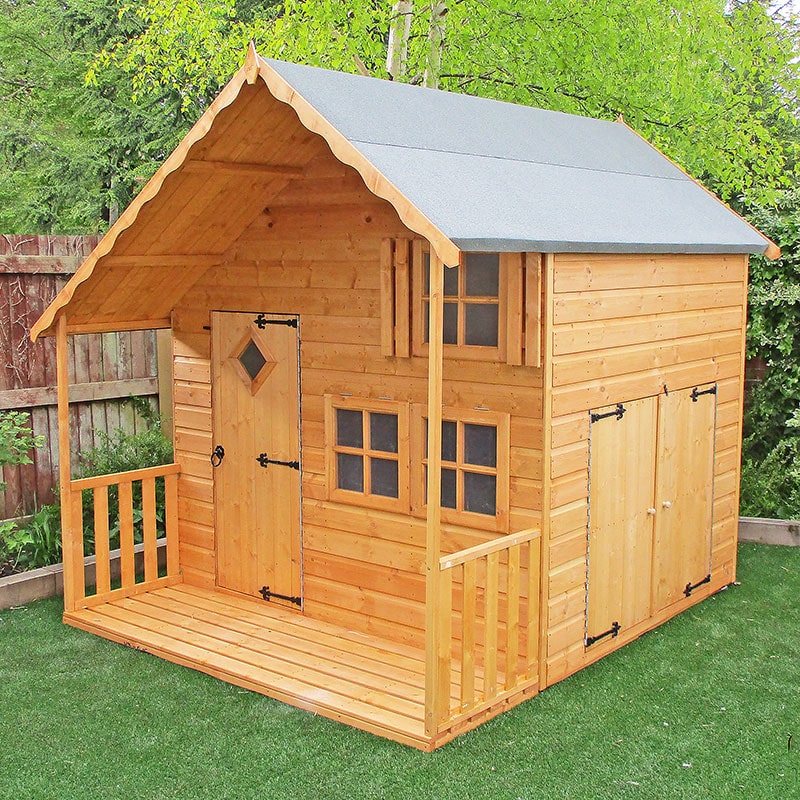
You will also see differences in the roof style, because roof shape changes how the playhouse looks in the garden. A gable roof gives a classic house profile. A pent roof usually looks simpler and more modern. Some playhouses lean towards a cottage feel, while others have a cleaner, timber-cabin appearance. These small visual changes can matter a lot if you want the playhouse to sit well with existing fencing, decking or planting.
Styles You’ll Find in This Size
Within the 8×7 playhouse range, there are several common styles that suit different kinds of play and different garden layouts:
- Cottage-style playhouses with decorative windows and a homely look for pretend living-room play.
- Cabin-style playhouses with simpler lines and a more understated timber finish.
- Raised playhouses that sit above ground level and may allow a den-like area below, depending on the design.
- Front-porch styles that create a small entrance space and add room for shoes, baskets or role-play props.
- Open-front or half-front designs that make it easier for younger children to move in and out during play.
Each style changes the way the playhouse is used. A cottage look suits pretend home play, while a cabin shape can work better for a den, reading space or mixed-age use. If the garden is quite neat and modern, a simpler form often looks more settled. If the aim is something playful and storybook-like, decorative detailing can add character without needing extra space.
Roof Shapes That Change the Feel
Roof design is one of the biggest visual differences in this category, and it also affects how the playhouse sits in a garden. A gable roof gives a familiar, pitched silhouette that children often read as “a proper house”. It creates a traditional look and usually suits cottage-inspired designs.
A pent roof gives a lower profile and a tidier line. It can feel a bit more contemporary, and some buyers prefer it where height is a consideration or when they want the playhouse to tuck into a corner without dominating the view. The shape can also change the internal feel slightly, especially if one side feels more open or roomier.
There are also playhouses where the roofline is used to create a stronger sense of scale, for example by making the front more inviting or adding a small overhang above the doorway. These details are not just decorative; they affect how the child experiences the space and how the building is read from the garden path.
Windows, Doors and Those Little Details
In an 8×7 playhouse, the layout of doors and windows matters more than many people expect. A side window can make the inside brighter and more open. A front window gives the playhouse a house-like face. Double windows can make it feel more social, especially if children want to play shop, cafe or home together.
Door style is just as important. A standard single door is simple and familiar. A split door or stable-style opening can give younger children a more playful entrance and helps the building feel less closed in. Some designs use a wider opening to make movement easier during busy play. The difference may seem small on paper, but in use it can change how often the space gets used.
It is also worth noticing whether the windows are placed for visibility and interaction. Children often like being able to wave out, hand things through, or chat from one side to another. That little social aspect is part of why playhouses stay interesting for longer than many other garden toys.
Why the 8×7 Footprint Works So Well
The 8×7 size has a useful balance. It is large enough to support more than one type of play, but not so large that the building starts to feel like a separate shed. In a family garden, that balance is handy. One day it may be a shop. The next day it becomes a tiny classroom, a reading den or a made-up cafe. The size supports that change without needing furniture to be constantly rearranged.
For children who like role play, extra floor area means more realistic scenes can happen at once. One child can “cook”, another can “serve”, and a third can sit by the window. That kind of layered play is harder to do in smaller playhouses. There is also a difference in the way the building feels from outside: the 8×7 footprint often gives a more finished presence, almost like a small garden room made for play.
Indoor Play Ideas That Suit the Space
Because the space is more generous, 8×7 playhouses often suit a wider range of play themes. Buyers tend to look for this size when they want the structure to last through different ages and interests, rather than being outgrown after one short phase.
- Pretend home play with toy furniture, dolls, soft toys and make-believe family routines.
- Shop play where the window becomes a counter and children act out buying and selling.
- Tea room or cafe play with a serving area and small tables or baskets.
- Reading den for quieter time, picture books and cushions.
- Adventure hideaway with maps, treasure chests, torches and story games.
That variety is one of the main reasons people move up to this size. It gives you more flexibility without needing a full-size outdoor building.
Material and Finish: What Buyers Often Compare
Most products in this category are designed as wooden playhouses, and that matters because timber gives a warmer, more garden-friendly look than plastic or metal. A timber playhouse usually blends more naturally with planting, fencing and decking. It also tends to suit both bright painted finishes and a more natural look, depending on how the product is supplied.
When comparing options, people often look at the panel style, boarding direction and visible structure. Some playhouses feel more like a compact house, with neat cladding and defined openings. Others look more rustic, with a simple cabin feel. Neither is “better” in a general sense; it depends on whether you want something that reads as a little home, a den, or a garden feature with play value.
Another useful difference is how enclosed the design feels. Some 8×7 playhouses have a more open, welcoming front, while others feel enclosed and private. Younger children often like the open feel because it is easier to go in and out. Older children may prefer the more private den-like versions, especially for imaginative games or a calm spot away from the house. Bit of a difference there, and it changes the kind of play you get.
Choosing Between Cottage, Den and Mini House
If you are trying to decide which style fits best, it helps to think about how the playhouse will actually be used. A cottage-style 8×7 playhouse usually leans into social, home-based role play. A den-style version is often better for children who want a tucked-away space with a slightly more private feel. A mini house design sits somewhere in the middle and can be a good all-round choice.
The differences are mostly about atmosphere. Cottage designs often have window trim, a pitched roof and a storybook look. Den styles are often simpler and can be better suited to more flexible play. Mini house designs tend to focus on the house idea itself, with a balanced layout and enough room for different ages. If you have siblings with different ages, the middle-ground option can make sense because it does not push the play in one direction too hard.
Useful Tips Before You Pick One
Choosing the right 8×7 playhouse is easier when you think beyond the image and into the actual garden setup. A few practical points can make a real difference to satisfaction after purchase:
- Check the footprint carefully and allow a little extra room around the playhouse, not just the exact 8×7 size.
- Think about window placement if you want visibility from the house or seating areas.
- Consider the roof shape if the playhouse needs to sit near a fence, tree or boundary line.
- Match the style to the kind of play your children already enjoy, rather than choosing purely by appearance.
- Look at access points if younger children will use it often, because some openings are easier than others.
- Decide whether you want a more open or enclosed feel before narrowing down the options.
These are the sort of details people sometimes skip when shopping quickly, but they often make the difference between a nice idea and a playhouse that gets used all the time.
Why Parents Often Choose This Size
For many families, the appeal of an 8×7 playhouse is that it feels like a proper purchase rather than a passing toy. It can support a wider age range, and it gives children a space that feels separate from the rest of the garden without becoming too formal or adult-looking. That balance is useful if you want something playful but still tidy in the overall layout.
There is also a quieter benefit: an 8×7 playhouse can help create a sense of ownership and routine in outdoor play. Children tend to return to spaces that feel defined. A door, windows, and a recognisable house shape give them a clear stage for imagination. That is why these products are often bought not only for fun, but because they encourage longer stretches of focused play, which is not nothing.
A Category Built for Growing Imagination
The best thing about this category is the way it leaves room for change. A playhouse that works for a four-year-old as a pretend kitchen can still work later as a den, a club house or a reading hideout. The 8×7 format gives enough room for that shift, which is one reason it compares well with smaller playhouses that are outgrown quicker.
If you are looking through the category, pay attention to the things that shape the play: roof style, window count, door type, openness, and overall shape. Those features affect how the building looks, how it feels inside, and how many kinds of play it can handle. A good 8×7 playhouse does not just sit in the garden; it becomes part of the games, the stories and the daily routines children build around it.
In other words, this is the sort of size that can feel sensible at first glance and then surprisingly useful once it is in place. Not flashy, just well judged. And for a garden play space, that’s often exactly what people are after.
[Sassy_Social_Share]