
Playhouses 70 sq ft / 7 m² - Best Deals in UK!
Showing the single result

Playhouses around 70 sq ft / 7 m² give children proper room to play, read, role-play and store toys, while still fitting neatly into a sensible garden footprint. Explore shapes, layouts, materials and buying tips for a tidy, characterful outdoor room.
A Proper Little Room, Not Just a Toy
At 70 sq ft / 7 m², a playhouse stops feeling like a small hut and starts working more like a tiny garden room for children. That extra space makes a real diference: there is room for a table, a couple of chairs, a toy shop counter, a dressing-up rail or a quiet reading corner, rather than everything having to compete for the same patch of floor. It is a size that suits families who want something more settled than a compact play hut, but who do not want a structure that dominates the garden.
This category usually appeals to buyers looking for a balance between play value and practical footprint. A playhouse of this size can support different kinds of play as children grow, so it is often chosen with a few years in mind, not just one season. That matters if you are comparing it with smaller models that feel charming but cramped once furniture, toys and more than one child are involved.
What 7 m² Really Means in Everyday Use
Seven square metres sounds simple on paper, but in use it creates a surprisingly flexible interior. You might see a layout with a central open area for games, a corner bench, a pretend kitchen on one wall and storage or shelving on the other. With this amount of floor space, the playhouse can support both active play and quieter activities without needing to be constantly re-arranged.
Bestseller der Kategorie Playhouses 70 sq ft / 7 m²
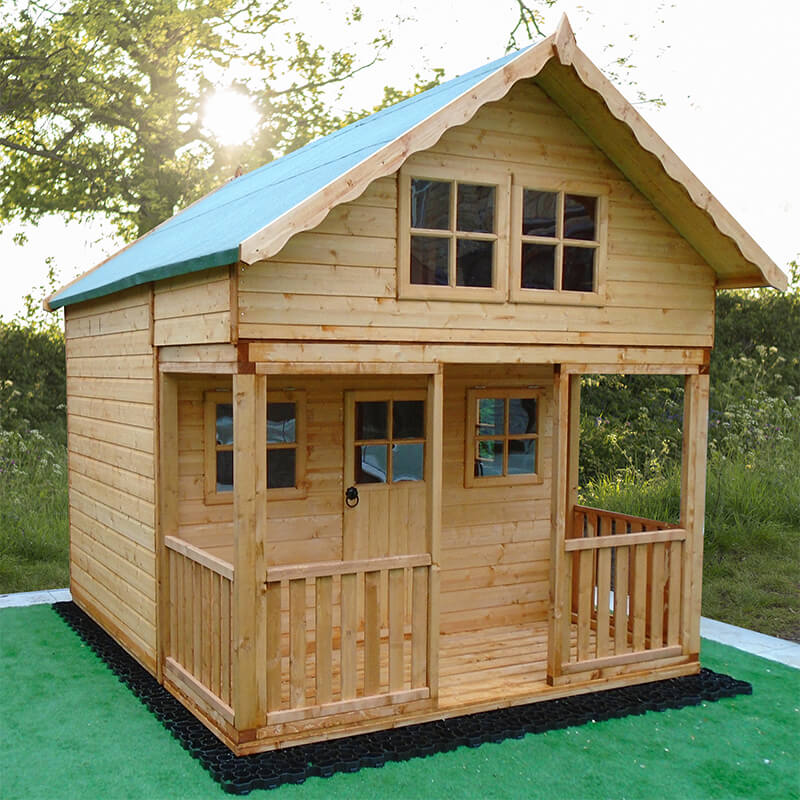
In practical terms, 70 sq ft playhouses often suit:
- Shared play for two or three children without everything feeling squeezed.
- Role-play setups such as shop, café, home, classroom or post office themes.
- Seating and table space for drawing, tea parties or board games.
- A bit of storage for baskets, books, soft toys or outdoor props.
If you are comparing size options, this category usually feels like the point where a playhouse becomes a destination rather than just a hidey hole.
Shapes That Change the Feel of the Space
The shape of a playhouse changes how the inside is used, even if the floor area is the same. A rectangular playhouse is often the easiest to furnish, because walls run straight and furniture can sit neatly along them. That can be useful if you want a proper shop counter, a toy bench or a small table in the middle.
A square layout tends to feel more open and balanced, with easier movement around the centre. It works well for mixed play, where the room needs to switch between sitting, standing and storing toys. This shape also tends to suit children who enjoy changing the game often, because there are fewer awkward corners.
There are also corner-facing or offset designs, where the structure is arranged to fit a garden edge or a more awkward site. These can make a 7 m² playhouse feel less intrusive outdoors, while still giving a generous internal space. The best shape for you usually depends on whether the playhouse is meant to sit against a fence, stand as a feature, or tuck into a quieter part of the garden.
From Storybook Cottage to Modern Garden Room
One of the main attractions in this size range is the choice of style. A storybook cottage style often uses pitched roofs, neat windows and a more traditional feel, which suits gardens where the playhouse is meant to look homely and inviting. These designs tend to work well for make-believe play, because the look already suggests a little house with its own life.
A modern playhouse style is usually cleaner in line, sometimes with larger windows or a simpler outline. That can feel more contemporary and may suit a garden where you want the structure to blend with a sharper, less rustic look. It can also help the inside feel brighter.
Then there are barn-inspired or cabincore styles, which sit somewhere between playful and practical. These often feel good in family gardens because they look sturdy without being severe. If you prefer a more decorative finish, some playhouses in this category are detailed with flower boxes, shutters, awnings or a small verandah. Those extras are not only about appearance; they can help define the entrance and make the space feel more like a destination.
Why Size Matters When More Than One Child Is Involved
Many smaller playhouses look fine until two children want to be inside at once. At 7 m², the room to negotiate, share and rearrange is noticeably better. This is especially useful if siblings of different ages use the same space. One child may want to role-play, another may want to sit and draw, and both can do that without the whole thing turning into a squeeze.
That extra room also means the playhouse can handle different forms of play over time. A younger child might use it for dolls and make-believe meals, while an older child may want a den, a reading spot or a small social space. In other words, the size gives the playhouse a longer useful life. It does not force one single kind of play, and that is a real advantage when you are choosing something that should stay relevant beyond the first excited week.
Features Buyers Often Notice First
When looking at playhouses in this category, the details matter a lot. A few small changes can alter how usable the space feels. Window placement, for example, affects light and sight lines. More windows can make the interior feel more open and easier to supervise, while a smaller number of carefully placed openings can give the house a cosier, den-like feel.
Door width is another point that is easy to overlook. A slightly wider entrance helps when children carry toys, trays or cushions inside. It also makes the playhouse easier to use for role-play, because coming and going feels less awkward. If there is a verandah, step or small porch, that changes the transition between garden and play space and can create a natural “shop front” or “front door” moment for imaginative games.
Inside, buyers often compare whether the playhouse has:
- Open floor space for flexible play.
- Built-in bench seating for reading or chatting.
- Partitioned zones that separate play areas.
- High eaves or a loft-like feel to make the room seem less boxed in.
These are the sorts of details that decide whether the playhouse feels merely adequate or genuinely useful day to day.
Material Choices That Affect the Look and the Feel
In this size range, the material and finish help define the whole character of the playhouse. Wooden playhouses are a common choice because they suit garden surroundings and give a warmer, more house-like appearance. Timber also works well with traditional and cottage shapes, and it tends to feel less like an object dropped into the garden and more like part of it.
There are also differences in the way surfaces and joinery are detailed. A smoother, more refined finish can suit a contemporary design, while a more textured look leans into the classic playhouse feel. Buyers often notice whether windows are clear or decorative, whether the roof line is neat and simple or more characterful, and whether the structure feels balanced from all sides. In a 7 m² playhouse, these visual choices matter because the building is large enough to be seen as a feature.
If you are comparing types, think about the overall impression you want. Do you want a little house that looks like a child-sized version of a family home, or something more like a garden retreat with a playful twist? Both can work well at this size, but they give very different moods.
Useful Differences Between Open-Plan and Zoned Interiors
Some playhouses in the 70 sq ft / 7 m² range are essentially open-plan, which gives children the freedom to invent the layout each time they use it. This suits children who enjoy moving furniture around, turning chairs into market stalls or shifting from café to castle without much fuss. It also makes cleaning up toys easier to understand because the room is simple and not overly chopped up.
Other designs use zoned interiors. That might mean one side for sitting, one for play, and another for storage or pretend cooking. These layouts can make the playhouse feel more structured, which is handy if you want to reduce clutter or create a more defined game. A zoned interior also helps when the playhouse is shared, because each child can understand where things belong.
There is no single right answer here. The difference is more about how your children play. If they like chaos and reinvention, open space works. If they like setting scenes and keeping things in order, zones may be the better fit.
Planning the Garden Position Without Guesswork
Even though this category is about the playhouse itself, the position in the garden plays a part in whether it works properly. A 7 m² structure needs enough surrounding space not just for the footprint, but also for access, movement and the feeling that it belongs there. Think about how children will reach it, whether there is a path of sorts, and whether it sits in a spot that feels used rather than tucked away and forgotten.
It is also worth considering the view from the house. A playhouse with attractive windows or a tidy roofline can become a pleasant focal point, not just a functional item. Some buyers prefer it near the main seating area so children can play within sight, while others place it slightly apart to give it the feel of a private den. Both approaches can work; the difference is how much independence and visibility you want.
A helpful tip: if you are comparing a square and rectangular structure, sketch the outline on the ground before deciding. That often makes the size feel much more real than looking at figures alone.
What Makes This Category Worth Considering
There is a good reason buyers keep coming back to playhouses around 70 sq ft / 7 m². They offer a middle ground between compact and full-on garden building. They are big enough to support proper imaginative play, but they do not ask you to give over a huge part of the garden. That makes them a practical choice for families who want something usable, not just decorative.
This size also tends to feel more settled as children get older. A tiny playhouse can quickly become too cramped or too juvenile, while a 7 m² model can adapt into a den, reading house or social space for a longer stretch of time. It gives you more room to say yes to different uses, which is often what buyers really want from the start.
Small Details That Help You Choose Better
When browsing this category, it pays to look beyond the first cute photo. Ask yourself how the internal space is likely to be used on an ordinary afternoon. Will there be room for a mat, a chair and a toy basket? Is the entrance easy for children to use without climbing or squeezing? Do the windows suit supervision and natural light, or would the room feel shut in?
Another useful point is whether the style supports the kind of play your children already enjoy. A shopfront look might be ideal for role-play, while a more cabin-like form may suit quiet time and den games. If the playhouse is meant for shared use, consider how each child might enter the space and where they might naturally settle inside. It is a small thing, but it often decides how often the playhouse gets used.
In short, a Playhouse 70 sq ft / 7 m² is a category for buyers who want more than a basic hideaway. It combines usable space, recognisable style and enough flexibility to keep children interested. That mix is what makes it such a sensible option when the goal is not just to buy a playhouse, but to choose one that actually becomes part of family life.
[Sassy_Social_Share]