
Playhouses 60 sq ft / 6 m² - Best Deals in UK!
Showing the single result

Playhouses 60 sq ft / 6 m² offer a smart, child-sized footprint for gardens where space needs to be used well: enough room for role play, reading nooks and small friends, without taking over the whole plot.
A Little House That Fits the Garden Rhythm
A 60 sq ft / 6 m² playhouse sits in a useful middle ground. It gives children a proper enclosed space to call their own, yet it stays compact enough for many family gardens, side plots and shared outdoor areas. This size often feels more intentional than a tiny hideaway and less demanding than a full garden building. For buyers, that balance matters. You get a play space that can become a shop, a café, a den, a story hut or a mini home base, while still leaving room for planting, lawn space and movement around it.
What makes this category interesting is the way the footprint shapes the experience. At around 6 m², the interior can support real imaginative play with a little table, storage crates, toy kitchen pieces or a bench, depending on the layout. It is not about cramming in everything; it is about choosing a form that suits how children actually play. That is where the differences between designs begin to matter.
Shapes That Change the Feel Inside
The shape of a playhouse has a direct effect on how it is used. A square or near-square plan usually gives the cleanest internal layout, making it easier to place a small table, two seats or role-play props without awkward corners getting in the way. Rectangular versions often feel a bit more like a room, which can suit longer benches or a little serving counter along one wall. If the shape is more compact at one end and wider at the other, it may create a cosy corner for sitting and a clearer open area for movement.
Bestseller der Kategorie Playhouses 60 sq ft / 6 m²
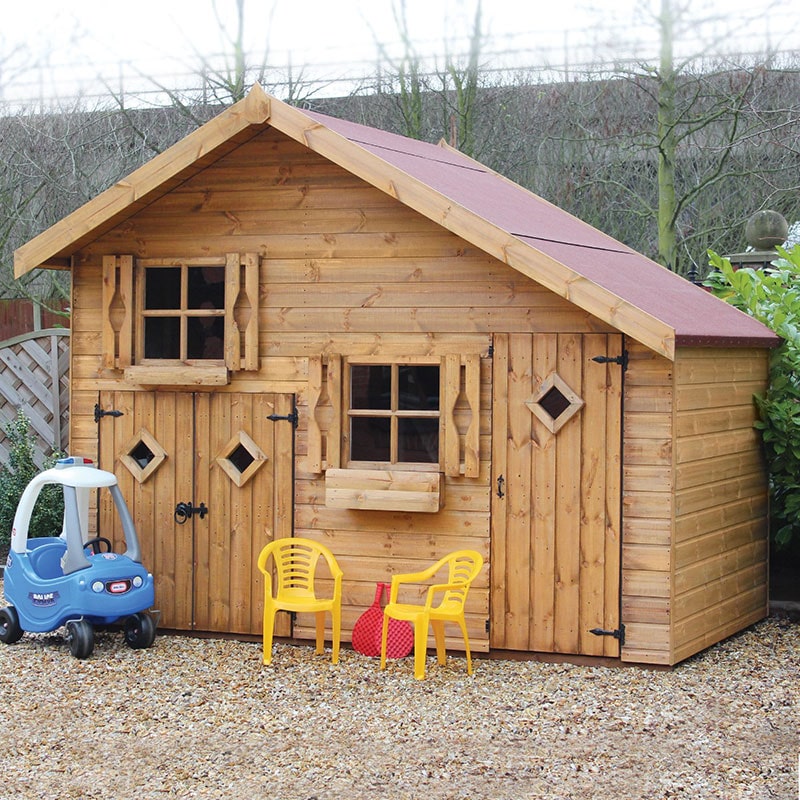
Some 60 sq ft playhouses are built with a simple shed-like outline, while others use a more traditional cottage look with a front porch or roof overhang. The porch does not always add much enclosed space, but it can change the way the playhouse is used. Children often treat a porch as a threshold area: a place to leave toy shoes, set up a pretend shop queue, or sit with a drink and talk to someone outside. That small transition zone can make the whole building feel more layered.
There are also raised playhouse designs, where the floor sits above ground level on a platform. These can create a lookout feeling and, in some cases, a small shaded area underneath for extra outdoor play. On the other hand, ground-level playhouses can feel more accessible and open, especially for younger children. The right choice depends on the garden and the age range you want to support.
Cottage, Cabin, Tower: Different Types, Different Stories
Within the 60 sq ft / 6 m² category, the main subtypes tend to be less about brand and more about structure and style. A cottage-style playhouse usually has a familiar domestic look: pitched roof, window openings, a front door and maybe shutters or a small veranda. It suits children who enjoy home-based role play, such as cooking, serving tea or looking after dolls and teddies. The appeal is in the recognisable shape; it feels like a small version of a family home.
A cabin-style playhouse has a sturdier, more rustic character. It often works well in gardens that already lean towards natural timber, gravel paths or informal planting. Cabin styles can feel a bit more neutral, which is useful if you want the playhouse to support a wide range of play themes rather than only one obvious storyline. A child might turn it into a woodland hut one week and a ticket office the next.
Tower or raised lookout playhouses bring a more adventurous angle. Even when the footprint remains at 60 sq ft, the vertical design changes the whole atmosphere. Children often like the sense of height, the staircase or ladder, and the fact that they can look out over the garden. These designs can be especially appealing where the playhouse needs to feel like an event rather than just a room.
There are also multi-zone playhouse formats where the enclosed room is paired with a porch, deck or open-fronted extension. These are useful if you want the category to do more than one job: sheltered indoor play, plus a semi-open spot for chatting, shoes, toy prams or outdoor tea sets. In practice, that kind of difference can matter more than people expect.
Why 60 sq ft Feels So Useful in Real Gardens
The strength of 6 m² playhouses is not only the size itself, but the way that size tends to fit a family routine. It is large enough for two or three children to share, depending on ages and how they play, yet compact enough that the garden still feels like a garden. Many buyers are trying to avoid the feeling of placing a building that dominates the whole plot. With this footprint, the playhouse can become a clear destination without swallowing the space around it.
Another advantage is flexibility. In a smaller garden, a 60 sq ft model can sit neatly along a boundary, at the end of a lawn or within a corner that was not doing much else. In a larger garden, it can be one part of a wider play area, alongside a sandpit, a climbing frame or a small seating zone for adults. Because the footprint is moderate, it often leaves more freedom for future changes. You are less locked into one layout.
For families with mixed ages, this size can also work well because it is not too enclosed. Older children still have enough room to make it their own, while younger children are not overwhelmed by a vast interior. It can become a stable meeting point in the garden, which is often the real aim. A good playhouse gives shape to play without needing to tell children exactly how to use it.
Inside the Footprint: What Works and What Gets in the Way
When looking at a 60 sq ft playhouse, the interior arrangement matters a lot. A square layout can help with central floor space, while a rectangular one may suit a clearer division between play and storage. If the playhouse has windows on more than one side, it often feels more open and useful, because children can keep an eye on the garden and still feel tucked away. Window placement also affects how role play unfolds. A serving window can turn the playhouse into a café, a market stall or a ticket booth with very little effort.
Some buyers prefer a more minimal interior, with no fixed furniture, because it gives children the freedom to invent the layout themselves. Others look for built-in benches, a ledge under the window or a small internal shelf. The choice depends on how the playhouse will be used. Built-in features can save floor space, but too many of them may limit imaginative flexibility. This is one of the main differences to weigh up when comparing options.
The height of the doorway is worth checking too. A door that is too small may suit toddlers but feel awkward as children grow, especially if the playhouse is meant to last through several stages. A decent doorway and a little headroom help the space feel usable for longer. It sounds simple, but this kind of detail often decides whether a playhouse feels like a favourite hideaway or just something they grew out of quickly.
Features That Support Play, Not Just Looks
People often first notice the style, but the best-suited features are the ones that support actual play patterns. Windows with shutters or open counters can create obvious points for interaction. A front porch can mark the entrance to an imaginary house, shop or post office. A side opening can make the building feel less closed off, which may help if several children want to move in and out more easily.
Roof style makes a difference too. A pitched roof usually gives a classic look and can help the playhouse feel more like a real little building. A flat or gently sloped roof can suit a more modern garden scheme and may give a slightly cleaner outline. Neither is better in every case; they simply set a different tone. If the garden already has strong lines and simple planting, a sharper roof profile may blend in. If the aim is a storybook feel, the pitched style often fits better.
Materials and finish also shape how the category is perceived. Natural timber gives a familiar, warm look and can feel more in keeping with planting and lawn areas. Painted finishes can make the playhouse more distinct and playful. Some people prefer a natural look because it sits quietly in the garden, while others want a visible focal point that children can spot from across the lawn. Both approaches are valid, and the difference is mostly about how much presence you want the playhouse to have.
Small Details, Big Difference for Buying
When comparing playhouses 60 sq ft / 6 m², it helps to think in terms of use rather than just appearance. Ask whether the layout suits one child’s private den, a shared role-play room, or a more social hangout space. A central open floor may be more useful than decorative extras if children like changing the game often. On the other hand, if the main appeal is pretend domestic play, a little counter, window ledge or porch detail can make the whole thing feel more believable.
Think about access, too. A straightforward entrance is usually better for a wide age range. If the playhouse is slightly raised, the steps or ladder should match the child’s confidence and age. That is not only a practical issue, it also affects how often the building gets used. If access feels fiddly, children often drift away from it. If it feels easy and inviting, they return to it again and again.
Placement in the garden matters in a similar way. A playhouse can work best where children can see part of the main garden activity but still have a sense of being in their own zone. Tucked too far away, it can feel disconnected. Put right in the middle, and it can interrupt the flow of the garden. The sweet spot is usually somewhere with a clear path to it and a bit of breathing room around it.
Which Style Suits Which Kind of Play?
If the main goal is pretend home play, the cottage type often makes the most sense. It offers an immediate script: kitchen, family life, tea parties, little guests, bedtimes and secret plans. If the children are more drawn to adventure or hide-and-seek, a cabin or tower form may be a better fit because it feels less like a house and more like a base. That difference can be important when choosing between styles that otherwise appear similar in size.
For children who like group play, a more open or porch-based layout can be useful because it supports turn-taking. One child can sit inside while another plays outside the serving window, or several children can gather on the porch without crowding the interior. If the playhouse is likely to be used by siblings with different ages, this kind of multi-level interaction can reduce arguments, which is no small thing.
For quieter play, a compact interior with a clear enclosed feel may be more appealing. Some children like a space that feels separate from the rest of the garden, somewhere they can read, collect toys or make up small worlds without much interruption. In that case, a simpler cottage or cabin shape often works better than a highly open design.
Useful Pointers Before You Choose
Before buying, it helps to check the real usable footprint, not only the advertised one. Sometimes the external dimensions include overhangs, porches or roof edges that change how the building sits in the garden. A 60 sq ft playhouse might look neat on paper, but the surrounding space still matters if you want room for access and play around it.
It is also worth thinking about the type of play your child already enjoys. If they love make-believe shops, houses and cafés, choose a form that offers obvious serving points and a sheltered front. If they prefer explorers’ dens and secret clubs, a more cabin-like or raised shape may be a better match. The wrong style can still be fun, of course, but the right one tends to get used much more.
And one small practical tip: if several children will share it, favour the layout with the least awkward corners and the most open floor space. That makes a bigger difference than many shoppers expect. In this size category, a little bit of thought about shape, access and window placement goes a long way. It is often those details that make a playhouse feel like a proper part of family life, not just another garden item.
A Garden Feature That Feels Personal
What makes playhouses 60 sq ft / 6 m² so appealing is the mix of scale and imagination. They are compact, but not tiny. They can be simple, but not plain. They offer enough room for children to build their own world, while still fitting into a garden without forcing every other element to give way. For buyers, that means more than a structure in the corner. It means a place that can keep changing with the children, the seasons and the games they invent.
Whether you lean towards a cottage look, a cabin style, a raised tower form or a more open porch-led design, the best choice is the one that matches both the garden and the way your children play. That is where this category earns its place: not by shouting for attention, but by giving a small, well-proportioned space that children can make their own.
[Sassy_Social_Share]