
Playhouses 60 sq ft / 5 m² - Best Deals in UK!
Showing the single result

Playhouses 60 sq ft / 5 m² offer a practical size for imaginative play, giving children room for make-believe, seating and storage without taking over the whole garden.
A Handy Size That Feels Manageable
A 60 sq ft / 5 m² playhouse sits in that useful middle ground: roomy enough for proper play, but still compact enough for many gardens. It is a size that can work as a children’s den, a mini shop, a story corner or a pretend home, while staying visually balanced in the outdoor space. For families comparing options, this footprint often feels easier to place than a larger cabin-style building, and more useful than a tiny hut that only fits one child at a time.
Because the floor area is defined, it is simpler to plan around. You can think in terms of single-level layouts, a small veranda, a doorway that feels generous, and enough interior space for a table, a bench or a few toy boxes. That makes this category attractive for buyers who want a playhouse with presence, but not one that dominates the garden.
Shapes That Change the Way Children Play
One of the interesting things about 5 m² playhouses is how different shapes can change the whole feel of the space. A square or near-square design usually gives the most straightforward interior layout, with furniture easier to arrange and less wasted corner space. This suits a pretend kitchen, book nook or general play room style.
Bestseller der Kategorie Playhouses 60 sq ft / 5 m²
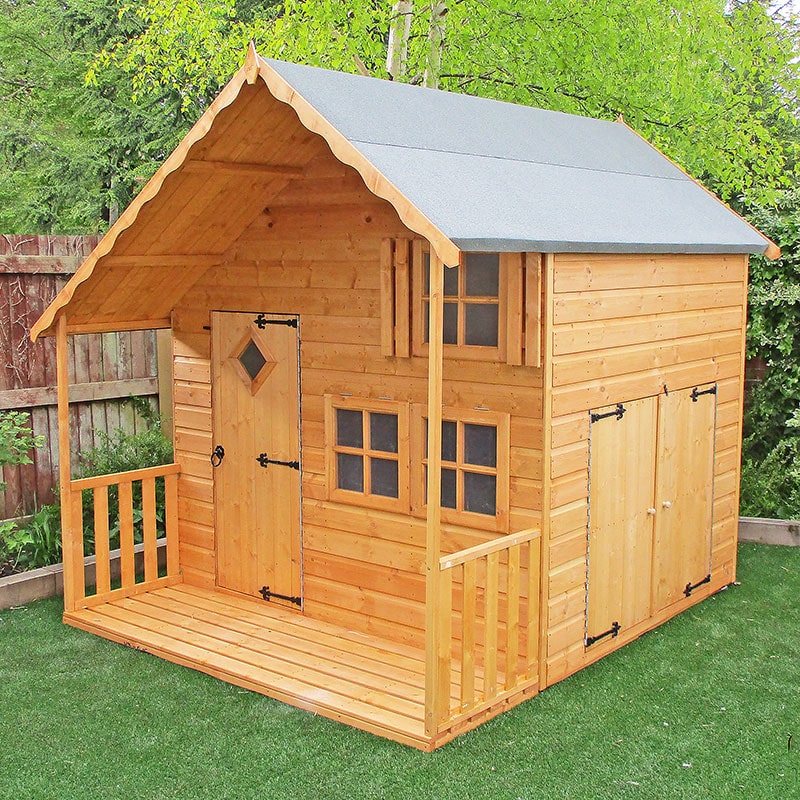
A more rectangular shape can feel longer and better for dividing the inside into “zones”, such as one end for sitting and the other for imaginative games. It can also work nicely with a front veranda or step area. Meanwhile, a narrower footprint with a pitched roof often creates a cosy, cottage-like feel, especially if the playhouse is meant to look like a little home rather than a play shed.
Some buyers are drawn to corner-friendly layouts, which can help a playhouse sit neatly against a fence line or in an awkward part of the garden. Others prefer a more open front, where the entrance and windows give a friendly, social feel. These shape differences matter because they influence not only appearance, but how many children can use the space at once and how easy it is for them to move about inside.
From Cottage Charm to Modern Lines
The 60 sq ft / 5 m² category covers a range of looks, and that variety is often part of the appeal. A traditional cottage-style playhouse usually has a pitched roof, small windows and a homely silhouette that children instantly recognise as “their house”. This style works well if the aim is imaginative roleplay, such as tea parties, shop games or family-style pretend play.
A modern playhouse, by contrast, often has cleaner lines, a more minimal profile and larger openings. It can feel brighter inside and may suit gardens where the outdoor furniture and landscaping are already fairly contemporary. The difference is not just visual. Modern forms can feel more open, while cottage forms tend to feel tucked away and enclosed, which some children love because it gives them a proper hideout.
There are also treehouse-inspired or raised-looking designs within this size range, even if they are not actual treehouses. These often include a slightly elevated entrance, a compact balcony or a tiny porch. That little bit of height can make the playhouse feel more adventurous without needing a much larger footprint.
Why 60 sq ft Works So Well for Shared Play
The biggest advantage of a 5 m² playhouse is that it can support shared play more comfortably than smaller options. Two children can often sit, stand and move around without constantly bumping into each other, and there is usually enough room for changing roles during imaginative games. That is especially useful when the playhouse is likely to be used by siblings or visitors rather than just one child.
This size also allows for a more varied interior setup. Instead of filling the whole space with one toy, you can create a proper mini world: a table, a few cushions, a shelf for roleplay items, maybe a small counter for shop games. The added room gives the playhouse a sense of purpose rather than just being a shelter. It feels like a place where children can actually do something.
For buyers thinking about longer-term use, the extra floor area can make the playhouse feel useful across different ages and stages. Younger children may use it as a pretend home, while older ones may turn it into a reading den, a hobby nook or a quiet retreat. That flexibility is one reason this category stands out when compared with smaller play shelters.
Features That Make a Difference Indoors
Inside a playhouse of around 60 sq ft, the useful features are often the ones that help the space feel comfortable, organised and easy to enjoy. A good doorway matters because it affects how freely children can go in and out, and whether the playhouse feels inviting rather than cramped. Window placement matters too, not only for light, but for the way children can look out and engage with the garden around them.
Some playhouses in this size category are designed with a more open interior, while others include small internal divisions or built-in details that create a home-like feel. A window box-style opening, internal ledges or a modest seat can add a lot to the play value without making the space feel crowded. Even little things like a front opening, side window or half door can change how children use the structure.
It is also worth noting the difference between a playhouse that feels like a blank canvas and one that already has a strong layout. A blank canvas gives more freedom for decorating with toys and pretend accessories, while a more defined layout can guide the play towards certain themes, such as home life, shop play or garden café roleplay. Neither is automatically better; it depends on whether the buyer wants flexibility or a more set character.
Porch, Veranda or Straight-In Entry?
In this category, the entrance style can have a big effect on both use and appearance. A straight-in entry keeps the footprint compact and is often the most practical choice if the aim is to maximise indoor play space. It gives more room inside for furniture and movement, and it can make the playhouse feel tidy and enclosed.
A small porch or veranda, however, adds another layer of play. Children often treat it as a threshold zone: somewhere to sit, wait, hand out imaginary orders or put toys down before going in. It can also make the playhouse feel more like a tiny home, with an outdoor edge that softens the look of the building in the garden. The trade-off is that a porch takes up part of the overall size, so the inside may feel a bit tighter than a purely enclosed design.
Some buyers prefer this because it gives the playhouse character. Others want every square metre to count indoors. That is one of the clearest differences in the 60 sq ft range: whether the design focuses on usable internal area or on extra charm at the front.
Window Choices That Shape Light and Mood
Window style changes more than just the look of a playhouse. In a 5 m² space, windows help define how open or tucked-away the room feels. Larger windows tend to make the interior brighter and more visible from the garden, which can be useful if children want a more sociable, café-like or shop-like setting. Smaller windows often create a snug, secret-den atmosphere that suits quieter pretend play.
There is also a difference between symmetrical windows and more playful, uneven placement. Symmetry tends to feel tidy and house-like, while offset windows can make the playhouse look more whimsical. A front window can create a strong “face” to the building, while side windows help spread light deeper into the space. For a category like this, the window arrangement can be a deciding factor for families choosing between a storybook cottage and a more modern garden building.
Where safety glazing or acrylic panels are used, the playhouse may feel more open and practical. That is less about decoration and more about letting the structure stay friendly to everyday use. In this size range, the balance between light, privacy and roleplay atmosphere is often what matters most.
Materials and Finish: What Buyers Usually Compare
Although styles vary, the finish of a playhouse in this category tends to be judged on how it looks in the garden and how it feels to use. A natural timber finish gives a warm, classic feel and blends well with planting, lawns and fences. Painted finishes can make the playhouse feel more characterful and immediately “set” into a theme, whether that is cottage, seaside, country or simple contemporary.
Some buyers prefer a more neutral look because it fits changing tastes and allows children to decide the play theme later. Others like a stronger decorative finish, because it makes the playhouse look finished from day one. The difference matters: a plain finish can feel adaptable, while a more styled finish can feel more like a destination in the garden.
Texture also plays a part. Smooth cladding gives a neater appearance, while more traditional board-and-batten or overlap styles give a classic garden-building character. This is not just visual detail; it changes the mood of the playhouse. One may feel polished, another more rustic. Neither is right for everyone, but it helps to know what you’re after before choosing.
Useful Tips When Choosing the Right Version
When comparing playhouses 60 sq ft / 5 m², it helps to think in practical play terms rather than only measurements. First, consider how many children will use it regularly. A single child can enjoy almost any version, but if siblings or friends will share it, an open layout and sensible doorway size become more important. A compact interior can still work well, but it needs to be thoughtfully arranged.
Second, think about the type of play you want to encourage. A cottage-style building with a little porch suits roleplay and pretend home games. A cleaner, simpler shape may work better as a reading den or general hideaway. If the goal is a small “hub” for multiple kinds of play, choose a layout that leaves the middle free and avoids too many fixed features.
Third, look at how the structure will sit in the garden. A square design can be easier to place in a corner, while a longer footprint may suit a boundary line or open lawn. The best choice is often the one that feels natural where it stands, not the one that just happens to be available. That sounds obvious, but people do sometimes forget it.
What Sets This Category Apart from Smaller Playhouses
Compared with smaller playhouses, the 60 sq ft / 5 m² size tends to feel less temporary. There is more room to create a proper setting, so children often treat it as a place with rules, roles and routines. That can make the playhouse more engaging over time, because the same space can host many different games without needing to be rearranged every five minutes.
Smaller playhouses may be easier to tuck into very tight spots, but they can also feel limiting once more than one child wants to use them. This category gives a bit more breathing space, which means less frustration and more room for pretend furniture, cushions and accessories. It does not mean the playhouse has to be oversized or bulky; it just feels more settled and intentional.
That middle-size character is often what makes this category appealing. It has enough scale to matter, but not so much that it starts to feel like a full garden building. For buyers trying to find the line between toy and outdoor room, this is where the balance often lands.
Buying with the Garden in Mind
One good way to judge a 5 m² playhouse is to imagine how it changes the garden from the child’s point of view. Does it create a special corner? Does it sit comfortably beside planting, a patio or a grass area? Does it look like part of the space, or like something that has been squeezed in? Those questions matter because a playhouse that feels placed with care usually gets used more often.
It also helps to think about the visual weight of the design. A tall roofline may give presence without adding too much floor area. A lower profile can look calmer and less imposing. If the garden already has a lot going on, a simpler form may fit better. If the space is plain, a more characterful cottage shape can bring a stronger focal point. The category offers enough variety to suit both approaches.
The Little Details Children Notice First
Children often respond to details adults barely register. A half door, a tiny window, a front opening or a small porch can all become part of the story straight away. In a playhouse of 60 sq ft, these features matter because they help the building feel like a place with personality. The right combination of openings and layout can encourage a child to make the playhouse their own very quickly.
That sense of ownership is part of the appeal. A well-sized playhouse gives children a place that feels separate from the house but still familiar. It can become a shop, a café, a school, a pirate hideout or just a quiet place to sit with a book. The category is strong because it gives enough room for imagination without demanding a huge footprint in return.
Why This Size Often Feels Like the Right Compromise
In the end, Playhouses 60 sq ft / 5 m² are appealing because they offer a compromise that does not feel like a compromise. There is room to play, room to share and room to arrange the interior in a way that suits the children using it. At the same time, the overall footprint stays modest enough for many outdoor spaces.
If you are comparing shapes, styles and layouts, this category gives you a useful spread: cottage or modern, square or rectangular, open or enclosed, porch or no porch. Those choices change the play experience in real ways, so it is worth taking a moment to picture how children will actually use the space. A good playhouse is not only something to look at; it is somewhere they can return to again and again because it feels like theirs.
- Compact but usable size for shared pretend play
- Flexible layouts for reading corners, roleplay or toy storage
- Different shapes to suit corners, lawns or boundary spaces
- Porch and window options that change the feel of the playhouse
- Varied styles from classic cottage charm to cleaner modern lines