
Playhouses 50 sq ft / 5 m² - Best Deals in UK!
Showing the single result

Playhouses up to 50 sq ft / 5 m² are a neat fit for smaller gardens, giving children their own space without taking over the lawn. Choose compact wooden, raised or tower styles, with ideas on sizes, layouts and play features.
A Small Footprint, A Proper Little World
A playhouse up to 50 sq ft / 5 m² brings a child-sized space into the garden without asking for a huge patch of ground. That size limit matters: it keeps the structure compact enough for courtyards, modest lawns, and mixed-use family gardens, while still leaving room for play around it. For many buyers, this category is the sweet spot between a simple den and a full-on garden building.
Because the footprint is controlled, these playhouses often feel more thoughtful in design. You can find single-room cabins, small veranda styles, raised treehouse-inspired designs, and compact cottage shapes that look like they belong in the garden rather than sitting on it like an afterthought. They can be chosen to suit the age of the children, the shape of the space, and how visible you want the structure to be from the house.
Shapes That Change the Feel of the Garden
Even within a small size, the shape makes a big difference. A square playhouse tends to make the best use of the floor area, so it feels practical inside. A rectangular layout can give a longer front wall, useful if you want a door plus one or two windows, or maybe a little outside deck. A corner design is a clever choice when the garden has a tight layout, because it can sit neatly where a boundary meets a fence line.
Bestseller der Kategorie Playhouses 50 sq ft / 5 m²
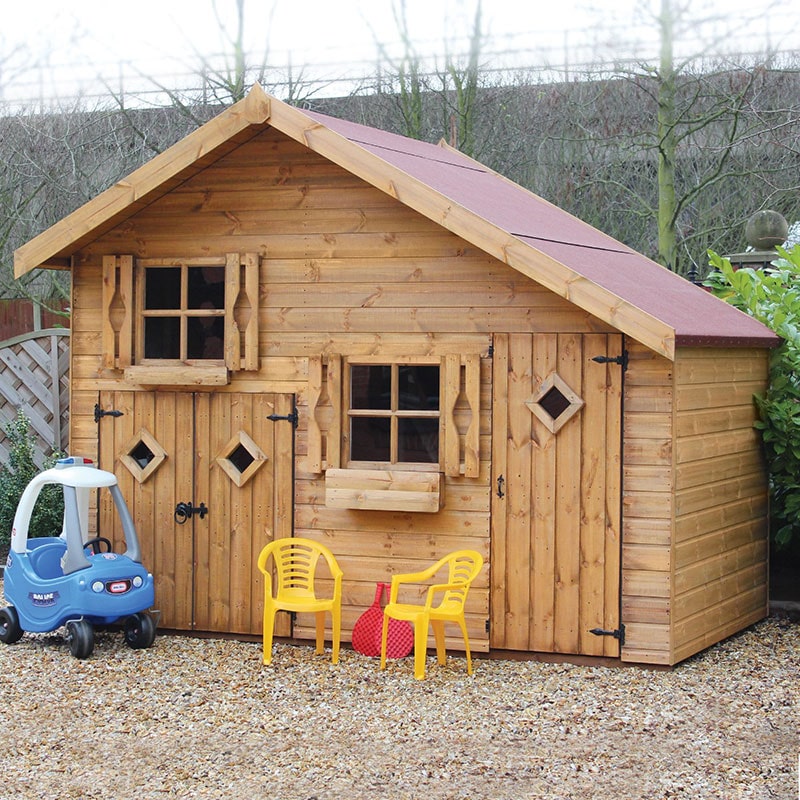
Then there are the more characterful forms. Cottage-style playhouses often have pitched roofs, window boxes, and a homely look. Tower-style units use height to create interest, which can make a smaller footprint feel more exciting. Playhouse and slide combinations are another route, especially where the house itself is compact but still needs a fun exit point. The main difference is not only appearance; it is also how children move through the space and how much room is left around it.
Wood, Panels or Mixed Builds?
In this category, the material choice affects the whole buying decision. Wooden playhouses are the most familiar fit for a garden setting, especially when the aim is to blend with planting, fencing, and timber furniture. They usually have a warmer, more natural feel and can suit both traditional and modern gardens. Panel-built playhouses are often straightforward in shape and can give a tidy, defined finish. Mixed-material designs may use timber for the main body with added details like glazing, railings, or a small deck.
The real difference is in atmosphere and form. A solid timber cabin-style playhouse feels enclosed and private, which some children like because it turns into a hideout or make-believe shop. A lighter, more open design with windows and a front opening can feel social and lets the garden stay visually connected to the play area. If the garden is already busy with planting, seating, or storage, a simpler shape can be the better choice. If the aim is to make the playhouse the focal point, a more detailed cottage style often does that without needing a bigger footprint.
What Fits Inside 50 sq ft / 5 m²?
This size is not huge, but it is enough for a proper play setup. Inside, a playhouse in this range can usually support role play corners, a small table and chairs, toy storage, or a soft floor area for reading and quiet play. The layout matters more than people expect. A square room lets children move around more freely, while a narrower layout may feel better if you want one side kept open and one side used for sitting or shelving.
For younger children, the appeal is often the feeling of being enclosed in their own little place. For older children, the space becomes more about using it as a den, a pretend café, a shop, or a secret meeting spot. That is why details like front doors, low windows, and internal headroom matter. A playhouse can look very small from the outside and still be used in a surprisingly flexible way if the layout is sensible.
Styles That Work in Smaller Gardens
If space is tight, some styles naturally work better than others. A raised playhouse can free up the ground beneath and give the feeling of a treehouse without needing a large footprint. A compact cottage looks friendly and often suits family gardens where the house is close to the boundary. A modern box-style playhouse can suit contemporary outdoor spaces, especially if the garden already has clean lines and simple planting. And if you want charm without fuss, a simple cabin form does the job with less visual weight.
The differences are mainly about presence and atmosphere. A cottage shape tends to read as playful and decorative. A cabin shape feels more pared back and practical. A raised design creates a sense of adventure, but may need more thought around access and visibility. A low, ground-based house is easier for younger children and can feel less dominating in the garden. None of these is right for everyone, which is exactly the point of the category: there is enough variety to match different family needs.
Why This Size Often Makes Sense
One of the main advantages of a playhouse up to 50 sq ft / 5 m² is how easily it fits into real gardens, not just showroom ones. It can sit beside a lawn, tuck near a fence, or slot into a corner without forcing the rest of the garden into compromise. That makes it a good option where children’s play still needs to share space with grown-up seating, planting, or a path.
Another plus is the balance between presence and practicality. A larger structure can dominate the garden, while a tiny one may feel more like a toy than a place. This size tends to land in the middle. It feels like a dedicated destination, but it does not overwhelm. For many families, that balance is what makes the purchase feel sensible rather than indulgent, even if the children will probably see it as the best bit of the garden, obviously.
Details That Make a Difference
It is often the small design features that decide whether a playhouse feels basic or properly thought through. Windows let light in and help the space feel less boxed in. Shutters or decorative frames add character and can change the look from plain to storybook-like. A front porch or tiny veranda gives children somewhere to sit with shoes off, line up toys, or make the house feel more like a little home.
Also worth looking at is the entrance. A single door gives a tighter, den-like feel. A wider opening can make it easier for children to move in and out during play. Some designs use double-front styling or an open serving hatch effect, which is handy for role play and makes the playhouse feel more interactive. If the aim is imaginative play, those front-facing details really matter. They help the playhouse work as a shop, café, ticket booth or mini house, not just as a shell.
Picking the Right Layout for How Kids Play
Different play habits call for different layouts. If children like quiet play, reading, or setting up dolls and figures, a simple enclosed room may be enough. If they enjoy pretend play with friends, a more open front or multi-window layout can make the space feel sociable. For children who like movement and a bit of drama, a raised or stepped design creates a stronger sense of entering a special place.
The best layouts are the ones that support repeat use. A child might use the playhouse as a home one day, a shop the next, and a hideaway after that. The more clearly the space is defined, the easier that becomes. A good compact design does not need lots of extras; it just needs enough shape and access points to encourage a few different ideas. That is where these smaller playhouses can really earn their place in the garden.
Useful Buying Checks Before You Choose
Before choosing a playhouse in this category, it helps to measure the actual ground space, not just the open area at a glance. The footprint needs to suit the garden, but so does the space around it. You will want room for approach, visibility from the house, and any safe area children will use while coming and going. A structure that technically fits can still feel awkward if it is squeezed into the wrong spot.
It is also sensible to think about height proportions, roof style, and how enclosed the front feels. A steep roof can make a compact house look taller and more striking. A lower roof line can keep the build discreet. More glazing can brighten the interior, while smaller openings can make it feel tucked away. There is no single correct answer, only a better match for your space and the way the children are likely to use it. And yes, the difference is pretty noticeable once it is in the garden.
Ideas That Make a Small Playhouse Feel Bigger
Without increasing the footprint, a few design choices can make a compact playhouse feel more generous. Front-facing windows help bring in light and create depth. Vertical cladding can make the structure seem taller. A porch or mini deck extends the usable area a little and gives the house a proper threshold. Even the roof line makes a difference: a gable roof often gives a stronger sense of height than a flat one.
Inside, a simple open plan works better than trying to force too many fixed features into a small room. That is especially true in a 50 sq ft / 5 m² limit. If there is too much built-in detail, the space can feel cramped. If the layout is clean, children can bring in whatever game they like. That flexibility is one of the quieter strengths of this category, and it is easy to miss if you only look at the outside styling.
A Play Space That Still Leaves Room for the Rest of the Garden
For buyers who want the garden to keep its grown-up functions, this category makes a lot of sense. A compact playhouse gives children a place of their own while leaving enough room for a table, planting beds, a path, or even a patch of lawn for ball games. That can be the real selling point: not just the playhouse itself, but the way it lets the rest of the outdoor space work better.
There is also a pleasant visual effect when a smaller playhouse is chosen well. It can sit in the garden like a little destination, rather than a bulky object that needs explaining. Whether you lean towards a cottage feel, a cabin look, or a more adventurous raised design, the best versions of this size manage to feel special without taking over. That balance is hard to beat when space is limited and imagination is not.
Choose the Form That Matches the Family
Not every playhouse needs the same personality. Some families want a neat, low-key structure that blends into the garden. Others want something with enough character to become a centre point for play. A ground-level house is easier for younger children and often feels more settled. A raised model adds excitement and a bit of drama. A traditional cottage feels warm and familiar. A clean-lined modern build may suit a more contemporary outdoor space.
What matters most is that the playhouse feels usable and appealing from day one. Size is only part of the decision; the rest is how the shape, openings, height and style work together. In this category, that combination is usually what separates a nice idea from something children will actually return to again and again. And that, really, is the point of buying one.
- Compact footprint for smaller gardens and shared outdoor spaces
- Different shapes including square, rectangular, corner and tower-style forms
- Style options such as cottage, cabin, raised and veranda designs
- Flexible play value for role play, quiet time and group games
- Useful details like windows, porches, doors and open fronts
- Better space balance so the garden still has room for seating, planting and movement
From neat cottage lines to more adventurous raised layouts, playhouses up to 50 sq ft / 5 m² offer a practical way to add imagination to the garden without losing the space around it. The right choice depends on the garden shape, the child’s age, and the sort of play you want to encourage. Keep an eye on the footprint, the layout, and the little features that shape the experience, and the result can feel like a proper part of family life rather than just another thing in the corner.
[Sassy_Social_Share]