
Playhouses 20 sq ft / 2 m² - Best Deals in UK!
Showing the single result

Playhouses around 20 sq ft / 2 m² are a neat choice for smaller gardens, giving children their own play spot without taking over the whole space; ideal for compact layouts, tidy footprints, and family-friendly outdoor corners.
A small footprint with real play value
A 20 sq ft / 2 m² playhouse sits in that handy middle ground where a garden structure feels present, but not overwhelming. It works well when space is tight, when you want room left for planting, seating, or a lawn, and when you’d rather avoid a bulky build that dominates the plot. These playhouses are often chosen for terraced gardens, side returns, narrow patios, or the kind of back garden where every square metre has to earn its keep.
What makes this size appealing is how it fits into everyday family life. It can become a den, shop, mini home, secret base, ticket kiosk, or quiet reading nook, depending on how children use it. The footprint is small enough to feel manageable, but still big enough to create a proper play zone with a door, a window, and space for a child or two inside. For many buyers, that balance is the point.
Shapes that change the feel
Even in this compact category, the shape of a playhouse makes a noticeable difference. Some styles keep things simple, while others add character or help the structure sit better in a smaller garden. The main types you’re likely to see include:
Bestseller der Kategorie Playhouses 20 sq ft / 2 m²
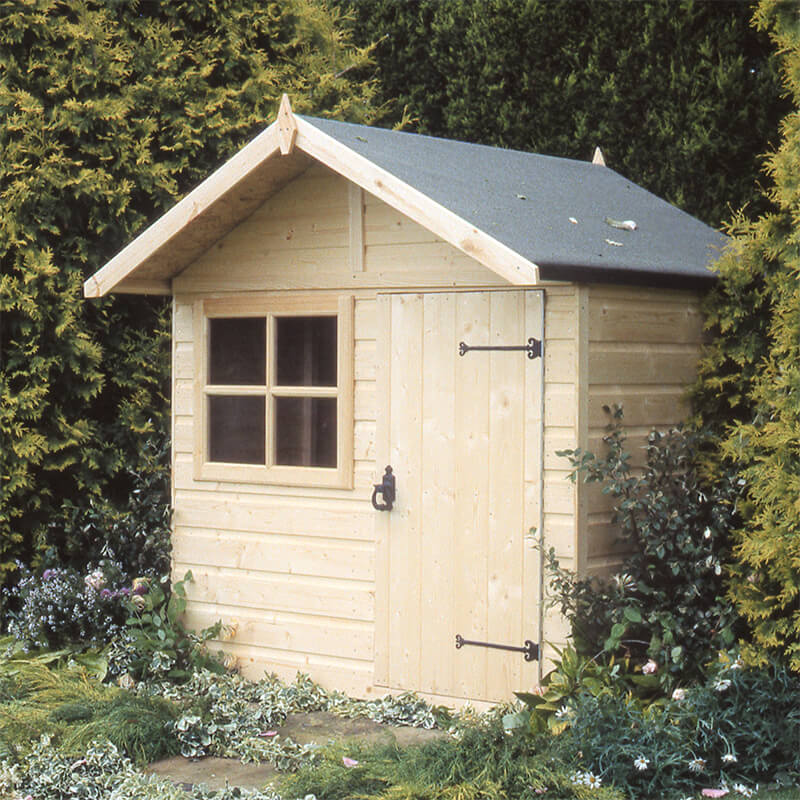
- Square playhouses – practical and easy to place, with a balanced layout that makes the most of the internal space.
- Rectangular playhouses – useful where the garden is narrow, since the longer side can sit neatly along a fence or wall.
- Corner-style playhouses – shaped to tuck into an awkward space, helping you use areas that might otherwise be left empty.
- Cabin-style playhouses – a cosy, hut-like look that often feels more enclosed and den-like for imaginative play.
- Traditional cottage shapes – often with pitched roofs and front openings, giving a familiar storybook feel.
The best shape often depends less on looks and more on how the garden is laid out. A square design can feel tidy and central, while a rectangular one may suit a long border or paved area. Corner forms are useful if you want to keep the middle of the garden open, and cabin styles can create a stronger “little retreat” feeling for children.
Compact does not mean plain
Small playhouses can still have a lot of character. In this size range, the difference often comes from the roof style, the window layout, and the way the front is designed. A pitched roof tends to add a more classic appearance and can make the playhouse feel taller inside, even when the footprint stays modest. Flat-roofed versions usually look more modern and can work well where height needs to be kept down, for example under a boundary line, near trees, or in a low-ceilinged garden scheme.
Front-opening designs with a door and one or two windows are popular because they keep the house feeling open and inviting. Other versions may have a small serving hatch, a side window, or a more enclosed front that gives children a hideaway type of space. These details matter because they affect how the playhouse is used: open fronts are better for role play and easy supervision, while more enclosed designs create a stronger sense of a private den.
Which sub-type suits which kind of play?
There is a surprising amount of difference between playhouses that may all be listed under the same size. A buyer looking at 20 sq ft / 2 m² models may notice that some are made for standing play, while others are more about sitting, pretending, and storing toys. The distinctions are worth noting:
- Open-front playhouses suit market-stall games, kitchen play, and easy interaction with siblings or friends.
- Closed-wall playhouses give a more private feel, which some children prefer for quiet, focused play.
- Raised playhouses can create a more adventurous look, though they may take a little more planning in a compact garden.
- Ground-level playhouses are usually easier to position and feel straightforward in smaller outdoor spaces.
- Multi-window playhouses feel brighter and more open, while single-window styles are often a bit more sheltered.
This is where choosing becomes less about size and more about how the child actually plays. A child who loves make-believe shops or cafes may get more use from an open front. A child who enjoys reading, drawing, or building little worlds may prefer something enclosed. That difference is easy to overlook, but it can decide whether the playhouse becomes a favourite spot or just another garden feature.
Why this size works so well in smaller gardens
The 2 m² footprint is attractive because it gives a proper play area without forcing major changes to the garden layout. There is usually still room left for a path, a planter, outdoor chairs, or a patch of grass. For families who want the garden to stay useful for grown-ups as well as children, that matters quite a bit.
This size can also feel less imposing from indoors. A larger playhouse may block a view or make a compact garden feel crowded, but a smaller one can sit more naturally in the space. It can almost look like part of the garden design rather than something added on top. That helps if you want the outdoor area to feel calm and organised, not overfilled with equipment.
Another point is flexibility. A small playhouse is easier to place in different parts of the garden, depending on light, shade, and the rest of the layout. It can work beside fencing, near a tree line, or at the far end of a plot. Some buyers like the fact that the house can create a destination without taking away too much usable area elsewhere.
Little details that make a big difference
When browsing this category, the finer points are often the ones that shift a decision. The look of the door opening, the amount of headroom, and the way windows are positioned can all affect how the playhouse feels in daily use. A child who likes to come and go quickly may prefer a wide opening. A child who wants a snug hideout may enjoy a smaller entry and more enclosed walls.
Window placement is also more important than it first appears. A window on the side can help with light and visibility, while a front window can make pretend play easier because it gives children a view of the “street” outside. Some buyers prefer a more balanced front with two windows for a cottage look. Others want fewer openings for a slightly quieter, den-like feel. Neither is better in the abstract; it just depends on the type of play you want to encourage.
Height is another detail worth checking. Two playhouses may share the same floor area but feel very different inside if one is taller. More height can make the interior less cramped for older children, while a lower design may feel more sheltered and suited to younger users. In a small garden, that extra bit of height can also change the way the structure sits visually against fences and planting.
Buying tips that actually help
If you are looking at playhouses around 20 sq ft / 2 m², a few practical checks can make the choice much easier:
- Measure the full space in the garden, not just the footprint on paper, so there is still room to move around it.
- Think about the play style first: shop, den, cottage, quiet room, or open role-play space.
- Compare shapes against the garden layout; a rectangular build may fit a narrow run better than a square one.
- Check the internal feel, not only the outside dimensions, because a small house can feel very different inside depending on roof shape and wall height.
- Look at window and door placement to see whether it suits supervision, natural light, and the kind of play your child enjoys.
- Leave space for the “play zone” around the house, not just the house itself, so there is room for toys, little seats, or outdoor role play.
These points may seem simple, but they often stop disappointment later. A playhouse can look perfect in a photo and still feel wrong in a garden if the shape does not match the space. A bit of measuring and imagining how the child will use it usually pays off.
The appeal of a playhouse that feels personal
One of the strongest reasons people choose this category is that a small playhouse can feel surprisingly personal. Children often treat it as their own place, even when it is only a modest structure. It becomes a backdrop for their ideas, which is really what makes it matter. A shop counter, a pretend kitchen, a secret club, a reading corner, a tiny post office — all of these can happen in the same small footprint.
That personal feel is helped by the scale. A 2 m² playhouse is often less intimidating for younger children than a larger structure. It feels reachable and easy to understand. They can step in, start a game, and make the space their own without needing a lot of setup. For siblings or visiting friends, that can also make the playhouse more sociable, because nobody feels lost in a huge room.
Small structure, different moods
Although the footprint stays the same, the mood of the playhouse can shift a lot depending on the design. A bright cottage-style house can feel cheerful and open. A more enclosed cabin form can feel secretive and snug. A modern boxy shape may suit a contemporary garden, while a traditional pitched-roof design brings a more familiar toy-town look.
This is where the category gets interesting. Buyers are not just choosing a size; they are choosing a little setting for play. Some children want a house that looks like a miniature home. Others want something that feels like a hideout or base. And some families simply want a tidy wooden structure that sits well in the garden and does not make everything else feel crowded.
What to look for when comparing options
Because the size is fairly compact, differences in construction and layout stand out more. The most useful comparison points include:
- Internal space use – how much of the footprint is actually usable once doors and wall thickness are taken into account.
- Roof profile – pitched for a classic feel, flat for a clean-lined appearance, or angled for a more tailored fit.
- Front design – open, half-open, or enclosed, depending on how interactive or private the play space should be.
- Window count – more openings usually mean more light and a less cave-like interior.
- Overall proportions – some playhouses look tall and compact, others wider and lower, and that changes how they sit in the garden.
It is also worth thinking about how the structure will look from the house and patio. A playhouse that looks balanced from the main window can feel like a genuine part of the garden. That makes it easier to live with, especially if the garden is used by adults too. In a smaller outdoor space, that visual balance is often just as important as the play value.
A smart fit for family gardens
The charm of Playhouses 20 sq ft / 2 m² is that they deliver a defined children’s space without asking too much from the rest of the garden. They suit families who want a proper play feature, but still want the garden to feel open, practical, and easy to enjoy. With the right shape, the right opening, and a layout that matches the way children play, a small playhouse can feel like a very considered choice rather than a compromise.
For buyers comparing options, this category offers a useful range of styles: square, rectangular, corner-friendly, cottage-inspired, and cabin-like forms, each with its own feel and purpose. The main thing is to choose the one that suits the garden and the child’s play habits, because that is what makes the difference between a structure that sits there and one that gets used again and again.
If you want a play space that feels personal, tidy, and easy to place, this size is worth a close look. It is compact, yes, but not limited. In the right setting, it can become the spot children head for first, and the garden feature that earns its place without taking over the whole view.
[Sassy_Social_Share]