
Playhouses 10x5 - Best Deals in UK!
Showing the single result

Playhouses 10×5 offer a compact yet roomy footprint for garden play, giving children a proper little space for make-believe, reading, and quiet time, with different shapes, layouts, and finishes to suit varied outdoor settings.
A handy footprint that fits more than you might expect
A 10×5 playhouse sits in that useful middle ground: long enough to feel like a proper garden room for children, but narrow enough to work in plots where space is watched carefully. The 10ft by 5ft format gives you a clear rectangular shape, which often makes planning easier than with more unusual designs. You know roughly how it will sit against a fence, along a wall, or at the end of a lawn, and that makes the whole decision feel a bit less complicated.
Because the floor area is stretched rather than square, a 10×5 layout can be arranged in different ways inside. Some buyers like the idea of a front-facing play space with room for toys, a small table, or floor seating. Others prefer a split interior, where one end feels like a play zone and the other becomes a den, reading corner, or pretend shop. That long narrow form is one of the key differences between these playhouses and smaller cube-style buildings.
What the 10×5 shape does well
The shape matters more than people first think. A rectangular 10×5 playhouse gives you a stronger sense of direction inside, so children can set out games more easily. It can feel less cramped than a square hut of the same floor area because one wall can be used for longer furniture or built-in features. That helps if you want a little counter, bench, or window seat effect, even when the overall footprint stays modest.
Bestseller der Kategorie Playhouses 10x5
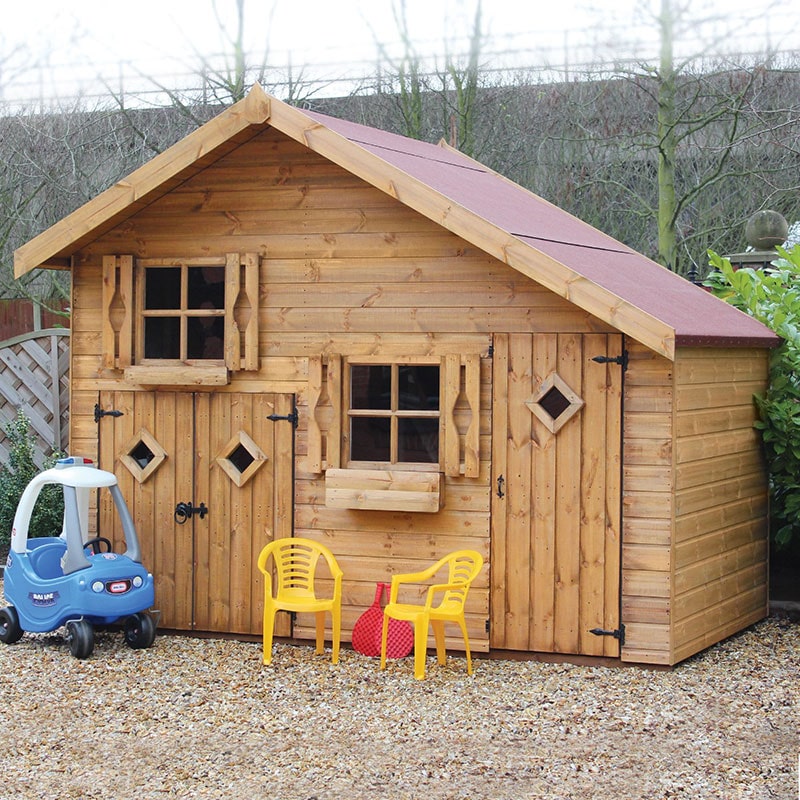
Another plus is how the shape works in the garden. A long, slim playhouse can sit neatly beside other outdoor items without dominating the whole space. It often suits side returns, boundary lines, or narrower lawns where a wider building would look awkward. For families trying to keep the garden open for running about, this can be a very practical choice.
Styles that sit within the 10×5 category
Even within the same size, playhouses 10×5 can vary quite a bit in style. Some lean towards a classic cottage look, with a pitched roof, window boxes, and a front door that feels straight out of a storybook. Others use a more simple hut style, with cleaner lines and less decoration, which can suit modern gardens better.
You may also come across elevated playhouse styles within this size, where the building is slightly raised, sometimes with a small platform or steps. These are useful when you want a stronger “hideaway” feel, though they do change how the house sits in the garden. By contrast, ground-level playhouses feel easier to step into and often work well for younger children or mixed-age families.
There are also open-front designs and more enclosed versions. An open-front style gives a breezier play area and allows easy supervision, while an enclosed playhouse offers more of a tucked-away den feel. The difference is not only visual; it changes how the space gets used day to day.
Why the layout matters for play
With a 10×5 playhouse, the internal layout can do a lot of the heavy lifting. A long room gives children room to move from one activity to another without everything being stacked on top of each other. That is useful for pretend play, where one end might become a kitchen, the other a shop, and the middle a place for friends to sit. It also works for quiet time, because the length of the space can create a natural sense of zones.
If you are comparing designs, look at the position of the doors and windows. A centrally placed door can give a balanced feel, while an offset door may leave more usable wall space inside. More windows can make the playhouse feel brighter, but fewer openings may suit children who like a more private den. There is no single best answer, just a different feel depending on how the space will be used.
Different roof shapes, different moods
Roof style changes the personality of a 10×5 garden playhouse quite a lot. A pent roof gives a simple sloping look and can suit tighter settings, especially if the playhouse sits near a boundary or under a tree line. A gable roof feels more traditional and creates a classic house silhouette, which many people like because it looks more like a tiny home than a shed with windows.
Some designs may have a higher roof pitch, which can make the interior feel a touch more open, while lower roof profiles keep the overall height more restrained. That difference matters if the playhouse needs to sit beneath planning limits, tree cover, or simply a more discreet corner of the garden. The roof shape also affects the outside look, so it is worth thinking about whether you want the playhouse to blend in or stand out a little.
What sets these playhouses apart from smaller sizes
Compared with compact playhouses, the 10×5 size gives more breathing room. A smaller hut can be charming, but once two or three children are inside, it can start to feel busy quite quickly. The extra length in a 10×5 model helps with sharing, which is useful if you want a playhouse that can cope with siblings or visiting friends.
There is also a difference in how it feels to furnish. Smaller houses often work best with very light additions only, but a 10×5 playhouse can usually manage more structured play furniture or a few defined play areas. That does not mean cramming it full, of course. The advantage is simply having options, and options matter when children change the way they play from week to week.
Possible timber looks and finish choices
In this category, you will often see playhouses that keep a natural timber appearance alongside painted or treated finishes. A natural wood look feels calm and garden-friendly, especially if you want the playhouse to blend with fences, sheds, and planting. A painted finish gives a more characterful expression, with colours that can make the house feel more clearly like a child’s space.
Some buyers prefer a finish that leaves room for later personal touches, such as signs, bunting, or name plates. Others want a design that already has enough character in the form of its windows, roofline, and door shape. Both approaches work. What matters is whether you want the playhouse to feel like a feature in its own right or a quieter part of the garden.
Little details that make a big difference
When choosing Playhouses 10×5, the small details often decide whether the design feels right. Window placement is a big one. Side windows can bring light into the middle of the space, while front windows can create a more welcoming face to the garden. Some playhouses use multiple windows for a brighter feel; others keep them smaller for a more enclosed, den-like mood.
Door style matters too. A single door keeps things simple, while a wider opening can make it easier for children to move toys in and out. If the design has a stable-style split door, that adds a different sort of charm and can offer flexible use, though it may not suit every family. These are the kind of things that seem minor until you picture daily play.
Good reasons families choose this size
One reason people look at 10×5 playhouses is that they feel balanced. They are not tiny, and they are not so large that they take over the garden. That middle position can make the purchase feel more sensible, especially for families who want a proper play structure without losing too much open ground.
The size also gives room for changing interests. A younger child may use it for dolls and soft toys, while an older one turns it into a secret club, reading den, or ticket office for endless made-up games. The same structure can do different jobs over time, which is useful when children grow and their ideas keep changing. That kind of flexibility is often more valuable than an over-decorated design.
How to compare one 10×5 playhouse with another
When comparing models in this category, it helps to look beyond the headline size and think about the actual feel of the building. Two 10×5 playhouses can look quite different once roof shape, wall height, window count, and door position are added into the mix. One may appear taller and more open, while another feels lower and cosier.
Also look at whether the design feels playful or practical. A decorative cottage style may be lovely to look at, but a simpler rectangular build can sometimes offer better usable space. Likewise, an elaborate exterior does not always mean better internal flow. If the playhouse will be used often, the interior layout probably matters more than a fancy bit on the roof, nice as it may be.
Things to think about before choosing
It helps to picture the playhouse in the garden rather than only on a screen. A 10×5 footprint can look different depending on where it sits. Against a fence, it may feel neat and tucked away; in the middle of a lawn, it becomes more of a feature. The same design can change character quite a lot depending on placement.
Consider how children will approach it too. A front-facing door can create a natural arrival point, while side-entry designs may feel a bit more private. If the garden has a clear path or patio area, that can shape the best orientation. These choices are not just about looks, they affect how easy the playhouse feels to use in real life.
Why the 10×5 format keeps on appealing
The appeal of Playhouses 10×5 comes from their useful proportion. They offer a decent amount of play space without demanding the sort of garden footprint that rules out everything else. For many homes, that is the sweet spot. You get a child-friendly building that feels like a proper destination, yet the rest of the garden can still do its job.
That is also why this size works across different ages and play styles. A younger child may see a magical house; an older one may see a den, hangout, or mini project space. The same dimensions support both views. And because the category includes different forms, from cottage-inspired houses to simpler rectangular play spaces, it is easier to find a style that matches the garden rather than fighting against it.
Helpful buying pointers, without overcomplicating it
If you are choosing from playhouses 10×5, start with the shape of the garden, then think about how the children will use the space most often. For simple play and easy access, a straightforward ground-level design may be enough. For more of a secret hideout feel, a more enclosed or elevated version may suit better. For those who like a classic garden look, a pitched roof and cottage details can bring the whole thing together nicely.
It also helps to think about whether the playhouse should feel bright and open or a bit more tucked away. Neither is wrong. It just depends on the sort of play you want to encourage. Some children like light, visibility, and room to spread out; others prefer a snug den where they can make up their own rules. A 10×5 playhouse can support both, which is part of the reason it remains such a practical choice.
- Rectangular 10×5 layout for easier zoning inside
- Cottage-style forms for a more traditional garden look
- Simple hut styles for cleaner lines and less visual bulk
- Open-front designs for a sociable, easy-access feel
- Enclosed designs for a more private den atmosphere
- Pent roofs for a neat, lower-profile appearance
- Gable roofs for a classic house-like silhouette
- Ground-level builds for straightforward everyday use
- Raised playhouse styles for a stronger hideaway feel
A final thought on choosing the right one
A good 10×5 playhouse does not need to shout to be useful. The best choices in this category usually combine a sensible footprint, a shape that fits the garden, and a layout that leaves room for real play rather than just looking nice from a distance. That is what makes the category worth exploring properly: the differences are not huge on paper, but in the garden they can change everything.
So if you are comparing Playhouses 10×5, focus on the shape, the roofline, the window and door arrangement, and how the space might feel once children make it their own. The right one will usually be the one that suits the garden as well as the games, and that is often what people are after, even if they do not say it out loud.
[Sassy_Social_Share]