
plastic sheds 50 sq ft / 4 m² - Best Deals in UK!
Showing the single result

Plastic sheds 50 sq ft / 4 m² offer a compact storage solution for gardens, patios and side returns, with low-maintenance panels, tidy layouts and useful room for tools, bikes and bins.
Why 50 sq ft / 4 m² hits the sweet spot
A plastic shed in the 50 sq ft / 4 m² range sits in that very practical middle ground: big enough to store the things that clutter a garden, yet compact enough not to dominate it. For many homes, this size works where a smaller box shed feels too cramped and a larger unit starts to take over the plot. It is the kind of shed that can quietly solve a lot of storage problems without asking for a huge amount of space in return.
At this footprint, the shape and layout matter just as much as the wall material. A well-planned 4 m² plastic shed can hold long-handled tools, a mower, folded chairs, planters, watering gear and a surprising amount of seasonal kit. The key is not simply square metres, but how those square metres are used. That is why buyers often look closely at roof style, door width, internal headroom and the overall footprint before deciding.
What makes plastic different in this size
Plastic sheds are often chosen for their clean-lined appearance and straightforward build. In this size category, the material choice makes a noticeable difference to the feel of the shed. Plastic wall panels usually give a neat, uniform finish, and the surfaces are less likely to look weather-beaten in the same way timber can. For a 50 sq ft unit, that means the shed can sit in the garden without adding visual fuss.
Bestseller der Kategorie plastic sheds 50 sq ft / 4 m²
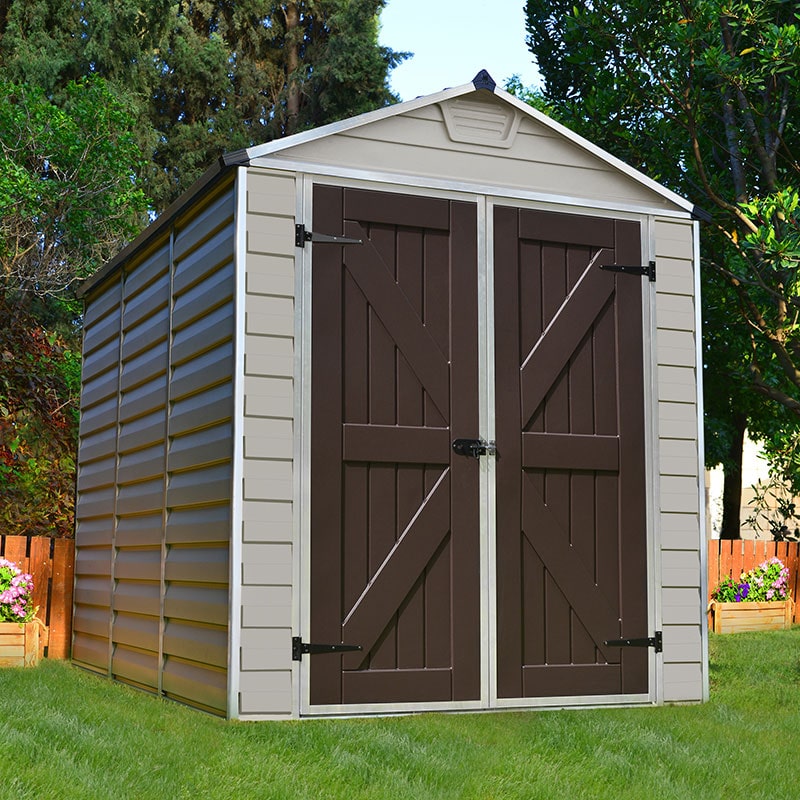
Another reason people choose plastic at this footprint is the balance between weight and practicality. A shed around 4 m² needs to be stable, but it should also be manageable to position and assemble. Plastic designs often come in panelled sections or modular parts, which is handy when access to the garden is tight. If the path is narrow or there is no easy side access, a lighter structure can make the whole project less awkward.
There is also the question of noise and finish. Plastic sheds generally have a quieter, more “contained” look than some metal options, and they avoid the grain, knots and colour variation found in wood. For buyers who want storage that looks tidy without drawing attention, that difference can matter a lot.
Shapes that change how the space works
In a plastic shed 50 sq ft / 4 m², the external shape affects the inside more than many people expect. Two sheds with the same floor area can feel quite different depending on roof form and wall profile.
- Rectangular sheds give the most straightforward layout for shelving, tall tools and stackable boxes.
- Square designs can feel more balanced inside and are often useful where access is possible from more than one side.
- Lean-to styles fit neatly against a wall or fence and can work well in narrower gardens.
- Gable-roof sheds usually create a more open feel overhead, which helps if you want to stand upright more easily.
- Pent-roof sheds often suit modern gardens and can be a practical option where rain runoff direction matters.
The shape also influences the way the shed sits in the garden. A lean-to unit can blend into an edge space, while a free-standing rectangular shed may become a more central storage point. If you are comparing options, it helps to think about the route from the house to the shed as well as the final footprint. A shape that looks compact on paper can feel different once you are carrying a mower or garden box through the opening.
Door styles that make storage feel easier
Door design is one of those details people notice later, usually when they are trying to squeeze in a bulky item. In this size range, the door opening can be the difference between useful storage and daily irritation. A plastic shed with wide double doors is often better suited to larger tools, garden furniture cushions or a ride-on toy, while a single door may be enough if the contents are more compact.
- Double doors help with wider items and make the centre of the shed easier to access.
- Single doors can suit narrower plots where the opening needs to be kept simple.
- Low-threshold entries are handy for wheeled items and reduce the awkward lift at the front.
- Full-height doors are useful when storing tall equipment, especially if the shed has decent internal headroom.
It is worth checking whether the door swing fits your space. A 50 sq ft shed might have enough room inside, but if the door opens into a wall, fence or planting bed, the practical access can be reduced. This is one of those small details that is easy to miss when browsing online, but it has a real effect on how the shed feels once installed.
The subtypes buyers compare most often
Within the category of plastic sheds 50 sq ft / 4 m², the main subtypes are less about brand names and more about structure. Each one serves a slightly different kind of garden and storage habit.
- Panelled plastic sheds are built from sections that fit together in a clear sequence, which can help with assembly and replacement of individual parts.
- Resin sheds usually refer to moulded or composite plastic builds with a solid, uniform finish and a more substantial feel.
- Double-wall plastic sheds often give a firmer look and can feel more stable in use, especially for everyday storage.
- Lightweight plastic sheds can be a good fit for temporary storage needs or gardens where moving the structure matters.
- Tool-store style sheds tend to favour vertical storage and a smaller door profile, even within the same floor area.
These subtypes are not just technical labels; they affect how the shed behaves in real life. A moulded resin design may feel more closed and self-contained, while a panelled version can offer a little more flexibility in layout. If you are storing larger items, a sturdier wall structure can make the space feel more dependable. If the priority is to keep the garden looking neat with less visual bulk, a lighter format may suit better. It really depends on what you are putting inside, and how often you need to get to it.
Horizontal lines or taller walls?
One of the biggest differences between plastic sheds in this size is whether the design is low and broad or more upright. A broader profile can suit low-level storage such as pots, boxes, seed trays and folded outdoor cushions. A taller profile, however, gives better standing room and tends to make the shed feel less cramped when you are searching for something at the back.
Low-profile sheds are often chosen for side passages, boundary spaces and gardens where the shed should stay visually discreet. Taller sheds make more sense if you plan to use the interior as a proper storage room rather than a simple stash point. The difference is subtle on a spec sheet but obvious when you are inside. Headroom changes how easy it is to sort items, reach shelves and move around without awkward bending.
For a 4 m² footprint, this choice matters because every centimetre counts. If you store long-handled tools, a bike, or stacked storage tubs, extra height can make the interior work harder. If you mainly need a tidy home for smaller garden items, a lower roofline may be enough and can help the shed sit more gently in the space.
Colours and finishes that suit the garden, not fight it
Plastic sheds often come in finishes that aim to blend into typical outdoor spaces rather than stand out. In this category, the colour is more than a cosmetic detail. It affects how large the shed looks, how it pairs with fencing and paving, and whether the building feels tucked away or present.
- Neutral grey usually gives a clean, modern feel and works well with stone, composite decking and darker fencing.
- Beige or taupe tones soften the look and can suit traditional gardens or warmer planting schemes.
- Dark finishes may feel more solid visually, though they can look larger in some settings.
- Wood-effect plastic gives a timber-style appearance without the same surface character or grain variation.
These finishes are useful when the shed needs to be seen as part of the garden rather than a separate utility item. A wood-effect plastic shed can appeal to buyers who like the look of timber but want the simplicity of plastic construction. Meanwhile, a plain neutral finish can make the structure feel more discreet, which is often a smart choice in smaller plots. It is less about trend and more about how the shed sits next to the rest of the space.
What you gain from choosing this category
People often look at plastic sheds because they want storage without a lot of visual or practical complications. In the 50 sq ft / 4 m² size, those benefits become even more useful because the shed is still small enough to stay manageable, but large enough to be properly functional.
- Compact footprint that fits many medium and smaller gardens.
- Useful internal capacity for tools, equipment and seasonal items.
- Low-fuss finish with no grain, flaking paint or patchy surface texture.
- Neat appearance that can suit contemporary and practical garden layouts.
- Flexible interior use depending on shelves, hooks and the shape of the shell.
The important thing is that these benefits work together. A compact footprint alone is not enough if the door is awkward or the roof feels too low. Likewise, a nice-looking finish is only useful if the interior can actually hold what you need. In this category, the best choice is usually the one that balances size, shape and access rather than chasing a single feature.
Small differences that change the buying decision
When comparing plastic sheds 50 sq ft / 4 m², the differences can seem minor at first glance, but they add up. Wall thickness, roof form, door width, internal height and footprint proportions all affect how the shed performs as storage. A buyer who only checks external measurements may miss the things that matter most in daily use.
For example, one shed may offer a slightly wider opening, which makes it better for bikes or a wheelbarrow. Another may have straighter internal walls, which help with shelving. A third may use a roof shape that sheds rain in a direction better suited to your garden layout. None of these features is dramatic on its own, but together they decide whether the shed feels convenient or a bit of a squeeze.
If the shed is going against a fence, it is also worth thinking about how the roof edge and door placement affect surrounding space. A 4 m² building can still feel generous if the layout is well planned, and oddly tight if the access side has not been thought through. That is why many buyers end up choosing a shed not only for its storage volume, but for how naturally it fits into the garden routine.
Practical tips before you choose
Before buying a plastic shed in the 50 sq ft / 4 m² range, it helps to work backwards from the items you want to store. A quick list can make the differences between models much easier to read.
- Measure bulky items first, especially bikes, mowers and storage boxes.
- Check the door opening, not just the external footprint.
- Think about the inside layout if you want shelves or vertical storage.
- Match the roof style to the garden position and nearby boundaries.
- Consider visual impact if the shed will be visible from the patio or kitchen.
It is also sensible to picture how often you will use the shed. A unit opened every week needs a layout that feels natural, not just one that fits on paper. If you only need occasional storage, a simpler design may be enough. If the shed will become part of your regular garden routine, then access and interior flow matter more than a clever-looking exterior.
A category made for tidy, usable space
Plastic sheds 50 sq ft / 4 m² are a strong choice for buyers who want storage that feels practical without becoming a project in itself. The size works for a wide range of gardens, the material gives a neat finish, and the different shapes and subtypes mean there is room to match the shed to the way you actually use outdoor space. Whether you need a compact tool store, a box-friendly garden unit or a more upright storage room with easier access, this category offers a lot to compare.
What makes it appealing is the mix of simplicity and usefulness. There is enough room to make a real difference, but not so much that the shed starts to feel oversized. For many gardens, that balance is exactly what is needed: a well-sized, sensible, easy-to-place shed that clears clutter without demanding attention. And really, that is the point of the whole thing.
[Sassy_Social_Share]