
plastic sheds 20 sq ft / 2 m² - Best Deals in UK!
Showing the single result

Plastic sheds 20 sq ft / 2 m² offer a compact, weather-resistant storage solution for tools, garden kit, bikes bits and seasonal clutter, with shapes and styles to suit tight spaces.
Compact Storage with a Clear Job to Do
A plastic shed of around 20 sq ft / 2 m² is made for gardens where every corner counts. It gives you a defined place for smaller equipment without taking over the whole plot, which makes it a practical choice for patios, narrow side returns, town gardens and shared outdoor spaces. The footprint is modest, but the storage use can still be clever if the layout is well planned.
These sheds are often chosen when people want tidy, enclosed storage without moving into a larger building. That makes them useful for hand tools, watering gear, fertiliser tubs, compact lawn tools, folding chairs, and a few bits that often end up cluttering the shed or garage.
What “Plastic Shed” Usually Means Here
In this size bracket, “plastic” normally refers to resin, polypropylene or PVC-based panels, rather than thin garden cladding. The construction is generally designed to be light, manageable and resistant to common outdoor conditions. Compared with timber, these sheds usually bring a more uniform finish and a simpler panel structure.
Bestseller der Kategorie plastic sheds 20 sq ft / 2 m²
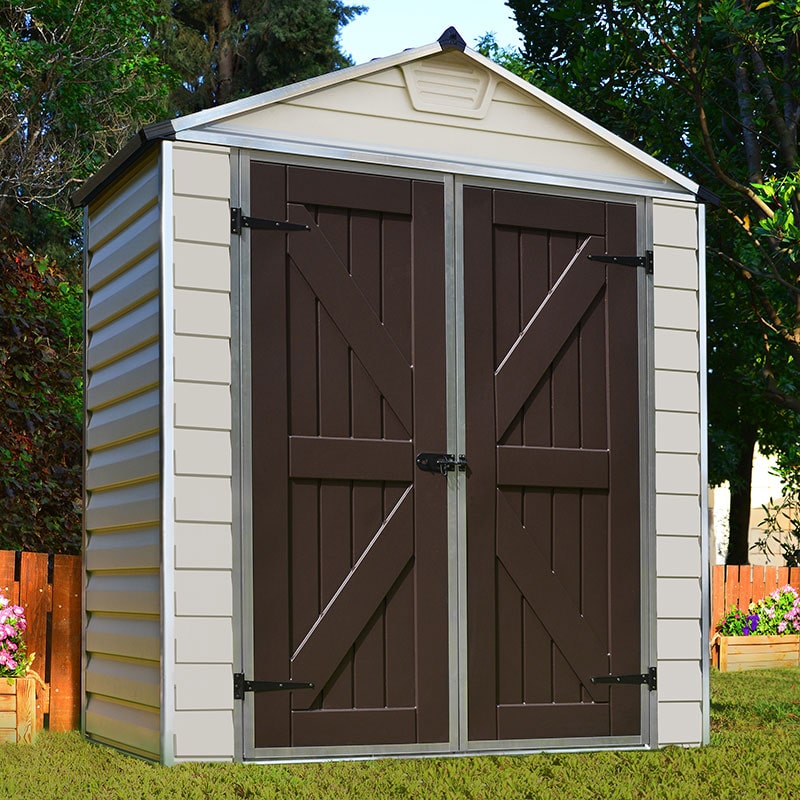
The category is not just one look. You’ll find panelled sheds, tongue-and-groove style plastic units, box-form stores and low-profile cabinets within this footprint. Some feel more like mini tool stores, others more like a proper small garden shed with a door and pitched roof. The differences matter, because the shape changes what fits inside and how easy it is to place against a wall or fence.
Shapes That Suit Small Gardens
The format of a 20 sq ft / 2 m² plastic shed can make a bigger difference than people expect. A neat footprint does not always mean the same usable space, because the roof pitch, door position and wall profile all affect what can be stored.
- Lean-to sheds sit well against a boundary wall and keep the depth shallow, which helps in narrow gardens.
- Apse-front or pent-roof styles give a lower overall height at the back and often look less bulky beside a house or fence.
- Mini apex sheds offer a more traditional roof line and can create a bit more head room in the centre.
- Horizontal storage cabinets are useful when the goal is to keep items low, dry and easy to reach rather than to store tall tools.
Choosing the shape is not only about appearance. A lean-to can be easier to tuck into awkward spaces, while an apex roof may suit gardens where you want the shed to feel less boxy. In a small footprint, even the door swing can change how practical the unit feels.
What Fits Inside a 20 sq ft / 2 m² Shed
This size is compact, so it works best when you know what you want it to hold. Think in terms of daily-use items rather than bulk storage. The inside usually suits a mix of upright and low-level items, especially when shelves or hooks are used.
- Hand tools such as spades, forks, trowels and secateurs
- Short-handled garden equipment like hoes, rakes and brooms
- Watering cans, hose accessories and plant feed
- Fold-up furniture for a small patio or balcony
- Kids’ outdoor toys if you need a dry place for them
- Small power tools and their cases
- Seasonal items such as seed trays or covers
If you are hoping to store a mower, double-check the dimensions carefully. In this category, some models will suit a compact push mower, but the internal shape can be the deciding factor. A shed may be “20 sq ft” on paper, yet the usable floor space can feel tighter once wall thickness and door openings are taken into account.
Why Plastic Can Suit This Size So Well
For a shed this small, the material choice has a noticeable effect on the whole buying experience. Plastic sheds are often favoured because they keep a neat profile and do not rely on the same level of visible maintenance as timber. They also tend to be lighter than many wooden alternatives, which can matter when access to the garden is awkward.
Another practical point is how the material behaves in everyday use. Plastic panels are generally chosen for their moisture resistance and straightforward cleaning. That matters in a compact shed, because there is less room for damp patches or water-damaged stored items to hide. Some buyers also prefer the more consistent finish, especially if the shed is visible from the house.
There is also the matter of assembly. Smaller plastic sheds are often designed with slot-together or panel-based systems, which can feel more manageable than handling heavy timber sections. That said, the ease of build still depends on the exact design and the condition of the base.
Different Panel Styles, Different Feel
Not all plastic sheds in this size are built in the same way. The panel style changes the look, the rigidity and sometimes the way the interior can be used. It is worth paying attention to these small differences rather than treating the category as one standard product.
- Single-skin moulded panels are usually straightforward and light, often suited to basic storage needs.
- Double-wall resin panels can give a firmer feel and a more finished look, which may suit people wanting a sturdier enclosure.
- Textured wood-effect surfaces offer a timber-like appearance without being actual wood, useful if the shed sits near a garden room or fence.
- Plain smooth panels can look cleaner and more modern, though they may show marks more easily.
The visual finish is not just cosmetic. In a compact garden, the shed becomes part of the view from the patio, so the panel style can help it blend in or stand out. A subtle texture often feels less harsh than a shiny plastic surface, especially in a small outdoor area.
Door Layouts That Change Everyday Use
In a shed this size, the door is a major part of the design. A small building can still be awkward if the opening is narrow or positioned badly. That is why door layout is worth treating as a key feature rather than a side note.
Single doors are common and suit lighter storage. They can work well where access is simple and items are carried in by hand. Double doors, where available in this footprint, make it easier to store bulkier items or slide in equipment without twisting it at an angle. Some designs also use a wider front opening with low threshold access, which can be helpful for wheeled items or plant crates.
The opening direction matters too. If the shed sits beside a path or fence, a door that swings out in the wrong place can become annoying. Small things like this are often the difference between a shed that feels easy and one that feels a bit cramped, even if the floor area is similar.
Useful Features Buyers Usually Look For
When space is limited, the little details matter more. A good 20 sq ft / 2 m² plastic shed often gets its value from practical features that make the storage space easier to use rather than from added decoration.
- High internal headroom for rakes, spades or hanging storage
- Integrated vents to help reduce stale air build-up
- Window panels or skylights for better daylight inside
- Built-in floor panels where a level base is hard to achieve
- Lockable door points for keeping contents more secure
- Reinforced roof sections if you want a firmer feel overhead
- Shelves or internal support points for making the most of vertical space
Not every shed includes all of these, and that is fine. The right mix depends on what you are storing. For example, if the shed is mostly for pots and hand tools, daylight and shelves may matter more than roof height. If you want to stand a long-handled tool upright, then internal height and door width become more important.
How Plastic Sheds Differ from Timber and Metal in This Size
People often compare small plastic sheds with timber and metal models, and the differences are worth understanding before buying. In a compact footprint, the material can influence both the look and the practical use of the space.
Compared with timber, plastic tends to be lighter and less tied to a natural wood finish. Timber can feel more traditional, but it may need more visual attention over time. Plastic is often chosen when the buyer wants a neater, less involved option for a tight garden.
Compared with metal, plastic usually feels quieter in day-to-day use and less prone to the cold, hard look that some metal sheds have. Metal can be slim and strong, but plastic often brings a softer visual finish and may be more forgiving if the shed is placed near a seating area.
The important thing is that this size category is about efficient, compact storage. Plastic works well here because the product does not need to be oversized to do its job. For many gardens, a modest shed that fits the space properly is better than one that dominates it.
Placement Tips That Make the Shed Feel Bigger
Because the footprint is small, positioning becomes part of the buying decision. A shed that is technically right may still feel awkward if it is placed in the wrong spot. The aim is to make the outdoor area feel organised rather than crowded.
- Place it where access is direct, so tools do not need to be carried across the whole garden.
- Check door clearance beside fences, planters and paths.
- Leave enough space for the lid or door to open fully, especially with double doors.
- Use the shed height wisely by storing long tools at the back or on one side.
- Think about sight lines if the shed will be visible from the house or patio.
A compact shed can look more settled if it sits on a base that feels intentional. Even when the shed itself is small, the surrounding gap, paving or edge detail can affect how neat the whole setup appears. That is especially useful in smaller gardens where visual clutter matters.
Who This Category Suits Best
This category tends to suit people who need light-to-medium storage in a limited footprint. It is a sensible match for urban and suburban gardens, rental properties, side passages and smaller plots where a large store would be unnecessary or simply not fit.
It can also work well for buyers who want a shed that feels less demanding than timber while still offering more enclosure than a box or chest. If you mostly store tools used every week, then having them in a dedicated, compact plastic shed can make the garden easier to use. You are less likely to leave things under the bench or by the back door, and that small bit of order often makes day-to-day gardening feel smoother.
Small Size, Smart Choice
A plastic shed 20 sq ft / 2 m² is not about huge capacity. It is about using a small footprint in a useful way, with a shape and layout that suit the garden you actually have. The best choices in this category are the ones that balance compact dimensions, practical access and a finish that fits the space without feeling overdone.
Whether you are looking for a lean-to store, a mini apex shed or a simple cabinet-style unit, the main advantage is having a tidy, weather-ready place for the things you use most. In a small garden, that can make a real difference to how open and usable the space feels.
If you want storage that stays visually light, handles everyday outdoor conditions, and does not ask for much room, this category is worth a proper look. The right model can seem small on paper and still make the garden feel more in order, which is often what buyers are after anyway.
[Sassy_Social_Share]