
plastic sheds 15 sq ft / 1 m² - Best Deals in UK!
Showing all 4 results
-
40% OFF: 5′ x 3′ Palram Canopia Dark Grey Voyager Shed (1.39m x 0.9m) £184.9940%

-
21% OFF: 4′ x 4′ Shire Tuscany Evo 120 Plastic Garden Storage Shed (1.22m x 1.22m) £589.9921%

-
13% OFF: 4′ x 4′ Shire Tuscany Evo 120 Plastic Garden Storage Shed (1.22m x 1.22m) £654.9913%
-
13% OFF: 5′ x 3′ Palram Canopia Dark Grey Voyager Shed (1.39m x 0.9m) £269.9913%

Plastic sheds around 15 sq ft / 1 m² are a compact way to store garden tools, mopeds of clutter, and small outdoor bits without taking over the plot. Ideal for tight patios, narrow side returns, and small gardens.
Small Footprint, Clear Purpose
A 15 sq ft plastic shed sits in that handy middle ground between “just a box” and a proper garden structure. At roughly 1 m², it is sized for places where every bit of ground matters, yet there is still a need for enclosed storage. These sheds are often chosen when a garden does not have the room for a larger unit, but the owner still wants a dedicated place for items that should not be left outside. Think hand tools, a watering can, plant pots, folding chairs, hose reels, and other bits that tend to pile up near the back door.
What makes this category useful is the balance between compact dimensions and defined storage space. Instead of relying on a bench box or a flimsy cover, a plastic shed gives a clearer boundary: things go in, the area looks tidier, and the garden can feel less crowded. For many buyers, that smaller size is not a compromise but the point. It is a good fit when you need storage, but not a structure that dominates the space.
Why Plastic Makes Sense in a Tight Spot
Plastic sheds are often picked for practical reasons tied to their material and shape. In this size range, weight matters. A smaller plastic shed is usually easier to position than timber alternatives, especially where access is awkward or the shed has to sit through a side passage, down the side of a house, or onto a patio with limited room for manoeuvring. That matters more than people expect when the footprint is only around 1 m².
Bestseller der Kategorie plastic sheds 15 sq ft / 1 m²

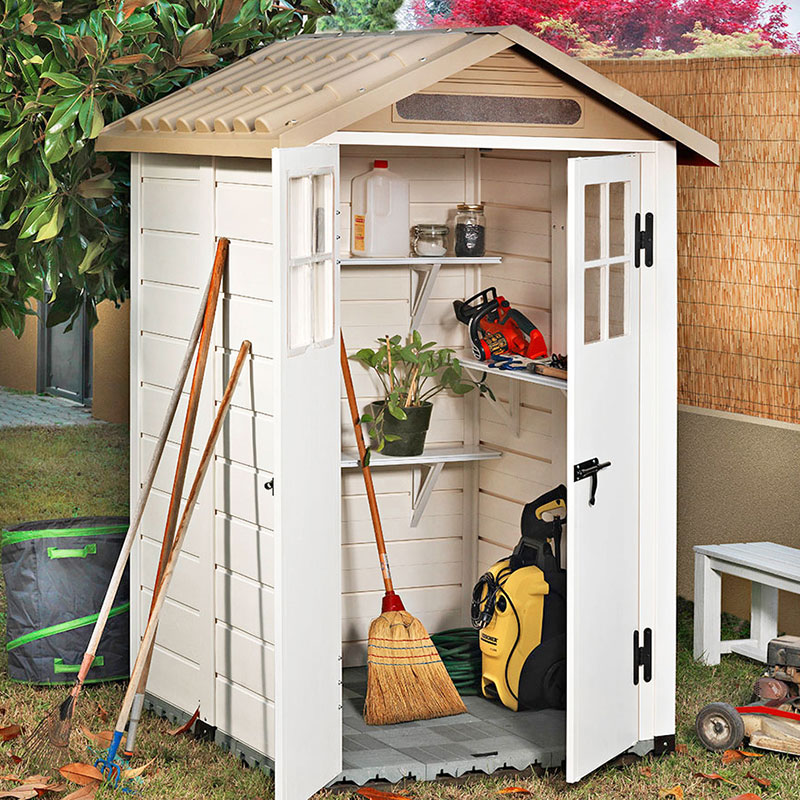
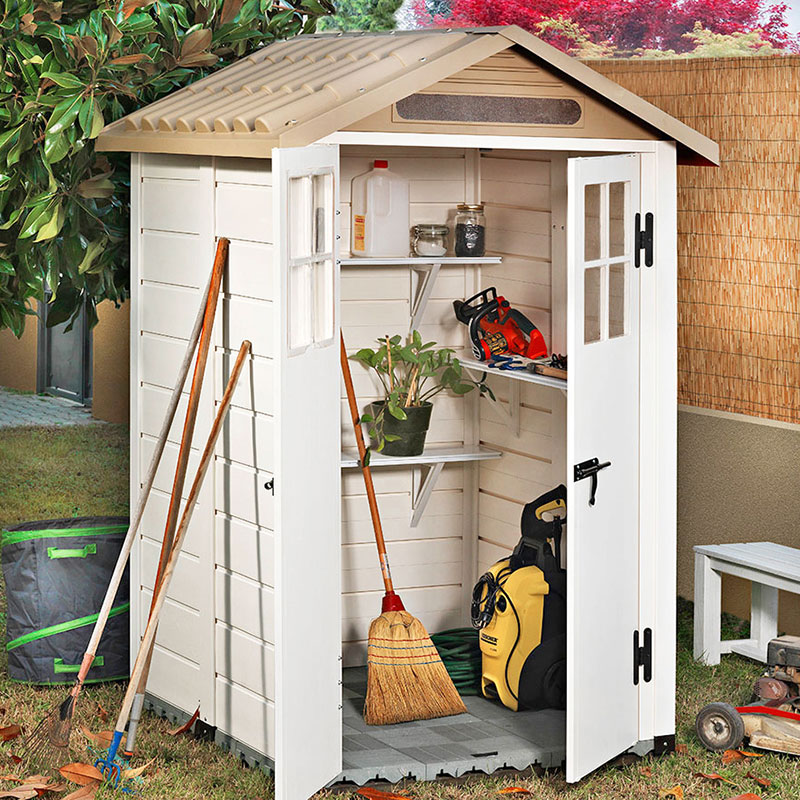
There is also a visual difference. Plastic tends to look neat and fairly uniform, which can help in small gardens where a bulky or weathered structure would dominate the view. For buyers who want storage that feels tidy without becoming a focal point, the material is a strong draw. It can suit modern paving, resin surfaces, gravel areas, and compact allotment plots, where the look needs to stay clean and simple.
Another practical point is that plastic sheds in this size are usually chosen for their space efficiency. The walls, roof pitch, and door layout are often designed to make the most of every inch. In a small shed, that detail matters a lot more than in bigger buildings because there is less room for wasted corners and awkward access.
Shapes That Change How the Space Feels
Not all plastic sheds 15 sq ft / 1 m² feel the same once they are in place. The shape changes how the shed works, how it fits against fences or walls, and how easy it is to get items in and out.
- Rectangular sheds are the most straightforward option for layout. They suit long, narrow items better and often sit neatly against a boundary.
- Square or near-square sheds make the most sense when the available area is compact and regular. They feel balanced and are easier to place on a small hardstanding.
- Corner-style sheds can be useful where the garden has an awkward layout and you want storage tucked out of the way. The footprint is still small, but the position feels less intrusive.
- Low-profile designs work well when the main concern is keeping the view open. They are less visually assertive, though the interior can feel tighter.
The shape also affects what kind of storage works best inside. A more rectangular unit may suit rakes, spades, and longer handled tools better than a broader, lower shed. A square layout can feel more flexible for mixed storage, but if the entrance is narrow or the internal height is limited, it may suit stacked items more than tall ones. Buyers often notice these differences only after measuring the items they actually want to store, which is worth doing before choosing a shape.
Door Styles, Access and Everyday Use
In a shed this small, the door style is not a minor detail. It changes whether the shed feels easy to use or slightly fiddly. Some plastic sheds in this size have a single front door, while others use double doors or a wider opening depending on the design. A single door can be fine for smaller items and frequent quick grabs, but a wider opening may make it simpler to reach things stored at the back.
For buyers who want to store a mixed set of items, door width can be more important than external shape. A 15 sq ft shed may seem adequate on paper, yet a narrow door can make it awkward to get in a tray of pots or a bulkier garden bucket. On the other hand, a double-door arrangement can feel useful if the shed is standing close to a fence or wall and you need a more open access point.
There is also the matter of how the shed is used day to day. If it will mostly hold one or two items and be opened quickly, a simpler door arrangement may be enough. If you expect to move things in and out often, a wider entry is easier to live with. That sort of practical detail often matters more than appearance alone, even if the shape is the first thing people notice.
Flat Roof, Apex Roof, Pent Roof: The Small-Size Difference
Roof form changes both the look and the usable feel of a plastic shed at this size. Because the footprint is small, roof shape can have an outsized effect on how the shed sits in the garden and how much overhead room it seems to offer.
- Flat roof designs can look compact and tidy, with a low visual profile. They are often suited to tight spaces where height should be kept in check.
- Apex roof styles give a more traditional shed shape and can make the interior feel less cramped in the middle, which helps with taller tools or stacked storage.
- Pent roof options create a sloping line that can suit walls and fences, especially where the shed needs to be placed close to a boundary.
The choice between these roof types comes down to more than taste. An apex profile can make a small shed feel less boxy, while a pent roof can blend more easily into a narrow side return or a sheltered corner. Flat roofs are useful where the goal is to keep the shed discreet. None of these shapes is “better” in every case; the right one depends on the garden layout and what is being stored.
What Fits Inside 1 m² Without Feeling Cramped
Because the space is limited, the best use of a 15 sq ft plastic shed is usually a focused one. It is less about cramming in everything and more about choosing items that genuinely benefit from being together in one place. In many gardens, this size is enough for a narrow mix of tools, hand equipment, watering accessories, plant care bits, or a small set of outdoor cushions if the proportions suit.
The main advantage here is that the shed encourages clearer organisation. A smaller footprint naturally forces decisions about what deserves storage space. That can be helpful for buyers who are tired of scattered items around the patio. Instead of creating a second dumping ground, the shed becomes a compact utility point. It can also reduce visual clutter around seating areas, which matters in small gardens where the storage zone is always in view.
This category can appeal to people who do not need a large walk-in structure but still want a proper enclosure rather than open shelving or a box. It is a practical middle option for gardens where storage needs are modest but real. The shed may not swallow every tool you own, and that is exactly why it works for certain buyers.
Plastic Shed Types Worth Comparing Before You Decide
Within this category, there are several subtypes worth comparing, even when the footprint stays around 15 sq ft / 1 m². The differences are often in the way the shed is shaped and accessed rather than in any dramatic change in size.
- Tool-store style sheds focus on smaller garden equipment and are handy when the aim is to clear up the patio fast.
- Compact utility sheds can feel a bit more versatile, with room for mixed bits and a less specialised layout.
- Tall narrow sheds are useful where vertical storage matters more than floor area, especially for long-handled tools.
- Low garden boxes with shed-like access suit items that do not need much standing room but do need weather protection.
The difference between these types is not only their look but their usefulness in a restricted setting. A taller design may give better internal organisation, while a lower one may fit more neatly under windows or along fences. Buyers often compare them by footprint alone, yet the real difference is in what the inside can actually do. In a small category like this, that detail can change satisfaction quite a lot.
Where This Size Works Best in the Garden
A plastic shed of this size is often chosen for places that would feel too tight for something larger. It can work well beside a garage, at the end of a narrow path, in a side return, or on a paved section near a back door. In smaller gardens, it can sit without blocking the whole sightline, which helps the space still feel open. That is one reason it appeals to buyers with town gardens, courtyard layouts, and compact terraces.
The size also suits spots where a larger shed would simply look too heavy. A structure at around 1 m² can feel more proportional next to a small lawn or a compact planting area. For people who want storage without turning the garden into a yard of buildings, that proportion matters. It keeps the garden looking like a garden, not an outbuilding site.
Placement is worth thinking about from a use point of view as well. If the shed is near the area where the tools are used, it saves repeated carrying. If it is tucked out of the way, the garden may look calmer, but access can be less convenient. That trade-off is normal in this size range, and it is one of the reasons these sheds are often bought for specific, everyday tasks rather than as all-purpose storage.
Details Buyers Usually Notice First
When comparing plastic sheds 15 sq ft / 1 m², buyers often focus on details that affect real-world use more than catalogue photos do. Internal height, door clearance, wall shape, and the way the roof line sits all play a part. In a small shed, a few centimetres can change whether an item stands upright or has to be laid down.
Another practical detail is the sense of enclosure. Some small sheds feel surprisingly usable because the interior is laid out clearly, while others feel narrower than expected once the door is opened. This is why people often compare dimensions carefully and look at the internal layout, not just the outer footprint. If the shed is intended for tools, smaller pieces can be arranged neatly; if it is for bulkier bits, the usable opening becomes more important.
Colour is also a factor, though often less about style than about how the shed blends in. Neutral tones can sit quietly against fencing, paving, or planting, which is useful in a small garden where every object is visible. A shed that blends in can help the space feel less crowded, even if the storage needs are still quite specific.
Useful Buying Tips Without the Fluff
If you are looking at this category, it helps to measure the items you actually want to store rather than guessing from memory. A 15 sq ft shed may sound compact enough for “just a few tools”, but practical fit depends on length, width, and the shape of the door opening. That is especially true for items with handles, hooks, trays, or awkward edges.
- Check the internal width if you want to store items side by side rather than stacked.
- Compare roof height if you have taller tools or boxes that need a bit of vertical room.
- Look at the door opening as closely as the shed size itself, because access can be the limiting factor.
- Match the roof shape to the garden position, especially if the shed must sit by a fence, wall, or boundary line.
- Think about the items first, then the shed shape second, not the other way round.
These details help the shed feel like a proper solution instead of a storage stopgap. In a small garden, that difference is important. The right plastic shed should make the space easier to use, not just add another box to the corner. For buyers who want a neat footprint, sensible access, and a size that fits modest storage needs, this category offers a clear and practical choice.
[Sassy_Social_Share]