
Pergolas 100 sq ft / 9 m² - Best Deals in UK!
Showing the single result

Pergolas for 100 sq ft / 9 m² add shade, structure and a defined outdoor room for dining, seating or climbing plants, with choices in timber, aluminium, wall-mounted and freestanding forms.
A small footprint that still feels like a proper outdoor room
A 100 sq ft / 9 m² pergola sits in that handy middle ground where a garden feature feels useful without taking over the plot. It is big enough for a compact table set, a bench with side chairs, or a sociable lounge corner, yet still neat enough for courtyards, terrace edges and narrow lawns. The scale matters here: in a smaller garden, the right pergola can give the space shape, not just shade.
Because this size is measured as a practical footprint rather than a grand statement, the design has to work hard. The posts, span and roof style all affect how open or enclosed it feels. A slatted pergola can keep the area airy, while a more solid lath layout gives a stronger sense of shelter. That difference is often what buyers notice first when comparing styles.
What fits inside 9 m², and why that matters
On paper, 9 square metres may sound modest, but in use it can be surprisingly versatile. It can hold a two-seater sofa with a couple of chairs, a round dining table for four, or a long bench arrangement with room to move around. If the pergola is to be used for dining, a slightly more square layout can feel balanced. For a lounge area, a rectangular frame often works better because furniture can sit along the longest side without crowding the centre.
Bestseller der Kategorie Pergolas 100 sq ft / 9 m²
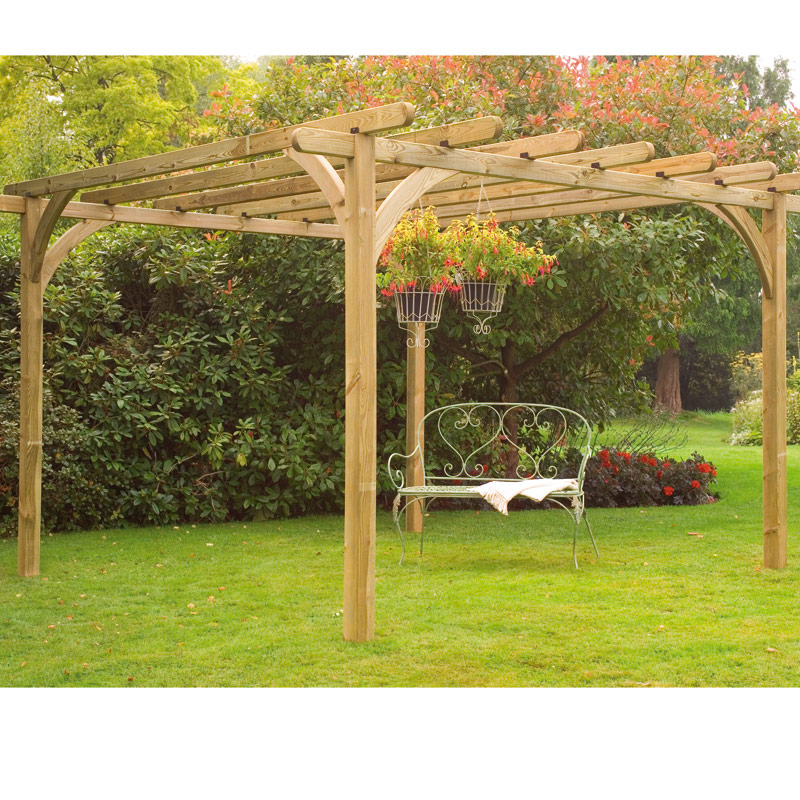
It is also worth thinking about headroom and edge clearance. A pergola that is the right size on paper can still feel cramped if the posts sit too close to seating. By contrast, leaving a little breathing room around the perimeter makes even a small pergola feel deliberate and calm. That is one of the less obvious differences between a well-planned garden structure and one that just fills a gap.
Timber, aluminium or steel: the material changes the mood
The material does more than alter the look. It changes the whole tone of the pergola. A timber pergola feels softer and more traditional, and it often suits planted borders or cottage-style gardens. A powder-coated aluminium pergola brings a cleaner, more contemporary line, especially where the garden already uses paved surfaces, slim planters or black-framed glazing. Steel-framed designs tend to look more architectural and can suit sharper, urban spaces, though they usually read differently from the lighter, open feel of timber.
For a 100 sq ft / 9 m² layout, the material also affects visual weight. Timber posts can look more substantial, which may be welcome if the pergola is meant to define a dining zone. Aluminium often appears slimmer, making the same footprint seem less crowded. That is a useful distinction if the surrounding space is already busy with fencing, sheds or planting.
Freestanding or wall-mounted: two very different ways to use the same size
A freestanding pergola creates a destination in the garden. It can stand over a patio, frame a corner seating area, or mark the point where the garden changes from open lawn to a more enclosed outdoor room. This type suits buyers who want the structure to be seen from several angles.
A wall-mounted pergola, by contrast, usually feels more integrated. Fixed to the house or another solid wall, it can extend a terrace and make the edge between inside and outside feel less abrupt. In a 9 m² format, this can be especially useful because one side is already anchored, so the usable area can feel clearer and more efficient. The choice between the two is not just about looks; it is about whether the pergola is meant to stand as a feature or act as an extension of the building.
Square, rectangular or corner shape: the form changes the flow
Not all pergolas in this size behave the same way. A square pergola tends to feel balanced and compact, which suits a central sitting area. It is often the easiest shape to furnish evenly. A rectangular pergola gives more room for lengthwise layouts, such as bench seating along one edge or a dining table placed under a longer run of beams. A corner pergola can make better use of awkward plots or leftover patio space, turning an underused angle into something that feels intentional.
The shape also affects how people move through the garden. A square frame invites a pause; a rectangle can lead the eye and create a clear pathway beside it. That difference sounds small, but it can change how the whole garden is read. In smaller gardens, this can matter as much as the finish or the material.
Open roof, slatted top or partial cover: shade with different levels of softness
The roof style is where many buyers begin to narrow their choice. A fully open pergola gives the lightest feel and is often chosen where the aim is to create structure without closing things in. A slatted roof softens direct sun and adds visual rhythm, while still letting the sky remain visible. A partial cover can give a more sheltered corner, though it will feel more enclosed and may suit dining or lounging areas where a stronger sense of cover is wanted.
For a 100 sq ft / 9 m² pergola, this choice can be the main reason one design feels airy and another feels more room-like. Buyers often compare them side by side and notice that the same footprint can behave very differently. It is not just about light or shade; it is about atmosphere. A slatted top can make the space feel relaxed and informal, while a denser roof line gives a stronger boundary.
Climbing plants, but with a structure that still shows through
Many pergolas are bought with planting in mind, and this size works well with climbing roses, clematis, jasmin and other trained climbers that can weave across the beams without swallowing the frame. The point is not to hide the structure completely, but to let the pergola and the planting work together. That is where the best-looking outdoor rooms often come from.
A lighter frame can suit more delicate climbers, while a heavier one can hold a fuller planting scheme. The visual difference is worth noting: timber under greenery often feels romantic and settled, while metal can look sharper with trained climbers and a more restrained planting palette. Either way, the pergola becomes more than a shade feature; it starts to feel like part of the garden’s layout.
Why this size is practical for buyers who want form and function
A pergola in this range often appeals because it is neither too small to matter nor so large that it dominates the garden. That balance is useful for people who want a defined outdoor area without building a full garden room or covered extension. It can mark out a dining zone, a lounging corner or a reading spot with enough presence to feel like a destination.
There is also a visual advantage. In many gardens, a structure of this scale gives the eye a place to settle, which can make the rest of the space feel more organised. It can help a patio look finished rather than left over. For buyers comparing different options, that sense of completion is often what tips the decision.
Subtle differences that change the buying decision
Two pergolas may both cover 9 m², yet still feel very different in use. The spacing of the posts affects how freely you can place furniture. The depth of the beams changes how much of the sky remains visible. The thickness of the frame changes whether the pergola reads as light and decorative or more substantial and grounded. Even small differences in proportions can matter a lot in a compact garden.
There is also the question of how enclosed the design feels from the edge. Some buyers prefer a pergola that barely interrupts the garden view, while others want something more defined and room-like. Neither is right for everyone. The better choice depends on whether the pergola is supposed to blend in or stand out a bit more.
Useful tips when choosing the right pergola style for 100 sq ft / 9 m²
- Check the usable footprint, not just the headline size, because posts and overhangs can change how much space is left for furniture.
- Match the shape to the layout: square for central seating, rectangular for dining or a longer bench arrangement.
- Think about visual weight; slim-framed designs can suit compact gardens, while thicker posts can help define a larger patio area.
- Choose the roof style by mood, not only by shade level. Open, slatted and partial-cover designs each create a different feel.
- Decide early between freestanding and wall-mounted, because this changes how the pergola sits in the garden and how much room remains around it.
- Consider what will sit under it: dining furniture, lounge seating or planting all ask for slightly different proportions.
- Look at the garden from inside the house, as a pergola often becomes a view feature as much as a usable space.
A structure that gives the garden a clear purpose
One reason a 100 sq ft / 9 m² pergola is such a popular category is that it offers definition without overcommitting space. It can turn a plain paved area into an outdoor room, create a sheltered threshold near the house, or give a quiet corner a bit of shape. In a small or medium-sized garden, that sense of purpose is often what makes the whole place feel more considered.
If you are comparing pergolas, the key is not simply choosing the one that looks good in a picture. It is choosing the one whose shape, material, roof style and frame thickness suit the way the space will actually be used. A well-chosen pergola in this size can feel neat, practical and pleasing without trying too hard. That balance is often what buyers are really after.
Where different pergola types tend to work best
- Timber freestanding pergolas suit garden corners, planted borders and softer, more traditional settings.
- Aluminium wall-mounted pergolas often work well on patios, terrace extensions and sharper modern spaces.
- Rectangular formats are a good match for dining tables, bench seating and longer outdoor layouts.
- Square formats feel tidy and balanced for compact lounge areas or central seating spots.
- Slatted-top designs offer a gentler sense of shade while keeping the space open.
- More open frame pergolas are useful when the aim is to define space without making it feel closed off.
The kind of feature that makes a patio feel finished
A pergola in this category is not just a decorative extra. It can give a garden a point of focus, a place to sit that feels intentional, and a scale that makes the space easier to use. With the right choice, a 9 m² pergola can make a small terrace feel more like an outdoor room and a larger garden feel more organised.
That is why the details matter so much. The wrong shape can waste space. The wrong frame can feel too heavy or too slight. The right one brings together proportion, shelter and style in a way that makes sense the moment you step outside. And that, more than anything, is what makes this category worth a closer look.
[Sassy_Social_Share]