
metal sheds 8x6 - Best Deals in UK!
Showing all 3 results
-
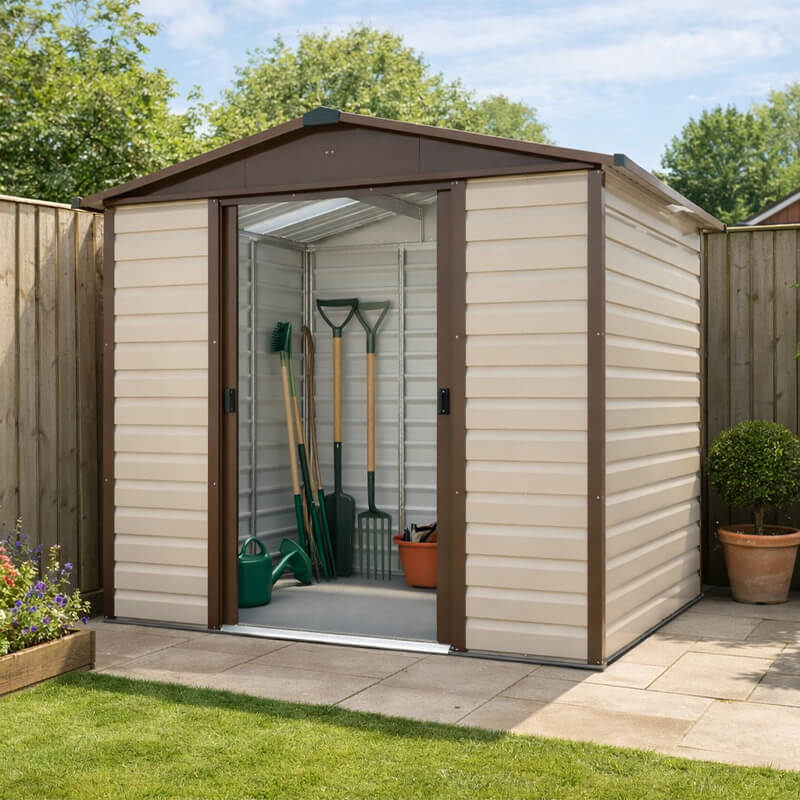
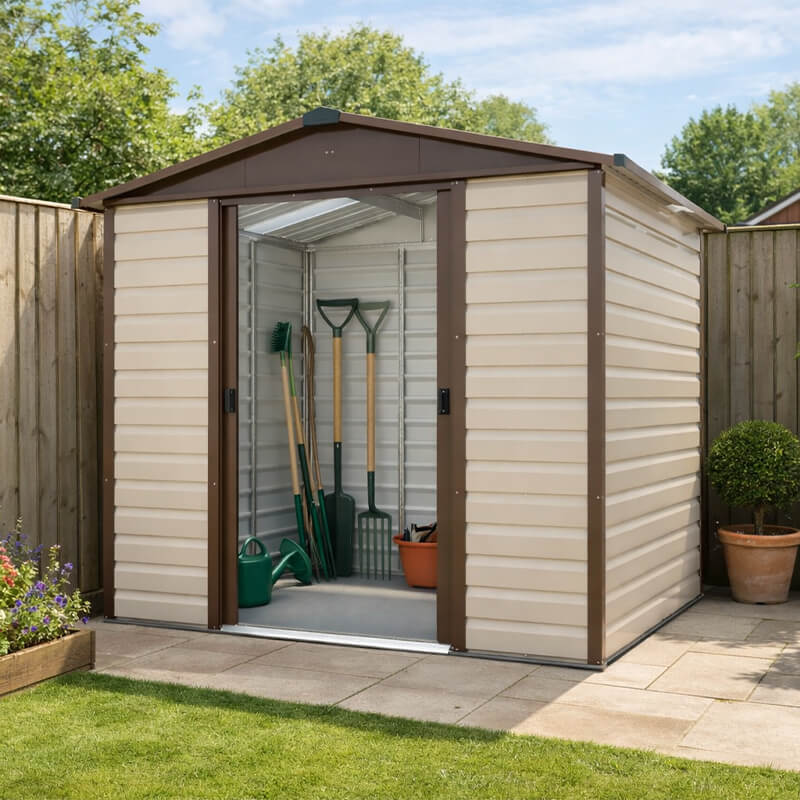
26% OFF: 8′ x 6’6 Yardmaster Shiplap Metal Shed Brown Finish (2.43m x 1.97m) £379.9926%

-
18% OFF: 8′ x 6’6 Yardmaster Shiplap Metal Shed Brown Finish (2.43m x 1.97m) £419.9918%
-
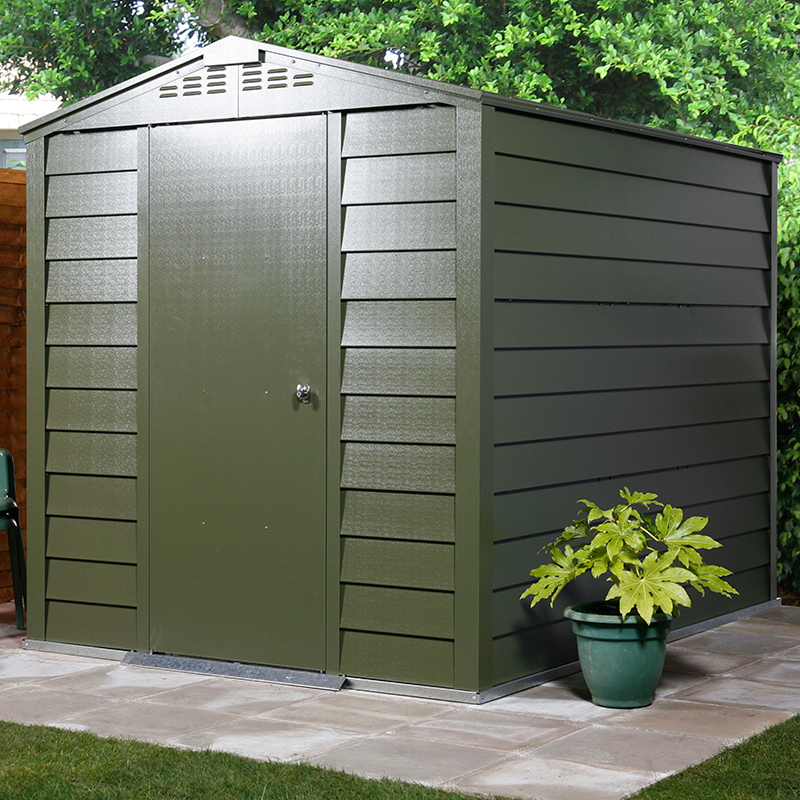
15% OFF: 6′ x 8′ Trimetals Premium Titan 680 Metal Shed (1.76m x 2.37m) £1,449.0015%

Metal sheds 8×6 offer a compact, practical storage solution for garden tools, bikes, bins, and seasonal kit, with different roof styles, door layouts, and panel finishes to suit varied spaces.
Why the 8×6 size works so well
An 8×6 metal shed sits in that useful middle ground: not tiny, not overbearing, and often easier to place than a larger outbuilding. The 8 ft by 6 ft footprint gives enough room for longer-handled tools, a mower, shelving, and a couple of bulkier items, while still fitting into many average gardens without swallowing the available space. For buyers who need storage that feels organised rather than cramped, this size often makes sense straight away.
Compared with narrower sheds, the extra width can make a real difference when you want to move around inside without knocking things over. Compared with larger metal sheds, an 8×6 shed is usually easier to position along a fence line, beside a garage, or at the back of a plot where access is a bit tighter. It also tends to look more balanced in smaller gardens, where a structure that is too deep can dominate the view.
Panelled steel, galvanised finish, and what the build means
Most metal sheds 8×6 are built from galvanised steel panels or a similar coated metal construction. The point of the metal shell is clear enough: a rigid frame, shaped panels, and a finish that helps resist rust and weather exposure. The exact thickness and profile can vary, which affects how solid the shed feels, how it handles wind, and how much internal bracing it needs. That difference is worth paying attention to, because not every metal shed has the same stiffness or weight.
Bestseller der Kategorie metal sheds 8x6
Some sheds use corrugated panels, which add strength through the shape of the steel. Others use flatter panels with pressed lines or ribs. Corrugated styles often give a more traditional utility look and can help water run off the sides. Flatter panel designs may look a bit cleaner and more modern, though they can vary more in feel depending on the frame underneath. If you are comparing options, the panel pattern tells you a lot about the shed’s character before you even read the specification.
Roof shapes that change the whole feel
The roof is one of the clearest differences between metal shed styles. A pent roof slopes in one direction, which gives a neat, compact profile and works well if the shed needs to sit against a wall or fence. It often feels tidy and space-conscious, and the sloping roof can help rainwater shed away in a controlled line.
A gable roof has the familiar pitched shape with a ridge in the centre. On an 8×6 shed, this can give a more traditional garden-building look and a slightly more open feeling inside at the ridge line. It also brings a different visual balance, which matters if the shed is going to be seen from the house or from a patio. There are also apex designs, which are often used to describe gable-style roofs with a central peak. These can suit buyers who want a shape that feels less boxy.
The main difference is not just appearance. Roof shape affects how the shed sits in a garden, how high it appears, and how practical it is where overhead clearance is limited. A pent version may blend more quietly into a side return. A gable or apex roof may offer a bit more headroom and a more defined silhouette.
Door layouts: the bit you notice every day
With an 8×6 metal garden shed, the door design has a bigger impact than many buyers expect. Single doors can work if the shed is mainly for hand tools, bags, and smaller items. They take up less frontage, which can be useful where access is narrow. But if you need to store a mower, boxed furniture, or a bike, the opening can feel a bit tight.
Double doors are a strong option for this size because they make it easier to bring in larger items without awkward angling. They also improve day-to-day access when you are reaching for something at the back. If the shed is going to hold mixed storage, double doors often make the layout feel more flexible, even if the internal size stays the same.
Some buyers prefer doors placed on the gable end, while others look for side access depending on the garden shape. Door position can influence where the shed sits and how easy it is to approach. That is one of those details that seems minor on paper, then becomes the thing you notice every time you carry something heavy out in drizzle.
Space inside: how 8×6 can be used properly
The value of an 8×6 storage shed is not just in the square footage, but in how that space can be arranged. One side can be used for long tools, rakes, spades, and watering equipment. Another side can take shelves or storage boxes. A central strip can stay clear for movement, which stops the shed feeling like a pile-up of odds and ends.
For gardeners, an 8×6 layout can hold a good mix of seasonal items: potting trays, compost bags, foldable furniture, plant supports, and a mower. For cyclists, the extra width can help with one or two bikes if the door opening is suitable. For families, it can work as the place where barbecue kit, children’s outdoor toys, and garden cushions all end up. The important thing is that the footprint allows more than one storage pattern, which is handy if your needs change through the year.
Compared with an 8×4 shed, the extra depth gives more room for shelving and bulky items without blocking access. Compared with a 10×6, it may be easier to fit into a standard garden while still feeling useful rather than token.
Types and styles worth comparing
When people search for metal sheds 8×6, they are often comparing more than size. They are comparing how the shed is shaped, how it opens, and how it fits the space they already have. A few common style differences matter quite a lot:
- Pent roof metal sheds for a low-profile look and a good fit beside boundaries.
- Apex or gable roof metal sheds for a more defined roof line and a familiar garden-building shape.
- Single-door sheds when the contents are mostly smaller tools and boxed items.
- Double-door sheds when movement of larger gear matters.
- Painted or coated finishes if the shed needs to sit more quietly in the garden visually.
- Galvanised steel sheds where the focus is on a hard-wearing outer surface and a practical, no-fuss appearance.
The difference between these versions is not just style. It affects how much room the shed seems to give you, how easy it is to use, and how it settles into the garden visually. That can be the deciding factor when you are comparing two sheds that look similar at first glance.
What metal does better than timber or plastic in this size
In an 8×6 format, metal sheds often appeal because they offer a straightforward storage shell without taking up extra visual weight. Against timber, metal usually brings a more uniform exterior and less chance of warping in the same way wooden panels can. Against plastic, steel construction can feel more rigid and less lightweight, which some buyers prefer when they want a shed that feels properly anchored.
The difference is especially noticeable in a garden where the shed needs to store heavier or sharper-edged items. Metal can suit tools, machinery accessories, and outdoor equipment that would quickly mark softer materials. It also tends to lend itself to a cleaner, more functional profile. That said, buyers who want the warmth of timber or the very light appearance of moulded plastic may see metal as a more practical choice than a decorative one. And that is fine, because this category is really about function first.
Features that make an 8×6 feel easier to use
Small details can make a big difference with an 8×6 garden shed. Ventilation slots or louvred sections help with air movement inside, which can matter when you are storing damp tools or garden items. Window panels, where included, can make the space brighter, so you are not always fishing around for a torch or relying on the door being open. Floor framing compatibility is another point buyers often check, because the shed needs a level base and a sensible way to sit above the ground.
Some metal sheds are designed with wider door openings, which can be very handy in this size class. Others prioritise a tighter, simpler shell. If you plan to store a mower, wheelbarrow, or boxed equipment, the opening width is worth checking carefully. A shed can be technically roomy enough and still feel awkward if the door and internal layout do not work together.
Practical tips before choosing one
Before you buy, measure not only the 8×6 footprint but also the clearance around it. You will need space for assembly, access to the doors, and a little room for rain run-off and maintenance checks. It sounds obvious, but a shed that fits on paper can feel cramped if the gate, path, or boundary leaves too little working room.
It also helps to think about what goes in first. If the shed is mainly for long-handled tools and smaller boxes, a single-door model may be enough. If you expect to roll in a mower or keep bikes inside, double doors may save you a lot of fiddling about later. If the shed needs to sit against a fence, a pent roof might suit the setting better than a high apex shape. If it will stand more openly in the garden, a pitched roof can give it a more finished outline.
Another useful point is interior planning. Buyers often focus on size, but the usable space depends on what is stored and how often you need to get to it. A shed with better door access and a roof shape that suits the site can feel bigger than one with the same footprint but awkward layout. Strange but true, really.
What makes an 8×6 metal shed a solid buy
A good metal garden shed 8×6 is one that answers a specific storage need without asking for more space than the garden can spare. It gives you a middle-sized footprint, a choice of roof and door styles, and a durable external shell that suits everyday outdoor use. It can be a tidy solution for gardeners, families, cyclists, and anyone who has ended up with a collection of items that do not quite belong in the house, garage, or loft.
What sets one version apart from another is usually the combination of roof form, door style, panel profile, and how well the shed fits the site. That is why this category works best when shoppers look beyond size alone. The right 8×6 shed is not just about storage capacity; it is about choosing a shape and layout that will actually be easy to use day after day, without making the garden feel crowded or the contents feel hard to reach.
If you are comparing options, focus on the details that shape daily use: the opening width, the roof line, the panel type, and the amount of space you want to move around inside. That is where the real differnce lies, and it is often what turns a basic shed into one that feels properly suited to the garden.
[Sassy_Social_Share]