
metal sheds 7x7 - Best Deals in UK!
Showing all 5 results
-
28% OFF: 6’8 x 7’2 Yardmaster Green Metal Shed (2.02m x 2.17m) £259.9928%

-
22% OFF: 6’8 x 7’2 Yardmaster Green Metal Shed (2.02m x 2.17m) £279.9922%
-
20% OFF: 6′ x 7′ Yardmaster Castleton Anthracite Metal Shed (2.02m x 2.17m) £309.9920%

-
15% OFF: 6’8 x 7’2 Yardmaster Tall Stone Grey Metal Shed (2.02m x 2.17m) £254.9915%

-
11% OFF: 6′ x 6′ Globel Heritage Green Metal Bike Shed (2.12m x 2.00m) £549.9911%

Metal sheds 7×7 give you a compact, weather-resistant storage space for tools, garden kit and outdoor clutter, with different roof styles, door layouts and panel types to suit tight spaces.
A square footprint that works hard
A 7×7 metal shed sits in that useful middle ground where a garden building is still manageable, yet offers enough room for more than just a few hand tools. The roughly square layout makes it easier to organise shelves, hang longer items and store bulkier bits without everything feeling squeezed into one corner. For many gardens, it is a neat solution when a standard narrow shed feels too limiting, but a larger outbuilding would take up too much ground.
Because the plan is almost square, these sheds often feel more versatile than long, thin alternatives. You can use one side for storage shelving, one wall for hanging equipment, and still keep a clear centre for access. That makes the format appealing for people who want order, not just somewhere to hide things.
What metal brings to the shape
The attraction of a metal garden shed is not only the material itself, but the way it supports this compact size. Steel and aluminium shed constructions are commonly chosen for their rigid panels, clean lines and relatively low-profile look. In a 7×7 format, that matters, because the building is small enough to be part of the garden rather than dominate it.
Bestseller der Kategorie metal sheds 7x7
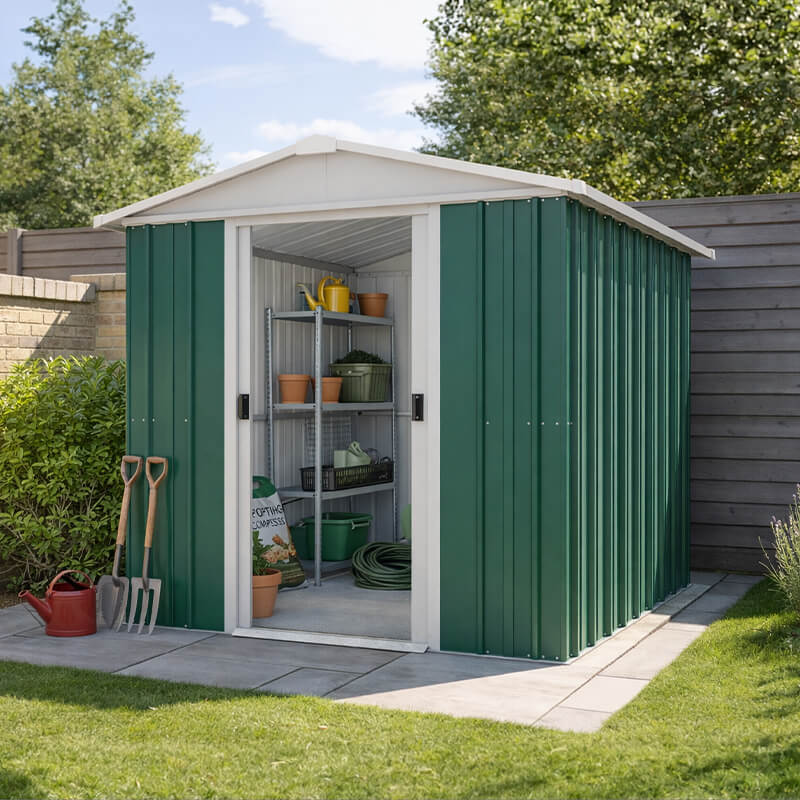
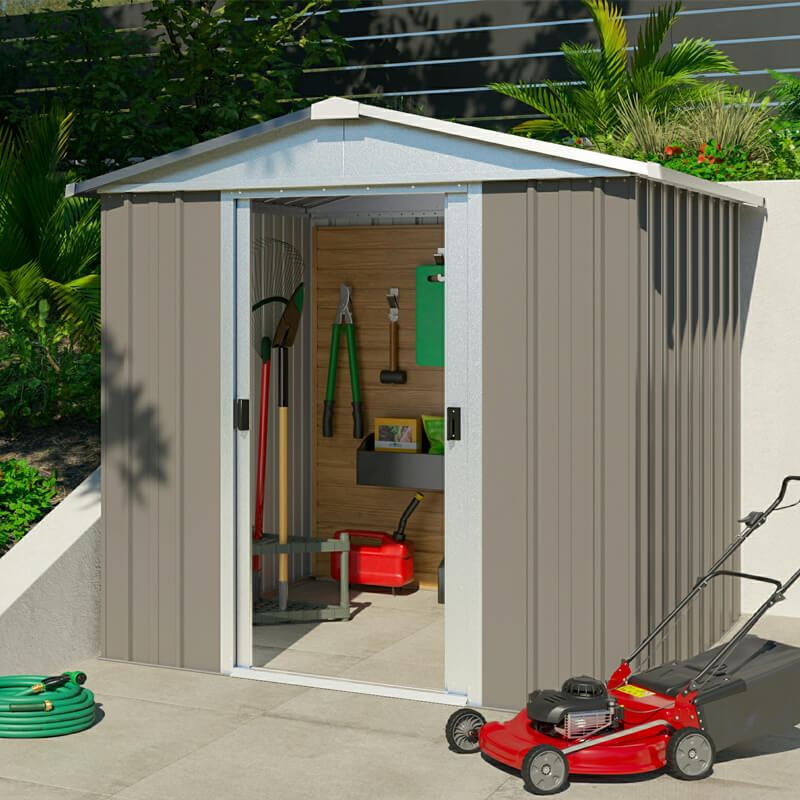

Metal sheds usually use either galvanised steel or powder-coated steel, and sometimes aluminium. Galvanised steel is valued for the protective coating that helps resist corrosion, while powder-coated finishes can add another layer of weather defence and a tidier surface appearance. Aluminium versions tend to be lighter, which can help if access is awkward or the base is in a tight corner.
Roof styles that change the feel
One of the main differences you’ll see in 7×7 metal sheds is the roof shape. This is not just a visual detail; it affects water run-off, interior headroom and how the shed sits in a garden.
- Gable roof designs give a more traditional shed profile, with a peaked centre that can feel a bit roomier above head height.
- Pent roof versions have a single slope, often making them easier to position against a wall or fence and giving a more contemporary look.
- Flat roof metal sheds are lower in profile, which can help where visibility matters or there are height limits, though the shape can feel more utilitarian.
If your garden is exposed and rain is driven by wind, roof shape matters more than many buyers first think. A good slope helps water move off the surface more cleanly, which is useful on a compact shed where pooling is not welcome.
Door layouts that decide how usable it feels
With a 7×7 shed, door design can change the whole experience. A building can be compact and still practical, but only if you can get items in and out without awkward manoeuvring. That is why single doors, double doors and different opening widths are worth comparing carefully.
Single-door sheds tend to suit lighter storage: hand tools, pots, fertiliser, hose reels, folding chairs. They can keep the façade neat and take up less wall space. Double-door layouts are useful if you want to move in a wheelbarrow, a mower, or larger boxes. The wider opening also makes the space feel less cramped when you are standing inside.
Some sheds use a central door position, while others place the entrance off to one side. That difference sounds small, but it changes how you organise the interior. A side-set door can free up a whole wall for shelving. A central entrance may feel more balanced, but it can split the room in a way that affects storage flow.
Panel types and the feel of the build
Not every metal shed is built the same way. The panel construction can influence strength, assembly style and the final look. For a 7×7 size, this can be a key point because the shed needs to feel solid without becoming difficult to put together.
- Corrugated panels have ridged lines that add stiffness and a classic shed look.
- Flat panels create a cleaner, more modern surface and can be easier on the eye in a small garden.
- Reinforced panels often include extra framing or thicker sections for a more secure feel, especially around doors and corners.
Corrugated styles often look more familiar in outdoor settings, while flat-panel designs tend to appear tidier against contemporary fencing, paving or decking. The right choice depends on whether you want the shed to blend in quietly or match a sharper garden design.
Seven-by-seven: why the proportions matter
The 7×7 shed format offers a balanced internal space. It is not a long corridor, so you don’t end up marching down a narrow aisle just to reach the back. That square plan can make it easier to create zones inside the shed, even when the overall footprint is modest.
For buyers comparing sizes, the difference between a 7×7 and a rectangular 7×5 or 8×6 shed is quite noticeable. A narrower building may suit only linear storage. A square one gives more flexibility for stacks, bins, bikes or mixed garden equipment. If your storage needs are varied, the shape can be more important than the total square footage alone.
It is also worth thinking about positioning. A square shed can fit neatly into corners, against a boundary or on a prepared base without looking stretched. In smaller gardens, that sense of neat proportion can make the whole area feel less busy.
Practical advantages that make sense day to day
Metal sheds 7×7 bring a number of practical benefits that are especially noticeable in a busy garden. One of the biggest is the way they help keep equipment together in one place. That sounds basic, but once you have a defined storage area, it becomes easier to find things and less likely that tools end up scattered across the patio.
Metal is also chosen by many buyers for its weather resistance and low fuss appearance. Compared with some timber sheds, a metal unit often has fewer concerns around rot, wood-boring insects or paint flaking, depending on the finish and setup. That can be attractive if you want a building that looks tidy with less attention paid to surface treatment.
Another practical point is security. A metal shed can feel more reassuring for storing items you don’t want left out in the open, such as power tools, garden machinery or spare kit. Of course, the lock and door hardware matter too, but the rigid structure itself adds to the sense of protection.
Different uses inside one compact shell
The same 7×7 footprint can serve different jobs depending on how you use it. That flexibility is part of the appeal.
- Garden tool storage for spades, forks, shears, pots and compost accessories
- Mower storage where the door width and internal floor space allow easier access
- Seasonal storage for cushions, outdoor decor, planters and parasols
- Bike storage for one or two bicycles, depending on layout and door clearance
- Mixed storage where shelves and floor space are split between smaller items and bulkier gear
The important thing is to match the shed’s form to your routine. If you often carry in awkward items, double doors or a wider opening will make a big difference. If the shed is mainly for boxes and hand tools, a simpler single-door version may be enough.
Choosing between steel and aluminium
Buyers often compare steel sheds and aluminium sheds when looking at metal options in the 7×7 size. Both can work well, but they do not feel identical.
Steel tends to offer a firmer, more robust impression, especially when the panels are thicker and the frame is well reinforced. It is often favoured when the shed will house heavier items or when the aim is a more anchored, sturdy-feeling structure.
Aluminium is lighter and can be easier to handle during assembly or placement. That can be useful on small sites or where access is awkward, but the overall feel may be slightly different from heavier-gauge steel. Neither is automatically better; it depends on what you plan to store and how the shed will be used.
Small details that make a big difference
In a compact metal shed, little design details quickly become important. The width of the door track, the position of ventilation openings, the angle of the roof edge and the amount of internal wall support all affect day-to-day use. A buyer might focus on size first, but these smaller points often decide whether the shed feels easy to live with.
Door clearance is a good example. If the opening is tight, the shed might technically be 7×7, but it still won’t be comfortable for larger tools. Likewise, the internal wall shape can affect whether shelves sit flush or leave odd gaps. A square shed gives you options, yet those options are only useful if the interior layout is sensible.
Check whether the shed’s corners and edges are designed for a clean fit on the base. In metal sheds, alignment matters. If the frame sits properly from the start, doors tend to close better and panel lines look more consistent. It’s the sort of thing you notice later, when the shed feels straight and settled rather than a bit off.
Tips for buying without overcomplicating it
When looking at 7×7 metal garden sheds, keep the focus on the real job you need it to do. A lot of frustration comes from buying for the idea of storage, rather than the actual items that need storing.
- Measure the largest item first so you know whether the door opening and internal depth are suitable.
- Think about access space around the shed, not just the footprint of the shed itself.
- Match the roof style to the garden setting and how visible the shed will be from the house.
- Compare panel thickness and frame style if you want a more substantial feel.
- Check the door arrangement if you plan to use the shed for mixed storage, not only small items.
It also helps to picture the interior in use, not empty. A shed with no shelves can look generous on paper and still feel disorganised once tools, boxes and garden bits are inside. A compact square shape rewards a bit of planning.
A tidy answer for tighter gardens
For many outdoor spaces, a metal shed 7×7 is a practical compromise between capacity and footprint. It gives you enough room to organise, enough structure to feel dependable, and enough variety in roof and door styles to suit different gardens. Whether you lean towards a gable roof, a pent roof, single doors or double doors, the format offers a clear, usable storage base without taking over the plot.
That is why this category suits buyers who want their shed to do a proper job, stay visually modest and make storage simpler. Not flashy, not overblown, just a useful bit of garden structure that earns its place.
[Sassy_Social_Share]