
metal sheds 70 sq ft / 7 m² - Best Deals in UK!
Showing the single result

Metal sheds 70 sq ft / 7 m² are a practical choice for compact gardens, offering secure storage for tools, bikes and outdoor kit in a tidy footprint. Explore shapes, roofs, finishes and useful buying tips.
A compact shed size that still pulls its weight
A 70 sq ft / 7 m² metal shed sits in that useful middle ground: not too small for everyday garden storage, yet not so large that it takes over the plot. It suits buyers who want a defined place for tools, lawn gear, folding furniture, composting accessories, bikes or a small workbench area, without stepping into a much bigger outbuilding. In practice, this size often feels easier to place than timber options because the clean lines and slimmer wall profiles can make the footprint look neat rather than bulky.
This category tends to appeal to people who need a proper store, not just a cupboard on a slab. The extra square footage can make a real difference when you are trying to separate long-handled tools from bulkier items, or when you want room to move around inside without side-stepping every time you pick something up. It is a size that can support a useful layout, rather than forcing everything into one stack.
What metal construction changes in everyday use
The main draw of a metal shed is the structure itself. Compared with timber, metal walls usually give a more rigid, shaped enclosure with fewer visible joints and a cleaner overall finish. Compared with many plastic sheds, metal often feels more solid in use, especially in larger spans like 7 m² where panel strength starts to matter. For buyers comparing materials, the difference is not only visual. It affects how the shed deals with stored weight, how it handles frequent opening and closing, and how it looks from the garden path.
Bestseller der Kategorie metal sheds 70 sq ft / 7 m²
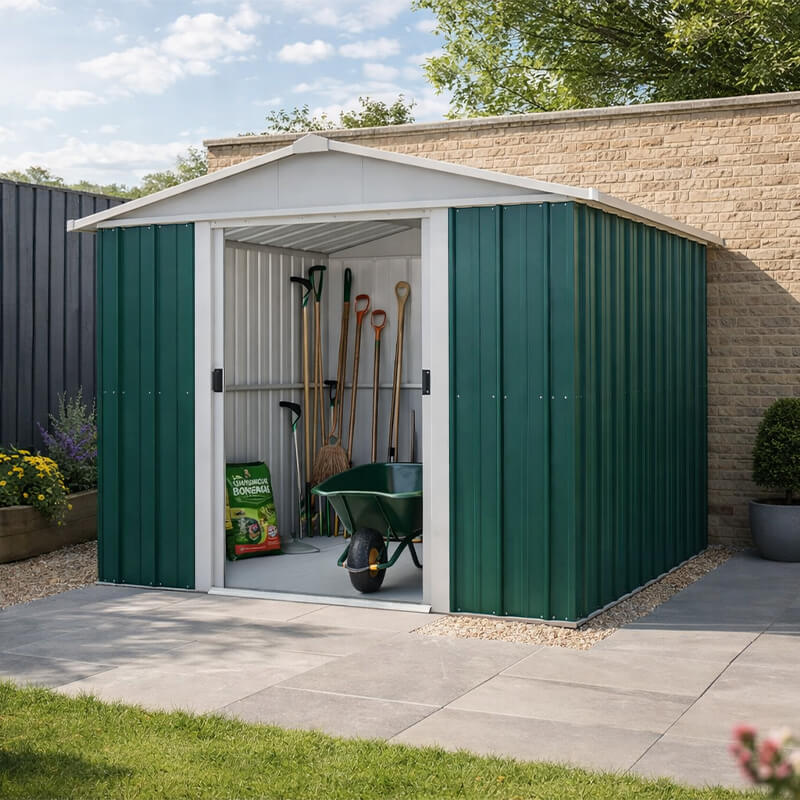
Metal is also often chosen because it can suit a modern garden where crisp edges, muted colours and simple roof lines look intentional. That said, the appeal is not only modern. Some finishes sit quietly at the back of a traditional garden, especially when the colour is closer to slate, dark grey or olive tones rather than shiny silver. A lot depends on the profile and door style, not just the material.
Shapes that change how the shed fits the space
Within the 70 sq ft / 7 m² range, shape matters nearly as much as size. A shed can be broadly rectangular, narrower and deeper, or more square in plan, and each layout changes what it is good at.
- Rectangular layouts are often easier for shelving, racking and storing longer items along the side walls.
- More square formats can feel balanced inside, with a central access area that works well for mixed storage.
- Narrow-deep designs suit boundary spaces and can make better use of awkward side returns, though access to the far end needs planning.
- Corner-friendly footprints can work in gardens where the shed needs to sit out of the main view, using a more compact visual line.
If you are weighing up shapes, think less about the headline area and more about how the space will actually be entered and used. A shed that is technically the right size can still feel awkward if the opening does not match the way you store things. For example, long items are easier in a rectangular shell, while a square floor plan can suit more varied stacks and boxes.
Roof styles that do more than change the silhouette
Roof shape is one of the clearest differences in this category. It alters the look, yes, but it also affects headroom, rain run-off and how the shed sits visually in the garden. In a metal shed 70 sq ft / 7 m², the roof style can decide whether the interior feels practical or a bit tight.
- Gable roofs give a familiar pitched look and often improve internal height at the centre.
- Lean-to roofs work well where the shed needs to sit against a fence, wall or boundary, with a lower front profile.
- Reverse apex roofs can help with side access in certain placements, especially where the shed front faces a path or patio.
- Flat-profile roofs create a restrained, low-line appearance, though the interior feel can be more limited depending on design.
For buyers comparing roof types, the important point is not just the look from outside. A pitched roof can make a small-ish metal shed feel more usable in the middle, especially if you want to stand upright while sorting items. A lower roof can be fine if you mainly need storage and care more about visual discretion or boundary fitting.
Doors, access and the difference a few centimetres can make
Access is often overlooked until the shed arrives. In this size category, door style can change the experience more than the wall colour or panel texture. Double doors are useful where you expect to move in bulkier items, such as bikes, wheelbarrows or stacked storage boxes. Single doors can be fine for lighter use and sometimes give a neater frontage, but may feel less convenient with larger kit. Some designs use wider opening spans than others, and that small difference can save a lot of faffing about.
The opening direction matters too. If the shed sits close to a path, fence or tree, the door swing and handle position can either help the layout or make it a pain. It is worth checking whether the doorway is centred, offset or placed on the gable end, because that affects how shelves and tools are arranged inside. A well-placed door can make a 7 m² shed feel bigger than it is.
Panel types and finish options worth comparing
Not all metal sheds are built the same way. The panel construction, surface treatment and colour finish influence appearance and the way the shed behaves in a garden setting. Here are some common differences buyers usually compare:
- Galvanised steel for a more practical, workmanlike look and a sturdy metal feel.
- Powder-coated finishes for a more refined surface and colour choices that blend better with fencing or paving.
- Corrugated panel styling for a familiar shed profile and added visual texture.
- Flat-panel cladding for a cleaner, more minimal appearance.
- Wood-effect metal finishes where the aim is to echo timber without using actual wood, though the effect varies by design.
The practical difference here is partly visual and partly about how the shed sits in its surroundings. Corrugated sides can look more utilitarian; flat panels can read as more contemporary. Wood-effect metal can be a useful compromise for buyers who want less of an industrial look, though it will still feel like a metal building when you stand close to it.
Why buyers choose this size over a smaller shed
It is easy to under-size a shed and then end up with tools piled in front of the door. A 70 sq ft / 7 m² metal shed often solves that problem without jumping to a very large structure. The extra room can support better sorting, which matters more than people think. Storage that is spread out properly is easier to use than storage that is tightly packed, even if the overall volume looks similar on paper.
This size also gives a bit more room for categories of items to stay separate. For example, longer garden tools can live in one zone, while smaller maintenance items sit on shelving, and seasonal kit can be boxed at the rear. That separation helps the shed stay sensible to use, rather than becoming a single mixed heap. It also gives a clearer sense of what you actually own, which can make buying duplicates less likely, or at least less accidental.
Where the differences really show up inside
On the inside, the best use of a 7 m² metal shed depends on how the floor space is divided. Some sheds feel very open because the door is wide and the internal span is clean. Others trade a little openness for stronger framing, which can slightly reduce the usable edge space. The distinction is subtle, but in a smaller outbuilding it matters.
Buyers should compare:
- Wall height, which affects whether shelves sit comfortably above stored kit.
- Ridge height, especially in pitched-roof designs where standing room varies by position.
- Door aperture width, which affects bulky item entry more than the advertised floor size does.
- Internal span, because support positions can change how freely you can place long items.
A shed may claim the same floor area as another but still feel quite different once you step inside. One might favour taller items, another may suit broad shelving runs, and another may work better for mixed storage with a free central walkway. That is why shape and structure deserve as much attention as the square footage.
Good fits for different garden setups
This category works well in several real-world layouts. In a narrow garden, a longer rectangular shed can sit neatly along a fence and preserve the open lawn area. In a more square garden, a central or side placement may be possible without making the space feel pinched. For urban plots, metal is often chosen because the crisp form feels controlled and easier to integrate beside paving, raised beds or boundary screening.
In family gardens, the extra capacity can help keep sports gear, gardening tools and outdoor toys from mixing together. In more dedicated growing spaces, it can store pots, trays, canes and seasonal equipment in one place instead of spreading them across the patio. If you are using the shed for mixed storage, a 7 m² footprint usually gives just enough room to avoid all items competing for the same corner.
Useful buying checks before you decide
When comparing metal sheds 70 sq ft / 7 m², a few checks can save disappointment later. These are the details people often skim past, even though they shape how the shed behaves in the garden.
- Measure the siting area with a little clearance around the shed, not just the exact footprint.
- Check door clearance against the route from the gate, patio or path.
- Think about item lengths, not only the number of items, because long-handled tools and bikes need straight access.
- Compare roof height if you plan to use vertical storage or want more comfortable movement inside.
- Match the finish to the rest of the garden if you want the shed to feel like part of the layout rather than a bolt-on box.
It also helps to picture the shed in use, not only empty. Many buyers focus on whether everything will fit on paper, but the more useful question is whether the shed will still work once items are coming in and out through the season. If access feels awkward from the start, the storage area can become less helpful than the numbers suggest.
Practical advantages without dressing them up
The appeal of a metal shed in this size is fairly straightforward. It gives defined storage, a tidy external shape and a sense of order that suits many gardens. It can be a good match for buyers who want a clear boundary for garden equipment, or who prefer a structure that looks less fussy than some traditional shed styles. The finish can be chosen to blend in or stand out a little, depending on taste.
Another quiet advantage is how the structure can suit frequent use. If you are in and out of the shed a lot, strong framing and simple door lines can make it feel more straightforward to use. There is less wrestling with a cramped layout, and less need to reshuffle the whole interior every time one item is taken out. That sounds small, but over time it adds up.
Choosing between similar sheds without getting lost in the details
When several sheds all sit around the same 70 sq ft / 7 m² mark, the differences usually come down to proportion, access and visual style. A buyer comparing two options should ask what matters more: a taller centre, a wider opening, a lower profile, or a finish that blends into the fence line. In many cases there is no single right answer, just a better fit for the way the garden is used.
If you are storing mixed items, favour a layout with flexible wall space and a sensible doorway. If you are mainly storing long tools, prioritise width and side arrangement. If the shed has to sit near a boundary, a lower roof or a lean-to profile may make the whole set-up easier to live with. Small differences can become quite important once the shed is in position, so it pays to compare them with the actual garden plan in mind, not just the product photos.
A size that is easy to justify, and easier to use well
A metal shed 70 sq ft / 7 m² is a measured choice for people who want more than basic storage but do not want an oversized building. It offers a useful balance of capacity, footprint and tidy garden presence. The best options in this category are the ones that make sense from the outside and work logically inside too. That means considering the roof, access, panel style and shape as a package, not one by one in isolation.
For buyers looking for a shed that feels purposeful without taking over the plot, this size can do a lot of quiet work. It stores, organises and settles into the garden in a way that makes everyday use feel less like a compromise. And that, really, is what makes it worth comparing carefully.
[Sassy_Social_Share]