
metal sheds 60 sq ft / 6 m² - Best Deals in UK!
Showing all 2 results
-
22% OFF: 10′ x 6′ Yardmaster Shiplap Metal Shed Brown Finish (3.03m x 1.97m) £434.9922%

-
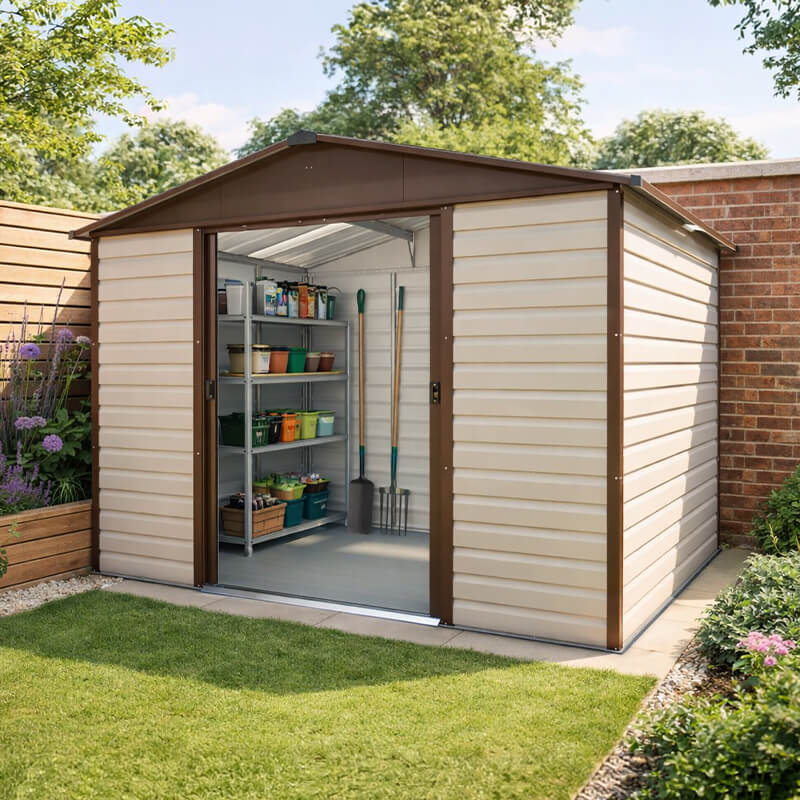
14% OFF: 10′ x 6′ Yardmaster Shiplap Metal Shed Brown Finish (3.03m x 1.97m) £479.9914%
Metal sheds 60 sq ft / 6 m² are a neat, space-smart choice for storing garden tools, bikes, outdoor furniture, and seasonal bits without taking over the whole plot; choose from flat roof, apex, pent roof, and compact lean-to styles.
Why a 60 sq ft shed feels just right
A 60 sq ft / 6 m² metal shed sits in that useful middle ground where a storage building is big enough to be practical, but not so large that it dominates the garden. For many homes, this size gives room for the everyday items that end up scattered around the patio, garage, and back corner of the lawn. You can think of it as a proper outdoor store rather than a little lock-up, yet it still stays manageable in tighter spaces. That balance is a big part of the appeal.
In this category, the size matters as much as the material. Metal construction gives the shed a clean, rigid structure, while the 60 sq ft footprint keeps it compatible with modest gardens, side returns, and narrow plots. It is often the sort of shed people choose when they want storage that looks tidier than a stacking of plastic boxes, but does not need the heavier presence of a workshop-sized building. And yes, for a lot of buyers, that makes it easier to place somewhere sensible without awkward compromises.
Compact footprint, usable interior
One of the best things about a 6 m² shed is that the interior can still feel organised if the layout is thought through. This size can hold upright tools, a push mower, bags of compost, foldable chairs, a hose reel, and a few larger items like a wheelbarrow or patio cushions. If you need space for a bicycle or two, many designs can handle that as well, depending on the door width and internal height.
Bestseller der Kategorie metal sheds 60 sq ft / 6 m²
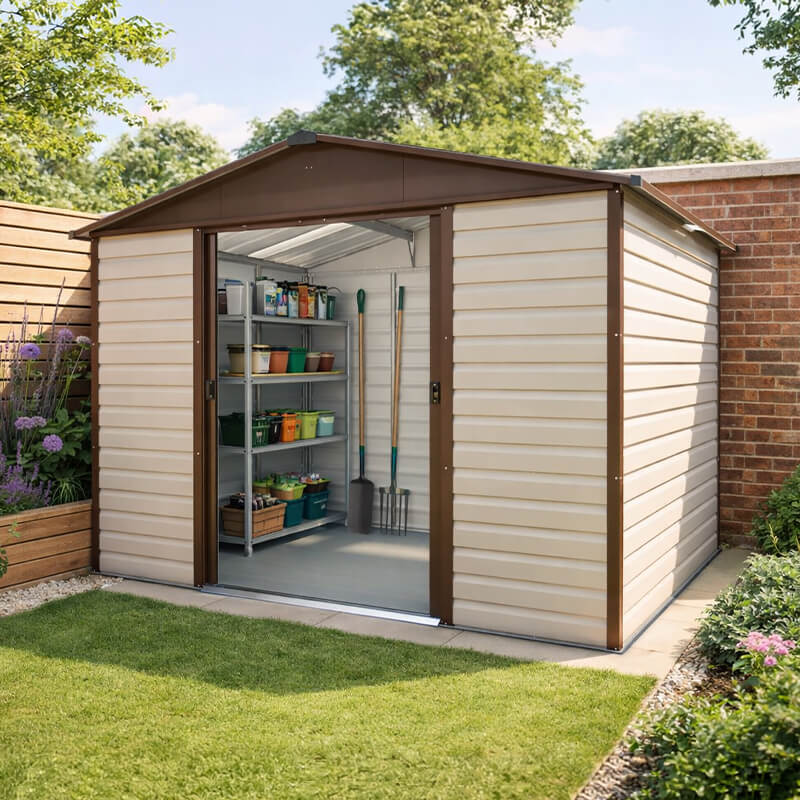
The important point is that this category is not about empty volume for the sake of it. It is about usable storage density. Metal sheds in this footprint often make better use of wall height and roof shape than some bulkier alternatives, especially when the doors open wide and the corners stay clear. That makes a real difference when you are trying to fit in long-handled tools, shelving, or awkward-shaped outdoor kit.
Shapes that change the feel
Within metal sheds 60 sq ft / 6 m², the roof shape has a bigger effect than many people expect. The different forms do more than alter the look; they change how the shed sits in the garden, how easy it is to place against a wall, and how much headroom you get inside. The main types are:
- Apex roof – the classic pitched shape with a central ridge, giving a traditional garden-shed look and more headroom in the middle.
- Pent roof – a single slope that works well close to fences or walls, and often gives a more modern, low-profile appearance.
- Flat roof – neat and unobtrusive, usually chosen where visual height needs to stay low and the shed has to sit quietly in the space.
- Lean-to style – best when the shed needs to tuck alongside another structure, with a shape that follows the line of the space rather than fighting it.
These forms are not just about looks. An apex roof can feel more generous inside for taller users or for storing items on upper shelving, while a pent roof often suits gardens where the shed must sit under a boundary line or in a narrower strip. A flat roof can be useful where planning restrictions or visual preference call for a lower profile, though it tends to offer less headroom. The difference is practical, not just aesthetic.
Metal panels, steel frames, and what that means in use
When people browse this category, they are usually looking at sheds made from galvanised steel or similar metal panel construction. That matters because the structure is typically formed from interlocking panels on a steel frame, creating a rigid shell that feels more contained than a loose, timber-clad build. It is a tidy, engineered sort of storage, which appeals to buyers who want a straightforward, defined space for equipment.
Different metal sheds can vary in panel thickness, frame detailing, door design, and the type of finish applied to the exterior. Those differences affect how solid the shed feels, how the walls sit in windier areas, and how neatly the panels line up. For a 60 sq ft model, even small changes in the frame design can influence how much the interior is actually useful. A strong frame with sensible panel layout often means better door alignment and fewer annoying little gaps. Not glamorous, but very relevant.
What this size works for, in real garden terms
A 60 sq ft metal shed is especially suited to homes that need dedicated storage but do not want to give over half the garden to one structure. It works well for:
- General garden tools such as spades, forks, rakes, loppers, and smaller hand tools.
- Outdoor furniture like folding chairs, cushions, parasols, and compact table sets.
- Bike storage, especially when door opening and internal layout are considered carefully.
- Lawn care kit, including a mower, trimmer, extension leads, and spare fuel containers where suitable.
- Seasonal items such as heaters, winter pots, children’s outdoor toys, and BBQ accessories.
The sweet spot here is that the shed can replace a lot of cluttered micro-storage elsewhere. Instead of squeezing things into the garage and then forgetting where anything is, a dedicated metal garden shed gives each category of item a place. That sounds simple, but it often changes how usable the whole outdoor area feels.
Differences that actually matter when comparing models
When comparing sheds in this size range, buyers often focus on price, but the more useful differences are in the structure and access. One model may have a wider double door, another a single door with a taller frame, and another a roof shape that improves internal space near the centre. Those details can matter more than a small variation in outside measurements.
Look at the door opening width, because a shed can be 60 sq ft on paper and still be awkward if the doorway is narrow. A bike, a wheelbarrow, or even a boxed item may be simple to store in theory, but not if it needs to be turned sideways every time. Also check the wall height and ridge height, as these affect whether shelving feels easy or cramped. In metal sheds, straight internal lines can be a plus, but only if the height works for the things you actually own.
Another useful distinction is between models that feel more like a utility store and those that lean toward a small outdoor workshop feel. The first might have lower profiles and simpler access, while the second may offer more generous headroom and a more open interior. Neither is better in every case; it depends what you are putting inside.
Low-key benefits that make daily life easier
A metal shed in this size range offers a few practical benefits that are easy to overlook until you have one. The first is the sense of order. Outdoor items often spread across patios, under benches, and into the garage because there is no single place for them. A shed of this size creates that place. It sounds boring, but it does reduce the constant shuffle of moving things around.
The second benefit is how defined the space feels. Metal sheds tend to have crisp edges, neat panel lines, and a firm structure that makes storage zones clear. If you like a space that feels structured rather than soft or rustic, that can be a real selling point. The third is the way this size can serve different uses over time. One year it may be mostly for garden tools, the next it may be holding bikes and a folding workbench. That flexibility is one of the reasons buyers keep coming back to this footprint.
Where metal tends to edge out other materials
People often compare metal sheds with timber or resin options in the 60 sq ft range. The differences are not theoretical; they show up in how the shed looks, how it fits the garden, and how it behaves as a storage space. Metal sheds generally have a slimmer structural feel than many timber builds, so the usable interior can seem cleaner and less broken up by bulky framing. That can be a plus if you want a straightforward store with fewer visual distractions.
Compared with many plastic designs, metal often feels more fixed and architectural. The lines are sharper, the panels are more rigid, and the overall look is usually more suited to a garden that already has fences, paving, and hard landscaping. Timber can blend in better for some plots, of course, but metal has its own appeal for buyers who want a tidier, less decorative statement. It is not about being fancier; it is about being direct.
Practical layout ideas inside 6 m²
To get the most from a 60 sq ft shed, the internal arrangement matters almost as much as the build itself. A sensible layout can make the same footprint feel twice as useful. Wall storage is usually the best starting point: long-handled tools on one side, hooks for smaller kit, and shelving above the floor for lighter items. That leaves the centre line clearer for bulky pieces that need straight access.
It can also help to think in zones. For example:
- Front zone for items used often, such as hand tools or a watering can.
- Middle zone for bigger items like a mower, bike, or folding furniture.
- Rear zone for seasonal storage that does not need constant access.
This is where roof shape and doorway position play their part again. An apex shed might suit a central stack or taller shelving, while a pent roof often works better with one long wall organised from end to end. If the door opens on the long side, the layout changes again. These are the small, practical details that can make a shed feel like a useful room rather than just a box.
Why the metal finish suits modern and traditional plots
A good thing about this category is that it does not lock you into one garden style. A metal shed 60 sq ft / 6 m² can sit comfortably in a modern courtyard, a family garden, or a more traditional plot with lawns and borders. The finish is usually clean and low-fuss, so it can blend with stone, decking, fencing, and paved paths without looking over-decorated.
For some buyers, the appeal is the no-nonsense appearance. For others, it is that the shed does not try to be a feature in itself. It simply does its job and leaves the rest of the garden to do the talking. That can be a real advantage if you already have planting, seating, or a gazebo and do not want another object competing for attention. Not every storage building needs to shout, after all.
Useful buying checks before you choose
Before settling on a metal shed in this footprint, a few checks are worth making. First, confirm the exact external dimensions, not just the approximate size class. Sixty square feet can be measured in ways that differ slightly from one design to another, and that affects where it will actually fit. Second, compare door access with the items you plan to store. A shed that is technically large enough can still be a faff if the opening is too narrow.
Third, look at the shape of the roof and the wall heights in relation to your intended use. If you plan to store tall tools, hanging items, or a bike upright, those dimensions matter a lot. Fourth, consider how the shed will sit in the space visually. A flat roof may feel discreet, while an apex roof has a more familiar shed profile. Neither is a wrong choice, but one will usually suit your plot better than the other.
The case for a tidy, dedicated store
At this size, a metal shed is often less about bulk storage and more about making the garden work better day to day. A 60 sq ft / 6 m² shed gives you a proper home for the things that usually end up under tarps, stacked in corners, or shoved into the garage. It creates room to breathe elsewhere, and that is part of the value. You are not just buying a shed; you are buying a more settled layout for the whole outdoor area.
If you want storage that is compact without being cramped, defined without being heavy-looking, and versatile enough for tools, bikes, and seasonal gear, this category makes a lot of sense. The different roof shapes, door formats, and internal heights let you choose a version that suits the garden you already have, rather than forcing the garden to adapt around it. And that is often the detail that turns a maybe into a proper yes.
[Sassy_Social_Share]