
metal sheds 50 sq ft / 4 m² - Best Deals in UK!
Showing all 3 results
-
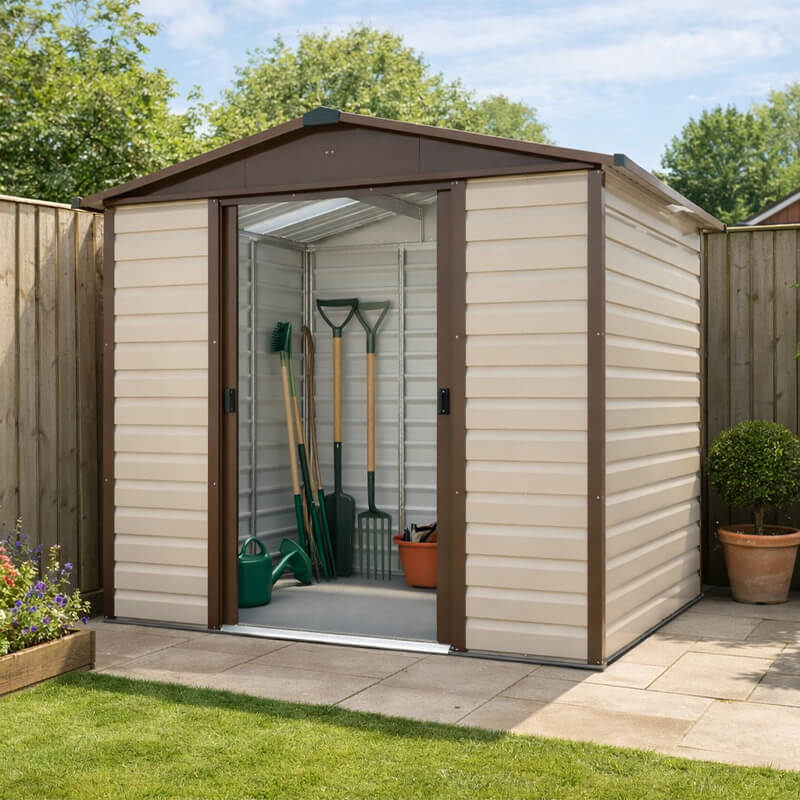
26% OFF: 8′ x 6’6 Yardmaster Shiplap Metal Shed Brown Finish (2.43m x 1.97m) £379.9926%

-
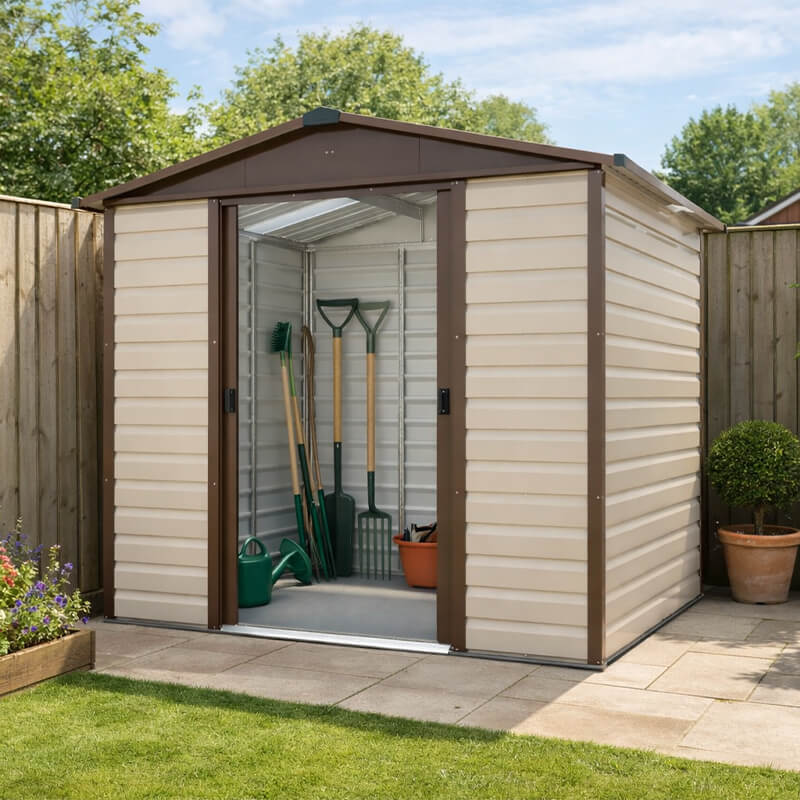
18% OFF: 8′ x 6’6 Yardmaster Shiplap Metal Shed Brown Finish (2.43m x 1.97m) £419.9918%
-
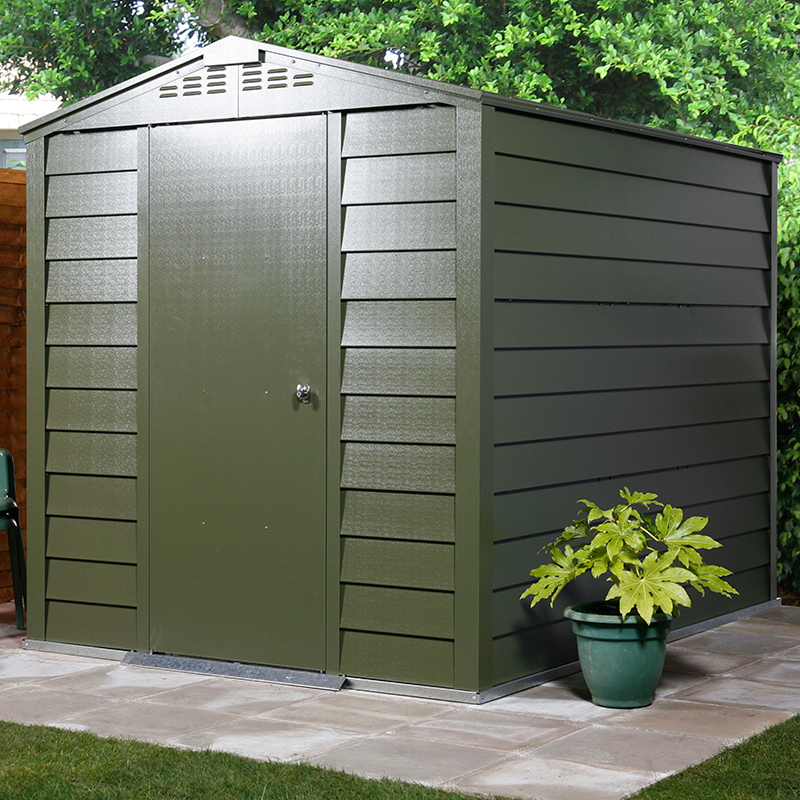
15% OFF: 6′ x 8′ Trimetals Premium Titan 680 Metal Shed (1.76m x 2.37m) £1,449.0015%

Metal sheds 50 sq ft / 4 m² give you a compact, tidy way to store garden tools, bikes, folding furniture and season stuff without taking over the plot. Compare styles, shapes and door types.
Compact Storage Without Wasted Corner Space
A 50 sq ft metal shed sits in that useful middle ground where it is small enough for tighter gardens, yet large enough to hold more than just a spade and a watering can. In metric terms, 4 m² is a practical footprint for homes that need proper storage but do not have the space for a big outbuilding. This size works especially well when you want to keep the garden looking open, but still need somewhere solid for tools, cushions, bins, or a push bike.
What makes this category interesting is the mix of space efficiency and metal construction. You are not just buying a box for storage; you are choosing a structure that can suit different access needs, rooflines and garden layouts. Some designs are made to tuck neatly against a fence. Others stand better as a free-standing unit where you can walk around all sides.
Why Metal Feels Different From Timber Or Plastic
Metal sheds have a very particular feel. They tend to suit buyers who want a neat, straight-edged look and a shell that handles everyday use without the same visual bulk as some timber buildings. Compared with wooden sheds, metal versions usually look more angular and precise. Compared with plastic, they often feel more rigid and less “domestic” in appearance, which can be a plus if you want something that blends into a utility corner rather than becoming a garden feature.
Bestseller der Kategorie metal sheds 50 sq ft / 4 m²
There is also a practical difference in how they are used. A metal shed 50 sq ft often works best for items that benefit from clear organisation: long-handled tools, ladders, small mowers, hose reels, bagged compost, sporting kit, and folded outdoor furniture. The internal shape matters a lot here. A shed that is the same footprint can feel quite different depending on whether it is narrow and long, more square, or higher at the ridge.
Shapes That Change How The Space Feels
At this size, shape is not just a styling choice. It changes how easy the shed is to live with. The main forms you will come across are worth comparing before you buy:
- Rectangular sheds – good for stacking items along one wall and keeping a clear walkway down the middle.
- Square-ish layouts – easier if you want a balanced interior with storage on several sides.
- Lean-to styles – ideal when you need to place the shed against an existing wall or boundary.
- Compact pent roof designs – useful where rain run-off direction matters or where one side height needs to be kept lower.
- Traditional apex roof sheds – give a more central peak, which helps the inside feel less cramped near the middle.
The shape you choose affects more than looks. A narrow rectangular metal shed can be brilliant for garden tools and long items, but awkward if you hope to fit in a bike and access it easily. A more square layout often suits mixed storage better, because the corners can be used without the space feeling like a corridor. Small details like this matter a lot in a 4 m² building, where every bit counts.
Apex, Pent Or Lean-To: The Roof Makes A Real Difference
The roof profile is one of the clearest differences between metal shed subtypes. A pent roof slopes in one direction, which gives a straightforward shape and usually a cleaner fit alongside a wall or fence. It can be a practical choice when height needs to be kept lower at the back. An apex roof, with its central peak, can feel more open inside and often suits people who prefer a classic shed outline. A lean-to metal shed is more site-specific, because it works best where the surrounding layout already supports that one-sided slope.
For a shed around 50 sq ft / 4 m², roof form can also influence what you store. If you want to stand long-handled tools upright or keep tall shelving inside, the apex style often gives a bit more headroom in the middle. If the shed is mainly for boxes, seasonal items and general garden gear, a pent roof may be enough and can look less bulky from the outside. It depends what you are trying to solve, really.
Door Styles That Decide How Easy It Is To Use
On smaller sheds, the door opening is one of the most important buying points. A shed can have the right floor size and still feel awkward if the access is too tight. Metal sheds in this category are commonly seen with different entry styles:
- Single doors – suit lighter storage and simpler access.
- Double doors – make moving wider items in and out much easier.
- Sliding doors – useful where swing space is limited, though they need clear side movement.
- Low-threshold access – helpful when wheeling items inside, or when you do not want a big lip underfoot.
The door type can decide whether the shed feels practical every day or only on the days you have plenty of patience. A double-door metal shed around 4 m² is often the more flexible option if you plan to store a lawnmower, a bicycle, or stacked storage boxes. A single-door design may work well when the contents are mostly hand tools and smaller items. Sliding doors can be handy in tighter spaces, though they are worth checking carefully if you plan on using the full width inside. There is nothing worse than buying a shed that technically fits, but only if you angle everything in sideways.
What Fits Inside 50 Sq Ft, And What Usually Does Not
This size is compact, but not tiny. A well-planned 50 sq ft metal shed can hold quite a lot if you choose the layout with some thought. Typical uses often include:
- Garden tools such as spades, rakes, forks, shears and hoes.
- Small power tools and their cases, if stored in an organised way.
- Outdoor cushions, folding chairs and lighter patio items.
- One or two bicycles, depending on frame size and door width.
- Hand mowers or compact garden equipment.
- Storage boxes for seasonal household overflow.
What tends to be harder is anything that needs lots of turning room or a very generous access width. A very large ride-on mower, bulky workshop benches, or several full-size bikes can make a 4 m² shed feel crowded quickly. That is not a fault of the shed itself, just the result of space being used in a more demanding way than the footprint allows. If you are comparing options, it helps to think in terms of bulk and movement, not only square footage.
Different Metal Types, Different Feel
When people talk about metal sheds, they are often looking at a few different construction approaches. Some use galvanised steel panels, which are common because they bring a firm, structured feel and suit straight-edged designs. Others use lighter gauge metal panels, which may keep the shed easier to handle during installation. The exact build can change the impression a shed gives: some feel more industrial, some a bit neater and more discreet.
For a 50 sq ft / 4 m² shed, the panel style matters because the structure needs to feel stable without being overcomplicated. Buyers often notice differences in wall profile, corner strength and the way panels meet at the edges. A design with clean panel lines may look simpler and be easier to place in a modern garden. Another with more traditional shaping can suit a less formal setting. It is a small building, yes, but it still has to sit right in the space.
Advantages That Matter In A Smaller Garden
The main appeal of a 4 m² metal shed is that it gives proper storage without demanding a huge patch of ground. That opens up options in terraced gardens, narrow plots, side returns and shared outdoor spaces. The low-maintenance nature of metal is often part of the attraction too, but just as important is how consistent the shape stays over time. Buyers often like that metal sheds keep a more rigid outline than some other materials.
Other useful advantages include:
- Efficient use of space – a small footprint with enough room for mixed storage.
- Clear internal planning – corners and wall runs can be used neatly with shelving or hooks.
- Modern appearance – suits gardens where you want storage to stay visually restrained.
- Different roof and door options – makes it easier to match the shed to your layout.
- Good for separating categories – tools in one area, leisure items in another, so things do not get muddled.
For many buyers, the real benefit is simply that a metal shed in this size avoids the common “too small to use properly, too big to ignore” problem. It is compact enough to fit a sensible garden plan, but not so tiny that it becomes frustrating after a few months.
Small Details That Make Buying Easier
When comparing metal sheds 50 sq ft / 4 m², the useful details are often the ones that do not shout the loudest in the listing. Think about door width, wall height, internal clearance under the roof, and whether the footprint is truly square or slightly elongated. Two sheds can both be described as roughly 4 m² and still feel very different once you try to place storage inside them.
It is also worth checking how the interior will be arranged. A shed with a more generous ridge line may allow a hanging rail or tall item storage. A lower profile model might be better if you want the shed to stay discreet against a boundary. And if you are trying to store a bike, don’t just measure the bike – measure the angle it needs for the handlebars and pedals. People forget that bit a lot, honestly.
How To Match The Shed To The Way You Use The Garden
The best choice in this category usually comes down to use pattern rather than just appearance. If your main need is tidy tool storage, a single-door pent roof shed can be very sensible. If you need to move wider things in and out, or want easier access to stacked items, a double-door apex model tends to make more sense. For tighter side spaces, a lean-to or lower-pitched version may fit more naturally.
It helps to think about how often you will open the shed. A storage space used daily needs simpler access than one opened only for seasonal changes. If you will be reaching for items every weekend, choose a layout that keeps the most-used things near the entrance. If the shed is more for overflow storage, then deeper corners and a less open shape may be fine. The difference sounds small, but in a compact building it changes the feel quite a bit.
Useful Buying Tips Before You Pick One
Before choosing a metal shed 50 sq ft / 4 m², a few practical checks can save time later:
- Measure the full site, including any gate access to get the shed panels into position.
- Check the roof height against nearby fences, windows or boundary lines.
- Think about door swing or slide direction so it works with the garden layout.
- List the biggest item first, then see what room remains for the smaller bits.
- Compare rectangular and square footprints rather than just total area.
- Look at internal clearance, not only external dimensions.
These checks sound basic, but they are often the difference between a shed that feels nicely sorted and one that is always slightly in the way. In a 4 m² footprint, good planning matters more than people expect.
A Practical Finish For A Garden That Still Needs Space
A metal shed around 50 sq ft is a good fit if you want storage that feels deliberate, compact and easy to place. The best part is the variety within the category itself: apex, pent and lean-to roofs; single, double and sliding doors; narrower or squarer layouts; lighter or more substantial metal panel construction. Those differences are not just technical. They decide how the shed works in real use, which is what matters once it is in the garden.
If you are comparing options, focus on the shed’s shape, access and internal usefulness rather than only the headline size. The right 4 m² metal shed can keep a small garden organised without making the space feel crowded, and it can do it in a way that looks neat rather than bulky. For many homes, that balance is exactly the point.
[Sassy_Social_Share]