
metal sheds 25 sq ft / 2 m² - Best Deals in UK!
Showing all 7 results
-
23% OFF: 6′ x 4′ Yardmaster Platinum Tall Pent Metal Shed (1.9m x 1.19m) £194.9923%

-
20% OFF: 6′ x 4′ Yardmaster Pent Metal Shed (1.98m x 1.19m) £179.9920%

-
20% OFF: 6′ x 4′ Yardmaster Castleton Anthracite Pent Metal Shed (1.98m x 1.19m) £214.9920%

-
16% OFF: 6′ x 4’6 Trimetals Premium Titan 640 Metal Shed (1.76m x 1.31m) £1,169.0016%

-
15% OFF: 6′ x 4′ Yardmaster Platinum Tall Pent Metal Shed (1.9m x 1.19m) £214.9915%
-
14% OFF: 6′ x 4′ Yardmaster Emerald Pent Metal Shed (1.98m x 1.19m) £204.9914%

-
13% OFF: 6′ x 4′ Yardmaster Pent Metal Shed (1.98m x 1.19m) £194.9913%
Metal sheds 25 sq ft / 2 m² are compact outdoor storage units for tools, pots, bikes parts and tidy garden essentials, offering a neat small-footprint solution for tight plots and side passages.
Small footprint, useful space
A 25 sq ft / 2 m² metal shed is the sort of structure that makes sense when the garden is short on room but still needs proper storage. It is compact enough for narrow runs beside a fence, a city courtyard, or the awkward corner that never quite fits a larger building. At this size, the value is in organisation rather than bulk: hand tools, watering gear, folding chairs, bags of compost, and smaller machines can all have a place without taking over the garden.
Because metal sheds in this size range are made for limited spaces, they tend to feel more practical than bulky. You are not buying empty volume for its own sake. You are choosing a structure that can hold what is used often, while staying visually light. For many buyers, that balance matters more than a bigger shed that dominates the plot.
What sits inside a 2 m² shed
It helps to picture the scale in real terms. A 2 m² shed is suitable for items that are easy to stack, hang or line up:
Bestseller der Kategorie metal sheds 25 sq ft / 2 m²
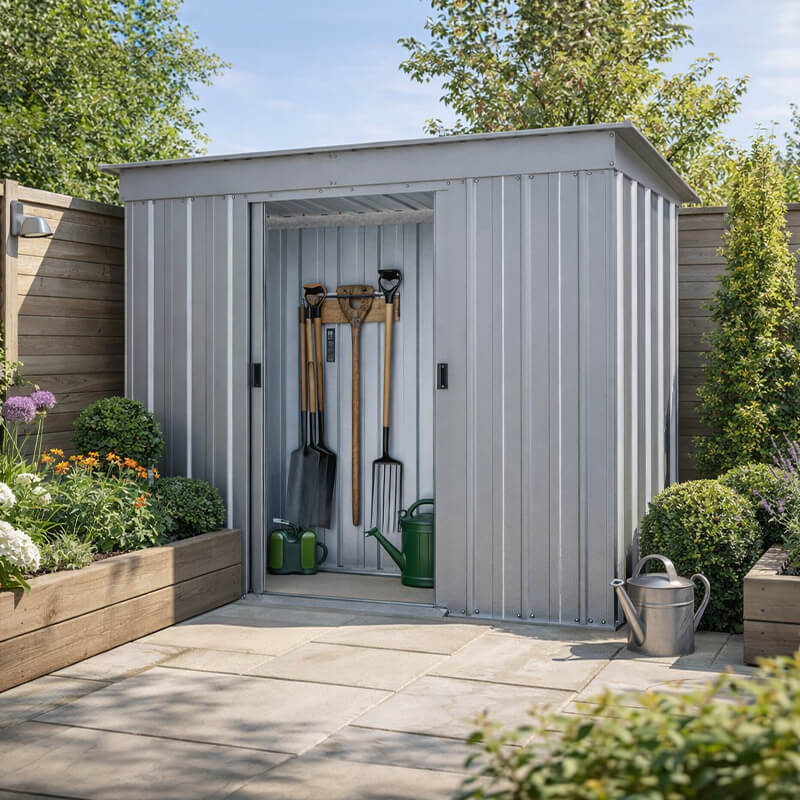
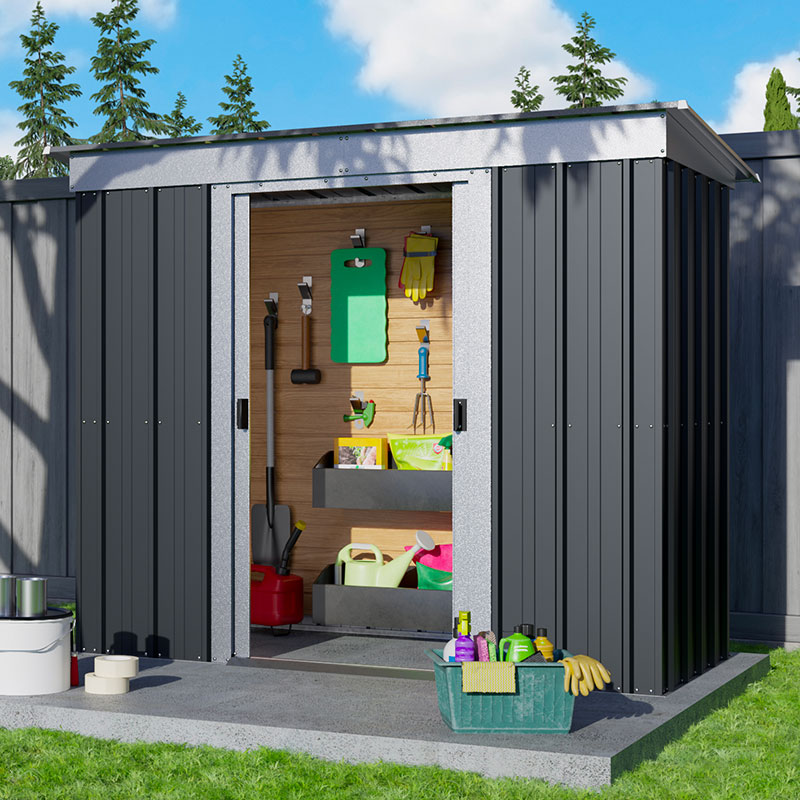
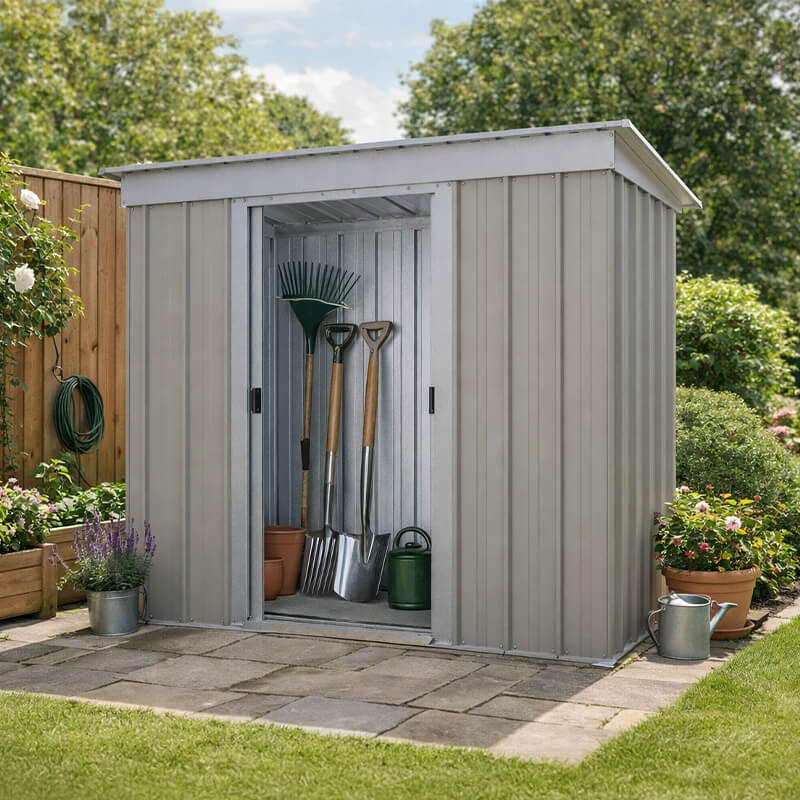
- Hand tools such as spades, forks, rakes and pruners
- Small power tools and their cases
- Watering cans, hose reels and accessories
- Compact garden furniture cushions, if they are stored dry and boxed
- Bags of soil, fertiliser or feed
- Children’s outdoor toys and sports items
- Folded items like a table, parasol base, or collapsible bench
The exact capacity depends on the internal shape, door opening and wall design, so the same floor area can feel different from one shed to another. A model with a wider door may be far easier for a mower or wheelbarrow to move through, while a tighter door works better when the contents are mostly slim and stackable.
Flat roof, apex roof, pent roof: the shape changes the feel
When people compare metal sheds 25 sq ft, roof style often decides which one feels right. The floor area may be similar, but the roof shape affects headroom, water run-off and how the shed sits in the garden.
Flat roof versions usually have the simplest outline. They can suit a clean, low profile look and may work well where height is limited, such as close to a boundary or under overhanging trees. They can also give a more discreet appearance in smaller gardens, though internal headroom is often more restricted.
Pent roof sheds slope in one direction. This can create a tidy modern line and helps rain move away from one side. In a narrow garden, that may be handy if you want the higher side facing inward for a bit more standing space, or outward if you want the profile to remain low next to a fence.
Apex roof designs have a ridge in the centre, so the shape feels more traditional. On a shed of this size, an apex roof can make the interior feel less cramped in the middle, and the form often suits gardens where the shed is visible from the house. It can also offer a more familiar shed silhouette, which some buyers simply prefer.
Panel build, overlapped sheets and framed bodies
Metal sheds in this category are not all built the same way. The difference is not just cosmetic; it affects how solid the shed feels, how clean the interior edges are, and how the outside panels sit together.
Overlap construction uses sheets that overlap at the joins. This is often associated with a more basic, practical finish. It can work well for budget-conscious buyers or for storage that does not need a polished interior look. The trade-off is that the inside can feel more utilitarian, and the panels may appear less streamlined.
Clad or framed panel construction tends to look more rigid and tidy. The walls often present a flatter face, with clearer lines and a more structured appearance. That can matter if the shed will be seen from the house, not tucked away behind shrubs. A framed body can also make the shed feel more robust, especially on a small footprint where a neat fit matters.
Corrugated steel is another common form. The ridged profile adds stiffness to the metal and gives the shed a recognisable industrial feel. Some buyers like this because it looks straightforward and doesn’t pretend to be timber. Others prefer smoother panels for a quieter, less utilitarian presence.
Door styles that make a small shed easier to use
With a 25 sq ft metal shed, the door is almost as important as the floor plan. A compact shed can still be awkward if the opening is too tight for the items you plan to store.
Single doors are common on smaller metal sheds. They suit garden tools, seed trays, and boxed items. On a shed this size, a single door can keep the front tidy and reduce the amount of wall space taken up by openings.
Double doors give more flexibility. If you want to slide in a lawnmower, stack larger boxes, or simply make the shed feel less cramped when carrying things in and out, double doors are worth considering. They do use more front wall space, so the overall design can feel a bit more open.
Sliding doors can be useful where the area in front of the shed is tight, because they do not swing outward. That is especially handy along a path or near a patio. The point is not just convenience; it is about how the shed works with the garden layout.
Low profile or more headroom?
For a small shed, internal height is often the bit people underestimate. A compact structure can still be pleasant to use if the proportions are thoughtful. Some metal storage sheds are designed with a low profile, keeping the overall silhouette neat and discreet. Others make better use of vertical space, giving a little more standing room or allowing taller tools to be stored without awkward tilting.
If you store long-handled tools, a taller internal point can help. If the shed is mainly for low boxes, pots and hand tools, a lower roof may be enough and may suit a garden with height limits better. It is one of those details that sounds small until you’re trying to fit in a rake and close the door properly.
Why metal feels different from timber or plastic
Buyers often compare metal sheds with timber and resin alternatives, especially at this compact size. Each material has a different feel.
Metal usually appeals because it brings a neat, pared-back look and can suit modern gardens as well as more practical spaces. It often has a slimmer wall profile than timber, which matters when every inch counts. That can translate into more usable interior space within the same external footprint.
Wooden sheds often feel warmer and more traditional, but they usually ask for a bit more visual and physical space. In very small gardens, that can be a drawback. Plastic or resin sheds may be lighter in appearance and easy to handle, though some buyers prefer the firmer, more structured feel of metal when the shed needs to stand its ground in a limited corner.
In this size range, metal often wins on the simple idea of space efficiency: more usable storage, less bulk, and a cleaner outline. That is not a dramatic claim, just a practical one.
Where a 25 sq ft shed fits best
This category suits gardens where a larger shed would be a bit much. Think of:
- Narrow side returns beside the house
- Small back gardens with a short run of fence
- Courtyard spaces where a discreet footprint matters
- Allotment plots needing secure, compact storage
- Terrace gardens where access is limited and every metre counts
The shed should look as though it belongs to the space, not squeeze it out. That is one reason this size is popular with buyers who want enough storage for everyday tools but do not want the garden to become a yard of outbuildings.
Practical differences that matter before buying
When comparing metal sheds around 2 m², a few details deserve a proper look. They may seem minor at first, but they influence how the shed works day to day.
- Door width and whether larger items will pass through without turning sideways
- Wall height and whether the inside feels usable for taller tools
- Roof shape and how it affects both appearance and headroom
- Panel format, since smoother panels can look more finished while corrugated ones often feel more industrial
- Placement flexibility, especially if the garden has a narrow access route
- Interior layout potential, because even a small shed benefits from simple shelving or hooks if the design allows it
These differences often decide whether a shed feels easy to live with, or merely fits on paper. The better choice is not always the biggest one, but the one that works with your actual storage habits.
Useful buying tips without the fluff
It is worth measuring the intended spot twice, and not just the floor area. Allow for the door swing or sliding track, and check the space needed to stand in front of the shed with a box or mower in hand. A compact shed that is hard to access can become annoying very quickly.
Also think about the shape of the items you want to store. Long tools, awkward bags, and boxy equipment take up different space. A shed that looks sufficient in square footage may still feel tight if the internal layout is narrow. That is why the proportions matter as much as the headline size.
If the shed will be visible from a patio or seating area, the finish and roof style matter more than people sometimes expect. A low, crisp profile can sit quietly in the background, while an apex roof may bring a more familiar garden-shed look. Neither is wrong; they simply give a different impression.
It also helps to think in terms of access, not only storage. If you will be in and out often, a wider opening or more usable internal height can make the shed feel less cramped. If you only need somewhere to keep a few seasonal things, a simpler layout may be enough.
A compact shed that earns its place
A metal shed 25 sq ft / 2 m² is a small structure, but that is exactly why it can work so well. It gives order to the bits and pieces that otherwise end up in the corner of the patio, behind the bin store, or balanced in the garage. The right version can feel neat, sensible and quietly useful without taking over the garden.
For buyers comparing subtle storage, clean lines, and a footprint that does not demand much room, this category offers a straightforward answer. Different roof shapes, door types and panel styles let you choose whether the shed looks more traditional, more modern, or simply more practical. And that small variation can be the bit that makes the decision easy.
[Sassy_Social_Share]