
metal sheds 20 sq ft / 2 m² - Best Deals in UK!
Showing all 10 results
-
18% OFF: 6’4 x 2’9 Trimetals Protect.a.Cycle Metal Bike Shed with Ramp – Cream (1.95m x 0.88m) £1,019.0018%

-
18% OFF: 6’4 x 2’9 Trimetals Protect.a.Cycle Metal Bike Shed with Ramp – Green (1.95m x 0.88m) £1,019.0018%

-
18% OFF: 6’4 x 2’9 Trimetals Protect.a.Cycle Metal Bike Shed with Ramp – Anthracite (1.95m x 0.88m) £1,019.0018%

-
16% OFF: 6’x3′ (1.8×0.9m) Trimetals Anthracite ‘Protect.a.Cycle’ Secure Garden Bike Storage £834.9916%

-
15% OFF: 6′ x 3′ Trimetals Premium Titan 630 Metal Shed (1.76m x 1.01m) £1,059.0015%

-
11% OFF: 5′ x 4′ Yardmaster Pent Metal Shed (1.58m x 1.20m) £189.9911%

-
6% OFF: 5â8 x 3â2 Trimetals Guardian D63 Metal Storage Shed (1.76m x 0.98m) £749.996%

-
6% OFF: 7′ x 3′ Asgard Access 4 Bike Metal Storage Shed (2.13m x 0.83m) £792.996%

-
6% OFF: 6′ x 3′ Asgard Addition Premium Metal Bike Shed (1.8m x 0.9m) £747.996%

-
6% OFF: 6′ x 3′ Asgard Annexe Police Approved Metal Bike Shed (1.83m x 0.92m) £887.996%

Metal sheds 20 sq ft / 2 m² are a compact answer for tool storage, bin hiding, and tidy garden corners, with steel or galvanised finishes, narrow footprints, and neat layouts.
Small footprint, proper storage
A 20 sq ft / 2 m² metal shed is sized for places where every bit of ground matters. It gives you a dedicated lockable space without taking over the garden, so it suits patios, side returns, courtyard plots, and tucked-away spaces near a fence or wall. For many buyers, that compact size is the whole point: you get the feel of a real shed, just in a scale that fits a smaller outdoor setup.
These sheds are often chosen when a wooden building would feel too bulky, or when a plastic box simply would not offer enough room. The result is a practical middle ground. You can keep garden tools, a hose, hand tools, compact machinery, or seasonal items in one place, instead of leaving them under a bench or in a garage corner. That makes the outside area feel calmer and more put together.
What fits in 20 sq ft / 2 m²?
At this size, the storage plan needs a bit of thought, because the interior is useful but not roomy. That is exactly why this category appeals to people who want a clear purpose rather than extra empty space. Depending on the internal shape and door opening, a shed this size can suit:
Bestseller der Kategorie metal sheds 20 sq ft / 2 m²
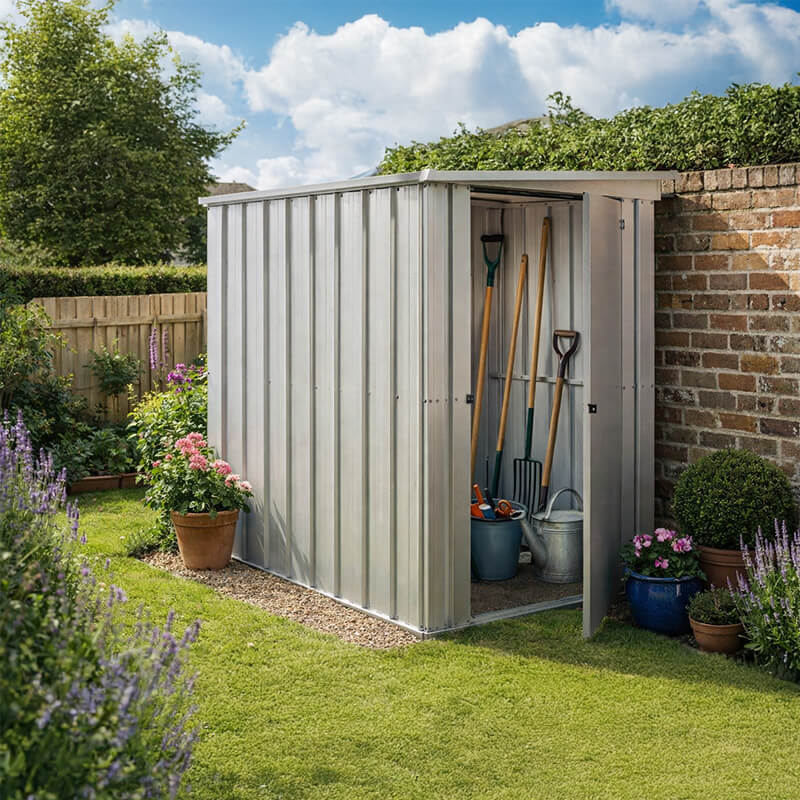
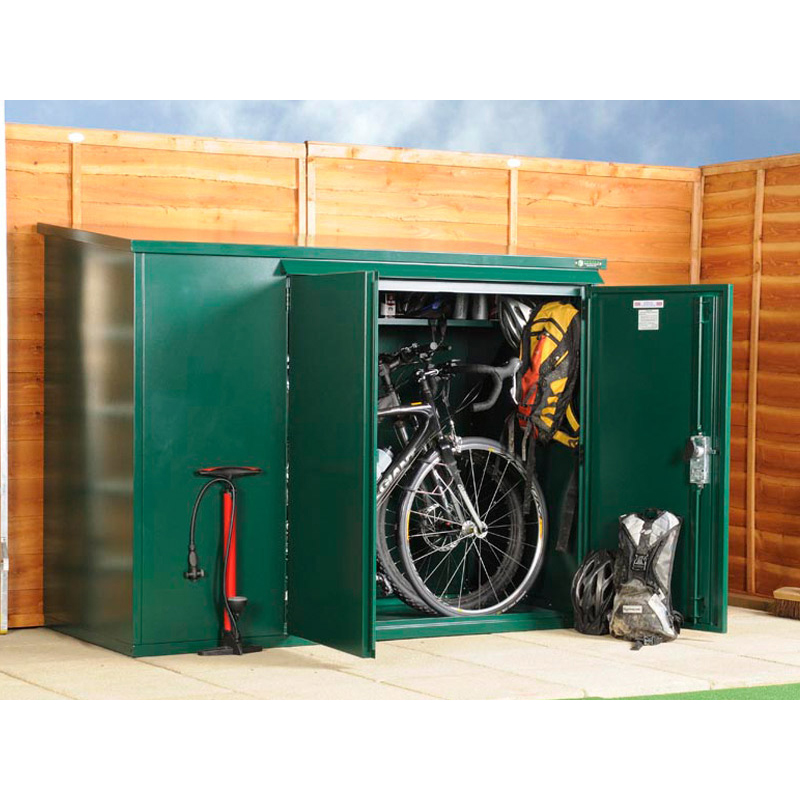
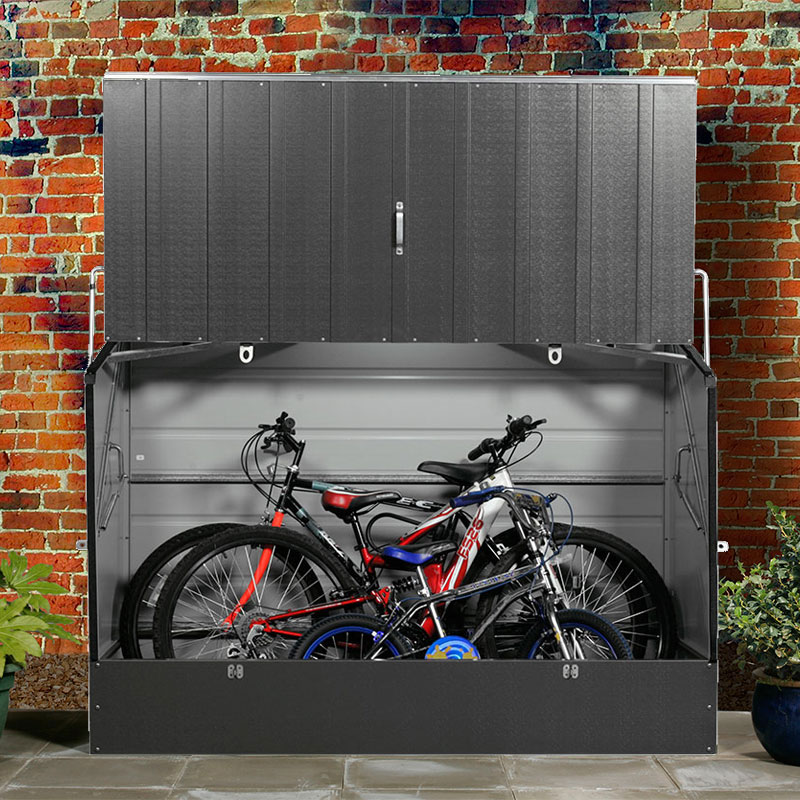
- Hand tools such as spades, forks, rakes, trowels, and loppers
- Compact lawn gear like a push mower, trimmer, or small hedge cutter
- Garden chemicals stored in their original containers, where allowed
- Plant pots and trays for seasonal use
- Folded garden furniture cushions if the layout leaves room
- Bin storage in some narrow designs, especially when used as a screen near the house
What matters most is the internal shape, not only the floor area. A shed with a clever roofline and a decent door position can feel easier to use than one with the same footprint but a awkward opening. Buyers often notice this only when they start placing items inside, so it is worth checking the usable width, head height, and door swing before ordering.
Shapes that change how the space works
Within the metal sheds 20 sq ft / 2 m² category, shape makes a bigger difference than many people expect. The same floor area can feel very different depending on roof design and wall profile. That is why it helps to look at the format, not just the number on the listing.
Lean-to sheds are a common choice for tight side spaces. They sit against a wall or fence line and usually have a shallow depth, which can make them feel less obtrusive. If your garden has a narrow strip that is not doing much else, a lean-to style can make proper use of it without blocking the view.
Pent-roof sheds have a single sloping roof plane. They often look neat and modern, and the slope can help direct rainwater away from the front or back depending on how they are set. This type can suit contemporary gardens where a plain box shape might look too heavy.
Gable-roof sheds feel more traditional, with a pitched roof shape that gives a bit more headroom in the centre. Even in a small footprint, this can make the shed easier to stand in when you are reaching for items on a shelf or lifting something onto a hook. The trade-off is that the overall look can be more classic and slightly taller.
Bike-store style metal units also sit in this size range sometimes, and while they are not always sold as full sheds, they can be relevant when the goal is narrow, secure storage. Their low profile works well where height is limited or where you want the structure to stay visually quiet.
Steel, galvanised, coated: the material side
When people search for metal sheds, they are usually comparing different metal constructions rather than just colours. In this size, the most common options are steel panels, usually with a protective coating, and galvanised finishes that are designed to help the metal stand up to the weather. The key difference is often in the surface treatment and panel thickness, which affect the feel of the shed and how solid it seems in use.
Galvanised steel is a frequent choice because the zinc layer helps protect the surface. It is a familiar option for buyers who want a shed with a crisp, clean look and less visual fuss than timber. In a small format, this can be useful because the shed stays discreet instead of dominating the corner of the garden.
Some sheds use powder-coated finishes, which add another layer of colour and protection. This can be handy if you want the shed to blend with fencing, paving, or other outdoor metalwork. The finish is not only about style; it can also influence how the shed sits in a garden scheme, especially when the structure is close to the house.
Compared with timber, metal sheds usually have a firmer, more defined panel look. That can be an advantage if you prefer clean lines and straightforward storage. Compared with resin or plastic, metal can feel more structured and secure, with less of that moulded-box appearance. None of these materials is “better” in every case; it depends on whether you care more about appearance, strength, price position, or how the shed will sit in a small space.
Why this size often makes sense
The 20 sq ft / 2 m² category is often chosen because it solves a specific problem without creating a new one. A larger shed may offer more room, but it can also eat into a lawn, make a patio feel crowded, or require planning where a smaller unit would not. This compact size is easier to place, easier to integrate, and often simpler to justify when the garden is not large to begin with.
There is also a neat practical advantage: a smaller shed can encourage better sorting. Instead of storing “just in case” items, you tend to keep what is actually used. That can be a relief in a garden where clutter quickly becomes visible. Buyers who like tidy edges and clear paths often find this footprint very satisfying.
Another plus is visual balance. A 2 m² structure can sit beside a border, at the end of a path, or near a garage without overpowering the rest of the layout. In a compact urban garden, that matters a lot. The shed works like part of the outdoor architecture rather than a piece of furniture dropped into the space.
Door style, access and the real-life test
For a shed this size, access is not a minor detail. It is one of the main differences between a shed that feels useful and one that becomes irritating. A wide double door can make loading tools easier, while a single door may suit a narrower footprint or a more discreet look. If the opening is too tight, you may find yourself having to angle items in and out, which gets old rather quickly.
Door placement also matters. A front-opening shed is straightforward if there is clear access from the path or lawn. A side-opening arrangement can make sense when the shed is set along a boundary and the front view needs to stay clean. In a tiny garden, the direction the door opens can affect how easy it is to walk past the shed, so it is worth checking before buying.
Some buyers look at the door and only think about width, but height is useful too. If you store tall tools, a mower with a handle, or stackable boxes, the opening should let you move those items without awkward lifting. It is a small point until you are standing there with something bulky and nowhere to turn.
How a metal shed differs from timber or resin
The appeal of metal garden storage often becomes clearer when you compare it with other shed types. A timber shed usually brings a warmer, more traditional look and can be easier to alter later, but it may also need more visual care to stay looking smart. Resin sheds are light, neat, and often simple to assemble, though they can feel less rigid in a small, exposed spot.
Metal sheds in this size tend to sit between those two worlds. They have a sharper profile than timber and often a firmer structure than lightweight plastic. That can matter in gardens where the storage unit is close to a fence line, shared boundary, or paved area. The shed can feel like part of the garden layout rather than a soft-sided accessory.
There is also the question of temperature and feel. Metal has a different character to timber, more crisp and functional. Some buyers prefer that because it suits tools and equipment, and because the shed has a plain, no-nonsense look. Others want the more natural texture of wood. So the choice is not about right or wrong; it is about what fits the garden and how you plan to use the space.
Details that make compact storage easier to live with
In a small shed, details matter more than you might think. Shelving compatibility, internal head height, and the way the panels meet can all affect how usable the space feels. A well-proportioned 20 sq ft / 2 m² shed can let you store items vertically instead of only on the floor, which is handy when the footprint is modest.
Here are a few practical points buyers usually check before choosing:
- Door width for moving tools, boxes, and small machines in and out
- Internal height for rakes, handles, and wall storage ideas
- Wall shape if you want shelves or hooks along the side
- Roof profile to judge how the shed will sit visually in the garden
- Front or side access depending on where the unit will stand
- Colour finish if the shed needs to match fencing, paving, or other outdoor elements
These are not flashy details, but they are the bits that decide whether the shed feels easy to use every week. A compact metal shed can do a lot when the layout is thought through. When it is not, even a good-looking one can feel cramped.
Best fit for small gardens, side returns and tidy corners
This category is especially useful for gardens that have one awkward section which never quite gets used well. A narrow side return, a patch beside the garage, a back corner near a hedge, or the end of a paved run can all suit a small metal shed. Instead of leaving that area empty, the shed gives it a job.
It also works for buyers who do not want a storage building to dominate a view from the kitchen or patio doors. A 2 m² structure can be tucked in and still remain accessible, which is useful when you want storage but not a heavy visual block. In a modest garden, that balance can be more important than adding extra capacity you will never really use.
For people who like order, the appeal is simple: tools have a place, seasonal items have a place, and the rest of the garden stays open. That makes mowing, sweeping, planting, and rearranging easier because you are not constantly working around loose bits of kit.
Choosing with a clear head, not a bigger number
When looking at metal sheds 20 sq ft / 2 m², it helps to think about use before size anxiety. It is easy to chase a larger footprint, but a well-placed smaller shed often works harder in a real garden. The right shape, a sensible door, and a finish that suits the setting can matter more than adding extra square feet that just sit empty.
If the shed is mainly for tools, compact equipment, and everyday outdoor bits, this category can be a very tidy solution. If you need to store awkwardly long items or larger machinery, then the limits will show quickly. That is not a flaw; it is simply the nature of compact storage. The trick is matching the shed to the job, instead of hoping the shed will somehow stretch to fit everything.
For buyers who want a practical, neat, and secure-looking storage option without giving up too much garden space, these sheds are easy to see the point of. They offer structure, a proper place for belongings, and a clean finish that works in small outdoor layouts where every metre counts.
[Sassy_Social_Share]