
metal sheds 130 sq ft / 12 m² - Best Deals in UK!
Showing all 3 results
-
24% OFF: 10′ x 13′ Yardmaster Metal Shed (3.03m x 3.96m) £499.9924%

-
19% OFF: 10′ x 13′ Yardmaster Castleton Anthracite Metal Shed (3m x 3.9m) £559.9919%

-
18% OFF: 10′ x 13′ Yardmaster Metal Shed (3.03m x 3.96m) £539.9918%
Metal sheds 130 sq ft / 12 m² give you a compact but proper amount of storage for tools, bikes, garden kit and seasonal furniture, with shape, door style and panel choice
Why 130 sq ft / 12 m² hits a useful middle ground
A 130 sq ft / 12 m² metal shed sits in that practical space where a garden store starts to feel useful, not just token. It is big enough for more than a mower and a shelf, yet still modest enough to fit into many domestic plots without taking over the whole garden. That balance is one of the main reasons people look at this size when they need a shed for real everyday use rather than a tiny box for odd bits.
At this footprint, the shed can often handle a mix of large tools, bikes, longer-handled equipment, stacked boxes and a working strip down the middle so you can still move around inside. The size also suits buyers who want to separate clean items from muddy ones, or keep summer furniture out of the weather without storing it in the house or garage.
Compared with smaller metal sheds, a 130 sq ft version gives more freedom with layout. Compared with larger garden buildings, it is usually easier to place on a prepared base, easier to site in a side return or at the rear of a garden, and less awkward when you are checking access from gate to foundation. That difference matters more than people expect.
Bestseller der Kategorie metal sheds 130 sq ft / 12 m²
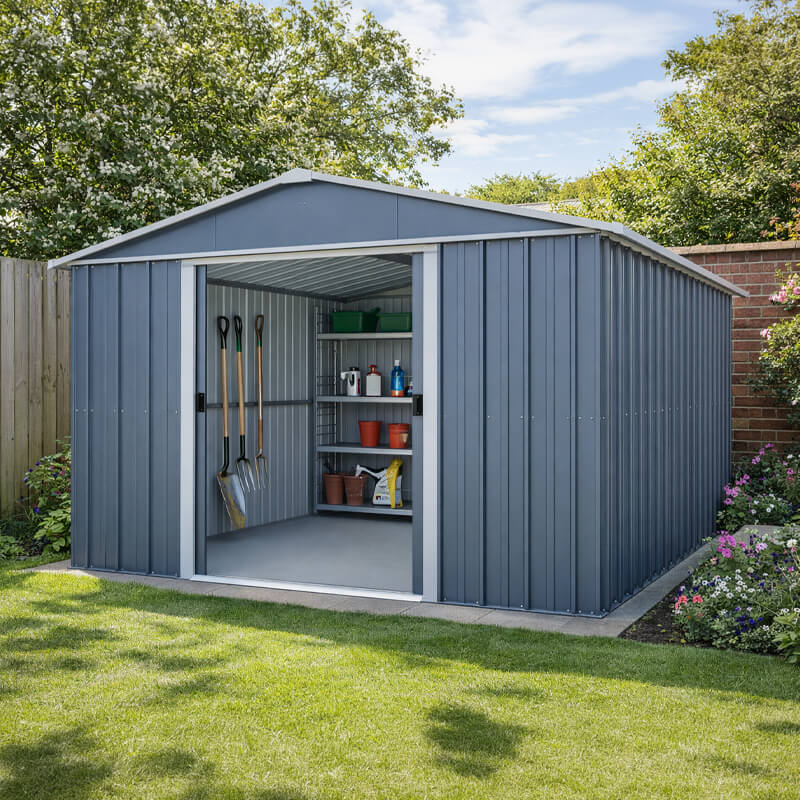
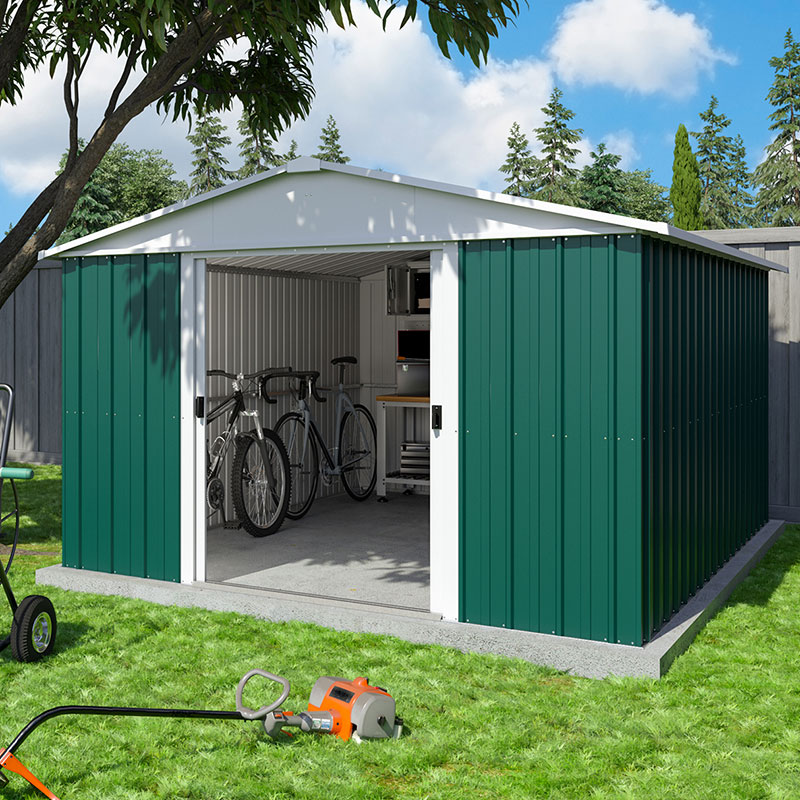
Shapes that change the feel of the space
Shape has a real effect on how a 130 sq ft metal shed works in day-to-day use. The same floor area can feel very different depending on the roofline and footprint proportions.
- Rectangular sheds are the most straightforward for storage. They suit long items like ladders, rake handles, timber lengths and folded garden furniture because the layout is easy to plan.
- Square-ish footprints can feel more open in the centre and may suit buyers who want a more flexible arrangement, with shelves or racks on more than one wall.
- Lean-to styles are handy where garden space is tight along a boundary wall or fence. They can tuck in neatly, though the internal headroom and storage rhythm is a bit different.
- Gable roof sheds usually give a more familiar garden-building look and can create a useful sense of height in the middle, which is good if you are storing taller items or prefer less of a boxed-in feel.
- Skillion or pent roof sheds suit modern plots and can work well where rainwater should run in one direction. They often look clean and simple, though the ceiling line is not as even across the width.
The best shape is not only about appearance. It changes how the shed behaves for access, shelving, wall clearance and the way larger objects fit through the door. A narrow rectangular building with the right door position can be easier to live with than a broader shape that sounds better on paper.
Single doors, double doors and where entry matters
For a shed at this size, door configuration is one of the first features worth checking. It affects what you can move in and out, and how naturally the building works as storage.
Single doors are often enough for general tools and smaller garden kit. They can feel neat and secure, and may suit buyers who do not expect to wheel larger items in every week. The downside is simple: some wider objects, such as certain mowers, benches or bikes with baskets, can be awkward at the turn.
Double doors make a clear difference in a 130 sq ft shed because they create a broader opening for bulky items. If you plan to store a bike, a barrow, a folded table or several stacked containers, that extra width is not just convenient, it changes how useful the shed becomes. Double doors also make the internal space feel less boxed in when open.
Some sheds place the door on the gable end, which can give a straight-in route along the length of the shed. Others use side entry. The right choice depends on where the shed sits in the garden and how you want to organise the interior. A door location that looks fine in a drawing can be mildly annoying in real life if it blocks your storage line, so this is worth a proper look.
Panel types and what they mean for the build
Not every metal shed is built the same way. The panel style changes how rigid the shed feels, how it is assembled and how it looks once in place.
- Corrugated steel panels are widely used and give a classic shed appearance. The ridged surface adds strength and a recognisable industrial feel.
- Flat panel designs often look cleaner and more modern. They can suit contemporary gardens where a softer visual line is preferred.
- Box-profile metal cladding gives a more structured finish, with a firmer visual rhythm across the walls.
- Light-gauge steel systems can keep the building manageable, though the feel and weight will differ from heavier panel constructions.
The main difference is not only visual. Panel design can affect how the shed deals with wind exposure, wall stiffness and internal usable space. Some buyers prefer the more traditional corrugated look because it disguises light marks and feels more like a real garden shed. Others prefer smoother panels because they make the building blend into a neater garden setting. Both have their place.
What 130 sq ft can actually hold
People often think about shed size in abstract terms, but the real question is what fits without everything ending up stacked badly. At 130 sq ft / 12 m², there is room for several storage zones if the layout is sensible.
- Garden tools zone for spades, forks, hoes, trimmers and hand tools on hooks or wall rails.
- Bulky item zone for a mower, pressure washer, compost bins, folding chairs or tables.
- Bike storage zone if the door width and internal clearances are thought through.
- Boxed storage zone for seasonal items, seed trays, covers, nets or spare plant pots.
- Long-item run along one wall for ladders, edging tools, timber offcuts or poles.
That mix is what makes this size appealing. It is not just about floor area, but about being able to separate items sensibly. A smaller shed tends to become one pile. At this size, you can usually create a bit of order, even if you are not a naturally tidy person, which is most of us really.
Roof styles that affect headroom and character
The roof is more than a finishing touch. It shapes how the shed feels when you step inside and how well different items fit near the edges.
Gable roofs give a more traditional profile and often improve the sense of height through the centre line. This can be useful if you want the space to feel less compressed or need to store taller tools against the middle area. They also tend to suit many garden settings without looking too modern.
Pent roofs are practical where one side needs to sit lower, such as near a boundary or where a simpler silhouette is wanted. They can look neat and straightforward, and they are often chosen for a cleaner, more contemporary finish.
Flat roof-looking designs, even when slightly pitched, may suit compact plots and can feel discreet from the house. They are visually calm, though inside the vertical clearance may be more limited at the edges, so think about what you plan to stand there.
Roof style also changes how the shed reads in a garden. Some people want the building to sit quietly behind planting. Others prefer a sharper, more architectural line. The shape you choose is part storage decision, part visual decision.
Steel, galvanised finish and why the material matters
When buying a metal shed, the material is part of the value as much as the size. Galvanised steel, coated metal and other treated finishes are common in this category because they help the shed cope with outdoor exposure while keeping the structure relatively light for its size.
One advantage of metal over timber is the clean, uniform structure. The panels are cut to a set system, so the shed often feels precise and ordered. That matters if you like a tidy line against paving, gravel or a wall. Metal sheds also tend to suit buyers who want a less rustic look and more of a practical storage building.
Another difference is how the surface behaves visually. Metal can look crisp and restrained, which works well if the shed needs to sit near a patio, driveway or modern extension. It is not trying to be a garden feature. It is there to do a job, but without shouting about it.
Practical advantages that shoppers usually care about
A shed in this size and material brings a few clear benefits that are worth naming plainly.
- Good storage density without needing a large footprint.
- Flexible internal layout for mixed household and garden items.
- Strong visual clarity so it is easier to plan shelves, hooks and zones.
- Useful for both hobby and utility storage, not just garden tools.
- More predictable sizing than ad hoc storage solutions, which helps when you measure a site carefully.
- Suited to compact gardens where space has to work hard.
There is also a less obvious advantage: a metal shed often makes storage decisions simpler. Instead of building around odd corners or irregular timber framing, you are working with a clear shell. That can be a relief if you want to get the garden in order and not keep rethinking the layout every season.
Differences to look at before you choose
Two sheds can both be 130 sq ft and still feel quite different. The main differences usually come down to wall height, door size, roof type, internal span and opening direction. These are the details that shape daily use more than the headline size.
A shed with taller side walls can feel easier to use for shelving and upright storage. A model with a wider opening is better if you regularly move larger items. A design with a clearer central span may suit bikes or a workbench corner, while a more segmented layout might suit boxed storage and wall-mounted racks.
Also think about how the shed sits in relation to the rest of the garden. A side-entry version may work nicely along a fence line. A front-entry version can be more direct from the house. Small difference, yes, but in a real garden these choices shape whether the shed feels handy or slightly out of the way.
Useful buying tips for this exact size
When shopping for a metal shed 130 sq ft / 12 m², a few checks can save irritation later on.
- Measure the route to the base, not just the base itself. A shed can fit in the garden plan and still be awkward to bring through a narrow gap.
- Check the door opening against the largest item you plan to store, not just the average one.
- Think about interior height where you may want hooks, shelves or hanging tools.
- Match the shape to the plot. Long narrow plots usually suit rectangular sheds better than broad, squat ones.
- Look at wall layout so you know which side will take shelving and which side needs to stay clear.
- Consider how you will use the centre. If you want a bit of working space as well as storage, do not fill every wall before the shed is even up.
These are the small things that can make the difference between a shed that simply exists and one that genuinely earns its place. It is easy to get caught by the outside dimensions and forget the inside reality, which happens quite often.
A size that suits more than one kind of buyer
This category works for a few different needs without being too broad. A keen gardener may want a place for hand tools, compost sacks, pots and a mower. A cyclist may want a safer, drier home for bikes and helmets. A family may want to get outdoor clutter out of the garage. Someone with a neat patio might just want a proper storage building that keeps the garden looking ordered.
That versatility is part of the appeal. A metal shed of 130 sq ft / 12 m² is not a vague compromise. It is a specific, useful size for people who need proper room but do not want to overbuild the site. Add the right shape, the right door setup and a sensible internal plan, and it becomes a very workable part of the garden rather than a forgotten corner.
Choosing the version that feels right in use
In the end, the best choice is the one that fits the way you actually live with your garden. If you need broad access, go for a wider door layout. If you want easy wall organisation, pick a shape that leaves clear runs along the sides. If the shed needs to sit quietly beside planting, a simpler roofline and flatter panel look may suit better. If you like a more traditional garden building feel, a gable roof with corrugated steel may be the better fit.
Metal sheds 130 sq ft / 12 m² offer a good mix of room, structure and everyday usefulness. They are large enough to solve storage problems, but still manageable in a domestic garden. For buyers who want something practical, tidy and flexible, this size is often a very sensible place to start.
[Sassy_Social_Share]