
metal sheds 120 sq ft / 11 m² - Best Deals in UK!
Showing all 4 results
-
25% OFF: 10′ x 12’5 Yardmaster Shiplap Metal Shed Brown Finish (3.03m x 3.78m) £579.9925%

-
17% OFF: 10′ x 12’5 Yardmaster Shiplap Metal Shed Brown Finish (3.03m x 3.78m) £639.9917%
-
14% OFF: 10′ x 12′ Yardmaster Shiplap Metal Shed Anthracite Finish (3.03m x 3.76m) £559.0014%

-
12% OFF: 10′ x 12′ Globel Anthracite Grey Apex Metal Shed (3.08m x 3.72m) £824.9912%

Metal sheds 120 sq ft / 11 m² give you a tidy, hard-wearing storage space for tools, bikes, garden furniture and seasonal kit, with layout options, roof shapes and door styles to suit different plots.
A compact footprint with room to do more
A 120 sq ft / 11 m² metal shed sits in a useful middle ground: big enough for proper storage, still manageable in a standard garden. It can hold long-handled tools, a mower, a pressure washer, plant pots, fold-away chairs and those awkward bits that never quite fit in the house. For many buyers, this size works because it gives a clear, enclosed zone without taking over the whole garden. It is the sort of space that can feel organised rather than crammed, which is often the real aim.
Compared with smaller metal sheds, this size gives more breathing room for shelves, wall hooks and a central walkway. Compared with larger garden buildings, it is usually easier to site, easier to place against a fence or wall, and less demanding on the available plot. That makes it a practical pick for semi-detached gardens, side returns and back corners where every metre counts.
What 11 m² actually buys you
In real use, 11 m² is enough for a few different storage styles. Some people want a simple open run for larger items. Others need a more divided setup with boxed goods on one side and long tools on the other. The point is not just size, but how that size can be used.
Bestseller der Kategorie metal sheds 120 sq ft / 11 m²
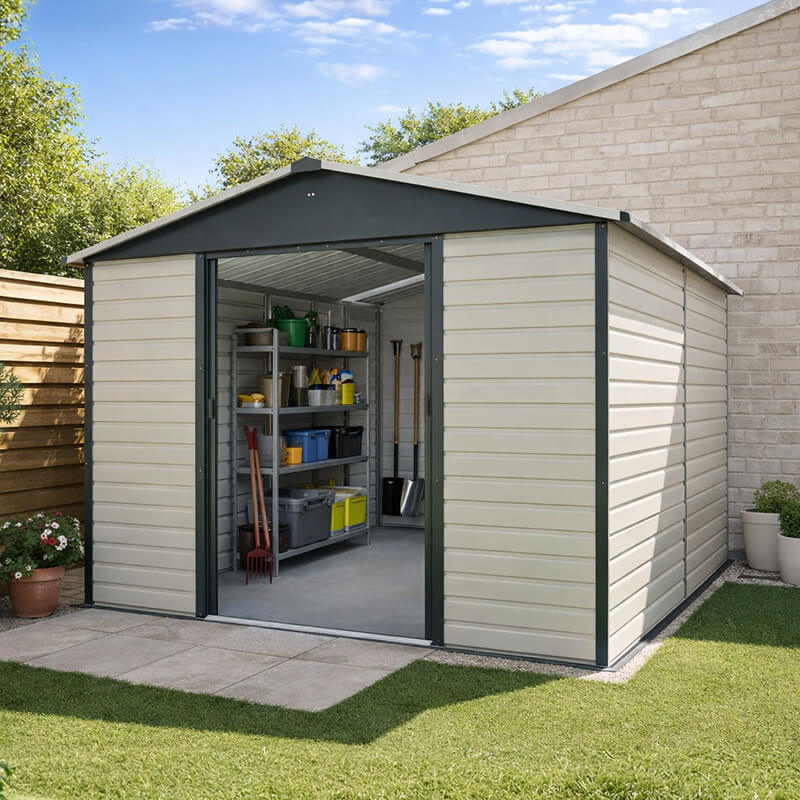
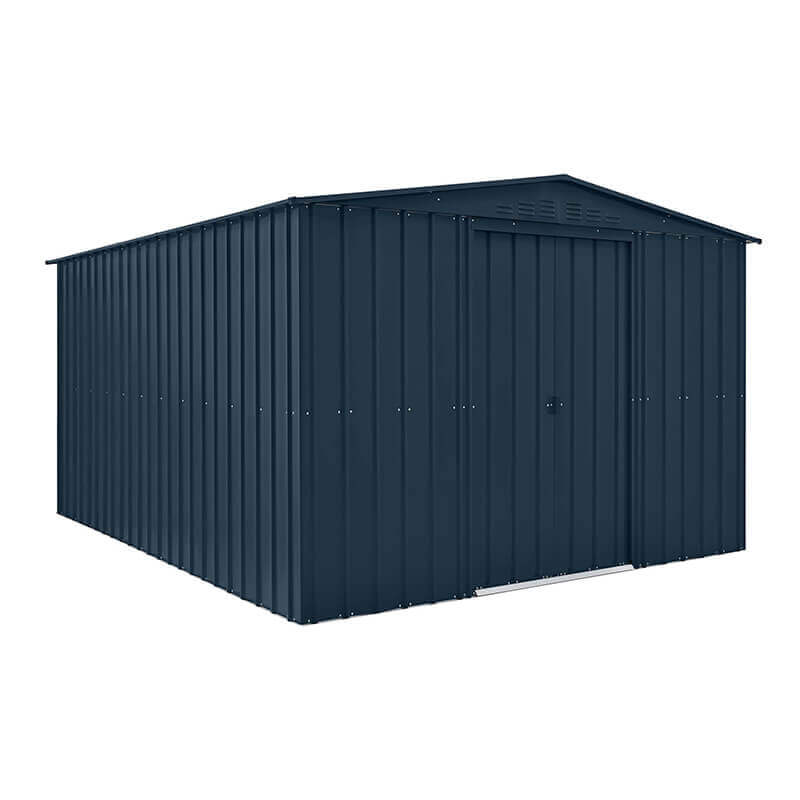
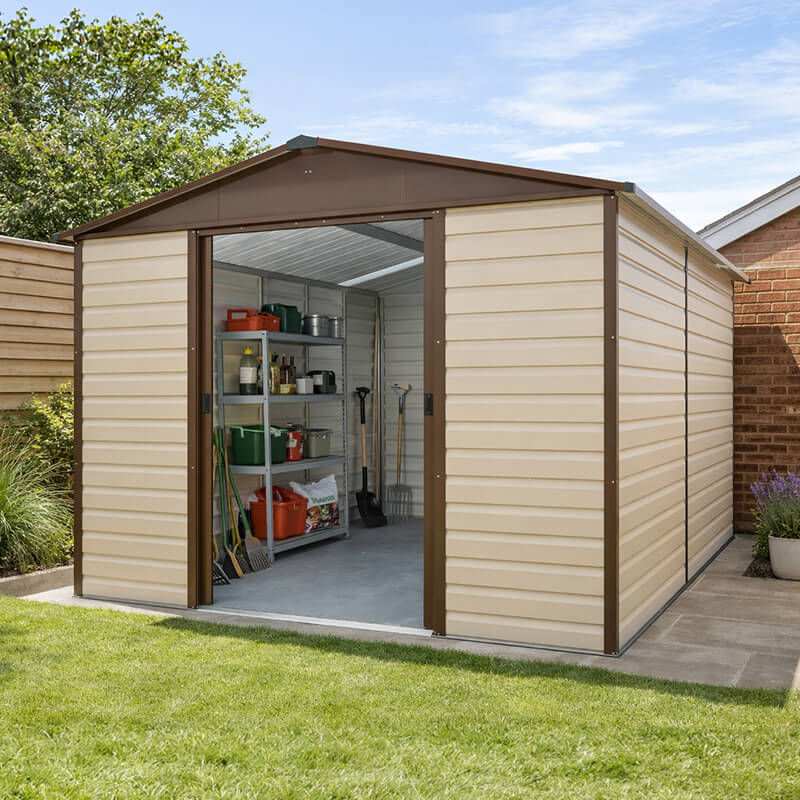
- Open storage zone for bikes, mowers and bulkier items
- Wall-mounted storage for rakes, spades and hand tools
- Stacked shelving for seed trays, boxes and smaller equipment
- Clear floor area so you can move in and out without a shuffle
This is one reason people look at metal sheds 120 sq ft instead of going smaller. You start to get proper zones inside the building, which helps if the shed needs to serve more than one purpose. It is storage, yes, but it can be sensible storage rather than a pile-up.
Lean-to, apex or pent? The roof changes the feel
One of the clearest differences in this category is the roof shape. It changes how the shed looks, where it fits, and how much standing room you get in different parts of the interior.
- Apex roof – The familiar peaked shape. Often chosen when you want a more traditional garden shed profile and a bit more central headroom.
- Pent roof – A single slope, often neat against a wall or fence. Good if you want a lower front line and a more modern look.
- Lean-to style – Useful where space is tighter or where the shed needs to tuck into an existing boundary line.
An apex metal shed can feel more balanced if you plan to store taller items or want headroom near the centre. A pent metal shed often suits a modern garden layout and can make rain run-off more straightforward in one direction. The choice is not only visual; it affects how the building sits in the plot and how easy it is to use the interior space.
Panel styles that change the whole look
Metal sheds in this size tend to come in a few panel finishes, and each one gives a different feel. Some are more practical-looking, while others try to sit more quietly in the garden.
- Corrugated panels – Strong visual lines, familiar on steel buildings, and often associated with a sturdy, no-fuss look.
- Flat-panel cladding – A cleaner appearance, sometimes chosen when the shed needs to look less industrial.
- Ribbed sheets – A middle option, adding structure and rigidity without being overly fussy.
The difference is not only cosmetic. Panel pattern can influence how the building reads against fencing, paving or planting. A corrugated finish may suit a more utilitarian corner, while a flatter panel style can blend better beside a modern patio or rendered wall. If your garden already has strong lines, it is often worth matching them rather than fighting them.
Single door, double door: access makes the difference
For a 120 sq ft metal shed, the door set-up matters a great deal. A shed that is large on paper can feel awkward if you cannot get bulky items through the opening without twisting and bumping.
- Single door – Good for everyday access, smaller tools and compact storage plans.
- Double doors – Better for bikes, barrows, larger boxes and anything with a wider turning circle.
- Sliding doors – Useful where front clearance is limited, since they do not swing outwards in the same way.
The best choice depends on the items you plan to store. If the shed is mainly for tools and seasonal boxes, a single door may be enough. If you want easier movement for a mower, ladder or bike, double doors can make daily use less awkward. That small change in access can make the whole shed feel more usable, which is often what buyers are really after.
Steel strengths, and why people choose metal here
The appeal of a metal garden shed is not hard to understand. Many buyers want something that feels firm, tidy and less vulnerable to the usual knocks of garden use. Metal has a crisp structure, and in this size it often gives a neat, ordered shape without too much visual bulk.
There is also a practical difference between steel sheds and other shed types. Metal versions tend to suit buyers who want a building with a clear frame, crisp edges and a more controlled interior shape. That can make storage planning easier, especially if the shed is meant for regular use rather than just a seasonal dump-space.
- Defined structure for shelving and racking
- Straight walls that help you place items close to the edges
- Space efficiency that works well in a measured 11 m² footprint
- Low visual clutter compared with some bulkier garden stores
For buyers comparing materials, the key difference is often how the shed behaves as a storage shell. Metal gives a tight, consistent form, which suits people who want the contents under control and not hidden behind a lot of decorative timber detail.
Where this size fits best in the garden
Metal sheds 120 sq ft / 11 m² work well in more than one spot, but placement still matters. A narrow side passage, back boundary or corner near existing hard landscaping can be a sensible location. Because metal sheds often have a relatively clean footprint, they can sit neatly beside fencing, paving or a hedge line without looking overblown.
If the plot is long and narrow, a pent roof can help the building tuck in visually. If the plot is more open, an apex version can help the shed feel more balanced from different angles. It is worth thinking not only about where it fits on paper, but about how the doors open and how you will carry items in and out. A great location with awkward access can still be annoying.
Inside the shed: ways to use 11 m² better
Once you move beyond the basic “put things inside” approach, this size starts to earn its keep. Buyers often want a shed that can do a bit more, and the inside layout is where the difference shows.
- Long wall storage for rakes, shears and brooms
- Corner stacking for bulky seasonal items
- Upper shelving for lighter boxes and spare pots
- Clear central run so the shed does not become a maze
Some users prefer to keep the whole floor open for bikes and larger garden tools. Others split the shed into a “heavy” side and a “small item” side. In a 120 sq ft metal shed, both approaches can work. The important part is to avoid wasting the height. A shed of this scale is much more useful when the vertical space is used sensibly, not just the floor.
Practical differences buyers notice straight away
When people compare 11 m² garden sheds, they tend to notice a few differences first: door width, wall height, roof pitch and the feel of the interior. These details can matter more than a neat product title.
- Wall height affects storage along the sides and how enclosed the shed feels
- Roof pitch changes water run-off and interior headroom
- Door width decides what can be moved in without awkward angles
- Panel form influences both looks and the overall visual weight
A lower shed can suit a restrained garden line, but it may feel tighter inside. A taller one can feel more open, though it may stand out more in the landscape. This is why shoppers often compare more than one metal shed type before they settle. The right choice is usually the one that matches both the items being stored and the shape of the plot.
Different buyers, different priorities
This category attracts a wide mix of people, and their priorities are not the same. Some are mainly after bike storage. Others want a tidy home for gardening kit. Some need a building for mixed household overflow, where boxes, tools and outdoor items all end up sharing the same space.
- For bikes – favour double doors and a clear internal run
- For tools – look for wall space and a sensible roof height
- For mixed storage – aim for a layout that leaves both shelves and floor area
- For tight plots – pent roof and compact door swing can matter a lot
It is easy to focus on the headline size and forget the use case. But a 120 sq ft shed can feel very different depending on whether it is for one bike and some boxes, or for a full spread of garden equipment. Matching the shed to the job usually leads to a better purchase, and fewer regrets later on.
Why this category keeps getting chosen
A lot of buyers return to this size because it is a balanced option. It gives enough room to sort, store and stack, without jumping into something oversized. It also suits gardens where the building needs to stay practical and reasonably neat. Metal construction adds to that appeal by keeping the form clean and the storage space predictable.
If you are comparing metal sheds 120 sq ft / 11 m² with timber or resin options, the main attraction is often the combination of defined space, clear access and a shape that supports real storage rather than decorative use. In other words, it is a garden building that can work hard without making a fuss about it.
Small details that make a big buying decision
Even within this one category, the small details can push you towards one shed or another. Buyers often overlook them at first, then realise later that they matter every time the door opens.
- Door placement – central, offset or side access changes the flow inside
- Opening width – important for barrows, bikes and boxy items
- Corner shape – sharper corners can help with positioning against boundaries
- Roof profile – affects how the shed sits visually in the garden
These are not flashy features, but they do influence daily use. A shed can look fine in a listing and still be a bit awkward in practice if access is tight or the interior layout is poorly matched to your gear. That is why it helps to picture the shed with your own items inside, not just as an empty object.
Choosing with the garden, not against it
The best metal shed for this size is usually the one that works with the shape of your garden rather than fighting it. A long, narrow space might lean towards a pent roof and a slim front profile. A more open plot may suit an apex roof and more visible height. If the shed is going beside planting, fencing or patio slabs, the finish and line of the roof can help it blend in better.
Think about the view from the house as well. A shed is often seen more often than expected, so the shape and panel style can have a real effect on how the garden feels. In that sense, a well-chosen 11 m² metal shed is not just storage; it is part of the overall layout and can help the garden feel more organised, even before anything goes inside it.
Final reasons this size makes sense
If you need a storage building that feels substantial without becoming awkward, metal sheds 120 sq ft / 11 m² are worth a close look. The size gives enough room for proper use, while the metal build keeps the form practical and direct. Roof shape, door style and panel finish all make a real difference, so the best choice is usually the one that matches your space and what you plan to store.
For buyers who want a shed that can handle bikes, tools, garden kit and the usual overflow of outdoor life, this category offers a useful balance. Not too small, not overdone, and with enough variation in style to suit different plots and preferences.
[Sassy_Social_Share]