
metal gazebos 12x10 - Best Deals in UK!
Showing the single result

Metal gazebos 12×10 offer a practical, space-smart shelter for gardens, patios and outdoor dining areas, with sturdy frames, defined shapes and room for seating, shade and relaxed gatherings.
A 12×10 Footprint That Fits More Than It Looks
A 12×10 metal gazebo sits in a useful middle ground: large enough for a proper seating set, yet not so wide that it takes over the whole garden. That size works well when you want a clear outdoor zone without losing the open feel of the space around it. In many layouts, the rectangular format makes it easier to place against a boundary, beside a lawn, or over a deck area, and it often gives more usable wall-to-wall room than a square frame of similar overall area.
For buyers comparing sizes, the 12×10 shape often suits a table with chairs, a lounge set, or a mix of both if the furniture is chosen with some thought. It can also feel more balanced than larger covers when the aim is to create a neat feature rather than a full garden room. That is one of the quiet appeals of this category: it feels substantial, but not awkward.
Why Metal Changes the Feel
Choosing a metal gazebo gives the structure a different character from timber or soft-frame alternatives. The frame usually feels more defined, with cleaner lines and a firmer look. In practical terms, metal is often selected for its rigid structure, its neat profile and the way it supports a more permanent-looking outdoor setting. It tends to suit people who want something that looks part of the garden, not just placed in it for a season.
Bestseller der Kategorie metal gazebos 12x10
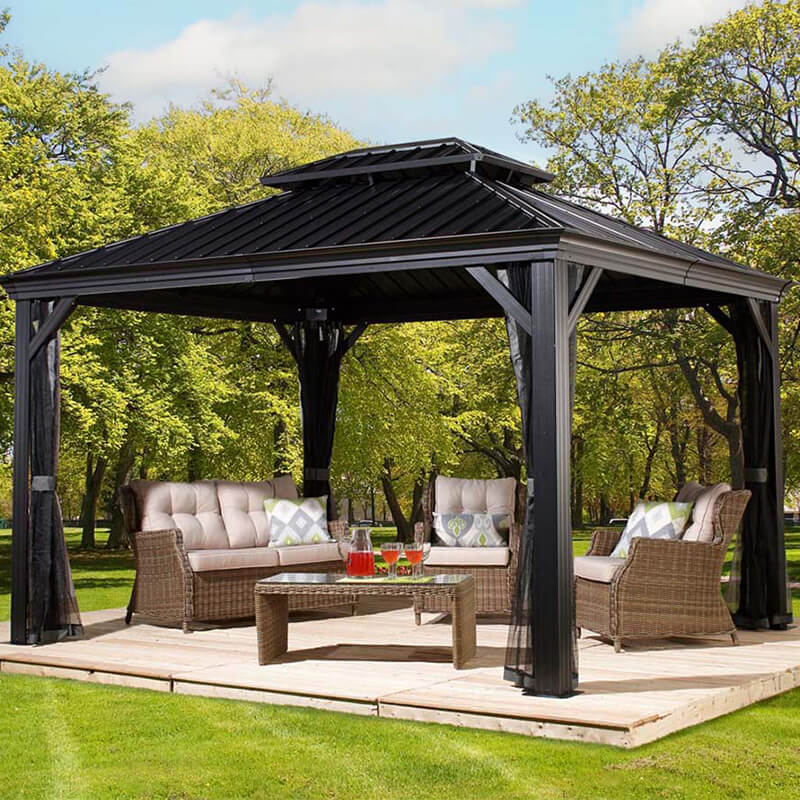
Metal frames also create a distinct visual mood. Some buyers prefer the slimline style of steel tubing, which can make the gazebo appear lighter and less bulky. Others like the more architectural feel of thicker profiles, where the frame becomes a feature in its own right. The difference is not just about looks; it changes how open the interior feels, how the roof seems to sit, and how much visual weight the structure adds to the space.
Shapes That Suit Different Garden Plans
Not every 12×10 gazebo looks the same, even when the dimensions match. The shape can change the whole idea of the product. A buyer might focus on the frame style, roof form and side arrangement long before thinking about anything else.
- Rectangular gazebos are the most direct fit for 12×10 sizing and often give the most practical layout for furniture.
- Hardtop gazebos use a fixed roof panel design, which gives a more structured, built-in appearance.
- Open-sided gazebos keep the space airy and are useful when the aim is shade and shelter without enclosure.
- Semi-enclosed styles offer a more defined room-like feel, while still keeping the setting relaxed.
- Curved roof designs can soften the profile and suit gardens where a boxy look feels a bit too straight.
The right shape depends on how the gazebo will sit in the garden. A straight-edged model can align neatly with paving, whereas a curved or shelter-style frame may look better as a freestanding centrepiece. Small differences in roofline and side structure can make a big impact on how the whole area reads. It is one of those details people notice after the gazebo is in place, and then think, yes, that was the right one.
Hardtop, Soft Top, and the Difference You Can See
Within the metal gazebos 12×10 category, the roof type is often the main decision point. A hardtop gazebo has a fixed roof surface, usually giving a firmer, more structured look. This style suits buyers who want a defined shelter zone and prefer the appearance of a permanent outdoor feature. A hard roof can also make the gazebo feel more like an outdoor room, especially when paired with side curtains or panels.
A soft-top gazebo, by contrast, has a fabric roof that sits on the metal frame. This creates a different profile altogether. The frame still gives it shape and support, but the roof feels lighter and more relaxed. Soft-top styles often appeal to people who want the metal framework without the heavier visual presence of a solid roof. They can look less formal, which is useful in gardens with a casual layout.
There are also versions with double-roof designs, where a raised top section gives the roof a layered appearance. This is not only about style; it can alter the feel of the space underneath and give the gazebo a more open, ventilated look in visual terms. The difference between these roof types matters because it changes how the product presents itself in the garden, and how the buyer imagines using it day to day.
Frames and Profiles: Slim, Sturdy, and In Between
Metal gazebos in this size are not all built with the same frame feel. Some use a slimmer tubular profile, which keeps the design light and less visually heavy. Others use a thicker structure, where the posts look more prominent and the gazebo has a more grounded appearance. The choice often comes down to whether the buyer wants something that blends into the garden or stands out as a feature.
There is also a difference between clean straight posts and more decorative metalwork. Straight posts tend to suit modern patios and simple layouts. Decorative frames, with curves or shaped braces, can add a softer character without becoming overly ornate. For many shoppers, this is where the appeal starts: a gazebo that feels practical, but still gives the garden a bit of personality.
Useful Ways a 12×10 Gazebo Gets Used
This size works well for several outdoor setups, and that flexibility is a big part of the buying appeal. A 12×10 metal gazebo can support different garden plans without needing a huge footprint. Some buyers see it as a dining shelter, others as a lounge area, and some use it as a neat cover for a hot tub zone or outdoor seating corner. The point is not to force one use, but to choose a frame that leaves options open.
- Outdoor dining areas with a table and chair set
- Relaxed seating spaces with sofas or armchairs
- Patio cover zones for a more defined entertaining area
- Garden focal points where the structure frames the view
- Private corners for a sheltered, more enclosed feel
The rectangular size gives a usable span that helps furniture sit logically rather than awkwardly. People often find that a 12×10 layout is easier to furnish than smaller or more square shelters, because seating can be arranged along the long side with better flow through the middle. That kind of layout detail matters more than buyers expect at first.
Open, Lined, or Screened: Side Options That Matter
Another point of difference in the metal gazebo 12×10 range is the side style. Some models are fully open, which keeps views out into the garden and gives a breezier feel. Others include curtain panels or side drapes, allowing the space to feel more sheltered and visually enclosed. A few styles may have framed side sections that create a more defined outline without closing everything off.
The side setup changes the atmosphere quite a bit. An open gazebo feels more connected to the rest of the garden, which is useful when you want the structure to act like a frame rather than a room. A gazebo with sides can feel calmer and more private, especially if it is used for social seating or a quieter spot away from the main terrace. Neither approach is better across the board; they simply do different jobs.
Buyers should think about how much openness they want from the edge of the gazebo. Too much enclosure can make the structure feel heavy in a small garden. Too little can leave it feeling less defined than expected. The best fit depends on how the garden is already arranged and whether the gazebo is meant to blend in or create a clear destination.
Materials and Finishes That Shape the Look
Although the core category is metal gazebos, the finish still makes a noticeable difference. Some frames have a darker, understated coating that helps the structure sit quietly against planting and paving. Others use lighter tones that draw more attention to the lines of the frame. The finish affects not just style, but how the gazebo appears in different light across the day.
There is also a contrast between matte and slightly more reflective finishes. Matte surfaces often read as calm and modern, while smoother finishes can give the product a neater, more polished appearance. This can be useful when matching the gazebo to existing garden furniture, outdoor dining sets or railings. A good finish does not need to shout; it just needs to feel right in the space.
What Buyers Often Compare Before Choosing
When people look at 12×10 metal gazebos, they usually compare a small set of key features. The differences may look subtle at first, but they affect the final experience quite a lot. It is often less about chasing a fancy feature and more about spotting which layout suits the garden, the furniture and the intended use.
- Roof type — hardtop or soft-top changes the overall feel
- Frame thickness — slimmer profiles feel lighter, heavier ones look more anchored
- Open or sided design — affects privacy and visual structure
- Rectangular or curved form — changes how it sits in the garden
- Finish colour — helps the gazebo blend in or stand out
These are the kinds of details that tend to decide whether a buyer feels satisfied later on. A gazebo is not just a shelter; it becomes part of the way the garden is used. If the proportions feel right and the shape makes sense in the space, the product tends to work better as a whole. Sounds simple, but it really matters.
Tips for Choosing the Right 12×10 Setup
If you are looking at this category, it helps to think in terms of the garden’s layout rather than just the gazebo itself. A 12×10 footprint is generous enough for a proper feature, so the placement should feel intentional. Rectangular gardens often suit the form well, but even awkward spaces can work if the gazebo is positioned with the rest of the outdoor area in mind.
It also helps to decide whether the gazebo should feel like a dining cover, a social shelter, or a visual centrepiece. That choice often points you towards a particular roof type or side configuration. For example, a hardtop model tends to feel more settled and structured, while an open-sided frame can feel less dominant. Buyers who want a stronger room-like effect often lean towards models with side panels, because the edges feel more defined.
Another useful thought is scale. A gazebo can look very different depending on what sits beside it. A slim frame may seem understated next to bulky furniture, while a thicker frame can help balance a larger seating set. The point is to match the structure to the rest of the outdoor setting so it does not feel out of place. That is where a good purchase starts to make sense.
Why This Category Keeps Catching Attention
The appeal of metal gazebos 12×10 lies in the mix of structure, size and clear purpose. The format gives enough space for real use, while the metal frame gives it a solid identity. Buyers often like that it looks organised without needing to be complicated. It is a straightforward category, but not a plain one. There is enough variation in roof style, frame profile and side design to suit different gardens, and that makes browsing it feel worthwhile.
For shoppers who want a shelter that feels more settled than a temporary canopy, the 12×10 metal gazebo category offers a balanced option. It can mark out a seating area, create a focal point, or simply give the garden a more finished layout. The best choices are usually the ones that answer a simple question: how do you want this space to feel when you step into it? Once that is clear, the right gazebo tends to stand out quite quickly.
[Sassy_Social_Share]