
metal carports 30x20 - Best Deals in UK!
Showing the single result

Metal carports 30×20 give you a practical covered space for cars, vans, trailers, and everyday gear, with different roof styles, frame types, and open or enclosed layouts to fit your plot.
Why a 30×20 metal carport makes sense
A 30×20 metal carport gives you a generous footprint without moving into full garage territory. That size is often chosen when a single parking bay feels too tight, or when you want room for two vehicles side by side with a bit of breathing space between them. The format is roomy enough for a car plus a mower, bike rack, bins, or workbench area, depending on how the space is arranged.
What makes this size stand out is the balance between shelter and openness. You get cover from rain, sun, frost, and falling debris, but you do not have the closed-in feel of a shed. For many buyers, that matters because it keeps access simple and parking less fiddly. It also works well where turning space is limited and a wide, easy drive-through opening is more useful than a full wall structure.
The 30×20 layout can suit a range of site types, from domestic driveways to larger yards and rural properties. Depending on the design, it can be used as a vehicle shelter, a covered storage bay, or a multipurpose space with enough headroom for taller vehicles. That flexibility is one of the main reasons people look at this category in the first place.
Bestseller der Kategorie metal carports 30x20
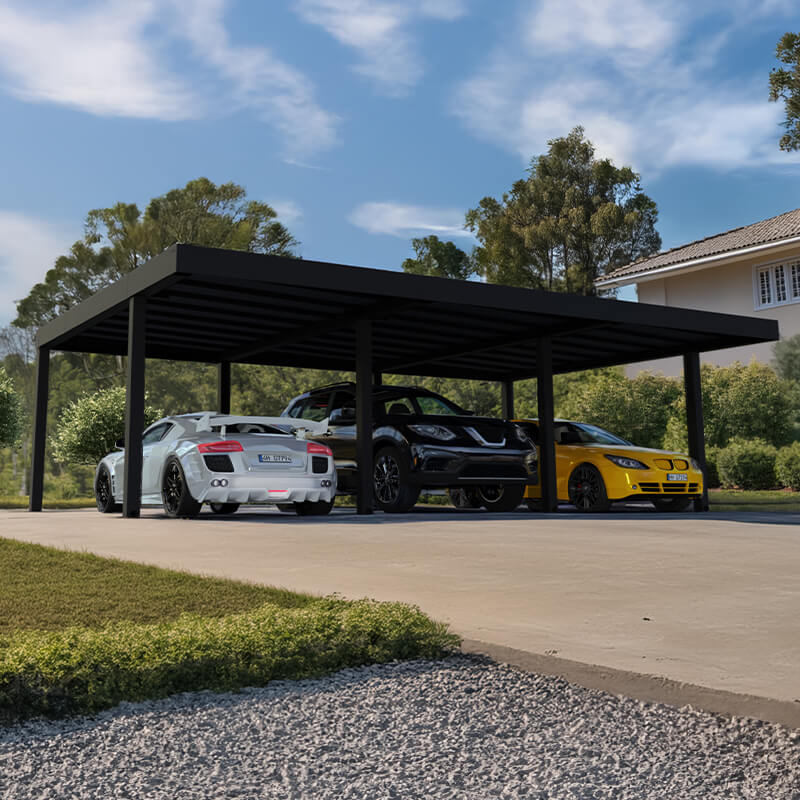
Open sides, partial panels, or enclosed ends?
One of the first choices with metal carports 30×20 is how open the unit should be. The same footprint can appear very different depending on the wall arrangement, and that changes how you use the space day to day.
- Open-sided carports are the most straightforward option. They give you easy access from both sides, good airflow, and a clean parking experience. They suit people who want shelter more than storage.
- Partially enclosed carports usually include one or two side panels or an end panel. This can help block wind-driven rain or give a bit more privacy without closing the whole structure in.
- Fully enclosed or mostly enclosed versions blur the line between carport and garage-like shelter. They can offer more protection against lateral weather, though access is less open.
The difference is not just visual. A more open design tends to feel lighter and easier to park under, while partial enclosure adds a sense of boundary and can help if the carport sits in a more exposed position. If your site gets crosswinds, the direction of any panels can matter quite a lot. That small detail is often overlooked.
Roof shapes that change the whole feel
Roof style has a big effect on how a 30×20 metal carport performs and looks. The frame can be similar, but the roof profile changes drainage, headroom, appearance, and sometimes how the unit handles windy conditions.
- Gable roof carports have a pitched shape on both sides, giving a classic look and a good amount of internal height in the centre. They often suit properties where the carport needs to sit comfortably beside a house or barn without looking too industrial.
- Mono-pitch / lean-to styles slope in one direction. These are useful when the carport is attached to an existing wall or when the site naturally sheds water toward one side. The shape can look neat and compact.
- Flat or low-slope roofs give a more understated profile. They can work well where planning or visual impact is a concern, although the slope still needs to be enough for drainage.
- Boxed or barn-inspired roof lines appear on some metal carport layouts and can suit rural plots or properties with more traditional outbuildings nearby.
The roof choice should not be made on looks alone. For a 30×20 footprint, the roof profile can change the whole impression of scale. A taller roof gives a more spacious feel and can help with higher vehicles, but it may also be more visible from the road. A lower roof sits quietly in the landscape, which some buyers prefer for a drive or side yard. It really depends on what you want the structure to do.
Steel frames, tube frames, and what the structure is really doing
When people compare metal carports, they often focus on the roof sheet first, but the frame is the bit doing the heavy lifting. In a 30×20 size, the structural system matters because the span is wide enough to need proper support and sensible spacing.
Galvanised steel frames are a common choice because the zinc coating helps resist corrosion and makes the frame suitable for long-term outdoor use. Some designs use heavier-gauge steel members, while others use lighter sections that still work well when the overall structure is engineered correctly. The difference shows up in rigidity, feel, and the amount of confidence you get when the weather turns rough.
Tube-frame carports usually have round or square tube sections and can give a clean, simple appearance. They are often easy to assemble in modular form. By contrast, box-section frames can look more solid and can suit buyers who prefer a sharper, more architectural profile. Both can work well; the choice often comes down to the look you want and the specification needed for the site.
If the carport is intended for a more exposed location, look closely at the post arrangement and whether the structure includes additional bracing. Wider bays need stable support, and the way posts are set out has a big effect on how easy it is to park and open doors. That practical detail can make a huge difference once the unit is installed.
Single bay, double bay, or flexible cover space
A 30×20 metal carport is large enough to be used in different ways, even if the layout stays simple. The footprint can be divided visually into zones, and that is where the subtypes become useful.
- Single large bay layouts suit one vehicle with a lot of side room. This is handy for wide vehicles, door clearance, or extra storage along one edge.
- Double bay arrangements are a strong fit for two cars parked side by side. They can reduce the need for two separate coverings and make family parking less of a shuffle.
- Vehicle plus storage combinations use part of the 30×20 area for parking and part for covered equipment, firewood, or a small utility zone.
- Drive-through layouts can be useful where access from both ends matters, especially for trailers, farm use, or vehicles that are moved often.
The right subtype depends on how often the space will be used for parking versus storage. If you only ever need to cover one car, the extra area may feel roomy in a good way. If you need the carport to do more than one job, a 30×20 footprint gives you enough flexibility to avoid a cramped setup. That is one of its main appeals.
What a metal build gives you that timber does not
People often compare metal carports with timber structures because both can cover the same role, but the materials behave quite differently. Metal tends to give a more uniform finish and a cleaner structural line, especially in larger spans like 30×20.
One practical difference is how the frame handles repeated outdoor exposure. Metal carports typically rely on engineered steel components and factory-made profiles that stay consistent from part to part. That matters when you need a wide carport to look and perform evenly across the whole span. Timber can be attractive, of course, but it often brings more variation in appearance and more visible bulk in the posts and beams.
Another difference is visual weight. A metal carport can look lighter, even when the frame is strong, because the lines are thinner and more precise. On a domestic driveway, that can be a useful thing. It lets the carport shelter the vehicles without dominating the whole front of the property.
There is also a useful practical point: a metal frame often pairs well with different roof and wall panel options, so the same basic structure can be adjusted to suit the setting. Not every site wants the same level of enclosure, and that is where metal systems tend to be more adaptable.
How the 30×20 size helps on site
The dimensions 30×20 sound straightforward, but in real use they open up several layout possibilities. Depending on whether the measurements are in feet or another unit used by the supplier, the overall area can be significant. Either way, the proportions usually give a broad, usable rectangle that is easier to organise than a narrow shed.
A wider carport is helpful when doors need to open without clipping posts. It also gives better room for side mirrors, child seats, or loading bags into the boot. For taller vehicles, the height profile matters just as much as the floor area, and a well-specified metal carport can offer a more comfortable park-in-and-step-out experience than a low, tight cover.
Because the structure is open or partly open, the space feels easy to approach. You are not reversing into a dark enclosure. For many buyers, that makes it less stressful to use every day. It sounds small, but when you are parking in poor weather, it is the kind of thing you notice.
Useful checks before you choose one
Before buying a 30×20 metal carport, it is worth looking at a few specific points so the structure fits the job properly. These are not flashy details, but they affect whether the carport feels right once it is in place.
- Vehicle height: check the tallest thing that will use the carport, including roof bars, roof boxes, or vans with raised roofs.
- Access width: make sure the post spacing allows doors to open properly and gives enough room for easy manoeuvring.
- Roof direction: think about where water will run off and whether that suits the driveway, boundary, or adjacent path.
- Exposure: if the site is open to wind, a sturdier frame and more considered bracing may be worth paying attention to.
- Visual impact: choose a roof and side arrangement that sits well with the house, yard, or surrounding outbuildings.
These checks can save a lot of back-and-forth later. A carport that looks right on paper can feel awkward if the posts land in the wrong place or the roof line fights with the site. With this sort of product, the details are a big part of the value.
Finishes and appearances that suit different properties
Metal carports are not all trying to make the same statement. Some are clearly practical, while others sit more neatly alongside a home or commercial yard. The finish matters because a 30×20 carport covers a fair bit of visual area.
Galvanised finishes often give a clean, bright technical look. They feel straightforward and honest, which suits a lot of utility spaces. Powder-coated or colour-finished frames, where available, can help the carport blend with the building or reduce contrast against fencing, gates, or brickwork. Roof panels may also come in different tones, which changes the overall impression more than people expect.
Style differences are subtle but important. A gable roof with slim posts can look more domestic, while a lean-to version can feel neater alongside a boundary wall. An open-sided design looks airy and simple; a partially clad version feels more enclosed and purposeful. There is no single right answer, only the one that fits the place you are putting it.
Where buyers usually see the value
When people buy a metal carport 30×20, they are often looking for value in three areas: space, access, and protection. The size gives room to breathe. The metal build gives a tidy, reliable frame. And the open format makes everyday use much easier than squeezing vehicles into a narrow garage opening.
For households with more than one vehicle, the ability to park under one shared structure can simplify the front of the property. For rural or semi-rural sites, a carport can shield equipment that would otherwise sit out in the weather. For trades or hobby use, the extra covered space can support a working area without needing a full enclosed building. That is why this category attracts such a mixed group of buyers.
There is also a simple visual benefit: a carport can organise an area that otherwise feels exposed or a bit unfinished. It gives the space a clear purpose. That can be enough to make a driveway or side yard feel more settled and useable, which is often part of the buying decision even if it is not written down.
Choosing the right type without overcomplicating it
If you are weighing up different metal carports 30×20, it helps to narrow the choice by use first and style second. Decide whether the main job is parking, storage, shelter from weather, or a mix of all three. Then look at how open the structure should be, what roof shape suits the property, and how visible the carport will be from the house or road.
A good rule is to avoid paying for features you will not use, but not to cut back on the things that affect daily convenience. Width, headroom, and access are the bits that people usually notice later if they were missed at the start. At the same time, a simpler open design can be a better fit than a more enclosed one if you mainly want fast parking and easy turning space. It does not need to be more complicated than that.
For buyers comparing options, the category is really about finding the right mix of form, frame, and footprint. A well-chosen 30×20 metal carport can be a tidy addition that works hard without taking over the site. That combination is why it remains a popular size for people who want shelter with a bit of room to spare.
[Sassy_Social_Share]