
Log Stores with Apex Roof - Best Deals in UK!
Showing all 3 results
-
43% OFF: 6’10 x 2’10 Forest Apex Large Logstore (2.1m x 0.9m) £169.9943%

-
21% OFF: 6’6 x 2’8 Forest Apex Overlap Logstore (2m x 0.8m) £219.9921%
-
21% OFF: 4’5 x 2’10 Forest Apex Medium Logstore (1.3m x 0.9m) £179.9921%

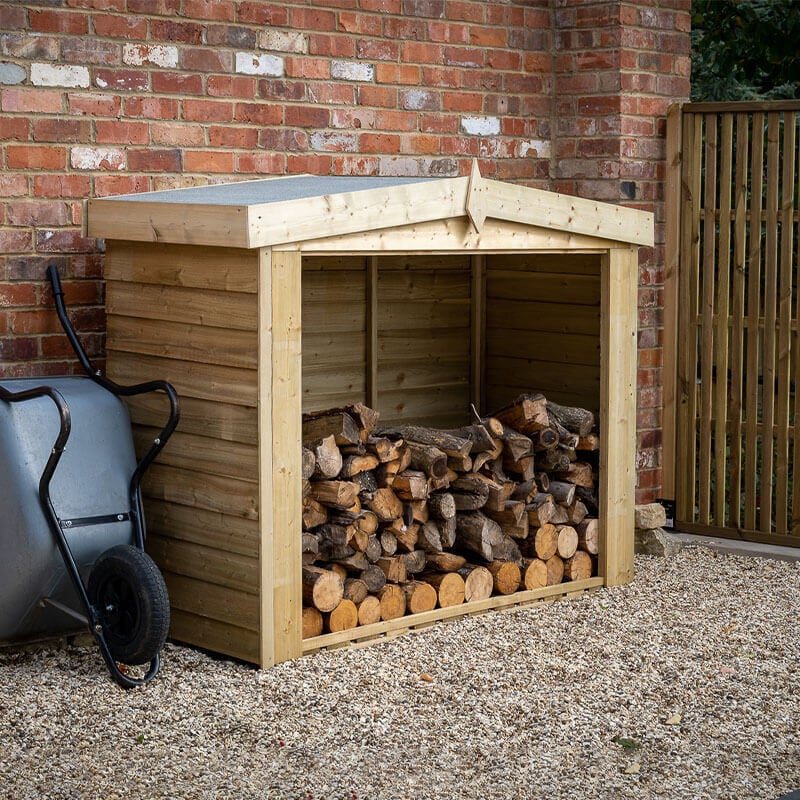
Log stores with apex roof give firewood a tidy, sheltered place to sit, while the pitched top helps water run off and makes storage look smart in a garden, yard or beside a shed.
The classic shape that suits firewood
A log store with apex roof is built around a simple idea: keep logs raised, aired and protected, without taking over the whole garden. The apex roof — sometimes called a pitched roof — creates a clear centre line and a sloping shape on both sides. That shape is practical, but it also has a neat, traditional look that fits well with timber fencing, sheds and older garden settings. It is the sort of design that feels deliberate rather than bulky.
For many buyers, the attraction is in the balance between appearance and usefulness. A log store should not just hold wood; it should help the wood stay in better condition for burning. The raised base keeps logs off damp ground, the open sides allow airflow, and the roof covers the stack from rain falling straight down. With an apex roof, the cover is less flat and less likely to hold puddles, which is one reason this style is so often chosen for outdoor firewood storage.
What sets an apex roof apart
The main difference between an apex roof and a flat roof is easy to spot, but the effects are worth knowing. A flat roof store has a more boxy outline. An apex roof store looks lighter, with a defined top line and angled sides to the roof. That pitched form can make the store feel a bit more architectural, even when it is a compact unit. In practical terms, the slope helps shed rainwater and reduces the chance of water sitting on top after bad weather.
Bestseller der Kategorie Log Stores with Apex Roof


There is also a visual difference in how the store sits in the space. Apex roof log stores often look good against a boundary wall, near a back door, or beside an existing timber structure because the roofline echoes common garden buildings. If you want storage that looks organised rather than improvised, this roof shape can help. It gives the impression of a proper place for logs, not just a stack with a cover on it.
Different forms within the category
Not every log store with apex roof is built in the same way. There are a few useful forms to look out for, depending on where the store will sit and how much wood you need to keep ready.
- Compact single-bay stores for smaller gardens or occasional burning
- Wide log stores with more horizontal room for larger stacks
- Segmented designs with divided sections for sorted firewood
- Store-and-shelter combinations that pair log space with a small covered side area
- Wall-backed styles that sit neatly against a fence or brick wall
- Freestanding units that can be positioned away from walls for airflow all round
Those forms do not just change the look; they change how easy the store is to use day to day. A compact store suits a few bags or a small stack for a stove. A wider unit is better if you burn through logs regularly and do not want to keep topping up. Segmented designs can help separate different woods, such as denser hardwood for longer burns and lighter kindling nearer the front, which makes life a bit easier when the weather is poor and you just want to grab what you need.
Hardwood, kindling and mixed loads
The way a log store is used often depends on the wood it is holding. Hardwood logs tend to be heavier and denser, so they benefit from a store that can take a more substantial stack without looking overfull. Kindling, by contrast, is lighter and may be stored in smaller, neater sections near the top or in a separate bay. Some buyers use an apex roof store for a mixed load, keeping everyday burning wood in the main body and smaller pieces in a side area or lower shelf if the design has one.
That is where the category becomes more specific than it first appears. A log store with apex roof is not only about capacity. It is about organising firewood by use. If the main stack is easy to see, it is easier to judge when you are running low. If the store has open slats or gaps in the sides, the wood can sit with a better chance of getting steady air movement rather than being sealed in. Buyers often notice this difference after the first few fills, because the stack feels more orderly and less awkward to reach.
Why the pitched roof matters in real use
The roof is not just decorative. In a garden setting, rain can arrive from odd angles, and a flat surface can hold standing water. An apex roof gives runoff a clear route, which helps the top of the stack stay less exposed. That does not mean the logs are fully enclosed, because they should not be. Firewood needs airflow. But the pitched roof gives you a better balance between protection and ventilation than a completely open stack.
Another advantage is height. An apex roof adds a central peak, which can give the store a bit more presence without making the whole unit wide and clumsy. This can be helpful when placing the log store in a narrow side return, along a fence line, or near a patio edge where space is limited. The top shape can also make the store feel less heavy visually, which matters if you do not want the garden to look crowded with timber structures.
Timber styles and finish options that change the feel
Within this category, the appearance can vary depending on the timber style and finish. Some log stores are made to look rustic, with a more natural wood grain and a straightforward, functional shape. Others have a cleaner, more finished look that suits a tidy modern garden. The key point is that the apex roof tends to work in both directions: it can look country-style in a softer setting, or more crisp and ordered in a contemporary layout.
When comparing options, it helps to notice whether the store has a more open or more enclosed feel. An open-sided structure is better for airflow and lets you see the stack at a glance. A more sheltered design gives the logs a bit more visual cover from the elements, while still keeping them outdoors. The difference is not only about looks; it changes how quickly you can check the stack and how exposed the front row is to sideways rain. Small details like these are what make one store feel right and another slightly off.
Size, stack depth and what to look for
Choosing a log store with apex roof is often about matching the size to the way you actually burn wood. A small store may be enough if you only need a few evenings’ worth of logs at a time. A deeper unit suits buyers who want a fuller reserve close to the house. Stack depth matters because it affects both capacity and access. A store that is too deep can make older logs hard to reach, while one that is too shallow may need filling all the time.
Look closely at how the store is proportioned:
- Width affects how many logs can sit side by side
- Height affects how much air space is available above the stack
- Depth affects how easy it is to load and reach the back row
- Roof overhang affects how well the top edge is shielded from rain
A sensible proportion often matters more than a bigger frame. A store that suits your fuel use will feel easier to live with, and it is less likely to end up half empty or awkwardly overpacked. That is a common mistake: buying on size alone, then finding the store is hard to fill neatly. An apex roof model should look composed when full, not strained.
Open sides, back panels and airflow balance
One of the main reasons people choose a dedicated log store rather than a closed cabinet is airflow. Firewood that is held too tightly can feel damp or stale. A well-designed log store with apex roof usually gives the logs room to breathe through open sides or spaced slats. At the same time, a back panel or partial rear wall can help keep the stack in place and improve the sense of order.
This is where the difference between styles becomes useful. A fully open store may suit a sheltered corner or a position under cover. A backed store can be better in a more exposed spot, where wind may otherwise disturb the stack. Some buyers prefer a design that keeps the front open for easy access, while others want a bit more structure around the rear and sides so the logs sit in a clear rectangle. There is no single right answer, but the best choice is usually the one that matches the site rather than just the catalogue photo.
Simple features that can make a real difference
Small structural details often matter more than people expect. A raised base is useful because it separates logs from damp paving or soil. A stronger roof line can help the store look settled and make the top area feel less flimsy. Braced corners can improve the sense that the unit will stay square when full. These are not flashy extras, just the sort of sensible details that make everyday use less fiddly.
Useful things to notice when comparing apex roof log stores include:
- Raised feet or base rails to lift logs clear of ground moisture
- Open slatted sides to support ventilation
- Roof overhang for added edge protection
- Brace pieces that help the frame keep its shape
- Divided sections for separating log sizes or batches
These features do not change the purpose of the store, but they do change how easy it is to live with. A neat stack is simpler to refill, easier to inspect, and less likely to slump sideways after a few awkward loads. That can save a fair bit of fuss later on.
Where this style works best in the garden
Log stores with apex roof are popular because they settle into different garden layouts quite easily. Against a fence, the pitched top gives the unit a finished look rather than something temporary. Beside a shed, it can mirror the roof shape and make the whole area feel more planned. Near a patio, it can keep firewood close to hand without looking like a random pile of timber. Even in a narrow side passage, the compact roof profile can help the store feel more orderly.
Placement matters because it affects both convenience and appearance. If the store is close to the house, you want access to the logs without much carrying. If it sits further away, you may prioritise a larger capacity or a more sheltered position. The apex roof suits both approaches because it keeps the silhouette clean and prevents the top from looking too flat or unfinished. In a small garden, that can make a surprising difference.
Buying with the fire in mind
A good log store is not just storage; it is part of how you use your stove, fire pit or indoor fireplace over the season. A log store with apex roof helps you keep a clear supply in one place, with the stack visible and easier to manage than loose wood spread across the garden. It also gives you a proper boundary for fuel storage, which can make the whole outdoor area feel more under control.
When buying, think about:
- How much wood you keep on hand at once
- Whether you want a compact or wide footprint
- If the store will stand alone or sit against a boundary
- How important the roof shape is to the look of the garden
- Whether you prefer a simple open form or a more sectioned layout
The right choice usually feels obvious once those points are lined up. Buyers who know their fuel habits tend to pick better than those who only compare dimensions. The category is broad enough to suit different spaces, but specific enough that the details matter. That is what makes it worth taking a proper look, rather than choosing the first wooden box with a roof.
A tidy place for proper fuel storage
In the end, the appeal of log stores with apex roof comes down to a mix of shape, shelter and everyday ease. The pitched roof gives the store a clear identity, while the open storage format supports airflow and keeps logs ready for use. Whether you need a small unit for occasional evenings by the fire or a larger structure for a regular burn, the apex roof style offers a practical and pleasant-looking way to keep wood in order.
It is a category that rewards careful comparison. Look at the form, the footprint, the openness, the roof line and the way the stack will sit inside it. Choose a store that suits the space you actually have and the wood you actually burn. Done well, it becomes one of those garden additions that quietly does its job, and does it with a bit of style too.
[Sassy_Social_Share]