
Log Stores under £300 - Best Deals in UK!
Showing all 3 resultsSorted by price: low to high
-
21% OFF: 6’6 x 2’8 Forest Apex Overlap Logstore (2m x 0.8m) £219.9921%
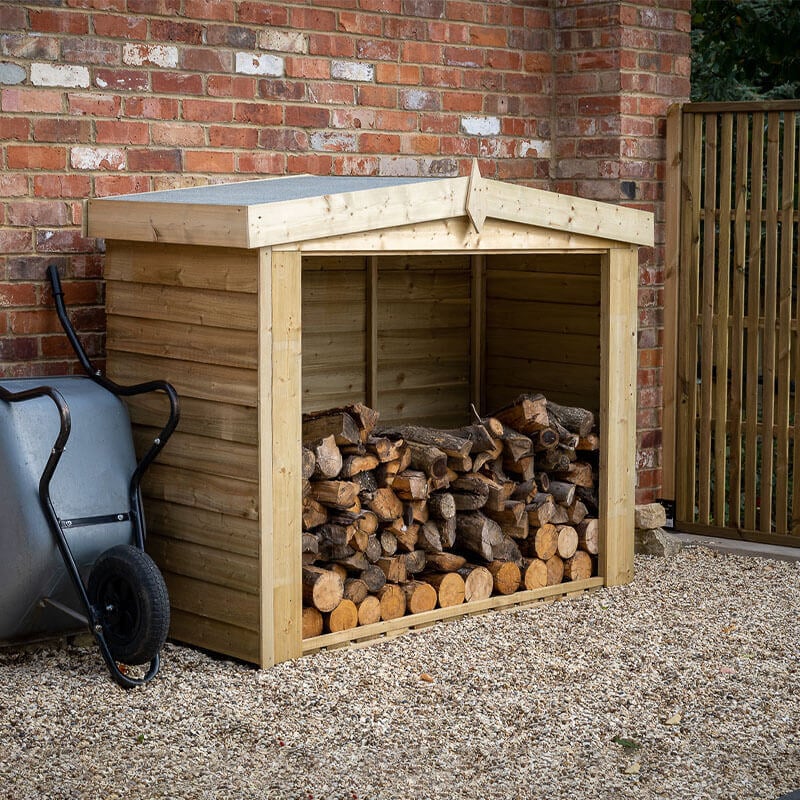
-
23% OFF: 6′ x 2’10 Forest Pent Medium Overlap Log Store (1.82m x 0.9m) £269.9923%

-
19% OFF: 6’5 x 2’3 Forest Pent Logstore with Tool Storage (2m x 0.7m) £274.9919%

Log stores under £300 offer practical firewood storage in compact, budget-friendly designs, from open-sided timber stores to metal log shelters, helping keep logs off the ground, aired and neatly stacked.
Popular products in this range
Small budget, tidy stack
Log stores under £300 are a handy choice when you want proper firewood storage without moving into pricier garden buildings. This price range usually covers a broad mix of single-bay, double-bay, and combined log store and shelter styles, so there is still room to choose something that suits the size of your outdoor space and the amount of wood you keep in rotation.
What makes this category useful is the balance between cost and function. A log store does not need to be large to be effective. Even a compact unit can keep logs raised off damp ground, organised by season, and easier to grab when the weather turns cold. The best part is that these stores often look more intentional than a loose pile under a sheet, so the garden feels calmer and a bit more finished.
Open-sided, roofed, and ready for the weather
Most log stores in this category are built around one simple idea: airflow. You will usually see open sides, slatted panels, or a back-and-sides frame with a sloped roof. That open structure matters because it gives the logs room to sit neatly while still allowing air to move around them. In practical terms, that means less trapped moisture and a more sensible setup for anyone burning logs through the season.
A roofed log store is often the most useful shape for a British garden, because the roof helps protect the top layer from rain while the open sides stop the whole thing from feeling boxed in. Some designs have a deeper roof overhang, which is useful if the store sits in a more exposed spot. Others keep the roof compact and neat, which can suit a patio edge or a narrow side return.
You will also find basic log racks, which are more stripped-back and often lighter visually. These can suit smaller gardens or those who do not want a bulky unit dominating the space. Then there are log stores with integrated tool space or side sections for kindling. These tend to be tidy options for households that like everything in one place, though they are still usually within this under-£300 bracket when the design is kept sensible.
Timber, metal, and the feel of the finish
The material makes a big difference to how a log store looks and how it sits in the garden. Timber log stores are common in this price range, and they usually feel the most natural beside fencing, sheds, planters, or a greenhouse. They can look soft and traditional, and they work well if you like your storage to blend in rather than stand out.
Metal log stores bring a sharper, more modern feel. They often have a slimmer frame and can look especially neat in contemporary gardens or near a rendered wall. Some are powder-coated, which gives a cleaner finish and helps the store hold its appearance over time. The look is different too: timber feels warmer and more garden-like, while metal can feel a bit more structured and minimal.
There are also mixed-material designs, where a timber frame is paired with a metal roof or metal supports. These can offer a pleasing middle ground, giving the store a sturdier edge without making it look too industrial. If you prefer the visual warmth of wood but want something a touch more defined, that sort of combination can be a very practical choice.
Compact, tall, wide: choosing the right shape
One of the main differences in log stores under £300 is shape. A tall, narrow store is useful if you have limited floor space but enough height to stack logs in a stable way. These are often seen in side passages, by the back door, or tucked against a boundary where width is tight.
A wide, low store suits larger log deliveries or households that burn through wood more quickly. It can be easier to sort logs into separate rows, which helps if you like to keep newly delivered wood apart from wood that has been sitting longer. A wider store can also make it simpler to see how much you have left at a glance, which is oddly satisfying and genuinely useful.
Some stores are designed as single-bay units, where all the logs sit in one section. Others have double-bay or multi-compartment layouts. These are worth looking at if you want to separate lengths of wood, store logs and kindling together, or keep a better eye on which stack needs using first. The shape you choose often says more about how you use your fire than about the garden itself.
What the budget usually gets you
At under £300, you can still find a good range of useful details. Many stores in this category include raised bases, which stop logs sitting straight on paving, soil, or decking. That small lift makes the structure feel more deliberate and makes stacking easier. You will also often see slatted sides, which are a practical detail rather than just a design choice.
Depending on the style, you may also find weather-resistant finishes, simple assembly design, and compact footprints that fit alongside other garden items. The point here is not fancy extras for the sake of it. It is about getting a store that does the job cleanly without feeling overbuilt or too expensive for what it is.
It is worth noting that this price band tends to favour straightforward, sensible construction. That can actually be a plus. Fewer complicated parts often means a cleaner shape, less visual clutter, and a log store that sits more naturally in the garden. Sometimes the less fussy option is the one that ends up looking the best.
Why logs like a proper home
A dedicated log store does more than just hide a pile of wood. It gives your firewood a defined place, which helps keep the garden orderly and makes refilling easier when the evening gets colder. If you have ever wrestled with loose logs near a fence or under an awkward tarp, the difference is easy to appreciate.
The most obvious advantage is better organisation. A stack inside a log store is easier to count, easier to sort, and less likely to spread across the patio. Another advantage is that the open design supports air movement, which is exactly what a log stack needs. A third is the visual one: a proper store looks intentional, even when it is packed full.
There is also the matter of access. A good store keeps logs close enough to the house to be useful, but not so close that they feel in the way. That middle ground matters. When the layout is right, you can move from garden to stove with less faffing about, which is one of those small practical comforts people notice more in winter than they expect.
Differences that matter when comparing stores
Not all log stores do the same job in quite the same way. Some are built mainly for maximum capacity, while others prioritise a neat footprint or a decorative look. If your main aim is keeping a steady supply for regular use, capacity matters more than style. If the store is visible from the seating area, shape and finish may matter more than sheer volume.
Another difference is whether the design is more open and airy or slightly more enclosed. Fully open sides are useful for airflow and easy stacking. Partly enclosed models can look tidier and feel a bit more protected, though they still need to stay airy enough for firewood storage. The right level of openness depends on where the store sits and how much weather exposure it gets.
There is also a difference between freestanding stores and those meant to sit against a wall or fence. Wall-hugging designs are handy for tighter gardens and can make use of awkward spaces that would otherwise go unused. Freestanding units often feel more flexible in placement, and sometimes look better when they are meant to be seen from more than one angle.
Useful details that make stacking easier
When browsing this category, it helps to look beyond the headline dimensions and notice the smaller features. A slightly raised frame can make a noticeable difference by keeping the base timber off the ground. A sloped roof helps rain run off rather than sit on top. A deeper bay can handle longer logs without them poking out awkwardly, which sounds minor but is actually one of the details people remember.
Some designs give you cleaner edges for stacking, which helps logs sit more securely. If the sides are well formed and the frame is square, the pile tends to look neater and feel steadier. This matters if you are buying not just for storage but for the appearance of the whole area. A tidy store tends to make the rest of the garden look less messy too.
It is also worth thinking about how the store works with your usual log sizes. A model that suits short cut logs may not be as friendly to longer pieces. Likewise, if you mostly buy smaller bags or nets of wood, you might prefer a shallower store rather than something deep and empty-looking. Matching the store to the actual wood you use saves a lot of irritation later on.
For patios, side returns, and narrow gaps
One reason log stores under £300 are so popular is that they can fit into awkward spots that would otherwise go unused. A narrow model can sit beside a shed, along a fence line, or in a slim gap near the house. That makes the category useful for smaller gardens where storage has to earn its place.
In a patio setting, a clean-lined timber or metal store can feel much more settled than a loose stack covered in sheeting. If the garden is partly paved and partly planted, the store can act almost like a small architectural feature, especially when the lines match nearby fencing or pergola timber. It does not need to shout; it just needs to look like it belongs there.
For larger gardens, a bigger store can be positioned a little further from the main seating area, leaving the closer spaces free for dining or planting. That is useful if you want the firewood to be available without making it the centre of attention. The best placement is often the one that feels tucked away but still sensible.
What to look for before you choose
- Capacity that matches how much wood you actually keep on site, not just how much you hope to store.
- Footprint that fits the garden without crowding paths, pots, or access points.
- Open sides or slatted panels for airflow and a less boxed-in look.
- Roof shape with enough slope or overhang to suit your chosen spot.
- Material finish that works with the rest of the garden, whether that is timber, metal, or a mix.
- Raised base if you want the logs kept clear of the ground.
- Bay layout if you prefer separating different log lengths or wood that is being used at different times.
A neat end point for the log pile
Choosing from Log Stores under £300 is really about finding the point where function, size, and appearance meet. Some buyers want a simple open rack for a modest supply. Others want a roofed timber store that sits quietly by the fence. Others again prefer a more modern metal frame that keeps the garden looking sharp. The variety in this category is what makes it useful.
If you know the space you have, the amount of wood you store, and the look you want beside the house, the choice becomes much easier. A good log store should feel like it was made for your routine. It should keep the wood organised, keep the garden calmer, and make the whole setup feel a bit more sorted. And honestly, that is the kind of practical upgrade that tends to get used every week, not just admired once and forgotten about.