
Log Stores 7x3 - Best Deals in UK!
Showing all 2 resultsSorted by price: low to high
-
43% OFF: 6’10 x 2’10 Forest Apex Large Logstore (2.1m x 0.9m) £169.9943%

-
21% OFF: 6’6 x 2’8 Forest Apex Overlap Logstore (2m x 0.8m) £219.9921%
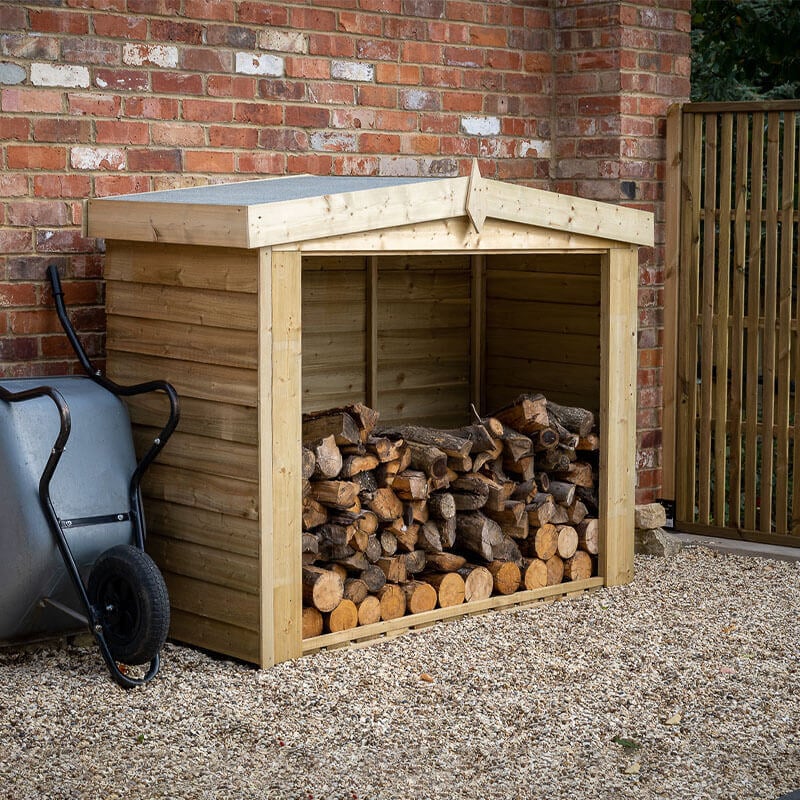
Log Stores 7×3 offer a compact, tidy way to keep firewood off the ground, neatly stacked and ready to use, with a slim footprint that suits patios, fences and smaller outdoor spaces.
Popular products in this range
A neat footprint for tight outdoor corners
A 7×3 log store is built for gardens where space matters. The shape works well when you need a dedicated place for logs, but do not want a structure that dominates the yard. Its long, narrow layout gives plenty of storage length for stacking firewood in ordered rows, while the depth stays modest enough to tuck beside a wall, along a boundary or at the side of a shed. That makes it a practical choice for householders who want firewood storage without losing useful room for seating, planting or access paths.
The dimensions also suit the way logs are usually stored. Firewood is often stacked in rows rather than piled high, so the 7×3 format helps create stable, easy-to-read stacks. You can see what you have at a glance, which is useful when splitting space between seasoned logs, kindling and mixed hardwood or softwood batches. It is a format that feels ordered, not bulky, and that matters when the outdoor area needs to stay tidy.
Why the 7×3 shape works so well
Compared with deeper log stores, a 7×3 design often makes loading and sorting simpler. You do not need to reach far into the unit, so stacking is easier and the front rows stay accessible. This can be handy if you rotate logs by dryness, wood type or size. It also helps when you want to keep different burn-ready batches separate, for example larger hardwood pieces on one side and smaller stove logs on the other.
The length gives a useful run for even stacking, which may reduce wasted gaps. That means the store can make good use of its footprint. For buyers comparing sizes, the key difference is often this: a 7×3 log store tends to feel more streamlined than wider models, while still giving enough capacity for regular use. It is not just about holding wood; it is about holding it in a way that is easy to manage day after day.
Open sides, shelter, and airflow in balance
Many log stores in this size are designed with a balance of coverage and airflow. The roof helps protect the top layers from rain and falling debris, while open sides allow air movement around the stack. This is important because firewood is usually best kept in a place that feels protected but not sealed in. A 7×3 log store often gives that middle ground, so logs are covered overhead yet still exposed to the moving air they need for storage.
When choosing between styles, it helps to look at the shelter provided by the roof and how open the sides are. Some designs leave more of the timber visible, while others add bracing or slatted sections that shape the look and alter how the stack sits. If the store is placed near a wall or fence, the surrounding setting may change how sheltered it feels. That can be an advantage if the structure is positioned thoughtfully, though it is still the store’s form that does most of the work.
Different subtypes you may come across
Within the Log Stores 7×3 category, there are a few common forms that suit different gardens and stacking habits:
- Open-front log stores for quick access and easy loading from the front.
- Slatted log stores that allow air to pass through the sides while keeping the stack contained.
- Roofed log stores with a more defined top cover for extra overhead protection.
- Raised log stores that lift firewood away from damp ground and help keep the base of the stack cleaner.
- Wall-side log stores suited to placement beside a fence, shed or garage where the footprint needs to stay neat.
These subtypes may look similar at first glance, but the details change how they are used. An open-front version is convenient when logs are accessed often. A slatted design tends to look a bit more structured and can keep the stack visually contained. A raised unit is helpful when you want logs lifted clear of soil or paving, while a roofed version can give the top layer a more sheltered position. None of these is automatically better; it depends on where the store sits and how often the wood is used.
Timber, finish and style differences
People often compare log stores by appearance as much as by size. In a 7×3 format, the choice of timber and finish can change the whole feel of the product. A natural timber look can blend into planting and fencing, while a darker finish may suit a more structured garden layout. Some stores are left with a plain, practical look, others have more defined framing that makes the unit look part of the garden rather than just an add-on.
There is also a difference between lighter-looking open frames and more enclosed builds. Open frames can appear less heavy in a small garden, which is useful where visual space matters. More enclosed styles can create a tidier line and help the log stack look organised from the outside. For buyers, the decision is often less about decoration and more about how the store sits against existing features like a shed, pergola or paved seating area.
What makes a 7×3 store practical for regular firewood use
A log store in this size is especially useful if you burn wood regularly but do not need an oversized timber house. It is the kind of storage that fits a routine: stack the logs, keep them separate, take what you need, and still have a clear view of what remains. The 7×3 proportion supports that kind of organisation without taking over the garden. It can feel like a proper part of the outdoor setup, not a temporary pile hidden in a corner.
For households with a stove, burner or fire pit, the benefit is simple: firewood is easier to find, sort and keep in order. The size also means the store can suit gardens where a larger cabin-style store would be too much. If the aim is tidy storage with a sensible footprint, this category makes a strong case. It is not flashy, it is just useful in the right way.
How the shape changes storage habits
The long profile of a 7×3 log store encourages cleaner stacking habits. Instead of tossing logs into a deep bay, the stack can be built in visible layers. That makes it easier to separate split sizes and maintain a steady flow of wood from one end to the other. If you use logs of mixed lengths, the shape helps you organise them by row, which can reduce awkward spaces and rolling pieces.
This format also helps when you want to keep the front area easy to reach. Logs can be removed from one side, leaving the rest in place. For buyers who have to carry wood a short distance to the house, that sort of access can make a difference. A neat, linear store often feels less cluttered than a square one, especially in gardens where every metre seems to count.
Good placement makes a noticeable difference
Where a 7×3 log store is placed can affect how well it works. A position with some shelter from driving rain is useful, but the store still needs room around it for air movement. A spot along a boundary, beside a shed or near a back wall often suits the slim shape. The length can sit comfortably in narrow runs of space where a deeper structure would be awkward.
It also helps to think about access. If logs are used often, placing the open side where it can be reached without fuss saves time. Some buyers prefer to keep the store close to the house, while others set it farther down the garden so the load is out of the way. Both can work. The right answer depends on the path you take with wood, and how often you need it.
Details buyers tend to compare before choosing
When looking at Log Stores 7×3, the differences are often in the details rather than the headline size. People may compare the roof style, the openness of the sides, the raised base, and how strongly the frame is built. Others look at how easy the store is to stack from the front and whether the interior shape supports neat rows. These are practical points, not fancy ones, but they matter more than a lot of people expect.
- Open access for fast loading and easy grabbing of logs.
- More enclosed sides for a tidier visual line.
- Raised bases to keep logs off direct ground contact.
- Simple roof profiles that help shed rain from the top layer.
- Long, narrow stacking zones that suit ordered firewood storage.
These features may look small on paper, but they change how the store behaves in daily use. A buyer who stacks wood once in a while may value easy access more than anything else. Someone with a steady stove routine may prefer a store that helps keep everything sorted and visible. The category covers both needs, which is why the 7×3 format stays popular with practical gardeners.
Helpful points to think about before adding one to the garden
If you are comparing options, it is worth thinking about the size of the logs you usually burn and how they are delivered or stored before use. A 7×3 log store is handy when your wood supply comes in batches that need sorting into usable rows. The dimensions also suit gardens where the storage area must stay narrow enough to leave a clear route beside it. That can be useful near side passages and fencing lines.
It is also worth considering the look from different angles. Because the store is long rather than deep, it can be visually lighter than a bulkier unit, which may suit an outdoor space that already has a few strong features. If you like a more ordered finish, the straight lines of this category help the wood look contained. If you prefer a rustic feel, the timber and stacked logs can create that without trying too hard. It is a very natural sort of object, really.
A practical choice with a calm, tidy finish
What draws many buyers to a 7×3 log store is the balance between utility and appearance. It gives logs a proper home, keeps them arranged rather than scattered, and fits into gardens that need storage to stay modest in size. The format can work for daily use, seasonal storage, or simply for keeping a clean supply close at hand. It does the job without asking for too much room.
If you are searching for a firewood store that feels straightforward, slim and easy to place, this category is worth a close look. The best part is often the simple one: logs stay grouped, accessible and out of the way, which makes the whole outdoor area feel more sorted. And for a lot of buyers, that is exactly the point.