
Log Cabins under £20000 - Best Deals in UK!
Showing the single result

Log cabins under £20,000 offer a practical way to add a timber garden room, home office, guest space or hobby area without moving into a bigger budget bracket. Compare sizes, wall thickness, roof styles and layouts to find the right fit.
Why this price band matters
When people search for log cabins under £20,000, they are usually looking for a proper timber building that feels substantial, but still sits within a realistic spending limit. This price range can cover a lot more than a basic shed. You will often find cabins with enough presence for year-round use, more usable internal space, and shapes that suit different gardens, from narrow plots to larger open spaces.
The main appeal is balance: enough room to make the building useful, but not so much cost that the project becomes out of reach. That makes this category popular with buyers who want a garden room that can do a job straight away, whether that is a studio, a quiet workspace, a storage-plus-sitting room, or a place for teenagers to hang out. There is a sort of comfort in this budget point too; you can compare options by footprint, timber build, glazing, and roof style without having to stretch into premium territory.
Cabin shapes that change the whole feel
The shape of a log cabin affects more than looks. It changes how the room feels, where furniture can go, and how the cabin sits in the garden. In this budget range, you will commonly see rectangular cabins, square cabins, and corner cabins, each with a different use case.
Bestseller der Kategorie Log Cabins under £20000
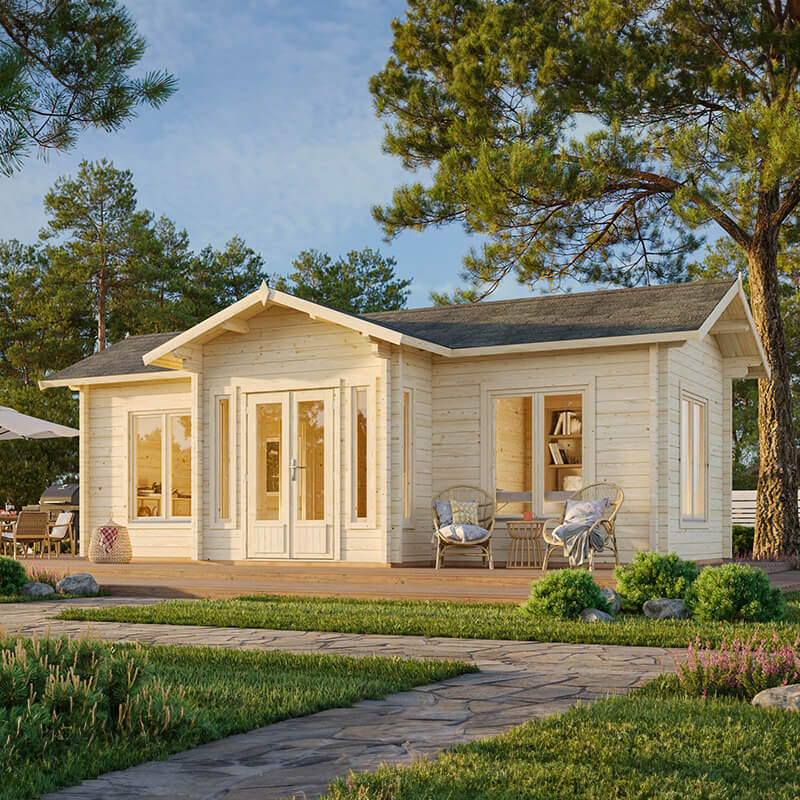
- Rectangular log cabins are often the easiest to furnish. They suit desks, sofas, storage units and long benches because the room runs in a clear direction.
- Square cabins tend to feel balanced and simple to plan. They work well when you want one main room, with seating or a workspace arranged around the centre.
- Corner log cabins are made to sit neatly into a corner of the garden, which can help if the plot is awkward or if you want to keep the middle of the lawn open.
- Multi-faceted or polygonal cabins create a more decorative look and can suit gardens where the building is meant to be a feature as well as a room.
There is no single best shape, and that is part of the point. A long narrow design may be brilliant for separating zones inside, while a more compact square cabin can feel easier to place and less dominant. If your garden has one odd boundary or a back corner that never quite gets used, the shape matters a lot more than people sometimes expect.
Roof styles and what they do for the room
The roof is one of the clearest ways to spot differences between cabins in this bracket. It is not just a visual detail. It can affect headroom, drainage and the overall character of the building. The common choices include apex roofs, pent roofs and, in some designs, hipped roofs.
Apex roof log cabins usually give a more classic cabin profile, with the ridge running along the centre. That can create a familiar, lodge-like look, and in some layouts it helps the interior feel less boxy. Pent roof cabins have a single slope and often read as more modern and neat. They can suit contemporary gardens and are often chosen where a simpler silhouette is preferred. Hipped roofs, where the sides slope too, can look settled and finished, especially in designs that are meant to blend in rather than stand out.
The roof style also changes how the cabin sits visually against nearby fencing, planting and neighbouring buildings. A low pent roof might feel calm and tidy. A taller apex profile can make a medium-sized cabin seem more spacious. For buyers comparing several cabins under £20,000, it is worth asking not just what looks nice, but what shape gives the room the kind of feel you actually want.
Wall thickness, timber feel and how it affects use
One of the most important differences in this category is wall thickness. It often shapes how solid the cabin feels, how insulated it may be once finished, and how suitable it is for different uses. Buyers tend to see a range of thicknesses, from lighter builds to more substantial log construction.
Thicker walls generally suit people who want a sturdier room with a more substantial timber presence. They can make the cabin feel more enclosed and more like a proper structure than a simple garden shelter. Lighter wall options can be useful for storage, occasional use or where the goal is a smaller footprint and lower outlay. The right choice depends on how the cabin will be used, and that is the key thing.
If you are comparing buildings in this price range, do not only look at the floor area. Two cabins can be similar in size but feel very different because one has heavier timber sections, stronger glazing or a more robust corner system. That difference is often what buyers notice once the cabin is in the garden, rather than just on the website page.
From hobby room to garden office: the main uses
Log cabins under £20,000 work across several everyday uses, which is why they appeal to so many buyers. A cabin in this range can shift from a quiet retreat to a practical work zone without needing to feel clinical or overdone. Common uses include:
- Garden office space for home working, meetings and focused tasks.
- Studio use for drawing, painting, craft work or music practice.
- Guest accommodation style space for daytime visits or sleeping arrangements where suitable and permitted.
- Family room for games, reading, TV or a second sitting area.
- Storage and utility mix where one part of the cabin is practical and another part is more relaxed.
- Teen room or hangout room that gives a bit of independence without needing a full extension.
The best part is that a log cabin does not have to stick to one identity forever. A room that starts as a workspace can later become a hobby room or a lounge area. That flexibility is one reason this category keeps attracting buyers who want their money to stretch over time, not just on the day of purchase.
Glazing, doors and the amount of light inside
Doors and glazing can change the whole mood of a log cabin. In this budget, you will often see a choice between smaller window layouts and larger glazed areas, depending on how the building is designed. Full-height glazed doors, side windows and wider openings can make a cabin feel brighter and more open, while more modest glazing can suit a space where privacy or wall space matters more.
A cabin intended as a garden office usually benefits from a clearer, lighter interior. Natural light helps the room feel less like a converted storage building and more like a proper place to spend time. On the other hand, if you want a den, listening room or snug, too much glass may not be the right move. There is a difference between airy and exposed, and buyers should keep that in mind.
Door style matters too. Wide double doors can make furniture moving easier and give the cabin a more open feel. Single doors can work well when the cabin is a tighter fit or when the design needs a neat front face. Some buyers focus on the front elevation and ignore how the doors affect the furniture plan inside, which is a small mistake but an annoying one later on.
Compact cabins, medium cabins and the question of footprint
Within log cabins under £20,000, the footprint is one of the most useful things to compare. A compact cabin may suit a modest garden or side space, while a medium-sized build can hold more than one function. There is a big difference between a room that just fits a desk and chair and a room that can also take a sofa, bookcase or small table.
Smaller footprints often appeal when the garden already has a lot going on. You might want to keep room for planting, a path or outdoor dining area. Larger footprints make more sense when the cabin is meant to become part of daily life. They give you a little more freedom with layout, and that can stop the room from feeling cramped once furnishings go in.
It helps to think in zones. Even if the cabin is a single room, a longer rectangular layout might let you split it into a working side and a seating side. A squarer layout may be better for one central purpose. This is one of those details people often overlook until they begin placing things inside, then suddenly the shape becomes very important indeed.
What sets one cabin apart from another
When buyers compare cabins at similar prices, the differences are often in the details rather than the headline figure. A cheaper-looking option may not be less useful, but it may have simpler glazing, lighter timber, a tighter layout or a less flexible interior. A more substantial cabin in the same bracket may use its budget in a different way, perhaps through stronger construction, more refined proportions or a better balance between wall space and windows.
Look closely at:
- Internal layout and whether the room feels open or divided.
- Shape of the roof and how it affects height and appearance.
- Window position and whether it supports the intended use.
- Door placement and how easily you can furnish the space.
- Overall proportions so the cabin does not feel too tall, too wide or oddly stretched.
The right cabin is rarely the one with the most features on paper. It is usually the one that suits the site and the job better. That sounds simple, but it saves a lot of second-guessing later.
Practical buying tips that actually matter
If you are shopping for log cabins under £20,000, it helps to start with the garden itself. Measure the area more than once. Check where the cabin will sit in relation to fences, sheds, trees and access points. Think about how the roofline will look from the house and whether the building should be discreet or more of a focal point.
Another useful tip is to decide the primary use before you get lost in browsing. A cabin for storage and occasional sitting needs a different balance from one used as a home office every weekday. If the building will be used often, then a more generous interior, better light and a more solid feel are worth paying attention to. If the cabin is more occasional, compact simplicity may be the better route.
Also, do not assume every cabin in the same price band offers the same level of space. Internal dimensions can vary quite a bit, even when the external size appears close. It is worth checking whether the cabin includes a veranda, canopy, or covered front area, because these extras can change how the building is used and how big it appears in the garden. Small details, but they make a difference.
Why people keep choosing timber over a plain outbuilding
There is something about a timber log cabin that feels more considered than a standard outbuilding. The grain, the joined corners, the shape of the roof and the way the whole structure sits in a garden make it feel more like part of the landscape. That matters to a lot of buyers, especially when they want a room that does a job but still looks pleasant from the patio or kitchen window.
In this price range, timber cabins can offer a useful middle ground between basic and elaborate. They are not trying to be a full house extension, and they do not have to. Instead, they give you a separate structure with a clear purpose, some personality, and enough flexibility to adapt if your needs change. For many gardens, that is exactly the sort of upgrade that makes sense.
Choosing the right cabin without overcomplicating it
The simplest way to narrow down log cabins under £20,000 is to match three things: space, shape and use. Once those line up, the rest becomes easier. A compact corner cabin might be right for an awkward plot. A longer rectangular design may be better for a working room. A square model can suit a general-purpose garden space with no fixed plan yet.
It is also sensible to think about how the cabin will feel once it is installed, not just how it looks in a photo. Will it seem tucked away, open, private, bright, or calm? Does the roof style support that feeling? Does the front face the right way? Does the layout leave enough room for the things you actually own, not just the things you imagine owning? That kind of practical thinking tends to lead to better choices.
In the end, this category is appealing because it offers real garden-building options without pushing into a much higher spend. The best cabins here are the ones that suit the space, the job and the way you want to use the garden day to day. And once those line up, the cabin stops being just a purchase and starts becoming one of the most useful parts of the garden.
[Sassy_Social_Share]