
Log Cabins under £15000 - Best Deals in UK!
Showing all 3 results
-
7% OFF: Palmako Sandra 7.5m x 4.8m Log Cabin Summer House (44mm) £13,989.007%

-
7% OFF: Palmako Heidi 8.4m x 3m Log Cabin Garden Building (70mm) £13,489.007%

-
Palmako Sandra 6.3 x 4.5m Log Cabin Garden Building (70mm) £14,489.00

Log cabins under £15,000 offer timber garden rooms, compact studios, apex or pent roof options, and practical spaces for work, storage or leisure, with clear size and spec differences to compare.
Affordable timber, without feeling like a compromise
Finding a log cabin under £15,000 is often about making the shape, wall thickness and internal layout work for your garden rather than chasing size for its own sake. In this price range, buyers usually look at cabins that balance usable floor space with a sensible footprint, so the building fits the plot, the budget and the way it will actually be used.
That might mean a compact garden office, a modest hobby room, a guest space, a summer house with more structure, or a practical storage-and-shelter style cabin. The key difference between cabins at this price point is not just the appearance; it is the combination of timber profile, roof style, door and window arrangement, and how much of the budget is going into the cabin shell itself.
What sits in the under-£15,000 bracket
Cabins in this category tend to cover a few distinct sizes and formats. Smaller footprints can leave more of the budget for stronger wall sections, better glazing or a more generous internal arrangement, while larger cabins may keep the same budget by using a simpler spec. That trade-off is worth spotting early.
Bestseller der Kategorie Log Cabins under £15000
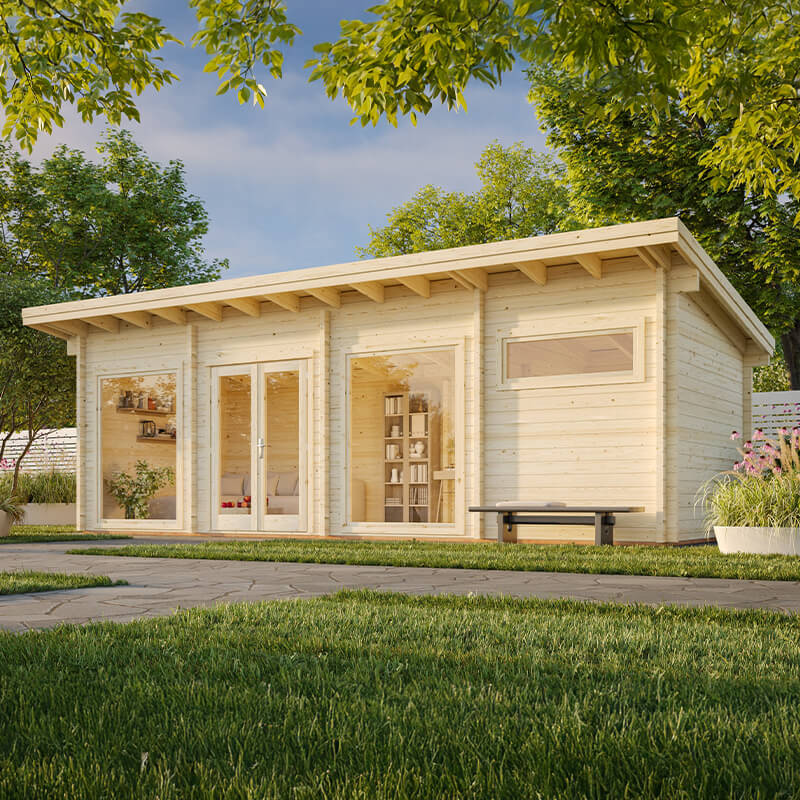
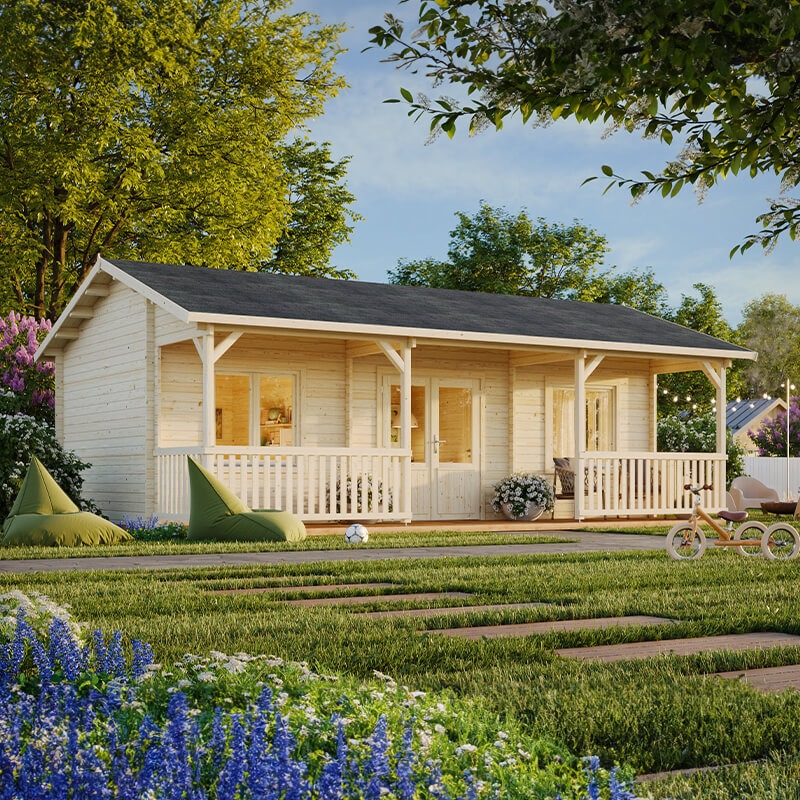
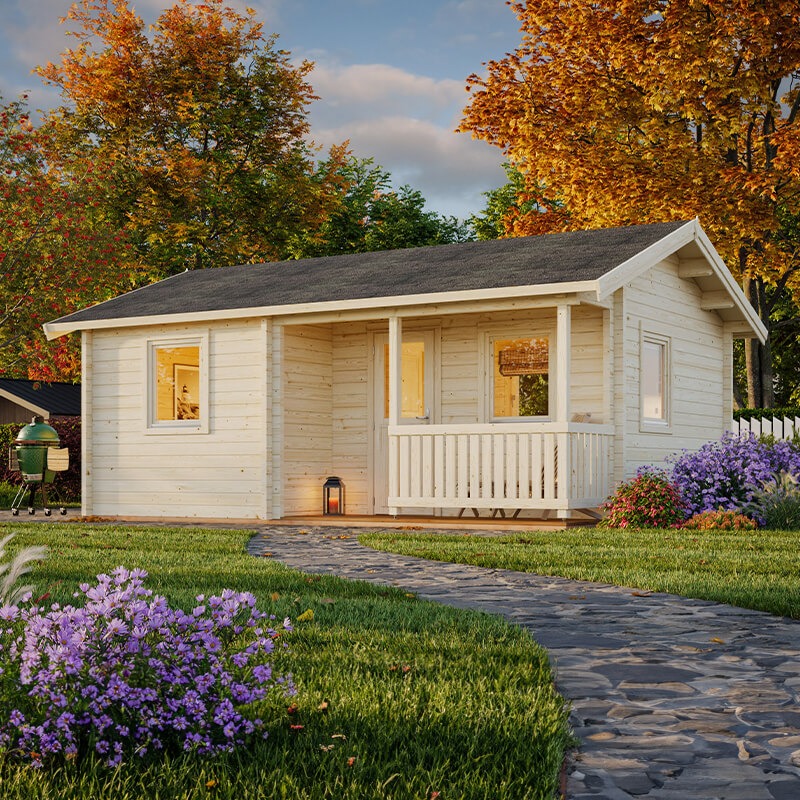
Common subtypes include:
- Compact one-room cabins for a garden office, reading room or private retreat
- Cabins with an awning or canopy, giving a covered front area for seating or a sheltered entrance
- Corner log cabins that suit tighter gardens and make use of awkward space
- Pent roof cabins with a modern, low-line shape and clean profile
- Apex roof cabins that create a more traditional cabin look and often a stronger sense of height inside
- Cabins with split doors or wide opening fronts, better for light and access
- Models with side windows for a brighter room and a less boxed-in feel
Not every cabin under £15,000 will do all of these things, of course, but the category often gives buyers a useful spread of choices without moving into much higher price bands.
Shape makes a bigger difference than people think
The shape of a log cabin changes how it feels in the garden and how easy it is to furnish. A square or rectangular cabin is usually the most straightforward to arrange, especially if it is going to hold a desk, sofa or storage units. Straight walls make the interior feel more practical, and it is easier to place items without wasting corners.
Corner cabins work differently. Instead of sitting like a box in the middle of a lawn, they tuck into an edge or unused section of the plot. This can be a smart move if the garden is narrow or if you want to preserve the main open area. The internal layout may feel less conventional, but that can suit a lounge-style room or a neat office nook quite well.
Hexagonal or octagonal styles are less common in this price range, yet when they do appear they bring a different atmosphere. They can feel more sociable and open, though furnishing them can take a bit more thought because the walls are not arranged in a simple straight line. For some buyers, that is part of the appeal; for others it is a faff they would rather avoid.
Pent roof or apex roof?
One of the most useful comparisons in this category is the roof type. A pent roof cabin usually has a single slope, which gives a modern silhouette and can work especially well against a boundary wall or fence. It often suits contemporary gardens and can be a good choice where a lower profile is preferred.
An apex roof cabin has the more familiar pitched form. This tends to create a classic log cabin look and can give a stronger sense of internal height in the centre of the room. For buyers who want the cabin to feel a bit more like a proper garden building rather than a simple shed alternative, this is often the version that catches the eye.
The practical difference is not just visual. A pent roof may sit more neatly in gardens where height matters, while an apex roof can add a little more presence and a more traditional cabin feel. Neither is automatically better; it depends on whether the cabin needs to blend in quietly or stand out as a feature.
Wall thickness, timber profile and the feel of the build
In this budget, the cabin’s timber profile can influence both appearance and the sense of substance. Log cabins are often described by wall thickness, and buyers will notice the difference when comparing options. A thinner wall section can keep the price down and may suit seasonal use or lighter garden-room duties. A thicker section can bring a more solid look and may feel more suited to year-round use, though the spec must still be checked carefully.
The way the logs are profiled also changes the overall impression. A cabin with a neat interlocking system and well-finished corner joints tends to look more polished and can help the building sit properly on the plot. Buyers comparing cabins often look at the visible details first, and quite rightly so. The joints, roof overhang and door framing say a lot about the cabin’s character.
This is one area where the under-£15,000 category is interesting, because the budget can be spent in different places. Some cabins put more emphasis on internal space, while others put more into the timber shell. Knowing which matters more to you saves a lot of second-guessing later on.
Light, access and the way the cabin opens up
Doors and windows are not just decorative. They shape how useful the cabin feels. A cabin with large front glazing can feel much brighter and more open, making it better suited to social use, a studio or a workspace where daylight matters. A cabin with smaller windows and a more enclosed feel may be better if privacy is important or if the room will hold equipment, boxes or a more secluded seating area.
Common variations include:
- Single door cabins, which keep the layout simple and work well where space is tight
- Double door designs, giving easier access and a more open frontage
- Half-glazed doors for a balance between light and privacy
- Full-glazed fronts for a brighter interior and a more room-like feel
- Side windows to stop the cabin feeling one-dimensional
- Shut-away layouts with fewer openings for a more enclosed purpose
If the cabin is meant to hold a desk, a table or a lounge chair, it is worth thinking about where daylight enters and where you would actually sit or work. It sounds obvious, but plenty of people get drawn in by the look of a front elevation and only later realise that the light falls in the wrong place. Bit annoying, that.
Which use suits which style?
Different cabin types suit different uses, and that is where this price band becomes quite useful. A compact office cabin benefits from a sensible rectangular shape, enough window area for natural light, and a layout that leaves room for a desk without boxing the space in. A hobby cabin might need a more open interior so tools, materials or equipment can be placed with some flexibility.
A leisure cabin often works well with a wider glazed frontage and a roof style that gives the room some character. If it is going to be used as a quiet escape, buyers often prefer a more enclosed design with a cosy feel rather than too much glass. On the other hand, if the space is meant for informal gatherings or a bit of time with friends, the open feeling of a broad front can be more appealing.
There are also cabins that suit a mix of uses, such as a work-from-home room that doubles as a reading space or a small studio. In that case, the best choice is usually the one that gives a clear central area and enough wall space to arrange the room without compromise.
Why this price band pulls interest
The appeal of log cabins under £15,000 is not just the lower entry price. It is the way they let buyers add a proper timber building to the garden without needing to move into a much bigger investment. For many households, that makes the idea feel more achievable and less of a stretch.
There is also a strong practical side. These cabins can create a separate space away from the main house, which is useful when the household is busy or when a room needs to feel distinct from everyday living. That separation can be especially handy for a home office, a teenager’s den, a craft room or a garden retreat that is not meant to be walked through all the time.
Another point in favour of this category is the variety. Even with a budget cap, there is still room to compare traditional log styles against more contemporary pent roof options, and compact footprints against wider, more sociable layouts. That makes the category feel less like a single product group and more like a range with proper choice.
What to compare before choosing
When looking through cabins in this bracket, it helps to compare the parts that affect both the look and the usability, not just the headline size. A slightly smaller cabin with a better layout can often work better than a larger one that feels awkward inside.
- Footprint — make sure the cabin fits the garden and leaves practical space around it
- Roof shape — pent for a lower, more modern outline; apex for a traditional cabin look
- Door position — central, offset or wide opening fronts all change the room flow
- Window set-up — front glazing, side windows or a more closed design
- Wall profile — the timber thickness and construction style will influence the sense of substance
- Internal usability — can you place furniture without the room feeling cramped?
- Garden position — corner siting, boundary placement or a central focal point all change the final effect
That kind of comparison may sound a bit detail-heavy, but it is exactly what helps buyers avoid choosing only on appearance. A cabin that looks tidy on a product page can behave very differently once dimensions, openings and room shape are taken seriously.
Buying tips that keep the choice focused
Start with what the cabin needs to do most often. If the main use is quiet work, prioritise light and a straightforward interior. If it is for relaxed time away from the house, think more about the shape and how the room feels when furnished. If it needs to fit a tighter garden, corner formats or lower pent roof designs may make more sense than a deeper apex model.
It also helps to look beyond the overall price and ask where the specification is coming from. In this category, two cabins can sit close together in cost but differ quite a lot in glazing area, roof style or usable floor space. That is why buyers often compare the layout first, then the design details, and only then the final price.
If you like a cabin with a more open front, check how much privacy the garden gives you. If the plot is overlooked, a design with side windows and a more controlled front opening may feel better in real use. If the space is tucked away already, a broad glazed frontage can make the cabin feel inviting without needing much else.
Choosing the right cabin for the right garden
Not every garden wants the same sort of log cabin. A narrow urban plot may suit a slim pent roof building that keeps the line of sight open. A wider family garden may take a more traditional apex cabin, where the building becomes a clear feature without crowding out the rest of the space. An awkward corner may be better used by a shape that turns dead space into something useful.
That is the real strength of this category. Log cabins under £15,000 can still feel purposeful, attractive and well matched to the garden if the buyer pays attention to form, openings and intended use. The right choice is not always the biggest one. Sometimes it is the one that fits the plot neatly, gives the room the right amount of light, and looks like it belongs there rather than sitting in the middle of things.
For buyers comparing options, this section of the market gives a decent spread of traditional and contemporary looks, compact and more spacious footprints, and different levels of enclosure. That makes it a useful place to start if the aim is to add a timber building with proper character, without losing sight of what the garden can realistically take.
[Sassy_Social_Share]