
Greenhouses 90 sq ft / 8 m² - Best Deals in UK!
Showing the single result

Greenhouses 90 sq ft / 8 m² offer a practical balance of growing space, compact footprint and year-round versatility for vegetables, herbs, flowers and young plants.
Why 90 sq ft / 8 m² hits the sweet spot
A 90 sq ft greenhouse sits in that useful middle ground where a small garden starts to feel properly productive, but without taking over the whole plot. At around 8 m², there is enough room for a couple of bench runs, a tidy aisle, and a sensible mix of crops, yet it still works in gardens where space is tight. For buyers comparing sizes, this format often feels less like a “mini” greenhouse and more like a proper growing room with a modest footprint.
That size is especially handy if you want to move beyond a few pots and actually organise your growing. You can split the interior into zones: one side for seed sowing and propagation, another for tomatoes, chillies or cucumbers, and a little shelf space for overwintering tender plants. It is a size that lets you think in terms of layout, not just storage. And that matters if you are choosing a greenhouse you will use often, not just admire from the lawn.
The shapes that change the whole feel
In this size range, the shape makes a noticeable difference to how the greenhouse works day to day. A lean-to greenhouse suits a wall or garage side and can feel neat and efficient, especially where garden width is limited. A freestanding greenhouse gives more flexibility on placement and is often the choice when light from all sides matters.
Bestseller der Kategorie Greenhouses 90 sq ft / 8 m²
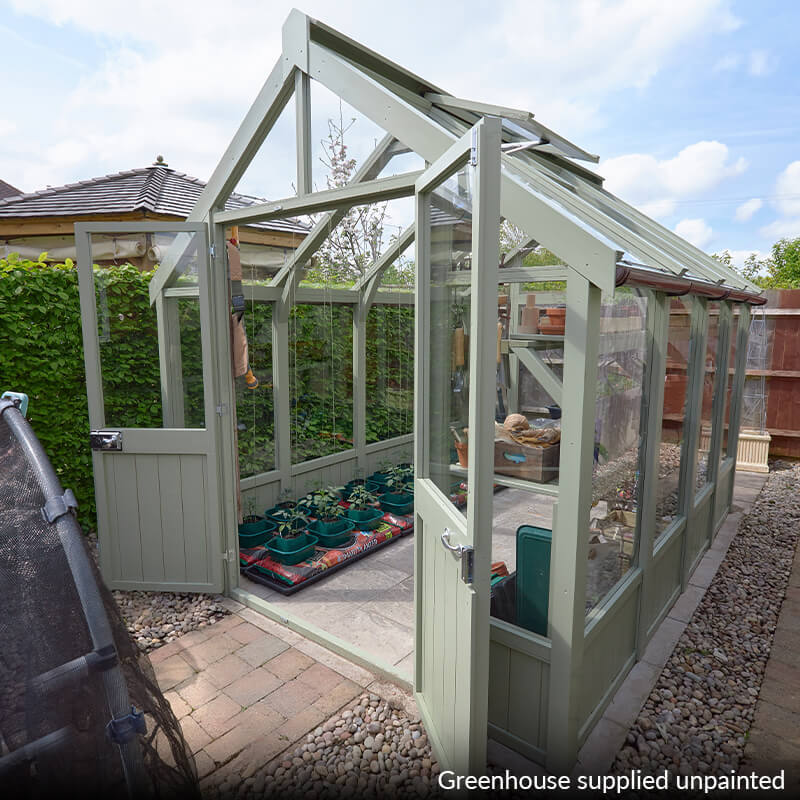
Then there is the question of the roof form. A traditional apex greenhouse gives a familiar profile, with a central ridge that can create a good standing height and decent air movement above taller plants. A curved or barn-style roof can change the usable volume in the upper section, which may suit growers who want to hang baskets, train climbing crops, or simply prefer a softer silhouette in the garden. The difference is not just visual; it changes how the space feels when you are inside with trays, canes and watering cans.
Some 8 m² designs are almost square, others are more rectangular, and that affects the internal rhythm. A more square plan can work well if you want central access and balanced benching. A rectangular footprint often gives a stronger aisle-and-bench arrangement, which can be easier for organising sowing and staging plants. It sounds like a small detail, but in this size, a few centimetres here and there can change what fits comfortably.
Glazing choices: clear, diffused, tough, or somewhere in between
The glazing type is one of the main differences shoppers weigh up, because it affects light, privacy and the feel of the interior. Horticultural glass gives a classic bright finish and is loved by people who want strong clarity and a traditional look. Toughened safety glass brings added peace of mind where accidental knocks are a worry, which is useful if the greenhouse sits near a path, family area or busy border. The trade-off is often weight and cost, but many buyers see that as part of the decision rather than a drawback.
Polycarbonate glazing is another common choice in the 90 sq ft size. It is usually selected for its lighter weight and more forgiving nature if you are worried about breakage. Some versions offer a more diffused finish, which can reduce harsh light and create a softer growing environment. That can be handy for young seedlings and leafy crops that prefer gentler conditions. The visual effect is different too: a glazed greenhouse looks crisp and classic, while polycarbonate often has a more practical, low-fuss character.
There is no single “best” option here. It depends on whether your priority is the traditional greenhouse look, extra resilience, or a balance between the two. For many buyers, the right choice comes down to how the greenhouse will sit in the garden and what you plan to grow inside it.
What fits inside 8 m² without feeling cramped
This is where Greenhouses 90 sq ft / 8 m² start to feel properly useful. The space is large enough for a surprising amount, but not so large that it becomes hard to manage or expensive to outfit. A sensible layout might include a bench along one side for trays and pots, a narrower staging shelf on the other side, and a clear route down the middle. That kind of arrangement gives enough working room without wasting precious floor space.
You can also use the height well. Taller growing crops, such as tomatoes, cucumbers, climbing beans or cordon fruiting plants, work nicely where the roof shape allows vertical space. Shorter plants like lettuce, basil, parsley and seedlings can sit on lower shelving or benches. This layered approach makes the greenhouse feel more productive, because you are using both the footprint and the air space.
For many gardeners, the appeal is that 8 m² is large enough to keep things organised. Separate trays can stay in one zone, transplanted plants in another, and crops approaching maturity can have their own space. That reduces the muddle that often happens in tiny structures where everything ends up pushed together. It is not about cramming in more for the sake of it; it is about letting each plant have a more sensible spot.
Different builds, different jobs
Not every greenhouse in this size category feels the same when you step inside it. A traditional glasshouse style tends to suit people who want a clean, bright and familiar growing space, especially if the greenhouse will be a visual part of the garden. A more practical utility style may lean towards straightforward assembly, efficient panel layout and easy internal organisation. Neither is automatically better; they simply serve slightly different buyers.
Some 8 m² greenhouses are designed with a stronger focus on propagation, where shelves, staging and access to trays matter most. Others are better suited to mixed cropping, where you want room for both pots and larger plants. If you grow mainly from seed, a setup with more bench space and good light across the lower half can be useful. If you want to raise fruiting crops through the season, a more open floor area and reliable headroom may matter more.
There are also differences in the frame profile. Slimmer framing can make the greenhouse feel lighter and less intrusive, while chunkier framing can give a more solid impression. In a small-to-medium size greenhouse, frame design can influence how much natural light reaches the plants and how spacious the interior feels. It is easy to overlook, but it can change the buying decision quite a bit.
Why gardeners often choose this size after trying smaller ones
People often start with something smaller and then realise they want more than just a place to keep seedlings alive. A 90 sq ft greenhouse gives a bit of breathing room for planning ahead. You are not limited to immediate use; you can keep one batch of plants going while another is still germinating, which is a real advantage if you like a steady cycle of sowing and moving plants on.
Another reason this size works well is that it supports more than one growing style. You can use it for early-season starts, summer cropping, autumn holding space and even winter shelter for sensitive plants. It is flexible without becoming overly complicated. For gardeners who enjoy variety, that balance can be more appealing than a larger structure that takes more effort to fill or a smaller one that gets full very quickly.
And, frankly, a greenhouse around 8 m² can make the garden feel more deliberate. It says you are not just keeping a few plants in containers, but creating a proper growing environment. That is often part of the appeal for buyers who want their greenhouse to feel like a useful feature rather than a garden accessory.
Practical differences buyers notice before they order
When people compare greenhouses in this category, the small differences start to matter. Door width affects whether you can carry in trays without awkward twisting. A taller eaves line can make moving around more comfortable, especially if you are in and out often. Roof angle changes how rain runs off and how much upper space you have for hanging items or training crops upward. Even the position of vents and doors alters how usable the space feels on a warm day.
Ventilation options are worth looking at closely, not because of general maintenance, but because they shape the kind of environment inside. Roof vents can help release rising warm air, while louvre vents or side openings can bring in lower airflow. If you are growing compact crops or starting seeds, that balance matters more than you might think. A greenhouse with a good ventilation layout often feels calmer to use, because the air does not become stuffy as quickly.
Another point is the threshold. Some greenhouses have a more flush entry, others a raised base or more defined step-in feel. For moving trays, trolleys or watering cans, this small detail can be surprisingly important. It is one of those things buyers only think about after they imagine actually using the greenhouse a lot.
Best uses that make the size earn its keep
A greenhouse around 8 m² can do several jobs across the gardening year. In spring, it is ideal for seed starting, pricking out and hardening off before plants move outside. In early summer, it can hold a mix of young crops and mature fruiting plants. Later on, it becomes a place to keep tender species protected while outdoor beds start to wind down.
It also suits gardeners who want to grow more specialist crops without giving them the whole garden. Chillies, aubergines, Mediterranean herbs, grapes in a training system, and potted citrus all make sense in a greenhouse of this size if the layout is thought through. You do not need acres of space to grow interesting things; you just need a structure that gives them a better chance than open ground alone.
For flower growers, the same space can support cut flowers, plug plants and overwintered favourites. A 90 sq ft greenhouse can feel lively without being messy if the different plant groups are kept in order. That order is part of the appeal. It lets you see progress clearly: trays filling out, stems lengthening, the first flowers opening, the next batch ready to move along.
What makes one 8 m² greenhouse feel more usable than another
Usability often comes down to the mix of light, access and layout. A greenhouse with bright glazing, sensible headroom and a tidy internal plan will usually feel easier to live with than one that technically has the same floor area but awkward proportions. That is why buyers should look beyond the headline size and picture the daily flow: where do you stand, where do the trays sit, and how do you reach the back corners?
It is also worth thinking about the outside footprint. A greenhouse of this size needs a place where it can receive strong light without being boxed in by walls, fences or overhanging trees. Even though the category is defined by area, the setting around it changes how effective the space really is. Two greenhouses with the same square footage can feel very different depending on where they are placed and how much open sky they get.
If you are comparing styles, ask whether you want the greenhouse to behave more like a workroom or more like a display piece. Some buyers want a clean, straight-sided structure that makes potting and staging easy. Others prefer a greenhouse with more decorative presence, where the shape itself becomes part of the garden. There is room for both approaches in this category.
Small details that make the purchase feel right
The best buying decisions here are often made by looking at the detail rather than the label. Bench depth, door placement, roof profile, glazing type and frame finish all shape how the greenhouse will work once it is in place. In a compact structure, these details are not small at all. They decide whether the space feels generous or a bit awkward.
Think too about how you like to garden. If you move plants around a lot, wide access matters. If you prefer controlled rows of crops, a rectangular layout may suit you. If you like experimenting with propagation, more shelving may help. If you want a greenhouse that blends neatly into a stylish garden, the visual profile could matter as much as the practical bits. Buyers rarely regret choosing carefully here.
A greenhouse at 90 sq ft / 8 m² is often bought by people who want more than a place to store pots. They want a space with enough room to think, sow, shift, and grow without the whole setup becoming unmanageable. That is the real attraction: enough capacity to be useful, enough restraint to stay realistic.
Why this category keeps drawing keen growers
There is something satisfying about a greenhouse that is neither tiny nor oversized. In this category, you get a structure that can support real productivity, yet still suits ordinary gardens and everyday routines. That combination is why Greenhouses 90 sq ft / 8 m² remain a strong choice for buyers who want a proper growing environment without moving into very large formats.
It is a size that leaves room for variety, and variety is often what makes greenhouse growing enjoyable. A few salad trays, a row of herbs, a couple of fruiting plants, some flowers, some overwintering stock – it all starts to fit in a way that feels ordered rather than cramped. And when a greenhouse feels ordered, it is usually more enjoyable to use. Not because it is perfect, but because it gives you enough structure to actually do the gardening you had in mind.
For anyone comparing options, this category is worth a close look if the aim is practical growing space with a manageable scale. It can be a neat answer for people upgrading from small cold frames or basic cloches, and a sensible fit for gardeners who want a greenhouse that does a bit of everything without becoming a full-time project.
- Compact but useful footprint for real crop planning
- Enough room for staging and benches without a crowded feel
- Freestanding or lean-to options depending on the garden layout
- Apex, curved and rectangular forms each change the internal experience
- Glass or polycarbonate glazing to suit different priorities
- Good for mixed growing: seedlings, herbs, vegetables and tender plants
- Flexible enough for seasonal rotation through the year
- Easy to organise into zones for sowing, staging and taller crops
A final thought before choosing
If you are looking at greenhouses 90 sq ft / 8 m², the decision is usually less about “Can I fit one?” and more about “Which version fits how I grow?” That is a good position to be in. The category is broad enough to offer different shapes, glazing styles and internal layouts, but focused enough to keep the choice grounded. Once you match the form to your space and the internal layout to your planting habits, the greenhouse starts to feel like it belongs there. And that is often what gets buyers over the line.
[Sassy_Social_Share]