
Greenhouses 45 sq ft / 4 m² - Best Deals in UK!
Showing all 3 results
-
13% OFF: 5’3 x 9’4 Coppice Ashdown Apex Painted Wooden Greenhouse (1.6m x 2.85m) £3,479.0013%

-
13% OFF: 5’1 x 9’4 Coppice Hatfield Lean To Painted Wooden Greenhouse (1.55m x 2.85m) £3,129.0013%

-
12% OFF: 5’3 x 9’4 Coppice Ashdown Apex Wooden Greenhouse (1.6m x 2.85m) £3,069.0012%

45 sq ft / 4 m² greenhouses suit compact plots, patios and side returns, giving enough room for trays, pots and a narrow walkway without taking over the garden.
Why this size feels right in a small garden
A 4 m² greenhouse sits in that useful middle ground where a structure is still compact, yet not cramped in the way a tiny cold frame can feel. It gives you proper standing room, space for a shelf or staging on one side, and enough floor area for a few benches, seed trays or a tidy run of pots. For anyone working with a smaller garden, this footprint often makes more sense than stepping up to a larger house that swallows the available space.
The appeal is not only the size, but the balance. A 45 sq ft greenhouse can handle a mix of tasks: starting seeds, bringing on young plants, keeping tender plants under cover, and creating a sheltered spot for cuttings. Because it is compact, the internal layout matters more, which is useful if you like things organised and easy to reach. It is a category that rewards planning, but does not demand a huge plot.
Frame shapes that change the way the space works
One of the clearest differences in this category is the shape of the frame. The form affects headroom, usable bench space, and how the structure sits in the garden.
Bestseller der Kategorie Greenhouses 45 sq ft / 4 m²
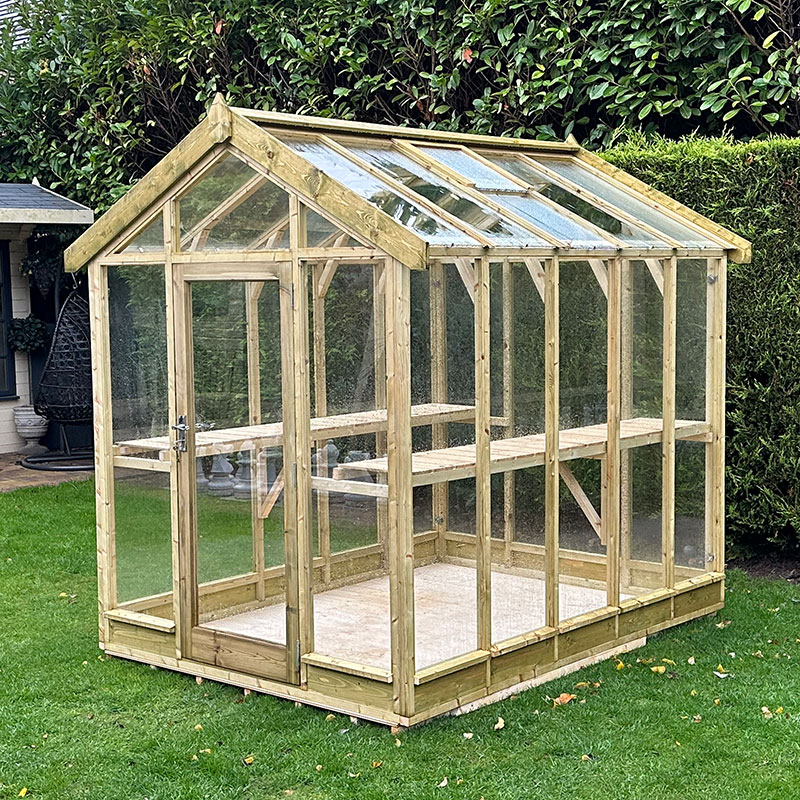
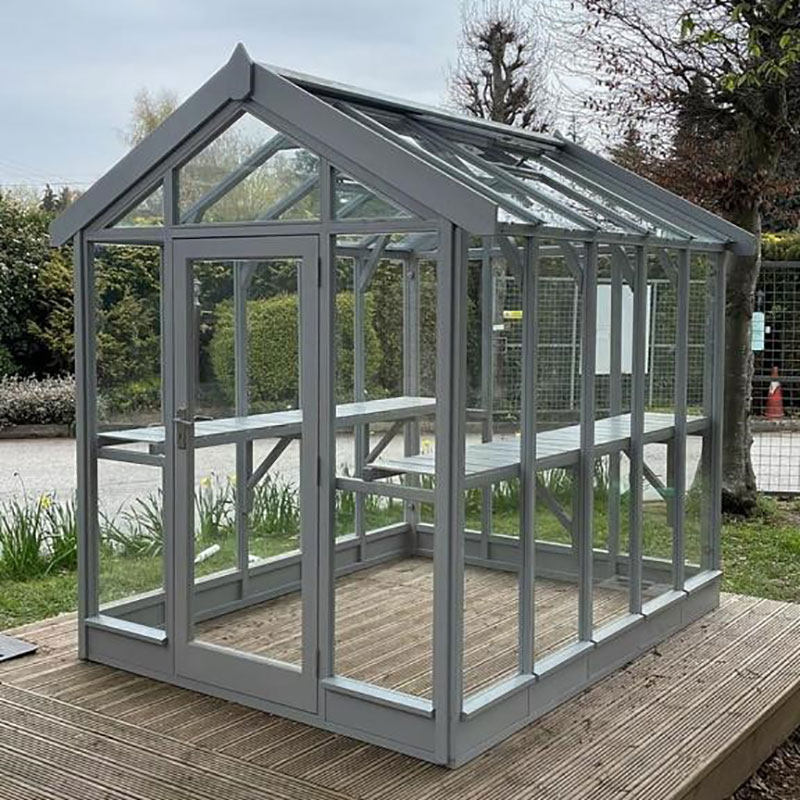
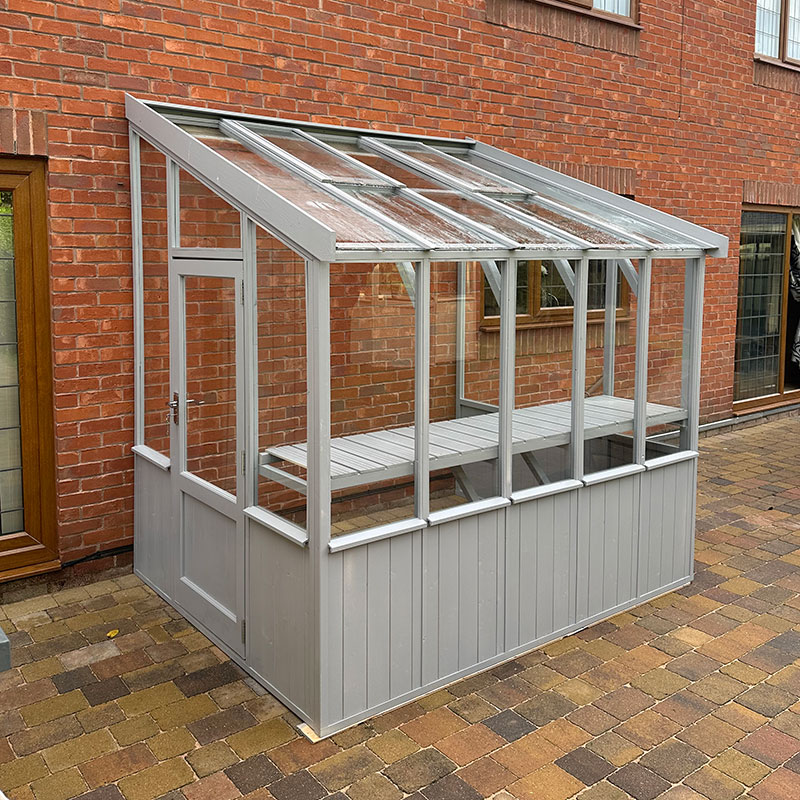
- Lean-to greenhouses attach to a wall or stable structure, making smart use of a boundary. They are handy where space is tight and can feel sheltered on one side.
- Traditional apex greenhouses have a pitched roof, which usually gives a more familiar growing space and a good balance of height and width.
- Pent greenhouses have a single-slope roof. These often fit neatly against fences or walls and can look lower and more discreet.
- Curved or bowed roofs soften the profile and can help rain run off, while also creating a slightly different interior feel.
- Corner-fit designs make use of awkward plots and can be a neat answer where the garden layout is not square or simple.
The differences are not just visual. An apex design usually gives a more open centre line for taller plants, while a lean-to may make better use of warmth from a wall and save precious ground area. A pent roof can sit lower under a boundary line, which matters if you want a greenhouse without blocking views. In a 4 m² footprint, the shape has a direct effect on what feels usable once staging, shelves and door clearance are included.
Glazing choices and what they mean in a compact house
In a greenhouse of this size, glazing is one of the key choices because it affects weight, light levels and the overall character of the structure. Different glazing types can make the same footprint feel very different.
- Horticultural glass gives a classic clear look and lets in plenty of light, which suits a traditional greenhouse feel.
- Toughened safety glass is often chosen where extra resistance matters. It has a more robust feel and is commonly preferred in many garden settings.
- Polycarbonate panels are lighter and can suit places where weight is a concern. They also give a more diffused light effect.
- Single glazing keeps the structure visually open, while multiwall panels can create a slightly softer, more insulated feel.
For a 45 sq ft greenhouse, the glazing decision is closely tied to use. If you want the brightest, clearest interior for seeing every tray and label, glass is often the obvious route. If you want a lighter build or something that feels less stark in a small garden, polycarbonate can be more practical. The point is not that one is best in every case; it is that the same 4 m² can behave in different ways depending on the covering.
Door styles and access you will actually notice every day
Door design may sound minor, but in a compact greenhouse it changes how easy the space feels. When every square foot counts, the door is part of the layout, not just an entrance.
- Single hinged doors are simple and familiar. They suit many small greenhouse footprints and keep the opening straightforward.
- Sliding doors save swing space, which is useful where a path is narrow or the greenhouse sits close to a fence.
- Low-threshold access can make the entrance easier to step through, especially if the greenhouse is used often.
- Wider doors help when moving in trays, bags of compost, or larger pots.
In a 4 m² greenhouse, a door that opens into the centre can steal usable floor area. A sliding option can feel tidier, while a hinged door gives the classic greenhouse experience and may be easier to inspect at a glance. Buyers often overlook this until they start placing benches, then the difference becomes very clear.
What fits inside 45 sq ft without making it feel packed
The advantage of a compact greenhouse is that it encourages a focused layout. Rather than filling a large, half-used structure, a 45 sq ft footprint asks you to think in practical terms. You can create zones for seed starting, potting, staging and taller crops, but the balance needs to be deliberate.
Common internal arrangements include a narrow central aisle with staging along one or both sides, a single bench plus floor space below, or tiered shelving for smaller pots and propagation trays. Many buyers like this size because it can support a clear purpose. One person may use it mainly for early sowings and hardening off, another for tomatoes and peppers, and another as a tidy home for overwintering tender plants.
The compact size also means that usable height matters more than people expect. A greenhouse with slightly better headroom can make a big difference for hanging baskets, taller supports, or simply not feeling boxed in. So while the footprint is 4 m², the shape of the roof and the wall height can change how generous it feels inside.
Ventilation features that suit a small footprint
In this category, ventilation is worth attention because a small house can change quickly as the sun shifts. The right combination of vents helps the structure feel more adaptable, especially when the greenhouse is used for a mixed collection of plants.
- Roof vents help release warm air that rises, which is a common feature in traditional greenhouse design.
- Side vents can support cross-flow and are useful where the greenhouse is tucked in close to other garden features.
- Automatic vent openers are often chosen for convenience, although they are not essential to every setup.
- Door venting can also play a part when the structure is small and regular access is frequent.
The difference between an enclosed-feeling 4 m² house and one that feels workable can come down to these details. If the greenhouse sits in a warm, sheltered corner, more venting may be worth considering. If it stands in a breezier position, the arrangement may need less opening area and a more balanced layout. These are practical choices rather than decorative ones, and in a small greenhouse they have a bigger effect than buyers sometimes expect.
Materials that shape the look and the feel
The frame material changes not only strength and appearance, but also how the greenhouse sits alongside the rest of the garden. In a 45 sq ft greenhouse, the frame is highly visible because the structure is modest in scale.
- Aluminium frames are common for their clean lines and low visual bulk.
- Powder-coated finishes can help the greenhouse blend with darker fencing or modern garden furniture.
- Timber-framed greenhouses bring a softer, more traditional look, though they usually need more attention in the long run.
- Hybrid constructions combine different materials and can shift the balance between appearance and practicality.
Aluminium often suits gardeners who want a neat, straightforward structure that does not overpower a patio. Timber can suit a more established garden setting, where the greenhouse is meant to feel like part of the landscape rather than a separate utility item. In a 4 m² category, that visual difference matters because the greenhouse is close enough to patios, paths and borders to be seen every day.
Subtypes that answer different growing habits
Not every buyer wants the same use from a greenhouse of this size, so the category often breaks down by sub-type. That is useful, because the same footprint can behave differently depending on the planting style.
- Propagation-focused greenhouses prioritise shelving and bench space for trays, cuttings and young plants.
- Mixed-use compact greenhouses try to balance storage, standing room and growing space in one layout.
- Display-style greenhouses place more emphasis on the appearance of plants and the structure itself, often with a tidy, open interior.
- Kitchen-garden greenhouses suit gardeners raising herbs, salad leaves and productive crops in a smaller footprint.
These subtypes are not formal product lines, but they describe how buyers tend to use the same size in different ways. A propagation-led layout may include more shelving and less open floor. A kitchen-garden approach may keep the lower area clearer for taller crops or containers. A mixed-use version can be the easiest choice if you are not sure what your routine will become. That flexibility is a real advantage in a category this size.
Practical differences between compact greenhouses and larger ones
Compared with larger structures, a 4 m² greenhouse is easier to place, easier to match to a smaller plot and generally less dominant visually. That does not make it a compromise product; it simply serves a different kind of garden.
The main difference is how intentional the interior has to be. A large greenhouse can absorb a loose arrangement. A 45 sq ft model asks for better planning, but in return gives a sharper, more efficient result. It can be a better fit for urban gardens, narrow terraces with suitable access, or any plot where the greenhouse needs to complement rather than command the space.
Another difference is how the structure integrates with paths and borders. A compact house can sit close to a fence, wall or shed and still leave room for movement. That makes it easier to preserve the rest of the garden for seating, planting or circulation. Some buyers actually prefer this because the greenhouse stays useful without becoming the main feature.
Small-space tips that make the layout work harder
When choosing within this category, a few details can make the greenhouse feel far more useful once it is installed. These are not about general maintenance; they are about making the footprint work better from day one.
- Check the internal width, not just the external footprint, because framing can affect how much room is left for benches.
- Look at door swing or slide space so the entrance does not interrupt the layout.
- Choose roof height carefully if you plan to grow taller plants or use hanging space.
- Think about staging depth so trays can be reached without leaning over too far.
- Allow a clear route to the back of the greenhouse if you want the space to stay easy to use.
- Match the style to the setting, especially if the greenhouse will sit in view from the house or terrace.
These points can seem small, but in a 4 m² greenhouse they quickly add up. A structure that looks fine on paper can feel much better in practice when the door, vents, shelves and roof line are all aligned with how you garden. That is often the difference between a greenhouse that feels crowded and one that feels composed.
A category built for focused growing, not wasted space
Greenhouses 45 sq ft / 4 m² appeal because they give gardeners a defined, manageable growing space without demanding a large footprint. They work especially well where the garden is tight, the layout is narrow, or the aim is to have a dedicated place for seedlings, tender plants and compact productive crops. With the right choice of shape, glazing and door style, the same footprint can feel classic, discreet or surprisingly efficient.
If you are comparing options, the key questions are simple: how much headroom do you need, how do you want to access the space, and which frame shape suits the plot best? From lean-to to apex, from glass to polycarbonate, and from single doors to sliding access, the differences are practical ones that affect everyday use. That is why this category keeps attracting buyers who want a greenhouse that is small enough to fit, but serious enough to use properly.
[Sassy_Social_Share]