
Greenhouses 15x7 - Best Deals in UK!
Showing the single result

15×7 greenhouses give you a practical growing space for vegetables, herbs, seedlings and taller crops, with a footprint that suits many gardens; choose aluminium, timber or polycarbonate styles.
A size that works with real garden plans
A 15×7 greenhouse sits in a very useful middle ground: roomy enough for serious growing, but not so large that it takes over the whole plot. The proportions matter. At around 15 feet long and 7 feet wide, this format gives you a clear linear growing run for staging, benches and borders, while still leaving enough width for movement down the centre. For many buyers, that balance is the main draw. It feels organised, not cramped, and it can fit into narrower spaces where a wider house would simply be too much.
This category suits gardeners who want a defined growing zone rather than a small hobby shelter. You can line one side with staging for pots and trays, keep the opposite side for taller crops or a bench, and still have a sensible walkway. In other words, the layout works with the greenhouse shape, not against it.
What the 15×7 footprint means in use
The proportions of a 15×7 greenhouse influence how it feels inside more than the total area alone. The length supports a layered arrangement: seedlings near the entrance, mid-height crops through the middle, and taller or climbing plants towards the far end. The width is generous enough for practical access, but not so broad that you lose the neat, manageable feel that many gardeners prefer.
Bestseller der Kategorie Greenhouses 15x7
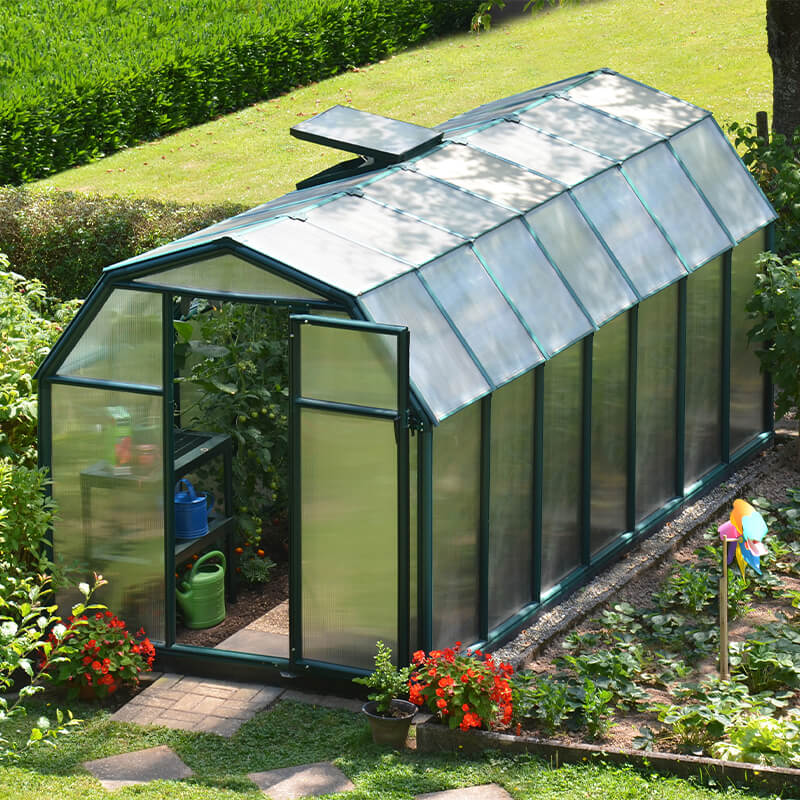
Compared with a smaller 12×6 greenhouse, a 15×7 version gives more breathing room for trays, larger pots and seasonal overflow. Compared with wider formats such as 8ft or 10ft wide structures, it can be easier to site along a boundary, fence line or narrow terrace edge. The difference is not just in size; it is in how the space is used day to day. A 15×7 tends to encourage a more linear, efficient arrangement.
Styles and subtypes worth comparing
Within the 15×7 greenhouse category, the main subtypes are usually defined by framing material, glazing type and roof form. Each changes the look, the light quality and the way the structure behaves in the garden.
- Aluminium greenhouses – light in appearance, clean lined and often chosen for a practical, low-fuss finish.
- Timber greenhouses – warmer in character, with a more traditional garden-room feel and a softer visual impact.
- Polycarbonate greenhouses – a common choice where diffused light and a more sheltered feel are wanted.
- Glass greenhouses – preferred for clarity, visual openness and that classic greenhouse look.
- Lean-to styles – useful when space is tighter and one wall can be used as support.
- Freestanding designs – better where access is needed on more than one side, or when the house needs to stand as a separate feature.
The choice between these subtypes often comes down to what matters most: appearance, light behaviour, or how the building sits within the garden layout. A glass 15×7 greenhouse gives a bright, crisp interior view and a more open feel. A polycarbonate 15×7 greenhouse tends to soften the light and can feel more enclosed. Timber frames create a different impression again, often better for a garden where the structure should blend with planting rather than stand out sharply.
Shape options that change the whole feel
Even within the 15×7 footprint, shape makes a real difference. The most recognisable form is the classic ridge and furrow greenhouse profile, with a pitched roof that sheds rain well and gives plants room to rise. This is the format many people picture first, because it suits a long, narrow interior and gives a straightforward working height.
There are also shapes with slightly altered roof lines or side walls that feel more compact or more decorative. A sharper pitch can improve headroom in the centre, while lower eaves may create a tidier external profile if the house is positioned against a boundary. The difference is often subtle, but in a 15×7 greenhouse those small shape changes affect storage, ventilation positioning and how easy it is to move around inside.
For buyers who want to grow taller crops such as tomatoes, cordons or climbing beans, a shape with good central height is useful. For tray production and lower crops, a more even roof line can feel practical. The key is to think not just about the outside appearance, but about what happens inside when the staging, shelves and plants are all in place.
Glass, polycarbonate and the light they give
Glazing is one of the biggest differences between greenhouse types in this size. Glass glazing gives clear visibility and a classic finish. It is often chosen when appearance and light transmission are important, especially in a garden where the greenhouse is meant to look like a proper feature, not just a utility box.
Polycarbonate panels behave differently. They diffuse light, which can suit seedlings and young plants that benefit from softer conditions. In a 15×7 footprint, this can be useful because the longer interior may have areas with varying brightness depending on orientation. Diffused light helps reduce harsh patchiness, and it can make the inside feel calmer on bright days.
There is also a practical difference in feel. Glass often gives a more open, precise look, while polycarbonate can feel slightly more sheltered. Neither is automatically better; the right choice depends on what you want from the structure. If the greenhouse is going to be used for display as well as growing, glass is often the more appealing finish. If the focus is on a more muted, working greenhouse, polycarbonate can fit very well.
Why the 15×7 format suits mixed growing
A major advantage of this category is how well it handles mixed planting plans. Many gardeners do not grow only one crop. They want space for propagation, potting on, salad leaves, tall fruiting plants and overwintering pots. The 15×7 layout makes that possible without turning the interior into a jumble.
You can create distinct zones: one end for seedlings and staging, the middle for active crops, and the far end for taller plants or larger containers. This is especially helpful when planting schedules overlap, which they always seem to do. There is enough length to separate jobs, but not so much that the greenhouse becomes awkward to manage.
For gardeners who like to compare practical options, the difference between a 15×7 and shorter sizes is mainly in organisation. A smaller greenhouse may still grow the same plants, but it often asks you to stack, shuffle and compromise more. A 15×7 gives a bit more order. That often translates into a better buying decision for people who are moving from a beginner setup to a more deliberate growing space.
Ways people use the space inside
Because of its proportions, a 15×7 greenhouse can be set up in several workable ways. Some buyers want a central aisle with staging down one side. Others prefer staging both sides and a narrower walk-through. There is no single layout, but the long shape encourages a clear route from one end to the other.
- Single-side staging – leaves more floor area for taller containers and bags of compost.
- Double-side staging – keeps trays at a comfortable working height on both sides.
- End-zone layout – useful where one end is reserved for propagation and the other for mature crops.
- Mixed-height setup – combines shelves, benches and floor space for varied plant sizes.
Some gardeners prefer to keep the centre fairly open because it makes watering cans, trays and plant moves much easier. Others use the whole space densely and accept a tighter fit. In a 15×7 greenhouse, both approaches are possible. That flexibility is one reason the size is often shortlisted when people know they need more than a compact house, but do not want to jump to a very large structure.
How it differs from wider or narrower greenhouses
The best way to understand the appeal of a 15×7 greenhouse is to compare it with nearby sizes. A narrower house, such as a 6ft wide model, can feel neat and efficient, but it may limit how much staging you can use without crowding the passage. A wider structure offers more freedom, but it also asks for more garden space and can be harder to site cleanly.
This 7ft width sits in a useful middle position. It gives enough room for a functional walkway and proper plant display, but it still feels compact enough to fit many standard gardens. The 15ft length is long enough to support a real growing rhythm through the year, with one area moving from seed trays to young plants, while another holds active crops or storage for pots and tools.
In buying terms, this means you are not simply choosing a greenhouse by square footage. You are choosing how you want to work. Some people want a compact shell. Others want a proper growing line. A 15×7 greenhouse leans towards the latter.
Useful buying points before you decide
When shopping this category, it helps to look closely at the details that affect how the structure will function in real use. The first is the door position. In a long greenhouse, access matters, and the way the entrance aligns with the central path can make a surprising difference. A well-placed door helps the interior feel straightforward from day one.
The second point is ventilation layout. Roof vents, side vents and door opening style influence how the house behaves on warm days. In a 15×7 greenhouse, airflow is not just a comfort detail; it shapes how evenly the space feels along its length. A greenhouse can look fine on paper and still feel awkward if air movement is poor.
The third point is the relationship between frame style and glazing. A slim aluminium frame can give a lighter external look, while timber may feel fuller and more substantial. Polycarbonate and glass also interact differently with the frame, so the overall appearance matters as much as the technical spec.
Practical tips for choosing the right version
If you are choosing between different 15×7 greenhouse types, think in terms of use, not just appearance. If you want a greenhouse that blends into a traditional garden and feels more like a feature, timber may be the better fit. If you want a cleaner outline and a structure that looks crisp beside paving or gravel, aluminium may suit you more. If your main concern is diffused light and a softer interior atmosphere, polycarbonate is worth comparing carefully.
Also consider the crops you actually grow. Tall tomatoes, sweet peppers and training plants benefit from clearer height and an organised central run. Trays of seedlings and young plants are often more comfortable in a setup with softer light and easy bench access. A mixed-use gardener will usually get the most from a layout that allows zones, rather than a single all-purpose shelf arrangement.
And do not ignore the outside fit. A greenhouse that is the right size on paper can still feel wrong if it sits awkwardly in the garden. The 15×7 footprint is attractive partly because it leaves room for paths, borders and access. That balance can be the difference between a structure that feels added on, and one that feels part of the place.
What makes this category worth browsing
People looking at greenhouses 15×7 are often already past the very first step. They usually know they need more room, but they are still weighing appearance, material and layout. This category suits that stage well because it offers a clear range of practical forms without moving into oversized territory.
You can compare glass versus polycarbonate, aluminium versus timber, and freestanding versus lean-to without changing the essential footprint. That makes selection easier. The size stays constant, so the real discussion becomes about how the greenhouse should behave and look. For many buyers, that is where the useful decision-making happens.
A 15×7 greenhouse is not just about growing more. It is about growing with a bit more order, a bit more room and a layout that makes sense when the trays are full and the season is moving quickly. If that is what you need, this category is a strong place to start comparing options.
[Sassy_Social_Share]