
Greenhouses 15x12 - Best Deals in UK!
Showing the single result

15×12 greenhouses give you a roomy growing space for vegetables, fruiting plants and overwintering stock, with enough width for benches, paths and proper crop rotation in one practical layout.
Why the 15×12 footprint works so well
A 15×12 greenhouse sits in that useful middle ground where the structure feels generous without becoming awkward to place on a plot. The 15ft by 12ft size gives you a broad internal span, so you can split the house into growing zones rather than treating it like one long tunnel of pots. That matters if you want to keep a section for seedlings, a section for taller plants, and a clear working route down the centre or along one side.
This footprint also suits gardeners who have outgrown a compact lean-to or a narrow starter greenhouse. There is enough depth for staging, still enough width for movement, and usually enough flexibility to fit raised beds, shelving, hanging baskets, tomatoes, cucumbers and a few more demanding plants at the same time. It is the kind of size that feels planned, not cramped.
Shapes that change how the space feels
Not every 15×12 greenhouse feels the same, because the shape of the frame changes the usable headroom, side space and the way light moves through the structure. Buyers often compare a few forms before deciding, and it is worth doing that, since the right shape can make the layout much easier to live with.
Bestseller der Kategorie Greenhouses 15x12
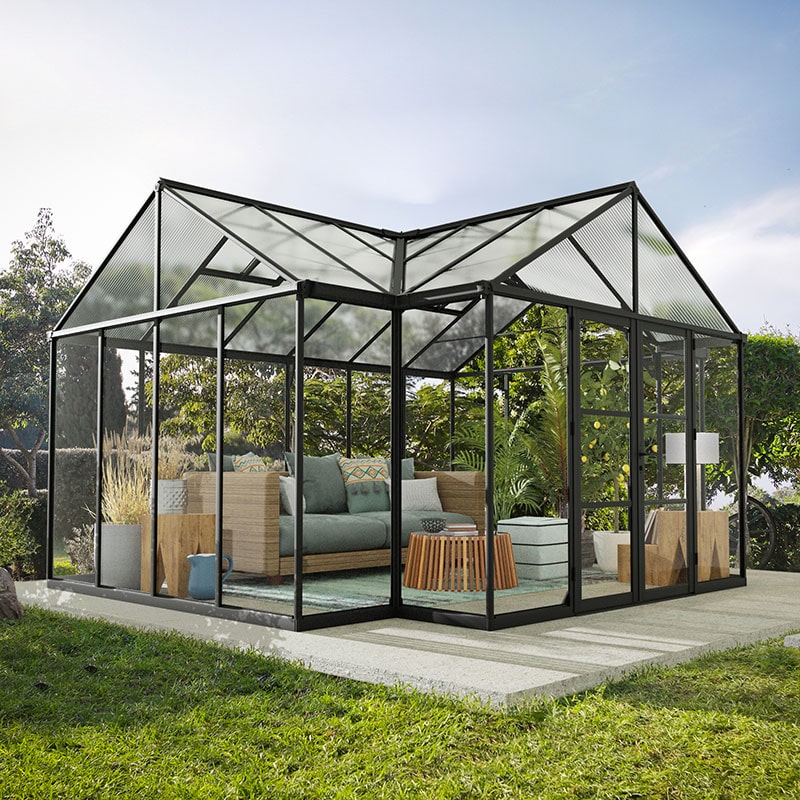
- Traditional gable-ended designs offer a familiar profile, usually with straight sides and a pitched roof that suits staging and hanging space.
- Victorian-style greenhouses tend to bring a more decorative look, with finer detailing and a classic feel that suits period gardens.
- Lean-to layouts make sense where a wall is already available, helping you use the 15×12 footprint in a more sheltered way.
- Hoop-style structures are less formal in appearance, but can be useful where a gardener wants a practical span with a simple interior.
- Orangery-inspired builds often focus on a balance between cultivation and display, with a lighter, room-like feel.
The difference is not only cosmetic. A pitched roof can improve the sense of height for climbing crops, while a lower side wall may suit low staging and propagation. In a 15×12 greenhouse, those small structural differences can decide whether the house feels airy or boxed-in.
Frame styles and what they mean in real use
When people shop for a greenhouse in this size, the frame type is often one of the main decision points. The structure has to do more than stand there nicely; it must support glazing, create a usable shape, and fit the way the greenhouse will be used through the year.
Aluminium frames are common in this category because they are neat, steady and suited to clear, modern lines. They usually allow for a straightforward finish and can work well if the buyer prefers a crisp look. Powder-coated aluminium adds a coloured finish that can help the greenhouse blend with planting, fencing or nearby garden buildings.
Steel-framed greenhouses feel different again. They are often chosen for a stronger visual presence and a more substantial appearance. In a larger 15×12 format, that can matter, because the frame becomes part of the garden view rather than something purely practical.
Timber greenhouses bring warmth and character. They can suit gardens where the structure is meant to sit more gently in the setting. The look is softer, and for some buyers that matters just as much as the growing space inside.
Glazing choices that shape light and privacy
Glazing is one of the biggest differences between greenhouse variants, and in a 15×12 greenhouse it has a noticeable effect because the surface area is large enough for the material to change the feel of the whole building. Light levels, privacy, and the appearance of the structure all shift depending on the panel type.
- Clear glazing brings in a bright, open feel and is popular where maximum light is wanted for fruit and flowers.
- Diffuse glazing softens glare and spreads light more evenly, which can be useful where seedlings or young plants need a gentler start.
- Toughened glass is chosen by buyers who want a sturdier pane structure and a more traditional greenhouse look.
- Polycarbonate panels offer a different feel, with a lighter, more impact-tolerant option that changes how the greenhouse reads from outside.
The choice here affects more than appearance. Clear glazing gives a sharper view into the house and can make crops look vivid from outside, while diffused or opaque-leaning options create a calmer, less exposed interior. If the greenhouse sits near a boundary, that may be a useful detail, even if it is not the first thing people think about.
Layouts for growers with a plan
The beauty of a 15×12 footprint is that it allows more than one layout to make sense. Some gardeners want a central aisle with deep beds on either side. Others prefer a perimeter staging arrangement, leaving the middle open for pots, wheelbarrows, or seasonal crops. The size supports both, and a few hybrids too.
Common internal approaches include:
- Central path layout for easy movement and clear access to both sides.
- Perimeter staging layout for propagation, potting and keeping plants at working height.
- Mixed layout with one side for benches and the other for taller crops.
- Bed-led layout for growers who want more direct in-ground planting inside the greenhouse.
This size also gives room for different heights. You can use the lower zones for trays and young plants, and the upper areas for cords, vines or hanging containers. That vertical variety is one of the less obvious advantages of a 15×12 greenhouse, but once you have it, it is hard to go back to a tighter house.
What sets 15×12 apart from smaller greenhouse sizes
Compared with a compact greenhouse, a 15×12 model feels less like a compromise. The main difference is not just floor area; it is how the whole structure handles movement and crop separation. In a smaller house, one tray can quickly become in the way of another. In this size, the zones can be distinct enough to reduce that constant reshuffling.
There is also more flexibility for seasonal changes. A section can be devoted to early propagation without forcing the whole greenhouse into nursery mode. Later, the same area can shift to tender crops or display planting. That kind of flexibility is one reason this footprint appeals to serious home growers who do not want to keep adding extra structures later on.
Against larger greenhouses, the 15×12 format can feel easier to place and easier to manage visually in the garden. It has presence, but it is not so large that it dominates every angle of the plot. For many buyers, that balance is exactly the point.
Plant types that fit the scale naturally
A greenhouse in this size is well suited to crops that benefit from dedicated space and a stable environment. The area allows for mixed planting without everything being squeezed together. That means you can keep plants grouped by height, by timing, or by how much attention they need at a given stage.
- Tomatoes and other cordon crops that need height and clear access.
- Cucumbers, where the larger frame helps with a cleaner training line.
- Peppers and chillies, which do well in a structured, sheltered space.
- Salad leaves and quick crops that can sit on staging or beds.
- Ornamental plants that need a bright house with room to show them off.
- Overwintering pots that should not be crowded into a corner.
The advantage of 15×12 is not just that it holds more; it allows the space to feel organised. If you are growing different plant families at the same time, that matters a lot more than people often expect.
Access, workflow and the little details buyers notice later
Practical details often decide whether a greenhouse feels enjoyable or simply big on paper. In a 15×12 greenhouse, the width can make access much easier, especially when moving trays, bags of compost or taller container plants. The layout can support a more natural working flow, so you do not need to keep stepping around your own planting plan.
Door position is one of those things that can change the experience more than expected. A central entrance may suit a balanced layout, while an offset door can help keep the main growing space less interrupted. Side vents, roof vents and the placement of internal benches also shape how easy the structure is to use. These are not flashy features, but they do affect day-to-day comfort in the greenhouse.
Another point is headroom. In a greenhouse this size, a pitched roof or taller central section can make a real difference for both comfort and crop training. Buyers often notice it only after installation, but it is one of the reasons the shape deserves proper attention before choosing.
Why the 15×12 size suits both display and production
Some greenhouse buyers want a purely productive space. Others want something that looks good as part of the garden scene as well as performing well. The 15×12 greenhouse sits nicely between those aims. It can be arranged as a working house, but it can also hold itself visually if placed where it can be seen from the terrace or paths.
That dual use makes it appealing for gardeners who like a more ordered look. A timber frame may soften the edges. A fine aluminium structure may feel neat and understated. Glass panels, if chosen, add a clear, bright appearance that often suits formal planting or a garden with straight lines. So the same footprint can serve quite different tastes.
Helpful pointers before choosing
If you are comparing greenhouses 15×12, a few details are worth checking closely so the space feels right once it is on site. It is not only about the headline size, but about how the house will actually be used.
- Check the internal working width rather than only the external measurement.
- Look at roof height and side wall height if you plan to train taller plants.
- Compare glazing types so the light level matches the crops you have in mind.
- Think about the layout first, then the frame and finish after that.
- Make sure the shape suits the garden, not just the plant list.
That last point can save a lot of hesitation later. A greenhouse that technically fits the area may still feel wrong if the proportions clash with nearby planting or buildings. The 15×12 size gives room to be choosy, which is part of its appeal.
A category for growers who want room without waste
The main attraction of a 15×12 greenhouse is the balance it offers. It is big enough for proper crop planning, different zones and a more settled internal layout, yet still compact enough to sit within a home garden without feeling overdone. That balance makes it a strong choice for buyers who want something beyond a starter unit, but not a structure that overwhelms the plot.
Whether the appeal lies in the frame style, the glazing, the classic shape or the usable depth of the footprint, this category gives buyers a chance to choose a greenhouse that feels thought-through from the start. If you want space for serious growing, but also want the greenhouse to fit naturally into the garden, 15×12 is a size that makes sense in more ways than one.
[Sassy_Social_Share]