
Gazebos with Pyramid Roof - Best Deals in UK!
Showing all 2 results
-
12% OFF: 10′ x 10′ Garden Must Haves Runcton Grey Polycarbonate Garden Gazebo (3m x 3m) £659.9912%

-
12% OFF: 12′ x 10′ Garden Must Haves Runcton Grey Polycarbonate Garden Gazebo (3.6m x 3m) £729.9912%

Pyramid roof gazebos bring a crisp, architectural shape to garden seating, dining and shade areas, with sloping lines that help water run off and give the structure a neat, balanced look.
A roofline that changes the whole feel
A gazebo with a pyramid roof is easy to spot: all sides rise towards a single point, creating a clean, centred silhouette that looks considered rather than bulky. That shape gives the gazebo a different mood from a flat-top or curved-roof design. It feels more defined, a bit more formal, and often more at home where the garden already has straight paths, clipped hedges, terrace paving or a central seating layout.
Because the roof slopes in four directions, the structure has a tidy symmetry that works well as a focal point. It can sit over a dining set, a hot tub area, a lounge grouping or an outdoor kitchen corner without drawing the eye in a heavy way. The shape also suits buyers who want the shelter to look like part of the garden plan, not just something placed there for function.
What makes a pyramid roof different
Compared with a gable roof, which has two main slopes and a ridge, a pyramid roof feels more compact and self-contained. It does not stretch lengthways in quite the same manner, so it often suits square or nearly square footprints better. Compared with a hip roof, the pyramid version has no long ridge line at all, which gives a sharper, more pointed finish. And compared with a curved canopy roof, it looks more structured and less relaxed, which many people prefer for a smart garden setting.
Bestseller der Kategorie Gazebos with Pyramid Roof
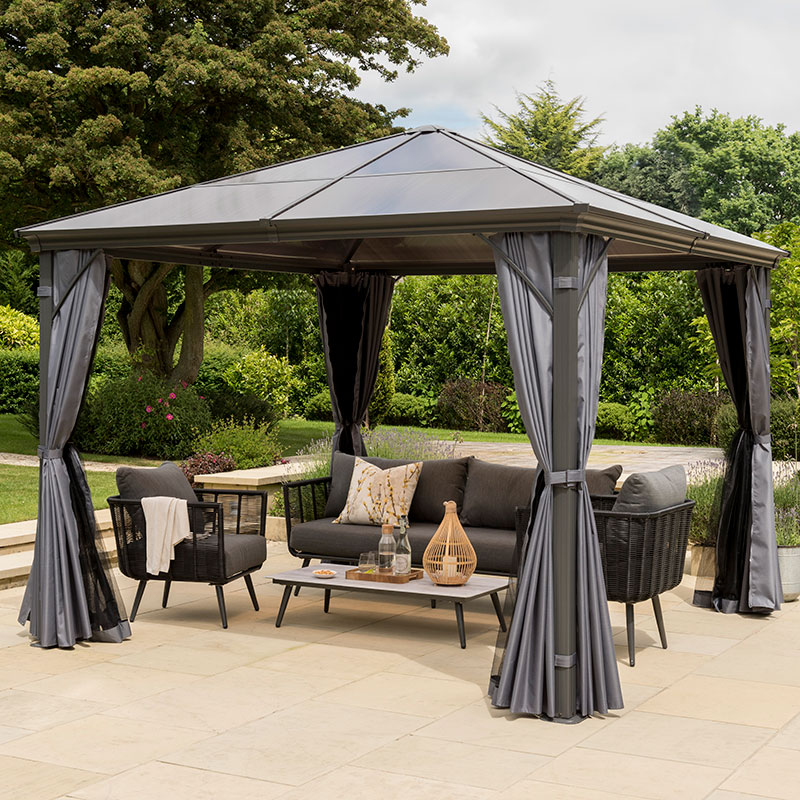
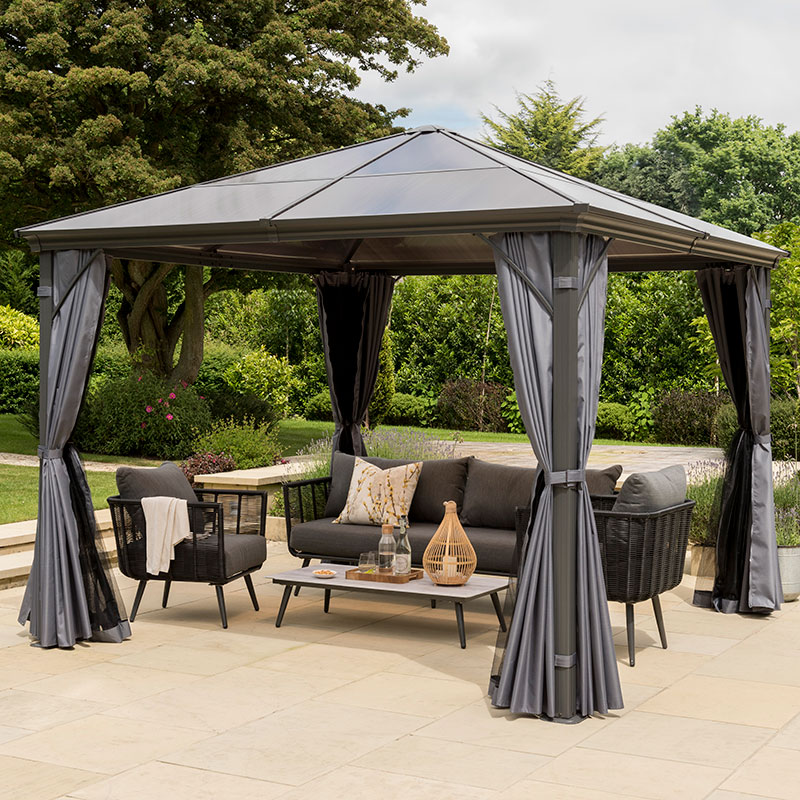
The difference is not just visual. The geometry of a pyramid roof can make the gazebo feel evenly balanced from every side. That matters if the gazebo will be viewed from several angles, for example in a lawn centre, at the end of a path, or beside a pond. Instead of having a “front” and “back”, it tends to look finished all around, which is handy when the layout is open.
Shapes and subtypes buyers usually compare
Within the pyramid roof gazebo category, there are a few common forms worth knowing about:
- Square pyramid gazebos – the classic layout, where the roof rises evenly from four equal sides.
- Rectangular gazebos with a pyramidal top – similar in style, but stretched to cover a longer dining or lounge area.
- Octagonal gazebos – not always a true pyramid in footprint, but often using a centred roof that gives a pointed, pavilion-like finish.
- Open-sided pyramid gazebos – designed for free airflow and a lighter look, often used where the garden feel should stay open.
- Partially screened pyramid gazebos – a middle ground when some enclosure is wanted without making the space feel closed in.
These variations may seem subtle at first glance, but the footprint changes how the roof looks in use. A square version tends to feel neat and centred. A rectangular one can work better over a long table, while still keeping that pointed profile people often like. An octagonal form reads a bit more decorative, and can give the gazebo a pavilion feel that suits classic gardens.
Why the slope matters in real use
The main practical appeal of a pyramid roof is the way it handles weather exposure across all sides. The four-way slope creates an even fall, so the roof does not present a single broad flat plane in the same way some other designs do. For buyers, that usually translates into a shelter that feels well proportioned and visually calm, especially when the sky is changing and the roofline remains clear and simple.
Another advantage is how the shape supports headroom and central space underneath. Because the roof rises to a point, the internal feel can be pleasantly open, with the eye drawn upward rather than outwards. That can be useful for dining gazebos, because the roof does not dominate the seating area. It can also suit a garden sofa set where people want a bit of enclosure but not a low ceiling feeling. The result is a space that feels usable and airy, not cramped.
Materials and finishes that suit the shape
Pyramid roof gazebos are often chosen in timber, metal or mixed construction, and the roof shape behaves differently depending on the frame. A wooden frame gives the pyramid roof a softer, more natural look, especially in gardens with planting, gravel and traditional furniture. The lines feel warmer, and the pointed roof can pick up a pergola-like charm without turning fussy.
Metal-framed versions tend to look more defined and contemporary. The crisp roof geometry is emphasised, which can suit modern paving, outdoor kitchens or a minimalist terrace. Some buyers prefer a darker frame because it makes the roof shape read clearly against the sky. Others choose lighter finishes to keep the structure visually airy. Either way, the pyramid form usually benefits from a finish that keeps its outline visible, because that is a big part of its appeal.
When a pyramid roof fits the space better
This category is often a smart match when the gazebo will stand in a square or central position. If the space is designed around a focal point, the symmetry of the roof helps tie the area together. It also suits gardens where the view is wide open and the structure will be seen from all sides, since the roof does not depend on a single “best angle”.
For smaller gardens, a pyramid roof gazebo can feel less imposing than chunkier forms, because the pointed top gives the eyes somewhere to travel upward. In a larger garden, it can look ordered and purposeful, which is useful if you want the seating zone to feel distinct from the rest of the lawn. If the area is long and narrow, a rectangular gazebo with a pyramid roof may work better than a square one, since it can follow the shape of the space without losing the neat roofline.
Open, screened or enclosed: choosing the right level of shelter
One of the key differences in this range is how open the sides are. An open-sided pyramid gazebo keeps the view and breeze moving through the space. It works well where the goal is shade and structure rather than full enclosure. This version often suits summer dining, social seating, or simply creating a defined spot in the garden.
A screened gazebo adds another layer of separation. Screens can help give the area a more settled feel and make the gazebo better for lingering over meals or evening use. The shape still stays light, but the space feels more room-like. An enclosed or partly enclosed version goes further again, and the pyramid roof gives that style a neat top finish instead of making it feel boxy. People often notice that the roof stops it from looking too heavy, which is a useful balance.
Different looks for different garden styles
The same roof shape can lean in several directions depending on the frame and detailing. A classic garden style usually pairs well with timber and softer lines, where the pyramid roof feels almost pavilion-like. A more modern scheme may favour straighter framing, dark finishes and a clearer geometric outline. In a courtyard setting, the pyramid roof can act as a tidy central feature without taking too much visual space from planting and containers.
If the surrounding garden uses curves, the pointed roof adds a little contrast and can stop the whole layout from feeling too loose. If the garden is already structured, the symmetry of the roof reinforces that order. That is one reason this category works across different tastes: it is not tied to one look only. It can be made to feel understated, decorative, formal or practical, depending on the rest of the design.
Useful buying points people often compare
When looking at gazebos with pyramid roofs, buyers often compare more than just the shape. They check how the roof sits over the footprint, how much space is left underneath, and whether the side height feels right for the intended use. A dining setup needs enough room for chairs to move in and out without the roof feeling low. A lounging setup may care more about the overall atmosphere and whether the structure frames the seating neatly.
It also helps to think about how the roof shape will look next to nearby features. A pyramid roof can echo square patios, raised beds or block paving patterns. That little visual match can make the whole garden feel more joined together. If the gazebo will stand near a wall or fence, the pointed top can stop the setup from appearing too flat. If it will be free-standing, the symmetry becomes even more important, because the roof is what gives the structure its character.
Advantages that are easy to see at a glance
There are several reasons people keep coming back to this roof style:
- Balanced appearance – the four-sided slope gives a centred, tidy finish.
- Good visual flow – the roof draws the eye upward without feeling bulky.
- Flexible placement – works well in the middle of a garden, on a patio or by a lawn edge.
- Choice of footprint – available in square, rectangular and octagonal-style layouts.
- Clear style distinction – looks different from flatter or more elongated gazebo designs.
- Comfortable feel underneath – often gives the seating area a more open impression.
For many shoppers, the appeal lies in that mix of form and function. It is not just “a shelter”; it is a shape that gives the garden a point of focus. That matters more than people sometimes expect, because an outdoor structure can either lift a space or make it feel crowded. The pyramid roof usually leans towards the first effect.
How the roof shape supports different uses
A pyramid roof gazebo can be used in several ways, and the roof style affects each one slightly. For dining, the centred point above the table helps the area feel deliberate, almost like an outdoor room. For lounging, the angled roof creates a sheltered zone that does not flatten the space. For entertaining, the clean roofline gives the gazebo a composed backdrop, which can matter if it will be seen in photos or from inside the house.
Some buyers choose the shape because it sits well with a standalone arrangement such as a round table or a square seating group. Others prefer it because it gives a sense of order around a fire pit style setting or a relaxed conversation area. The main point is that the roof does not dominate the furniture below it, and that makes arranging the space easier.
Picking the right size without overthinking it
Size choice is often about proportion more than anything else. A small pyramid roof gazebo can look very neat in a compact garden, but if the seating set is too large, it may feel tight under the roof. A larger version gives more freedom, though it needs enough surrounding space so the pointed top does not seem crowded by borders or walls.
As a simple rule, it helps to imagine the gazebo as part of the garden layout, not just a stand-alone object. If you want a central retreat, leave breathing room around it. If you want it to link directly with a patio, a rectangular form may make better use of the available area. That kind of practical fit often matters more than trying to make the structure do everything at once. And yes, it’s easy to overlook this and then notice later that the table leaves very little movement space, which is a bit annoying.
Why buyers often prefer the pyramid profile over flatter roofs
Flatter roofs can work well, but they sometimes read as visually broader and less distinct. The pyramid profile gives the gazebo a clear identity. It looks intentional from the outset, which is useful if the structure is meant to feel like a feature rather than just cover. That sharper identity can help buyers feel more confident in the purchase, because they can picture exactly how it will sit in the garden.
The other benefit is that the form tends to stay visually neat as part of the landscape. Even when the garden changes seasonally, the roofline remains easy to read. That steadiness is useful for people who want the outdoor area to feel composed across the year, whether it is viewed with summer planting, autumn leaves or bare winter borders.
A shape that makes the space feel finished
In the end, a gazebo with a pyramid roof is chosen for more than shelter. It is chosen for the way it settles a space, gives structure to seating and brings a clear, balanced line to the garden. The form can be simple or decorative, open or screened, compact or more generous, but the roof always keeps that tidy point of focus.
For buyers comparing gazebo types, this category offers a strong middle ground: more defined than a basic canopy, less heavy than some enclosed shelters, and more architecturally pleasing than a plain boxy frame. If the aim is to create an outdoor area that feels planned and easy to use, the pyramid roof is often the detail that makes the difference.
[Sassy_Social_Share]