
Gazebos under £800 - Best Deals in UK!
Showing the single result

Gazebos under £800 offer a practical way to add sheltered seating, shade and structure to a garden, with choices in wood, steel and pop-up frames, plus square, hexagonal and rectangular styles.
What a Budget Gazebo Can Actually Do in the Garden
A gazebo under £800 is not just a place to sit out of a shower. It can create a proper outdoor room, define a dining area, or give a corner of the garden a bit of shape when the rest of the space feels open and unfinished. In this price range, buyers can still find fixed gazebos, hard-top styles, and more flexible soft-top covers, depending on how permanent they want the structure to feel. The trick is choosing the right form for the way the garden is used, not just the look of it.
For many homes, this category is about balancing appearance, footprint and shelter. A compact square gazebo can suit a patio that only has room for a table and a couple of chairs, while a longer rectangular design works better over a dining set or bench seating. Hexagonal and octagonal shapes bring a more classic garden feel, especially when placed on lawn or decking. Each shape changes how the gazebo sits in the space, how people move around it, and how enclosed it feels.
Shapes That Change the Whole Feel
One of the biggest differences between gazebos under £800 is the shape of the roof and frame. A square gazebo tends to feel modern and tidy, with straight lines that sit well beside paving, fencing and planters. It is often the easiest shape to position against a wall or in a corner. A rectangular gazebo gives more usable coverage for long tables, outdoor sofas or a row of seating, so it can feel more like a proper garden shelter than a decorative feature.
Bestseller der Kategorie Gazebos under £800
Hexagonal and octagonal gazebos usually have a softer, more traditional profile. They can suit a lawn centrepiece or a seating nook where the aim is to make the structure feel part of the view rather than just a cover. The angled sides create a more open, inviting look and often allow better sight lines out into the garden. For buyers who want something that feels a bit more like a pavilion, these shapes are often the ones that catch the eye.
- Square – neat, versatile and easy to place
- Rectangular – better for dining sets and longer seating layouts
- Hexagonal – balanced, traditional and softer in appearance
- Octagonal – more decorative, with a fuller garden-room feel
Frame Materials: Why They Matter More Than People Think
At under £800, the frame material is one of the biggest clues to how the gazebo will perform and how it will feel in the garden. Powder-coated steel frames are common in this bracket because they offer a clean look and a sturdy feel without pushing the price too high. They often suit contemporary gardens and are a good match for streamlined furniture, metal dining sets or a more urban outdoor space.
Wooden gazebos are another strong option, though the quality and finish can vary a lot within budget. A timber gazebo tends to feel warmer and more natural, which works well in leafy gardens or spaces with stone paving and softer planting. Wood also gives the structure a more permanent, furniture-like presence. It can make even a small patio look considered rather than thrown together. That said, a wooden frame usually needs more space visually; it can look substantial, so it’s worth checking proportions carefully.
There are also lighter aluminium-framed designs and mixed-material styles that use metal frames with fabric or polycarbonate roofing. These can suit buyers who want a lower-key shelter without the heavier look of timber. The main difference is in the mood they create: steel is sharper, wood is more grounded, and lighter frames feel less dominant. None is “better” in every case, it depends what the rest of the garden is already doing.
Roof Styles: Soft Shade or More Solid Shelter
The roof changes both the look and the use of the gazebo. A soft-top gazebo usually uses fabric canopy material, which keeps the structure lighter in appearance and often more affordable. This style suits casual outdoor seating and summer gatherings where the aim is mainly shade and a sense of enclosure. Soft tops often feel more relaxed, and they can work well in smaller gardens because they do not visually weigh down the space.
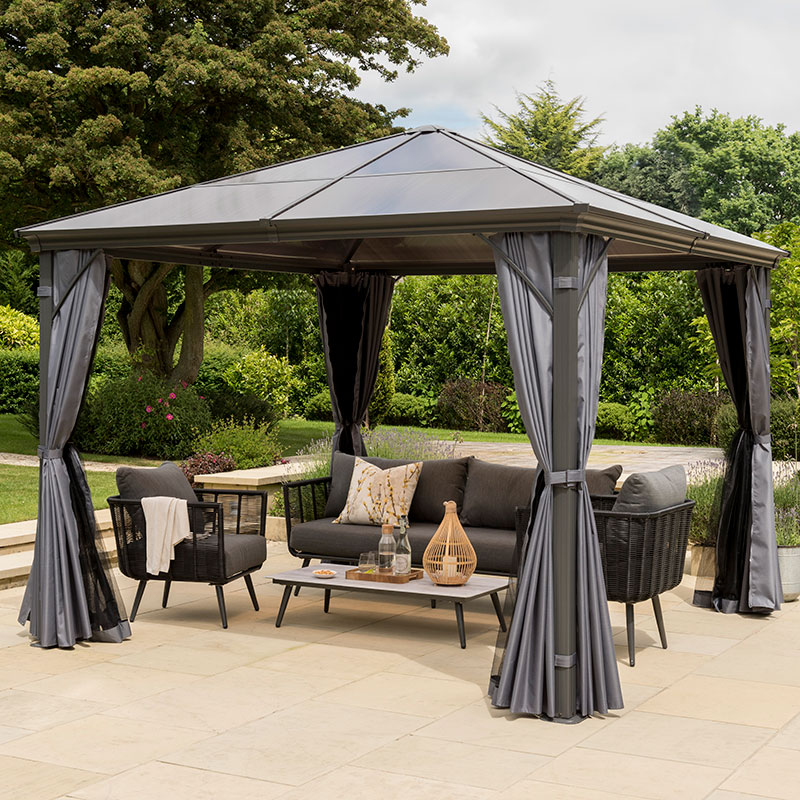
Hard-top gazebos bring a different level of presence. They often use polycarbonate panels or similar roofing materials, giving a firmer roofline and a more substantial sheltered feel. Within this price range, hard-top options can be very appealing for buyers who want the gazebo to feel like a fixed part of the garden layout. They can look more architectural and make the seating area feel defined, especially on a patio or deck.
The difference is not only visual. A soft-top style usually feels more seasonal and casual, while a hard-top version reads as more anchored and structured. If the gazebo is going to frame a dining area or a long-standing outdoor seating spot, that firmer roof can make the space feel more finished. If the idea is more about flexibility and a lighter touch, a soft-top may be the better fit.
- Soft-top – lighter look, easier on the eye, more casual feel
- Hard-top – stronger structure, clearer shelter, more permanent character
- Polycarbonate roof – lets light in while still giving cover
- Fabric roof – softer visual effect, often better for a relaxed setting
Open Sides, Curtain Panels and the Way Space Feels
Another feature that sets gazebos apart is how open or enclosed they are. Some budget gazebos are fully open-sided, which makes them feel airy and easy to use for casual gatherings. Others include curtain panels or side screens that can be drawn across to create a little privacy and help block wind from certain angles. This changes the whole atmosphere of the gazebo, turning it from a simple shade spot into something more like an outdoor retreat.
Open-sided gazebos work well when the garden view matters and when the user wants a social space that doesn’t feel closed off. They suit cooking nearby, chatting across a table, or keeping the area connected to the rest of the garden. By contrast, side panels make sense when the gazebo is closer to neighbouring boundaries or when the seating needs a more tucked-away feel. They can make a garden nook seem calmer, which is a big plus if the aim is to create some separation from the rest of the outdoor space.
The difference is practical too. A gazebo with panels can feel more versatile because it can be slightly open or more enclosed depending on the moment. That can be helpful if the same structure is meant to serve different jobs – lunch spot one day, garden reading corner the next. For a buyer comparing options under £800, this detail can matter more than a flashy shape.
How to Match the Gazebo to the Garden Itself
The best gazebo is usually the one that fits the garden’s proportions. In a compact space, a large roof and heavy frame can overwhelm the area, making everything feel tighter than it really is. A smaller square or octagonal design may be enough to create a useful shelter without taking over the whole patio. In a larger garden, though, a modest gazebo can disappear visually, so a more open or architectural shape may work better.
Placement also changes how the gazebo performs. Near the house, it can act like a covered extension of the indoors, especially if it sits over doors leading to the garden. Further away, on grass or at the end of a path, it can feel like a destination in its own right. That difference matters when choosing the form. A gazebo near a wall might benefit from straight sides and a simpler profile, while one in the middle of the garden can handle a more decorative shape.
It’s also worth thinking about the furniture that will go underneath it. A round table often looks balanced under a hexagonal gazebo, while a rectangular dining set tends to suit a rectangular frame better. This is one of those details people sometimes skip, then notice later when the seating feels awkward. The right shape makes the furniture look intentional instead of squeezed in.
Why Buyers Look at Gazebos Under £800
This price point is attractive because it opens the door to more than a basic sunshade. Buyers can often find structures that feel substantial enough to change the garden layout, without stepping into a much higher spend. That makes the category useful for people who want a defined outdoor area but are not looking for a fully bespoke build. It is a middle ground – not flimsy, not overly expensive, just practical and visually clear.
For many shoppers, the appeal is in getting noticeable garden impact for a realistic budget. A well-chosen gazebo can make a plain patio feel more styled, give furniture a reason to sit in one zone, and create a sheltered place that feels ready for use. It can also help separate functions in the garden, which is handy if the space has to do a lot of jobs at once. Dining, relaxing, entertaining and shading plants or pots all become easier to organise when there is a clear structure in place.
There is also a difference in how polished the garden looks once a gazebo is added. Even simple outdoor furniture can feel more deliberate under a roofed frame. It gives the impression that the area has been planned, not just filled. That visual lift is a big part of why people browse this category instead of settling for a parasol or a basic canopy.
Useful Buying Checks Before You Pick One
When comparing gazebos under £800, it helps to look at a few details side by side rather than focusing only on the headline style. Frame thickness, roof type, side layout and overall footprint all influence how the gazebo will feel in use. A model that looks elegant in a photo may actually need more room around it than expected, while a simpler frame can end up being more useful day to day.
- Check the footprint against the patio or lawn space available
- Match the shape to your furniture layout, not just the garden style
- Choose the roof type based on how permanent you want it to feel
- Think about openness if the view and airflow matter
- Consider the frame material in relation to the rest of the garden
- Look for clear proportions so the structure doesn’t feel too bulky
It can also help to ask whether the gazebo is meant to be a background feature or the main focal point. A decorative hexagonal design can be lovely if it is going to stand on its own. A more discreet rectangular frame may be better if the furniture, planting or surrounding view is meant to take centre stage. That sort of decision is often what separates a good purchase from one that feels slightly off once it’s in place.
Small Details That Make a Big Difference
In this category, small differences often have a bigger effect than people expect. A roof that lets a little light through can stop the space from feeling too enclosed. A frame with straighter lines can make a compact garden feel more ordered. Side panels can change the mood from open and social to calm and sheltered. Even the way the legs sit in relation to the corners can affect whether the gazebo looks neat over a table or a bit crammed into the space.
Buyers also tend to notice how a gazebo alters the way they use the garden. A sheltered seat can encourage longer meals outdoors. A covered corner can create a place for morning coffee without feeling fully exposed. A frame over a seating set can make the whole area feel more defined, which is useful when the garden needs a little structure. These are simple changes, but they make the space more usable in a way that feels natural.
For anyone comparing gazebos under £800, the main aim is finding the version that suits the garden’s shape, the furniture underneath, and the mood you want the outdoor space to have. Some will want a neat square shelter, others a softer octagonal centrepiece, and others a rectangular outdoor room with a practical roof and side cover. The right choice usually becomes obvious once the shape, material and openness are all looked at together.
In the end, this category is strong because it offers a good mix of style, shelter and usable space without needing a huge budget. A well-chosen gazebo can change how the garden looks and how often it gets used, and that is often the point. Not every outdoor feature needs to shout for attention. Sometimes it just needs to fit properly, look right, and make the garden feel a bit more complete.
[Sassy_Social_Share]