
Gazebos under £20000 - Best Deals in UK!
Showing the single result

Gazebos under £20000 bring together usable outdoor shelter, defined shapes, and year-round style for gardens, patios and entertaining spaces, with timber, aluminium and steel options.
Shape sets the tone before anything else
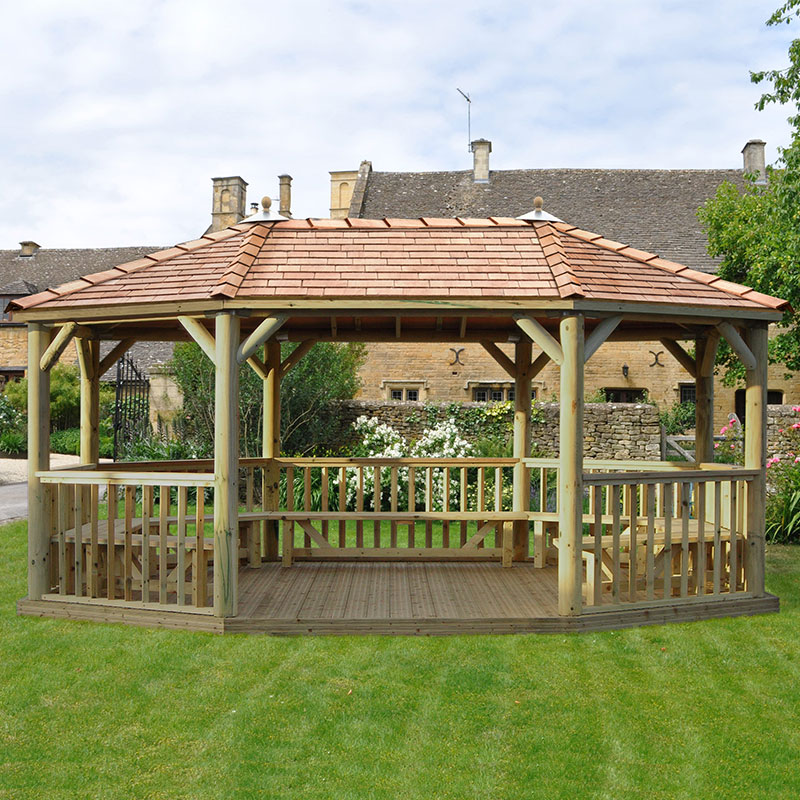
When people look at gazebos under £20000, the first big decision is usually the shape. It changes how the structure sits in the garden, how many people it can hold, and even how the space feels when you step inside. A round gazebo has a softer, more classic look and works well when you want the structure to feel like a focal point in the middle of a lawn or planting scheme. A square gazebo feels more orderly and is easier to position against a terrace, deck, or straight garden edge. Rectangular gazebos are practical for dining sets, outdoor sofas, or longer seating layouts, while octagonal gazebos give a more traditional garden-building feel with a bit more visual detail.
The difference is not just about looks. Shape affects how people move around inside, where tables fit, and how the roofline reads from a distance. For example, a square or rectangular frame can make better use of a straight patio, while a round or octagonal form tends to soften a sharper landscape. If your garden is compact, a cleaner shape often feels less crowded. If the plot is open, a more decorative outline can help the gazebo become a feature rather than just a shelter.
Materials that change the whole feel
In this price range, material choice matters a lot because it affects both the look and the way the gazebo will be used. A timber gazebo feels warm and natural, and it blends easily with planting, gravel, lawns and traditional garden furniture. Timber can suit rustic spaces, cottage-style gardens, and anything where you want the structure to look part of the landscape rather than placed on top of it.
Bestseller der Kategorie Gazebos under £20000
Aluminium gazebos usually look neater and more contemporary. They can suit gardens with cleaner lines, modern paving, and metal-framed seating. The profile is often lighter visually, which helps if you do not want the structure to feel heavy. Steel gazebos tend to give a firmer, more substantial impression, with a bit more visual weight. That can work nicely in larger gardens or where the gazebo is meant to anchor an outdoor room.
There are also hybrid styles, where the frame and roof materials are chosen to balance appearance and practicality. A buyer might prefer a timber look with a more straightforward roof arrangement, or a metal frame with softer decorative details. The point is not to chase a trend, but to match the gazebo to the rest of the garden. If your fences, decking, or pergola already use timber, a wooden gazebo often feels like a natural next step. If your outdoor area is sharper and more structured, metal may fit more comfortably.
Open sides, closed sides, and the in-between options
Not every gazebo works in the same way. Some are built as open-sided gazebos, which create a defined shelter without closing off the view. These are handy if you want the garden to remain visible from all angles and you do not want the space to feel boxed in. Open-sided designs are often chosen for dining, informal seating, or simply creating a dry and shaded spot without losing the connection to the rest of the garden.
At the other end are gazebos with partial panels or side features that give more enclosure. These can feel more private and are useful if you want to reduce exposure to breeze or create a more contained outdoor room. Some designs sit somewhere between the two, with framed sides or curtain-ready rails, giving you a bit more control over how open the area feels. That middle ground is often the sweet spot for buyers who want flexibility.
The difference is worth thinking about because it changes how the gazebo will be used throughout the day. A very open structure can feel airy and social, while a more enclosed one can create a stronger sense of retreat. If the garden is overlooked, partial sides can help the gazebo feel more personal. If you are trying to preserve a long view across the lawn, open sides may suit better. It is a simple decision on paper, but it changes the whole character of the space.
Roof styles that do more than look neat
The roof form is another detail that buyers often notice straight away, even if they do not name it at first. A pitched roof gives a classic profile and often feels more architectural. It can help a gazebo sit confidently in the garden, especially if nearby structures have similar lines. A flat roof gazebo looks more minimal and contemporary, and it can suit modern patios where you want less visual height. A domed or curved roof can add a softer silhouette and create a more decorative finish.
There is also the practical side. Roof design influences how the gazebo appears in relation to nearby trees, house walls, and boundary lines. A lower roof can feel tucked in and intimate, while a higher one can give a more spacious sense inside. If the gazebo is for dining, a little extra height can make the seating area feel less cramped. If it is for a snug corner, a lower roof may help the space feel more sheltered and connected.
It is not just about the cover itself either. Some gazebos under £20000 use roof detailing to create a sense of depth and structure. You might see layered edges, refined corners or a more prominent apex. These touches make a difference when the gazebo is viewed from the house, the patio, or the back gate. After all, the roof is often what you see first from a distance.
Why this budget opens up more useful choices
With a budget of under £20000, buyers can usually look beyond very basic shelter and think more carefully about the shape, finish and overall presence of the gazebo. That does not mean every option is highly elaborate. Rather, it means there is room to choose a structure that feels properly suited to the garden instead of settling for the first size that fits. The budget can allow for more considered proportions, more defined materials, and a gazebo that feels like a destination rather than an afterthought.
One advantage in this price band is the ability to choose a gazebo that supports a specific use. For example, if the aim is outdoor dining, the layout can be chosen with table clearance in mind. If the gazebo is for a lounge area, the shape and opening can support sofas or armchairs more naturally. If it is meant as a gathering point, a more central or symmetrical form can make sense. In other words, the budget makes it easier to shop with intent.
Another point is visual balance. A well-sized gazebo can connect the house to the wider garden, making the outside space feel more purposeful. That can be especially helpful on terraces and larger lawns where a simple parasol or small canopy may look a bit lost. A gazebo gives the eye something to settle on, and that alone can change how the whole garden feels when you’re outside with family or guests.
How different styles suit different gardens
Different gardens call for different types of gazebo. A traditional garden with borders, climbing plants and softer planting often pairs well with timber and an octagonal or round shape. The structure can sit among the greenery without feeling too hard-edged. A contemporary garden with clean paving, rectilinear borders and architectural planting may suit square, rectangular, or flat-roof designs in metal or mixed materials.
If the space is compact, choosing a gazebo with a tighter footprint and a straightforward shape helps keep circulation easy. If the garden is larger, a more decorative profile can hold its own and stop the structure from disappearing into the background. Long gardens often suit rectangular gazebos because they can echo the site’s proportions. More central plots can handle a round or octagonal form better, since those shapes create a clear destination without mirroring the boundaries too closely.
It is also worth thinking about sightlines from inside the house. A gazebo can frame a view, disguise a less attractive corner, or give the garden a clear focal point. The right form can make the whole layout feel more joined up. That is one of the reasons buyers spend time comparing styles rather than just sizes.
Useful differences buyers should notice
There are a few practical differences that are easy to overlook when browsing gazebos under £20000:
- Permanent frame vs lighter structure – A heavier frame feels more anchored, while a lighter one can look less dominant in the garden.
- Symmetrical vs elongated layout – Symmetry works well for central placement; elongated designs are often better for dining or seating zones.
- Decorative vs plain detailing – More detailing gives character, while plain lines suit modern spaces and keep the focus on furniture.
- Open feel vs sheltered feel – Open sides preserve views; partial enclosure adds privacy and a more room-like atmosphere.
- Timber vs metal finish – Timber feels warmer and softer; metal can look sharper and more contemporary.
These differences matter because they shape everyday use, not just first impressions. A gazebo is not only something you look at. It is a place where people sit, chat, eat, and spend time. So the best choice is often the one that fits your routine as well as your garden layout.
Small buying tips that make a big difference
Before choosing, it helps to picture the gazebo in the garden rather than only on a screen. Think about where the seating will go, how people will enter and leave, and whether the shape leaves enough space around it for movement. A gazebo that looks fine in isolation may feel awkward if it blocks a pathway or crowds a patio edge. Measure twice, really.
It also helps to match the gazebo to nearby features. If there is a pergola, timber shed, or wooden decking, a timber gazebo may look more settled. If the garden has grey paving, black planters, or slimline furniture, metal can feel more consistent. Matching does not have to mean everything is identical; it just means the gazebo should feel like it belongs.
Finally, think about whether you want the structure to stand out or blend in. Some buyers want the gazebo to be a clear centrepiece. Others want it to support the garden quietly. Neither is wrong. The better choice is the one that fits how you actually use the outdoor space.
A garden feature that earns its place
A well-chosen gazebo can change a garden from somewhere you pass through into somewhere you use properly. Gazebos under £20000 offer enough range to find a shape, material and style that works with the rest of the space, without forcing you into a one-size approach. Whether you are drawn to a round gazebo, a square gazebo, a more traditional octagonal gazebo, or a modern rectangular design, the details are where the value sits.
What makes these structures appealing is the mix of form and function. They create shelter, define a zone, and add a finished look to the garden without asking the whole outdoor space to be redesigned around them. If you choose carefully, the gazebo becomes one of those features that seems to make sense from every angle. Not flashy, not fussy, just well placed and easy to use. That tends to be what people keep enjoying long after the first look.
[Sassy_Social_Share]