
Gazebos under £200 - Best Deals in UK!
Showing the single result

Gazebos under £200 bring shade, shelter and a neat focal point to smaller gardens, patios and lawns, with foldable, pop-up and hardtop-style options that suit weekend gatherings and tight budgets.
Budget Gazebos that still earn their place outdoors
Looking at gazebos under £200 is often the practical choice when you want a covered spot without tying up too much of the garden budget. This price range usually covers pop-up gazebos, steel-framed garden gazebos, temporary party shelters and lighter canopy gazebos that work well for occasional use. The appeal is simple: you get a defined outdoor zone for shade, guests, food, or just a bit of calm, without moving into the higher spend of permanent structures.
It is also a range where shape and function matter a lot. A plain frame with a canopy can be useful for quick cover, while a more enclosed gazebo may suit people who want a bit more privacy from neighbours or a break from light wind. The differences are not just cosmetic; they affect how the space feels, how easy it is to put up, and where it fits in the garden.
What £200 tends to buy in this category
In this bracket, buyers are usually choosing between lightweight portability and more structured shelter. A lower-cost gazebo may be aimed at garden parties, BBQs, children’s activities or short-term use, while a sturdier option may offer better frame stability and a more finished look. You’ll often see a mix of materials such as powder-coated steel frames, polyester canopies, and side panels that can be attached or left off depending on the weather.
Bestseller der Kategorie Gazebos under £200
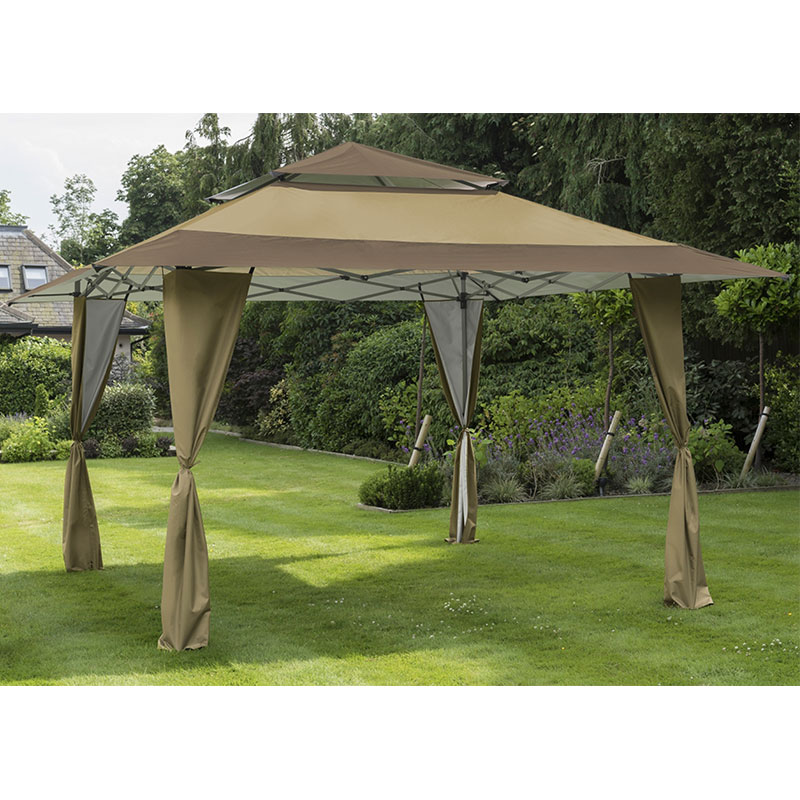
It helps to think in terms of use case rather than just price. If the gazebo is mainly for a summer table, a light canopy style may be enough. If it is expected to cover a seating area for longer periods, the frame shape, anchoring points and side coverage become more important. In other words, two gazebos can both be under £200 but still feel very different in real life.
Shapes and styles that change the whole feel
One of the biggest differences in this category is shape. A square gazebo gives a tidy, compact footprint and often sits neatly on patios or paved spaces. A rectangular gazebo can be better for long tables, buffet setups or narrow gardens where width is limited. Hexagonal or octagonal gazebos tend to feel a little softer in appearance, with a more decorative edge that can suit lawns and feature corners.
There are also practical style differences. A pop-up gazebo usually has a central canopy form and is chosen for speed. A pagoda-style gazebo may have a pointed roof and a more defined silhouette, which can look more settled even in a budget version. A open-sided gazebo feels airy and social, while a gazebo with side panels offers more visual shelter and a bit more definition around the edges. The right shape depends on whether you want a piece that blends in quietly or one that actually acts like a garden room for the day.
Pop-up, foldable and frame-led: the key types
When people search for gazebos under £200, they usually come across a few main types. Pop-up gazebos are the easiest to recognise. They are made for quick assembly, often with an accordian-style frame that opens out fast. These are handy if you need shelter for a single event or want something that doesn’t take over storage space.
Foldable gazebos are similar in spirit but can vary a bit more in frame strength and canopy design. Some feel more event-led, others more garden-friendly. Then there are steel frame gazebos, which can be more reassuring if the gazebo will stay in one place through a season. They are not all heavy, but they usually feel more anchored than a very light pop-up style.
Canopy gazebos often lean towards open, relaxed outdoor use, with the roof doing most of the work and the sides staying minimal. These can be useful if you mainly need shade rather than a fully enclosed nook. By contrast, gazebos with mesh side walls or panel sides offer a clearer boundary and can feel more private, especially on overlooked plots. Each type has its own rhythm, and the best one depends on whether your garden is for dining, lounging, or hosting.
Where the differences really show: roof, sides and frame
Within budget gazebos, the roof shape and canopy material make a bigger difference than many buyers expect. A flat or gently pitched roof can suit modern spaces and is often simple in appearance. A peaked roof helps water run off more easily and usually gives the gazebo a more recognisable profile. A vented roof can also help with airflow, which matters if the gazebo is being used for people sitting inside it rather than just standing under it for a short time.
The sides are another deciding factor. Open sides feel friendlier and are easier for moving in chairs, serving tables or allowing a clear view of the garden. Side panels can create a more enclosed feel and may help soften draughts, though they do also change the atmosphere quite a lot. If you want a gazebo that feels like part of the garden rather than a separate object, partial sides or removable panels are worth looking at. If you want a more defined space, fully enclosed side panels make more sense.
The frame is where budget differences often show up too. Thin framing can keep weight and cost down, but may feel less reassuring when the weather turns breezy. A powder-coated steel frame is common in this price band and usually gives a decent balance of price and appearance. Some gazebos also use simpler connector systems, which can be fine for occasional use but may not feel as solid as something with more reinforced joints. That doesn’t make them bad; it just means the job is different.
Why buyers choose this price band
The biggest advantage of gazebos under £200 is value with purpose. You can create a covered area for a summer meal, birthday gathering, market stall style setup or quiet shaded seat without committing to a larger spend. For many gardens, that is enough. It gives structure to outdoor living, especially where the lawn or patio otherwise feels a little undefined.
Another advantage is flexibility. Many budget gazebos are easy to shift around, take down or store when not needed. That suits smaller homes, rented spaces and gardens where a permanent structure would be too much. A gazebo in this range can also act as a test run before buying something more substantial later on. If you’re not sure how often you’ll use one, starting here makes sense.
There is also the matter of seasonal use. A gazebo can make a standard garden feel more usable on bright afternoons, and it can keep a gathering going when the weather is a bit unpredictable. Even without turning the space into a full outdoor room, a simple roofed shelter can change how the garden gets used over spring and summer.
Choosing between open, enclosed and semi-enclosed layouts
An open gazebo works well when the garden itself is the main feature and you just want a roof overhead. It keeps the space light and airy, which is useful for dining or casual sitting. A semi-enclosed gazebo with one or two panels can offer a bit more definition without making the area feel boxed in. This can be a good middle ground if you’re not keen on a fully enclosed look.
A fully panelled gazebo changes the experience more noticeably. It can feel more like a shelter than a simple cover, and that can be useful for smaller patios or spots that are more exposed. Buyers often choose this style when they want some privacy from nearby windows or fences. The trade-off is that the gazebo can feel heavier visually, so it suits some gardens better than others.
If you have a compact outdoor area, the open or semi-enclosed styles usually sit better. If your garden is larger and you want a more distinct destination space, panelled versions can help with that. It is less about what is “best” and more about what feels right where it will stand.
Little buying details that make a bigger difference than expected
When comparing gazebos under £200, useful details often come down to frame width, roof pitch, side panel layout and the kind of fixings included. A gazebo that comes with guy ropes and ground pegs is generally easier to secure in softer ground, while one made for hardstanding may need a different approach. If the gazebo is going on patio slabs, consider how the feet sit and whether the base design looks steady enough for the surface.
Another thing to note is internal space. A gazebo can look roomy in pictures but feel tighter once chairs, tables and people are inside it. Check the footprint against what you actually want to place underneath it. A small square gazebo might work for two chairs and a side table, while a rectangular one could fit a long bench or dining setup better. That practical side often matters more than the shape alone.
If you want a gazebo that can be used for more than one purpose, look for a design that leaves the layout open. That way it can shift from drinks area to cover for a hot tub, garden table or buffet stand without needing much rearranging. Versatile shapes tend to earn their keep more often.
Materials you’ll see in this bracket
In this category, the most common material pairing is a steel frame with a polyester canopy. That combination keeps the gazebo affordable while still giving it a proper outdoor structure. The canopy fabric may vary in thickness and finish, and that can affect how the gazebo looks as well as how much light it lets through. Some roofs feel more opaque, others lighter and softer.
You may also find mesh panels or textile side curtains in some designs. Mesh can help soften the space without fully closing it off, which is useful if you want a bit of shelter but not a sealed-in feel. Fabric side panels can make the gazebo look more complete, especially in a garden with a more informal setting. As ever, it depends on whether you want a casual canopy or something with more presence.
Useful tips before you press add to basket
Think about where the gazebo will sit first. A sheltered corner, level patio or even a flat lawn can change which type makes sense. A garden with a strong breeze may suit a lower, more compact frame rather than a tall, open design. If the area is narrow, a rectangular footprint is often easier to use than a square one.
Also consider how the gazebo will be used most often. If it is mainly for garden parties, a quick-assembly style can save hassle. If it is more about creating a shaded spot for everyday sitting, a gazebo with a slightly more substantial frame and side options may feel better. There isn’t much point buying a design that looks nice but doesn’t match how you actually spend time outside.
And don’t forget visibility. Some gazebos have a more neutral, tidy appearance that sits in the background. Others become a stronger feature in the garden straight away. Both can work, but the choice affects the whole look of the space. A simple frame with neat lines can feel modern, while a pointed roof or panelled layout may bring a more classic outdoor feel.
What makes these gazebos worth a second look
For buyers comparing options under a tighter budget, the real attraction is the mix of practical shelter, shape choice and seasonal flexibility. You are not just buying a roof; you are shaping how the garden gets used. A gazebo can create a dining spot, a shaded resting place, a social corner or a temporary event area, all without making the garden feel overbuilt.
That’s why this category is worth browsing with a clear idea of your space and how you use it. The right gazebo under £200 does not need to do everything. It just needs to fit the area, suit the way you spend time outdoors and make the garden feel a bit more considered. When those details line up, even a budget gazebo can feel like a good decision rather than a compromise.
- Pop-up gazebos for quick setup and short-term shelter
- Steel frame gazebos for a more structured feel
- Open-sided designs for airy, social spaces
- Panelled gazebos for more privacy and definition
- Square and rectangular shapes for compact patios or longer seating layouts
- Peaked roofs for a more familiar gazebo look and better runoff
- Mesh side walls for lighter enclosure without a heavy look
If you are after gazebos under £200, the best choice is usually the one that fits your space first, then your plans. That sounds simple, but it saves a lot of second guessing later on.
[Sassy_Social_Share]