
Gazebos under £12500 - Best Deals in UK!
Showing all 5 results
-
22% OFF: 15’x13′ (4.7x4m) Luxury Wooden Garden Gazebo with New England Cedar Roof – Seats up to 19 people £10,849.9922%

-
19% OFF: 17’x12′ (5.1×3.6m) Premium Oval Wooden Garden Gazebo with New England Cedar Roof – Seats up to 22 people £11,359.9919%

-
19% OFF: 17’x12′ (5.1×3.6m) Premium Oval Furnished Wooden Garden Gazebo with New England Cedar Roof – Seats up to 22 people £12,219.9919%

-
19% OFF: 17’x12′ (5.1×3.6m) Premium Oval Furnished Wooden Garden Gazebo with Timber Roof – Seats up to 22 people £10,529.9919%

-
18% OFF: 20’x15′ (6×4.7m) Premium Wooden Garden Gazebo with Timber Roof – Seats up to 27 people £12,239.9918%

Gazebos under £12,500 offer a practical route to a well-built garden shelter, with choices in timber, metal and composite styles, different roof shapes, and layouts for dining, shade or quiet seating.
Why this budget opens up more than a simple shelter
A gazebo under £12,500 gives you room to look beyond the basic frame-and-roof idea and think about how the structure will actually work in your garden. In this price range, buyers often compare open-sided gazebos, partially enclosed designs, and more defined garden rooms that still keep that airy outdoor feel. The useful part is the range: you can lean towards a compact shape for a smaller patio, or choose a larger footprint if the gazebo is meant to anchor a seating area, outdoor dining setup, or a sheltered spot beside a lawn.
This budget also tends to shift the conversation from “what fits” to “what suits”. Some gazebos sit lightly in the garden with slim posts and open sides. Others feel more structured, with stronger visual presence and clearer edges. That difference matters if you want a feature that blends into planting, or something that acts as a focal point. Shape, roof style, side openness and material all change how the gazebo feels to use, not just how it looks from the path.
Shapes that change the whole feel
The shape of a gazebo is not just a design detail. It changes how people move around it, how furniture sits inside, and how the structure reads from the rest of the garden. A round or octagonal gazebo feels softer and more traditional, with a central point that draws the eye. This works well when you want the gazebo to feel like a garden destination rather than a box on a terrace.
Bestseller der Kategorie Gazebos under £12500

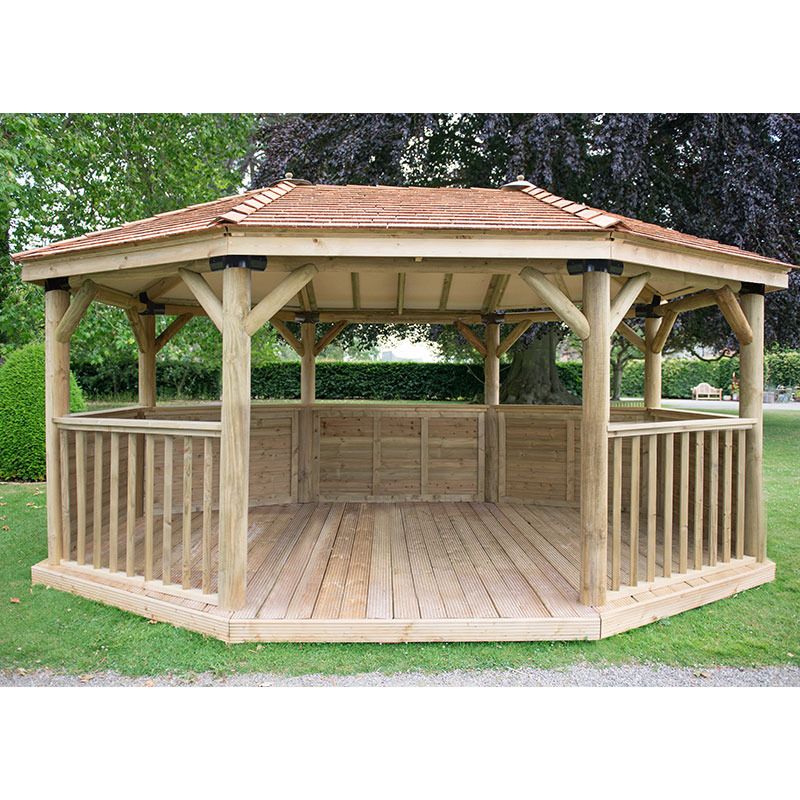
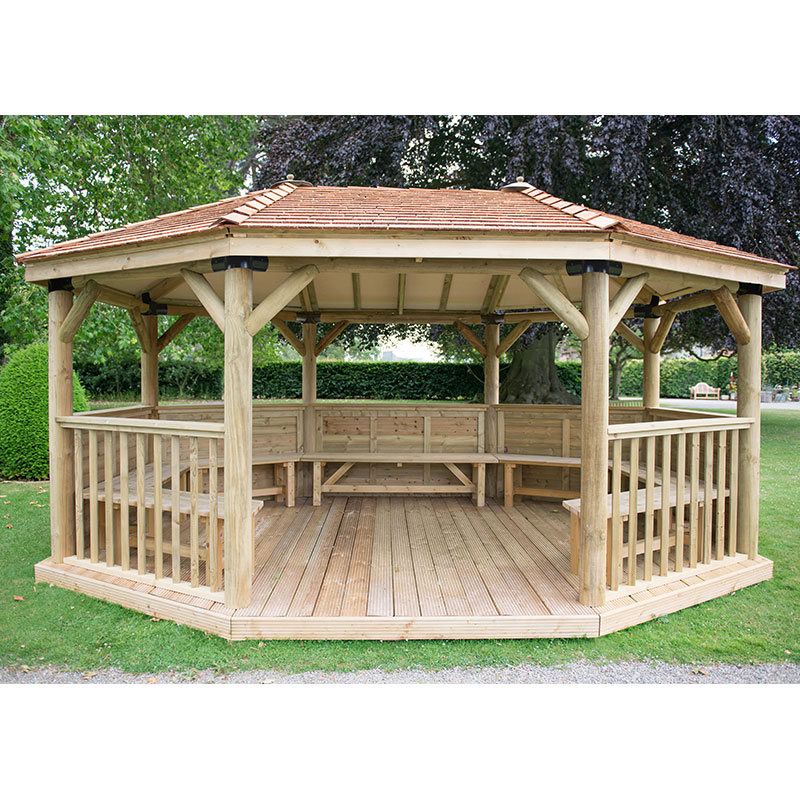
A hexagonal gazebo gives a similar character but often feels a little more compact and easier to place in medium-sized gardens. The angled sides can create a balanced look without taking on the bulk of a square building. By contrast, a square or rectangular gazebo is usually the easiest for furniture planning. Tables, benches and loungers line up neatly, and the edges feel more practical when the gazebo is going to be used for dining or everyday seating.
There are also corner gazebos, which make smart use of awkward space. These are useful when the best spot is against a boundary or in a garden corner where a full centrepiece would feel intrusive. The difference is simple: a round or octagonal structure is often chosen for atmosphere, while a rectangular design is often chosen for function. Many buyers end up choosing between the two based on whether they want a feature, or a room-like outdoor space.
Open sides, screened sides and the middle ground
One of the main differences between gazebos in this bracket is how enclosed they feel. An open-sided gazebo is the easiest to access and gives the widest view into the garden. It works well if the aim is shade, an entertaining area, or a place to sit without closing yourself off too much. These designs often feel lighter and less formal, which suits relaxed gardens and informal seating.
A partially screened gazebo sits in the middle. It may have fixed panels on some sides, decorative rails, or built-in sections that create a bit of shelter without making the space feel shut in. This can be useful if you want a wind break on one side or a more private corner for conversation. It also gives the gazebo more visual depth, which many buyers like because the structure feels more considered.
At the more enclosed end, some gazebos are shaped to create a stronger sense of room. These are helpful if the gazebo needs to support a dining table, outdoor sofa set or occasional use in less predictable weather. The difference here is not only about protection; it is also about atmosphere. Open gazebos feel sociable and airy, while enclosed and screened versions feel more defined and a touch more sheltered.
Timber, metal and mixed materials: what each one brings
Timber gazebos remain a common choice because they sit naturally in garden settings and work with planting, stone, and lawns. They often feel warmer in appearance and can suit both traditional and modern gardens depending on the detailing. In this budget, timber options are often part of the appeal because they can offer a more substantial look without feeling too formal.
Metal gazebos usually bring a cleaner outline. Their advantage is the sharper frame and thinner profile, which can suit contemporary gardens or spaces where you want the structure to feel less bulky. Metal can also make intricate shapes look crisp, especially in hexagonal or octagonal layouts. The main visual difference is between the softer, natural character of timber and the more defined lines of metal.
There are also mixed-material designs, where the roof, frame and side elements may not all share the same visual weight. These can be helpful when you want a gazebo that feels lighter at the top but still grounded below. For buyers comparing options, the key point is that the material affects how the gazebo sits in the garden as much as how it performs as a shelter. A chunky timber frame reads differently from a slim metal one, even when the footprint is similar.
Roof styles that do more than cover the top
The roof is one of the most important differences across gazebo categories under £12,500. A pitched roof gives a classic gazebo shape and can make the structure feel more pronounced from a distance. It often suits traditional garden schemes and helps the gazebo look like a permanent feature rather than a temporary shelter.
A flat or low-profile roof tends to feel more contemporary. It suits buyers who want cleaner lines and a less dominant silhouette. This can be a good match for modern patios, decked areas, or gardens where the gazebo should not interrupt long sightlines. The feel is more understated, which many people prefer when they want the seating area to blend in.
There are also roofs with a more decorative profile, which can make the gazebo feel more architectural. The practical difference is not only style; roof shape affects how the structure is perceived from the house and from neighbouring areas. Some buyers choose a pitched roof because it reads as a focal point, while others choose a flatter form because it keeps the garden looking open. Both can work well, but they create very different moods.
Dining, lounging or standing room: choosing by use
The best gazebo is often the one that matches the way it will be used. If the plan is garden dining, a rectangular or square gazebo usually makes life easier because chairs can be pulled back and the table sits more naturally within the frame. A slightly more enclosed model can help the area feel like a proper outdoor room, which makes meals feel more settled.
If the gazebo is mainly for lounging, open sides and softer shapes can be more comfortable. They keep the space relaxed and avoid that boxed-in feeling. A sofa set or pair of chairs can sit in a gazebo without much fuss, and the structure becomes a place to pause rather than a formal layout to arrange.
For those who want a structure that feels like a general-purpose gathering spot, the middle ground is often best. A gazebo with a broad roof, enough head height, and a shape that does not pinch the usable floor area will feel more flexible. The useful tip here is to think in terms of movement. People need space to step in, turn, and sit without awkward shuffling. That sounds obvious, but it is the difference between a gazebo that gets used often and one that looks nice from the window.
Traditional detail or cleaner lines
Within this budget, gazebos can lean either traditional or contemporary, and that choice changes the whole tone of the garden. A traditional gazebo often has a more decorative frame, an angled roof, and a shape that feels familiar in classic gardens. It pairs well with gravel paths, mixed borders and mature planting, because it looks settled rather than new-for-the-sake-of-new.
A contemporary gazebo usually keeps the lines simpler. The posts may be straighter, the roof less ornate, and the structure may rely on proportion rather than decoration. This suits neat lawns, paved terraces and modern boundary treatments. The benefit is that it can feel less visually heavy, especially when the gazebo is part of a larger outdoor entertaining area.
The difference is worth noting if your garden already has a strong style. A detailed timber gazebo can feel right in a more romantic setting, but the same design can look busy beside very minimal landscaping. Likewise, a starkly simple frame can look just right against modern paving, but may feel a little bare in a cottage-style garden. Matching the gazebo to the setting is often what makes it feel like it belongs.
What makes one gazebo feel more usable than another
Useful gazebos tend to share a few practical features that matter more than the brochure language. Headroom is one of them. If the roof feels too low, the space can seem cramped even when the footprint is generous. Clear side access matters too, especially if you want the gazebo to be used for socialising rather than just looking at.
Footprint proportions are another key difference. A large gazebo that is too narrow can feel awkward with furniture inside. A smaller but better-proportioned gazebo can be more comfortable and easier to place on a patio or deck. It is also worth thinking about the view through and around the structure. A gazebo should frame the garden, not block it off unless that enclosed feel is exactly what you want.
Some buyers focus only on the roof style or the material, but the actual usable space is what determines whether the gazebo feels worth the money. A well-proportioned gazebo under £12,500 can feel far more satisfying than a larger one that does not suit the layout.
Small tips that help the budget work harder
If you are comparing gazebos in this price range, a few choices can make a real difference:
- Measure the intended spot carefully, including space for chairs to move out and people to walk around.
- Match the shape to the furniture; square and rectangular layouts usually suit tables, while rounder forms feel looser and more social.
- Think about openness; open-sided designs feel lighter, while screened versions add privacy and a more settled feel.
- Look at the roof profile; a pitched roof gives presence, while a flatter one keeps the look calmer.
- Check how the structure will sit in the garden view; the gazebo should work from the house as well as from inside it.
These points sound simple, but they often separate a good choice from one that merely looks good on a product page. A gazebo is a visual feature, yes, but it is also a bit of outdoor architecture. The better the fit between shape, use and style, the more likely it is to become part of daily life rather than just a seasonal extra.
Finding the right balance between statement and restraint
Gazebos under £12,500 sit in an interesting place. They are not just budget shelters, and they are not full garden buildings either. That middle ground gives buyers room to choose a design that feels thoughtful without pushing into unnecessary complexity. The strongest options usually do a few things well: they suit the size of the garden, match the way you want to use the space, and bring a shape that fits the rest of the landscape.
Some gardens need the gazebo to stand out. Others need it to settle in quietly. That is where the differences in shape, openness, roof form and material become useful rather than decorative. A timber octagonal gazebo can bring a softer, established mood. A rectangular metal frame can make a patio feel sharper and more organised. A screened design can create a more private outdoor nook. None of these are the same, and that variety is exactly what makes this category worth exploring.
For buyers, the appeal is in having options that are still within a defined spend. A gazebo in this range can offer the kind of presence that changes how the garden is used, while still leaving room to choose a style that feels personal. If you are comparing designs, focus less on labels and more on the structure itself: how it frames the space, how it handles furniture, and how it changes the feel of the garden. That is usually where the right choice shows itself.
[Sassy_Social_Share]