
Gates under £1500 - Best Deals in UK!
Showing all 8 results
-
24% OFF: Devon Premium Metal Driveway Double Gates – Black £1,009.0024%

-
24% OFF: Devon Premium Metal Driveway Double Gates – Grey £1,009.0024%

-
24% OFF: Exeter Premium Metal Driveway Double Gates – Black £1,029.0024%

-
24% OFF: Exeter Premium Metal Driveway Double Gates – Grey £1,029.0024%

-
24% OFF: Barnstaple Premium Metal Driveway Double Gates – Black £1,019.0024%

-
24% OFF: Barnstaple Premium Metal Driveway Double Gates – Grey £1,019.0024%

-
17% OFF: Partial Privacy Premium Metal Driveway Double Gates – Black £1,229.0017%

-
17% OFF: Partial Privacy Premium Metal Driveway Double Gates – Grey £1,229.0017%

Gates under £1500 bring together practical security, tidy kerb appeal and a choice of styles, sizes and finishes for front gardens, driveways and side entrances. Compare timber, steel, aluminium and composite designs.
Where budget meets proper gate design
When you are looking at gates under £1500, the useful part is the range you can still get without drifting into overdone, custom-only pricing. This bracket often covers a solid spread of single pedestrian gates, driveway gates, side gates, and matched gate-and-fence combinations that suit both modern homes and more traditional properties. You are not just choosing a barrier; you are choosing the first thing people notice from the pavement, and the bit that makes a garden feel finished.
The price band also tends to open up more choice in frame depth, panel style, material thickness and decorative detailing. That matters because a gate can look similar from a distance but behave very differently once fitted. A slimline design may suit a narrow pathway, while a more substantial gate can feel better on a wider entrance where the proportions need a bit of visual weight. For buyers comparing options, this is often where the decision stops being about “just a gate” and becomes about how the whole front of the property works together.
The main types you will keep seeing
In this category, a few gate types come up again and again, each with its own strengths. The most common are:
Bestseller der Kategorie Gates under £1500
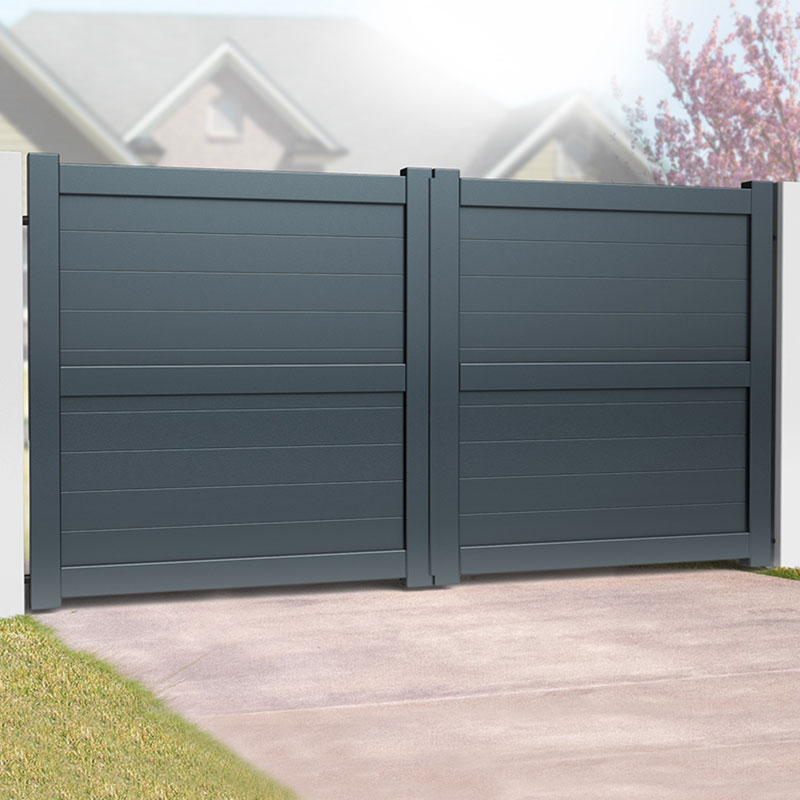
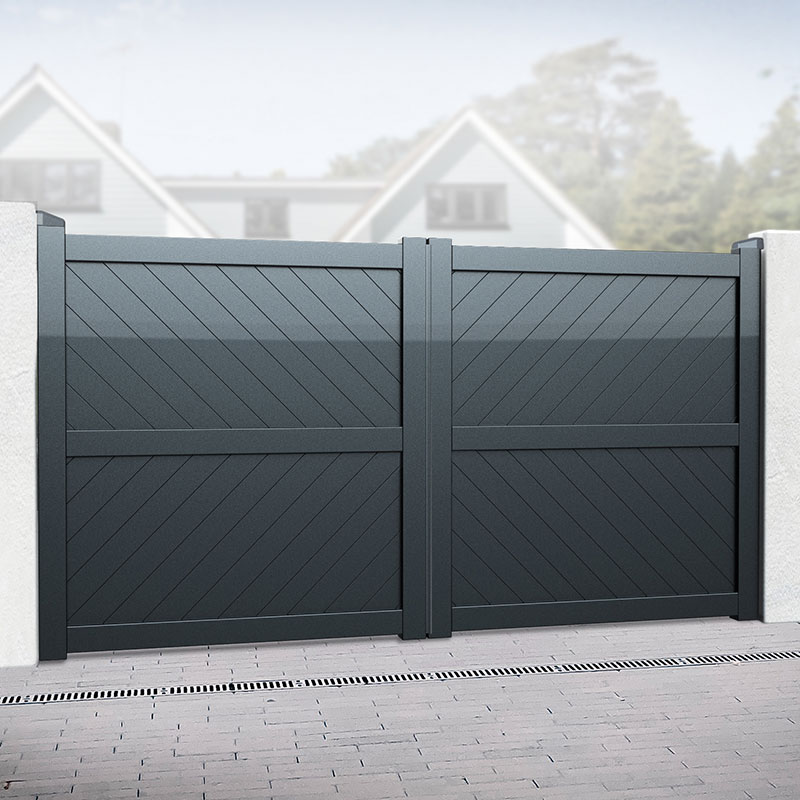
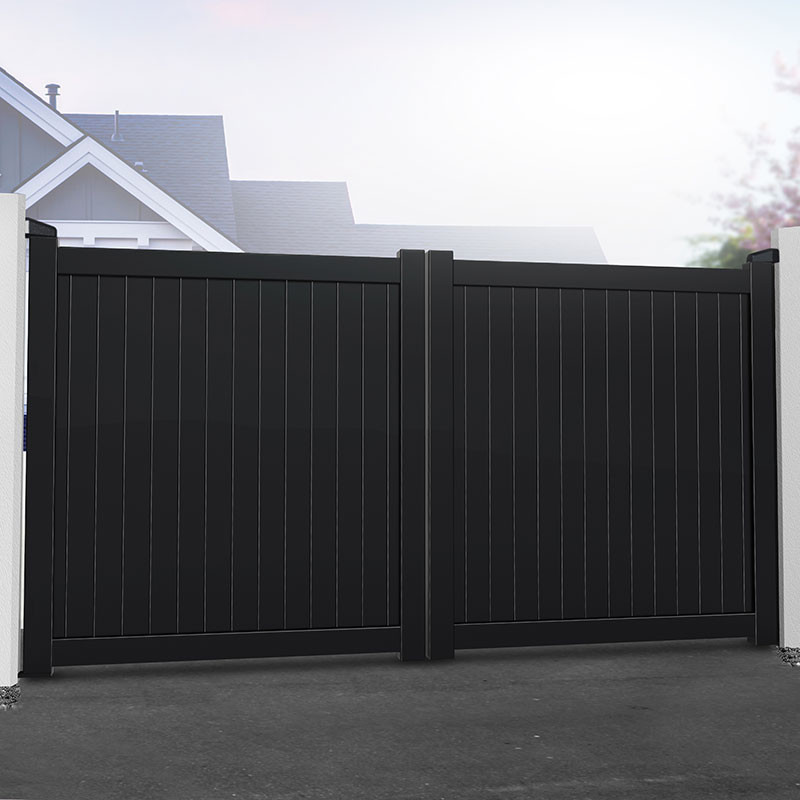
- Pedestrian gates for garden paths, side access and neat front boundaries.
- Driveway gates for vehicle entrances, often supplied as pairs or a wider opening.
- Side gates for narrower routes where security and privacy matter more than show.
- Single-leaf gates where space is limited and a simple swing is easier to live with.
- Double-leaf gates for wider openings and a more balanced, framed look.
The choice between these types is mostly about opening width, available swing space and how often the gate will be used. A pedestrian gate can be lighter, quicker to open and less visually dominant. A driveway gate needs more structure, more careful alignment and usually a stronger frame because it has to cope with a much larger span. Double-leaf designs feel more formal in many settings, while a single gate can keep things compact and easier to handle day to day.
Timber, metal or composite? The feel changes fast
Material choice changes the character of the gate more than many people expect. Timber gates often bring a warmer, softer look, which suits cottages, period homes and garden boundaries that need a more natural feel. Depending on the board style and frame, timber can appear solid and private or more open and decorative. Within this category, you may see vertical board gates, horizontal slatted styles and framed tongue-and-groove options, all of which create a different visual rhythm.
Steel gates tend to feel more structured and angular, with a clearer sense of security. They often suit properties where a sharper outline is wanted, or where the gate needs to sit comfortably with railings, brick piers or a more urban frontage. Aluminium gates are popular where a lighter weight is useful, especially for larger openings. Their clean lines work well in modern settings and can give a neat, tidy finish without the bulk of heavier materials. Composite gates sit somewhere between traditional and low-fuss in appearance, often chosen for a tidy, consistent look that avoids the knots, grain movement and colour variation of natural timber.
The practical difference is not only appearance. Material affects weight, frame stability, privacy level and how well the gate complements the rest of the frontage. A heavy metal gate can feel reassuring at an entrance, but a lighter aluminium design may be better where the posts are not built for excess strain. Timber can look more characterful, though the exact style of board and frame changes how enclosed or open it feels. That is why it helps to think about the whole entrance rather than picking from a photo alone.
Shapes and frames that change the whole look
Gate shape sounds like a small detail, yet it makes a clear difference to the overall impression. A straight-top gate creates a crisp, level line and suits contemporary properties, side access points and front entrances where neatness matters. A arched-top gate softens the outline and can suit more traditional gardens or homes with curved brickwork, wrought detailing or a softer landscape design. There are also rising-top and curved-slat variations that can add a bit of movement without becoming fussy.
The frame matters just as much. A boxed frame gives a stronger, more enclosed presence and often helps the gate feel planted and secure. A thinner frame can look lighter and less intrusive, which is handy when the gate sits beside planting, narrow paving or decorative fencing. Some gates have visible bracing that adds structure, while others use hidden reinforcement to keep the front face cleaner. This creates a real difference in style: one gate may look engineered and firm, another more understated and airy.
It is worth noticing how the shape changes the gate’s mood. Straight lines can make a small frontage feel sharper and more ordered, while a curved top can soften hard materials like brick and stone. For buyers comparing gates under £1500, these details help narrow the field quickly, because the right shape often solves the visual problem before you even think about colour.
Privacy, visibility and how much you want to show
One of the biggest differences between gates in this price band is how open or closed they feel. A solid gate gives more privacy, blocks sightlines and can make the boundary feel settled. This is useful on side access routes, garden entrances near busy paths or driveways where you want less interruption from the street. Solid designs also tend to feel more substantial, especially in timber or composite.
By contrast, slatted gates and open bar designs allow light and air through while still marking the boundary clearly. These are useful when you want the gate to define the entrance without making it feel shut off. Open metal gates can suit front gardens where a sense of space is wanted, while partially boarded timber gates give a middle ground: enough screening for comfort, but not the heavy look of a fully closed panel.
The practical advantage here is flexibility. A more open gate can make a narrow path feel less boxed in, while a solid design can hide bins, side passages or less tidy service areas. If the gate fronts onto a street, the level of visibility also affects how the property reads from the outside. Some buyers prefer to show the planting and path beyond; others want a calm, private edge. Neither is wrong, but the gate style should match the use of the entrance, not just the look in the catalogue.
Why hardware and fixing style matter more than people think
Even in the under-£1500 range, the gate’s value is tied closely to its hinges, latches, fixing points and overall construction. A well-made gate with a strong frame and sensible hardware usually feels better in use than a prettier gate that flexes or sits awkwardly on its posts. This is especially true for wider driveway gates, where weight distribution and swing action become more noticeable very quickly.
Some gates are designed to work with existing brick piers or timber posts, while others suit new posts better because the fitting points are easier to position. The opening direction can also change the experience. A gate that swings neatly away from a path feels smooth and natural; one that clashes with paving, fencing or sloping ground becomes irritating fast. That is why buyers often compare not just style, but also clear opening width, post spacing and ground clearance.
For the budget-conscious, this part of the category is useful because it helps avoid hidden compromises. A gate that looks within budget but needs a lot of adjustment can end up being the more awkward choice. By contrast, a gate with properly thought-out structure can be easier to fit into a real garden layout, which is exactly what many people want from a practical purchase.
Design details that make a gate feel more finished
At this level, small design decisions really shape the final impression. Vertical boards tend to feel classic and tidy, and they often help a gate look taller or more formal. Horizontal boards give a broader, more contemporary feel and can suit low, linear garden layouts. Feather-edge styles suggest a more informal garden boundary, while close-board or tongue-and-groove faces look denser and more private.
Metal gates may use scrolls, rings, spindles or simple bars, and each detail changes the mood. Simple bar patterns feel clean and restrained. More decorative pieces lean into a traditional look, especially on front entrances or when paired with railings. The difference is not only visual; it also affects how much light passes through and how heavy the gate appears from the street.
Colour matters too, even if it is not the first thing people think about. Dark tones can make a gate recede into the background and feel more grounded. Natural wood tones bring texture and warmth. Grey finishes often sit well in contemporary settings, while black metal can make a gate feel defined against planting or pale walls. The right finish is one of those things that seems subtle until it is wrong, then it is all you can see.
Useful buying tips without drifting into guesswork
Before choosing from gates under £1500, it helps to focus on the things that will affect daily use:
- Measure the opening carefully, including any slope or uneven paving.
- Check the swing space so the gate can open without hitting walls, bins or planting.
- Match the material to the span; bigger openings usually need more structural thought.
- Think about privacy first if the gate fronts a busy road or shared access.
- Keep the style in line with fences, railings, brickwork and the front of the house.
- Choose a finish that suits the setting, not just what looks nice in isolation.
These checks make the buying process feel less like a gamble. They also help separate gate styles that may look similar online but behave differently on site. A good match is usually the one that fits the entrance properly, feels balanced in proportion and supports the way you actually use the space.
What this price range gives you, in real terms
Gates under £1500 often sit in a very useful middle ground. They can offer enough choice to match a house style, while still being grounded enough for everyday use. That means you can look for privacy, security, decorative character or a cleaner modern line without jumping straight into specialist pricing. It is a range that supports both simple side access gates and more visible entrance pieces that need to look right from the pavement.
For many buyers, the main advantage is balance. You are able to pick from different materials, shapes and levels of detail without having to settle for something flimsy or visually bland. A gate in this bracket can help a front garden feel more orderly, make a side return feel less exposed, and give a driveway a clearer edge. It can also tie the property together in a way that feels deliberate rather than patched together.
If you are comparing options now, the best approach is to read the gate as part of the whole entrance: the width, the height, the frame, the material and the way it opens. Once those pieces line up, the right choice usually stands out quite quickly. And if it does not, that is often a sign to look at a different sub-type rather than compromise on the basics.
A final look at the styles that earn their place
The most useful gates in this category are the ones that do a few things at once: they define the boundary, suit the property, and feel comfortable to use. A solid timber side gate may be the right answer for privacy. A slatted aluminium driveway gate may work better for a modern frontage. A decorative steel gate may fit a period entrance with railings or brick piers. The differences are not only in appearance, but in how each style deals with scale, visibility and daily movement.
That is why this range is worth exploring carefully. It gives room for taste, but also for practical detail. A gate under £1500 does not need to be plain or compromise-heavy. It just needs to fit the opening, suit the setting and do its job without drawing attention for the wrong reasons. When those pieces come together, the gate stops being an afterthought and becomes part of the character of the whole garden.
[Sassy_Social_Share]