
Gates 4x3 - Best Deals in UK!
Showing the single result

4×3 gates offer a practical fit for smaller entrances, side paths and boundary openings, with a balance of privacy, access and visual appeal for timber, metal and mixed-material gardens.
Compact on paper, useful in the garden
A 4×3 gate is often chosen where space is limited but the entrance still needs to feel finished. In UK listings, the size usually points to a gate around 4ft wide by 3ft high, which makes it a common option for side access, narrow paths, front edging, utility areas and smaller garden boundaries. The appeal is simple: it gives you a clear entry point without overpowering the surrounding fence line.
Because this category sits in the smaller gate range, it tends to suit places where a full-height entrance would look too heavy or block light. That makes it a neat choice for gardens that need definition rather than enclosure. It can mark a route, separate a section, or create a tidy pause in a run of fencing without making the whole area feel shut in.
Shapes that change the feel
Within 4×3 gates, the shape of the top edge makes a real difference to the look. A square-top gate gives a clean, straightforward line that works well with modern fencing and simple layouts. A arched-top gate softens the profile and can suit more traditional gardens, especially when paired with timber panels or curved fence details. A feather-edge style or boarded gate often gives a denser, more private appearance, while a picket-style design feels lighter and more open.
Bestseller der Kategorie Gates 4x3
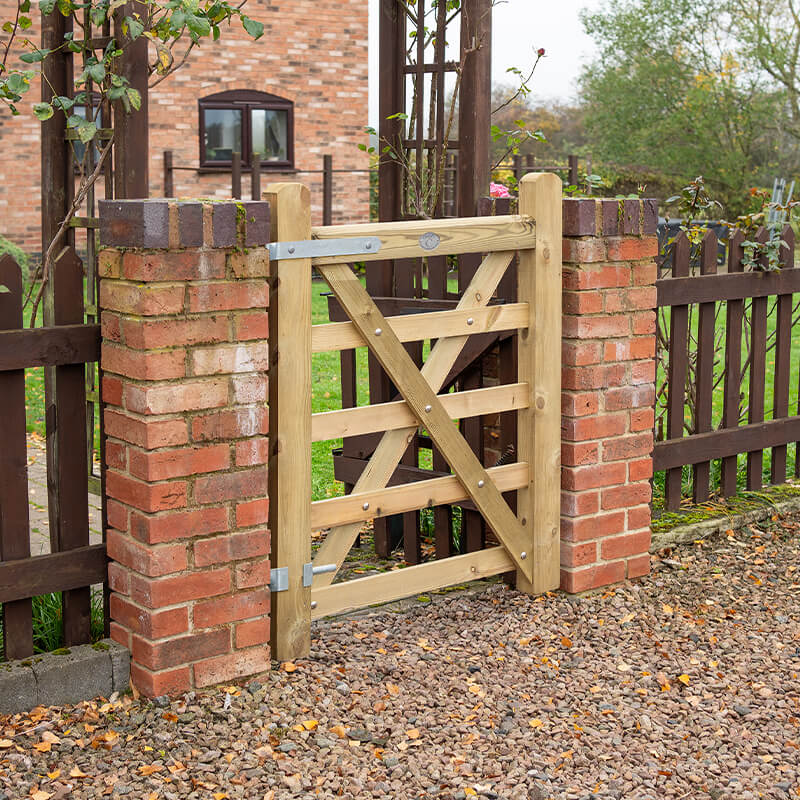
The difference is not only visual. A square-top gate can be easier to align with flat fence tops. An arched top may echo nearby planting or curved paths. A picket form allows more sight through the entrance, which matters when you want the gate to guide movement rather than hide the area beyond. If you are comparing options, think about whether the gate should blend in, frame the view, or act as a focal point.
Timber, steel, and mixed-material choices
The material changes both the style and the way the gate sits within a garden. A timber 4×3 gate is usually picked for warmth and a natural look. It suits rural spaces, traditional terraces and gardens where the fence already uses wood. Timber also gives a softer edge alongside planting and stone paths. A metal 4×3 gate, by contrast, tends to bring a more defined outline and a slimmer visual profile. It works well in front gardens, side access routes and areas where a sharper boundary is wanted.
There are also timber-framed gates with infill or other mixed constructions, where the frame adds structure and the infill influences privacy and appearance. These can be useful when you want the look of wood with a firmer, more balanced build. The main difference between materials is not just style. It is also about how the gate sits against the rest of the garden: timber feels grounded and informal, while metal leans towards neat lines and a more exact finish.
Privacy, airflow, and visibility in one small opening
At this size, the design of the boards or bars has a big effect on how the gate functions. A solid boarded gate gives more screening, which is handy where the opening leads to bins, storage, or a narrow side run. It also makes the boundary feel more contained. A slatted gate or one with spaced uprights allows a bit of light and air through, so the entrance remains visible and less enclosed. This can be a better fit for smaller gardens, where every bit of openness helps the space feel usable.
The choice is often about balance. Too much screening and the gate may feel heavy for a compact opening. Too much openness and it may not do enough to define the route. A 4×3 gate sits in that middle ground where buyers often want a useful barrier, but not a wall. That is why the spacing, board direction and frame style matter so much in this category.
Which under-type suits which job?
Different 4×3 gates can be matched to different needs, and the category covers more than one obvious use. A garden access gate is often there to guide daily movement between front and back areas. A side gate may need a narrower, neater design that fits close to a wall or boundary. A decorative gate is chosen more for the way it frames the entrance, often with shaped tops or shaped pales. A practical security gate focuses on keeping the opening controlled while still looking tidy from the street or path.
- Full-boarded styles suit screening and a more enclosed feel.
- Slatted styles suit lighter boundaries and better visibility.
- Picket styles suit classic gardens and softer front boundaries.
- Framed styles suit buyers who want a firmer structure and a defined outline.
Choosing between these is less about fashion and more about how the gate needs to behave in the space. If the opening feels tight, a simpler, less bulky style may work better. If the gate needs to sit between mixed materials, a framed design can make the whole run look more deliberate.
Why the 4×3 size gets chosen again and again
One reason this category stays popular is that 4×3 gates are easy to place in smaller garden plans. They can fit routes that would feel awkward with a larger gate, and they often suit domestic entrances where a smaller footprint is useful. For many buyers, the size brings a sense of proportion. It is big enough to feel like a proper gate, yet modest enough not to dominate fencing or planting.
There is also a practical side to that proportion. In compact gardens, a gate that is too tall or too wide can make the boundary look cramped. A 4×3 size keeps the entrance readable. It gives guests, family and delivery access a clear point of entry without requiring the rest of the layout to change around it. That kind of fit can make a garden feel more organised straight away.
Design details that are worth paying attention to
When comparing 4×3 gates, small design details can change the buying decision quite a lot. The frame thickness affects how substantial the gate feels. The pale spacing changes the level of openness. The top finish alters the gate’s outline against the sky or fence line. Even the direction of the boards can matter: vertical boarding gives a familiar, tidy look, while horizontal lines can make the gate feel a bit wider and more contemporary.
Another point is whether the gate looks better as part of a set or as a standalone piece. Some buyers want the gate to match fence panels closely. Others prefer a slight contrast so the opening stands out. If the rest of the garden uses chunky timber, a slim gate can look a bit out of place. If the boundary is already visually busy, a simpler gate can bring order.
Small things such as post alignment, opening direction and clearance at the sides also matter in this size range. A gate that suits the opening on paper can still feel awkward if the hinges, latch side or swing space are not thought through. That is why 4×3 gates tend to be bought by people who want a neat, measured fit rather than a one-size approach.
Matching the gate to the setting
A 4×3 gate in a front garden has a different job from one at the side of a house. In a front setting, buyers often lean towards something that looks welcoming but still marks the boundary. A pale gate, arched timber gate or simple framed design can sit nicely with low fencing and planting. It can give the entrance a sense of order without making the frontage look hard or closed.
For side access, the priorities shift. Here, a gate may need to sit between walls, close to bins, or alongside utility routes. In that case, a narrow-profile design or a more solid construction is often useful. The entrance should feel easy to pass through and should not clutter the path. If the area is used often, buyers usually prefer a gate with a straightforward shape and a robust outline rather than anything too ornate.
In rear garden zones, the same size may be used to separate a patio from a service area or to close off a passage between sections. That can make the gate feel more like a working part of the layout than a decorative feature, so the look should match the everyday use.
What buyers compare before they choose
People shopping for 4×3 gates usually compare more than just the size. They look at privacy level, style match, frame strength, material feel and how the gate will sit against the surrounding fence or wall. A design that looks attractive in isolation may not be the right one if it clashes with the existing boundary. Likewise, a gate that is very practical but visually plain may not feel right in a front-facing position.
Another difference is between a gate that feels open and airy and one that feels solid and enclosed. Some buyers want to keep sight lines through the garden. Others want more screening from the street or neighbouring path. There is no single answer that suits every plot, which is part of why this category is useful. It covers several looks without moving away from a manageable size.
Price often follows material and construction detail, but the cheapest-looking choice is not always the best fit. A gate that looks slightly more considered can make a small entrance feel planned rather than added later. That can be a persuasive point for buyers who want the garden to look sorted without doing a full boundary overhaul.
Helpful buying checks without overcomplicating it
Before picking a 4×3 gate, it helps to measure the opening carefully and think about how the gate will sit when fitted. Even a small difference in width can alter the final look. Check whether the opening needs a gate that feels exact or one that allows a bit of room for frames and posts. Consider whether the gate should open inward or outward, and whether anything nearby could block the swing.
- Measure the clear opening, not just the visible gap.
- Match the gate style to the fence, wall or path beside it.
- Choose privacy level according to the space behind the gate.
- Think about everyday access, not just the first impression.
- Check the visual weight so the gate does not look too heavy for a small boundary.
It also helps to imagine the gate in use. A compact side passage may need a design that feels quick and unfussy. A front boundary may need something with a bit more character. A garden entrance used by children, pets or frequent visitors may benefit from a style that looks clean and does not feel cramped. These details are small, but they shape the feel of the whole space.
Small gate, clear impact
The strength of the 4×3 gate category is that it gives structure without taking over. It can make a boundary look complete, turn a narrow opening into a proper entrance, and bring a clear style cue to a garden that needs one. Whether the choice is timber, metal, slatted, boarded, picket or framed, the size remains approachable and easy to place.
For buyers, that means fewer compromises and more precise decisions. The right gate can make a side access route feel neater, a front garden feel more finished, or a small boundary feel intentional rather than patched together. If you want an entrance that sits comfortably in a modest space and still looks thought through, 4×3 gates are a strong place to start. They do not need to shout to do their job, which is part of the appeal.
[Sassy_Social_Share]