
Gates 15 sq ft / 1 m² - Best Deals in UK!
Showing the single result

Gates for 15 sq ft / 1 m² openings are a neat fit for smaller garden entrances, side passages and tidy boundary gaps, giving you a defined access point without swallowing space.
Small opening, proper purpose
A gate sized around 15 sq ft / 1 m² is often chosen where space is tight but the boundary still needs a clear, practical finish. This size suits compact front paths, narrow side returns, allotment entrances, bin-store access and little garden routes that need to feel separate from the rest of the plot. It is a useful size when you want an opening that feels deliberate, not oversized or awkwardly bulky.
Because the span is modest, these gates tend to look balanced beside short runs of fencing, masonry piers or low walls. They can bring structure to a garden without dominating it. For buyers, that means a simpler choice: you are not trying to fill a large gap, just match a smaller opening with something that looks right and works properly.
The shapes that suit a 1 m² opening
Within this category, the most common forms are the ones that keep the footprint compact. A single-leaf gate is the obvious option for a one-person opening, while a pedestrian gate can be similar in feel but often has a slightly smarter, more finished look. Where the opening is nearly square, the proportions matter just as much as the style, because a gate that is too tall, too narrow or too plain can make the entrance feel off.
Bestseller der Kategorie Gates 15 sq ft / 1 m²
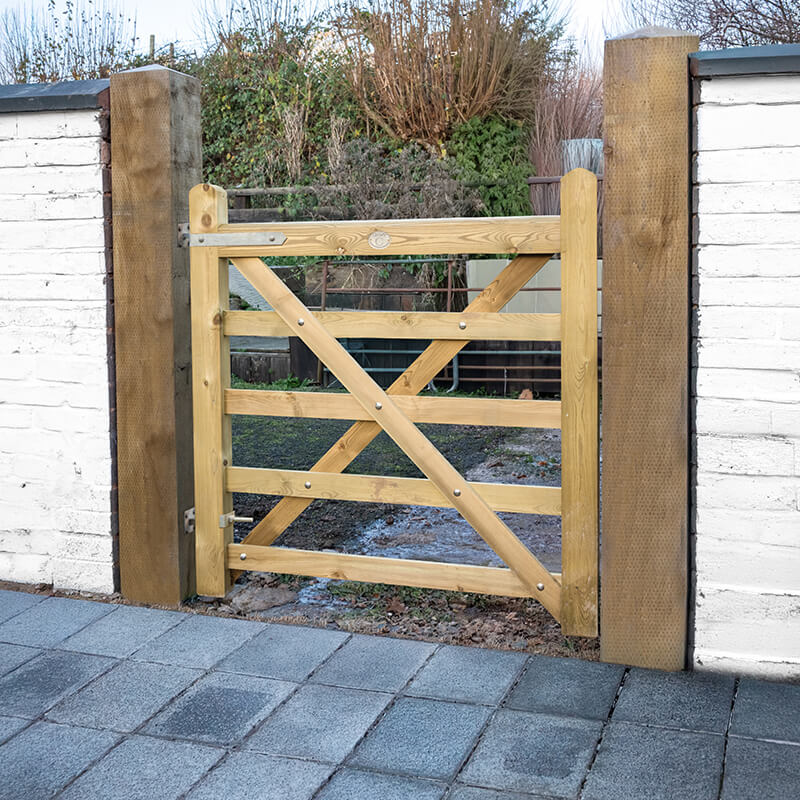
There are also gates with arched tops, flat tops, curved tops and paddle tops. Flat top gates give a sharp, simple line and usually sit well in modern spaces. Arched or curved tops soften the look and can make a small entrance feel less boxy. A paddle top, with its gentle rise and fall, can suit traditional garden boundaries and timber fencing where you want a more relaxed profile.
Timber, metal and mixed looks
Material changes the whole feel of a gate, even when the size stays near 1 m². Timber gates bring warmth and blend easily with fencing, planting and older garden features. They often look right in cottage-style or informal plots, especially when the boundary is already built from wood. The visible grain and board layout can help the gate feel like part of the garden rather than an added extra.
Metal gates usually feel lighter in the eye, even when they are solidly made. They are handy where you want visibility through the opening or a more open boundary line. Slender bars, vertical rods and patterned infills can keep the entrance from feeling heavy. If you prefer a cleaner, more exact finish, metal can suit that mood well.
There are also combination styles, where timber and metal details are paired to create contrast. These can work especially well in small openings, because the mix can stop a gate from feeling plain. A framed timber leaf with metal fittings, for example, gives you a practical structure with a sharper outline. The main difference is visual: timber feels softer, while metal usually reads as more defined.
What buyers often compare first
When people shop for a gate in this size range, they usually compare width, height, opening direction and visual weight. Width is the obvious one, but in a compact entrance the height can be just as important. A tall narrow gate can give privacy and presence, while a lower gate keeps the boundary more open and social.
Opening direction matters because a small gate should move cleanly without clipping planting, paving or steps. Left-hand or right-hand hanging can make all the difference in a tight spot. The visual weight is another key point: solid boards, close spacing and thick framing make a gate feel more enclosed, while open slats or bars keep things airy. Two gates can fit the same 1 m² opening and still feel completely different.
Privacy, airflow and sightlines
One of the main benefits of a gate sized for 15 sq ft / 1 m² is the control it gives over what happens at the boundary. A solid timber gate can block direct views into a side path or small front area, which is useful where the entrance sits close to the house. A more open gate, by contrast, lets you keep a visual link with the outside while still marking the edge of the garden.
If the area behind the gate tends to feel still or enclosed, slatted or open-bar designs can help by keeping airflow and light moving through the boundary. That can matter on narrow access routes that already feel tight. On the other hand, if the gate is there to screen bins, tools or a private yard, a solid pattern is often the better match. The difference is not just looks; it changes how the space feels once you pass through it.
Classic options and their feel
Closeboard gates are often chosen when the goal is privacy and a sturdy, enclosed look. The vertical boards create a straightforward face that pairs well with fence panels and solid boundary runs. They suit small openings where the entrance should feel secure and visually calm.
Featheredge-style gates bring a more handmade, traditional character. Their overlapping boards can echo countryside fencing and older garden layouts. They are useful when you want a boundary that feels consistent with rustic panels or natural materials. The edge detail gives a bit more texture than a flat-board gate.
Slatted gates give a more contemporary read. Horizontal slats can make a narrow opening feel wider, while vertical slats can make the gate feel taller and neater. The gap between the slats changes the whole impression, so this style suits buyers who care about how the gate shapes the view as much as it blocks it.
Trellis-top gates are another familiar choice. They combine a more private lower section with a lighter upper part, which can be useful if you want screening without a heavy finish. For a compact entrance, this can help the gate feel less blocky. It also works well where planting climbs nearby, since the top section can sit visually alongside the garden rather than against it.
Open patterns and decorative details
Some 1 m² gates are chosen less for full screening and more for the way they frame the entrance. Palisade-style designs, vertical pickets, decorative rails and shaped finials can all make a small gate feel more complete. These details are useful if the gate sits at the front of the property or at a visible route through the garden.
With smaller gates, decorative touches need a bit of restraint. Too many curves, cut-outs or heavy ornaments can make the leaf feel crowded. A simple profile with one or two clear details usually works better. That might be a shaped top rail, a pointed picket finish or a neat frame around the edge. The result is tidy rather than fussy, which often suits this size.
Single leaf or paired leaves?
For a gate around 15 sq ft / 1 m², a single-leaf gate is usually the most natural solution. It is straightforward, space-friendly and easy to place in a narrow opening. It also keeps the hardware simple, which can help the gate look neat rather than overcomplicated.
Paired leaves are less common at this size, but a narrow double-leaf arrangement can work if the entrance needs to be split for visual reasons or because the opening is framed in a particular way. The difference is mainly in how the entrance feels. One leaf gives a clear, direct passage. Two smaller leaves can create a more formal or balanced look, though they can appear busy if the opening is too small. In many gardens, single leaf wins simply because it suits the proportions better.
The fittings that change the whole gate
Even when shoppers focus on the main gate leaf, the fittings shape how it looks and works. A compact gate may use heavy-duty hinges, modest latch sets, drop bolts or simple gate stops depending on the style and level of use. The visible hardware can be plain or decorative, and that choice changes the tone of the entrance.
Black metal fittings often suit timber gates because they give a clear outline and a tidy contrast. Galvanised or coated hardware can fit a more practical, understated look. On smaller gates, the fittings should feel in scale with the leaf; oversized ironmongery can overpower the design, while too-small fittings can look weak. The best result usually comes from hardware that matches the gate’s visual weight rather than fighting it.
When space is tight, proportion matters most
A small gate can look excellent when the proportions are right. In this category, height-to-width balance matters more than buyers sometimes expect. A gate that is too squat can look lost between posts. A gate that is too tall for the opening can feel overbearing. The right proportions make the entrance look intentional and finished.
This is also where the surrounding structure matters. If the gate sits between tall fence posts, a slightly taller leaf may help it feel anchored. If it is part of a low boundary or a side path, a simpler, shorter gate can blend in better. The aim is not to force the gate to be noticed, but to make the whole entrance look as if it was planned together.
Benefits buyers notice on day one
A gate in this size range brings several practical and visual advantages. It helps define a small boundary clearly, which can make a garden feel more ordered. It can also create a sense of controlled access at side passages, allotments, yard entrances and little front routes. For a buyer, that often means the space feels more usable without needing major changes elsewhere.
Another benefit is the way it supports different garden moods. A closed-board timber version can make a narrow access route feel private and sheltered. A slatted or barred version can keep a route open and sociable. A decorative gate can add character to a plain boundary without needing extra features around it. In other words, the gate itself does a lot of the work.
Matching the gate to the boundary
One of the simplest ways to get a better result is to match the gate style to the boundary it sits in. Timber fencing usually works best with timber gates that share a similar board direction, finish and general shape. Masonry walls can suit a more framed or formal gate, especially if the leaf has a neat outline and clear hardware. Metal railings usually need a gate with similar line weight so the entrance does not feel bolted on.
Buyers often overlook this and just look at the leaf on its own. But a gate in a 1 m² opening is seen together with posts, hinges, latch side and the space around it. That means the best choice is often the one that repeats the language of the boundary rather than trying to start something entirely different. The whole entrance reads as one piece.
Useful pointers before you choose
Before buying, it helps to check the opening in a few places rather than relying on a single measure. Small entrances can be slightly uneven, especially where posts have shifted, paving has settled or old walls are not perfectly square. A gate that is meant for 15 sq ft / 1 m² should sit comfortably in the actual opening, not just in the idea of it.
It is also worth thinking about how the gate will be used. A quick side access gate needs a different feel from a front garden gate that guests will see often. If the opening is used with bags, bins or garden tools, a clean swing path matters. If the gate is mainly about appearance and boundary definition, the profile and finish may matter more than a wide opening angle. Small decisions like this often make the difference between a gate that merely fits and one that feels right.
Why this category is easy to shop with
Gates in this size range are easier to compare because the opening is already defined. That means you can look at the style first, then decide whether you want privacy, openness, tradition or a cleaner modern line. For many buyers, that makes the choice feel more focused and less guessy. You are not searching for a vague “garden gate”; you are looking for a gate that suits a specific space and purpose.
Whether you prefer a plain boarded leaf, a slatted design, a decorative top or a more formal framed look, the key advantage of this category is the balance between compact size and clear presence. A 15 sq ft / 1 m² gate does not need to shout to make the boundary work. It just needs the right shape, the right material and a good fit for the opening. That is often enough to lift the whole entrance.
Small gate, clear result
For compact garden entrances, side passages and tucked-away access points, this gate category offers a lot of choice without making the decision feel messy. The differences between solid, open, decorative, timber and metal designs are easy to see once you know what the opening needs to do. Some gates screen, some lighten the boundary, some add character and some do a bit of all three.
If your space calls for a gate around 15 sq ft / 1 m², the best pick is usually the one that matches the boundary, respects the proportions and fits the way the space is actually used. A small opening can still make a strong impression when the gate is the right one for it.
- Single-leaf gates work well for direct pedestrian access and tight spaces.
- Solid timber designs suit privacy-led boundaries and quieter side routes.
- Slatted or barred styles keep the entrance lighter and less enclosed.
- Arched, flat and curved tops change the feel of a compact opening in different ways.
- Matching hardware and proportions helps the gate look built-in, not added on.