
Gates 10 sq ft / 1 m² - Best Deals in UK!
Showing all 2 resultsSorted by price: low to high
-
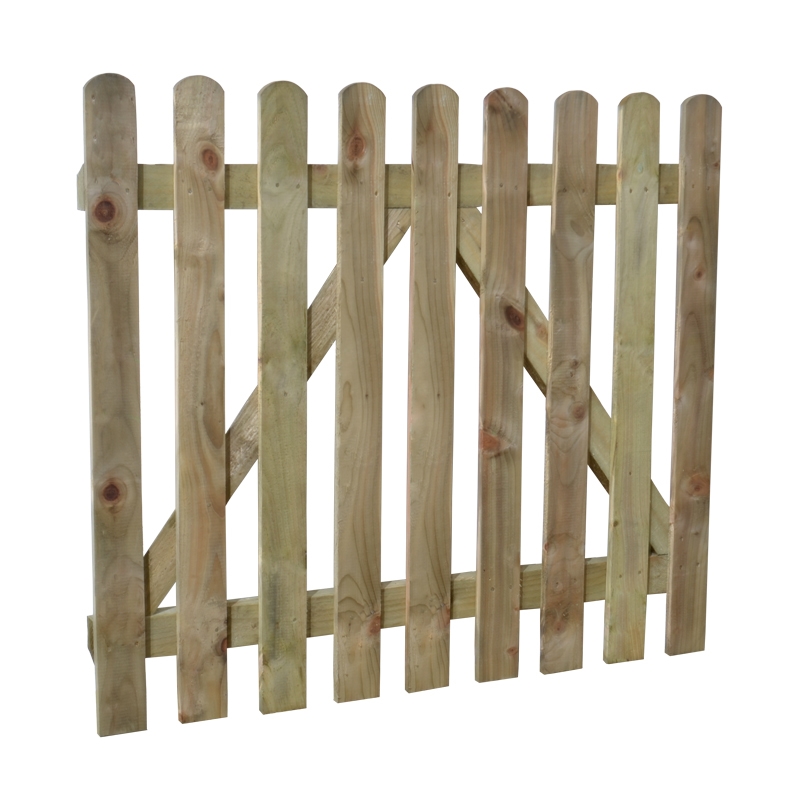
21% OFF: Forest Heavy Duty 3’3″ x 3′ Pressure Treated Wooden Picket Garden Gate (1m x 0.9m) £69.9921%
-
Forest 3â x 4â Croft Prestige Gate (0.91m x 1.22m) £144.99

Gates for 10 sq ft / 1 m² spaces bring structure, access and privacy to compact gardens, side paths and small openings, with choices in timber, metal, arch-top, picket and solid designs.
Popular products in this range
Small opening, clear purpose
When a gate is sized for around 10 sq ft / 1 m², the brief is usually quite focused: mark a boundary, close off a narrow run, or finish a short entrance without making the space feel boxed in. These gates are often chosen for side passages, compact garden entries, bin store access, allotment plots, and courtyard corners where every inch matters. Because the opening is modest, the gate needs to do more than just open and shut. It has to look right in proportion, sit neatly in the frame, and suit the rest of the fencing or walling around it.
That is why this category includes different gate styles rather than one fixed look. A tight space can suit a simple flat-top gate, but it can also take a more decorative shape if the surroundings call for it. The right choice depends on how much visibility you want, whether the gate should feel open or enclosed, and how it works with the path, hinge side and latch position. In smaller dimensions, even small design differences become quite noticeable.
Timber gates that feel built-in
Wooden gates remain a strong choice for compact garden openings because they blend easily with feather edge fencing, lap panels, trellis edges and traditional brickwork. In a smaller size, timber tends to soften the boundary rather than dominate it. There is a natural fit with rustic, cottage-style and informal gardens, but it can also work in cleaner settings if the line is simple and the finish is neat.
Within timber gates, there are a few common forms worth looking at:
The main advantage of timber in this category is the way it can look tailored to a small opening without feeling severe. A 1 m² gate in wood can make a narrow gap look intentional, rather than like an after-thought. Another benefit is the variety of board spacing and top profiles available. Wider spacing can reduce the visual weight, while close boarding gives better privacy. The difference is not only visual; it changes how the entrance behaves from the street side or the garden side. A solid gate reads as a stop, a lighter one reads as a passage.
Metal gates for a neater line
Metal garden gates in this size range often suit spaces where the user wants a more precise outline and a slimmer frame. Compared with timber, metal can create a tidier silhouette, especially in narrow side access where a chunky gate would seem too heavy. Wrought-style patterns, vertical bars and framed steel forms all work well in compact openings because they keep the gate looking crisp and defined.
Useful subtypes in the metal range include:
One clear difference between metal and timber in a 10 sq ft / 1 m² format is the visual density. Metal can appear lighter even when it feels solid, because the structure is often made of thinner sections and open patterns. That can be very useful where a gate needs to define space without making the entrance look crowded. Another advantage is the more precise geometry: straight lines, even spacing and clean edge detail tend to suit modern paving, rendered walls and contemporary fencing. For buyers comparing options, the choice often comes down to mood as much as function. Timber feels warmer and more relaxed; metal feels sharper and more architectural.
Privacy, openness or somewhere in between
Not every small gate needs to do the same job. In a compact opening, the design choice usually comes down to how much you want to see through the gate once it is shut. A solid gate gives the strongest visual barrier and is often picked for side entrances or areas where tools, bins or stored items sit nearby. It creates a proper finish, especially when the boundary is already closed on both sides.
A semi-open gate sits in the middle. This might mean spaced boards, slim vertical rails or a partial decorative panel. It allows a bit of air and light through, which can be helpful in a small garden where a fully solid gate might make the space feel tighter than it is. Then there are open designs, like picket or bar gates, which keep the entrance visually light and can make a narrow route feel more like part of the garden rather than a separate service area.
The difference matters because a small gate can strongly affect how the whole boundary reads. In a 1 m² format, a solid gate can make the opening feel more secure and private, while an open style can make the same gap feel broader and more sociable. That is why this category lends itself to comparing styles side by side rather than choosing only by material.
Shapes that change the mood
Even in a compact size, the top line and overall shape can change the look quite a lot. A flat-top gate is direct and practical, often the easiest way to keep a small opening tidy. It suits modern layouts, narrow passages and spaces where the gate should quietly do its job. A arched-top gate, by contrast, adds a softer profile and can keep the gate from feeling too rigid. This shape is often used where the boundary has a bit of charm already, such as a brick wall, hedge opening or older timber fence.
There are also raked or shaped top versions, where the line is not fully straight. These can help the gate sit more naturally against sloping ground or irregular surroundings. In a smaller category, that sort of detail makes a noticeable difference. A gate with a shape that repeats the lines around it tends to look more settled. A gate with a shape that fights the setting, by comparison, can look tacked on.
Why size matters more when the space is small
With gates in a 10 sq ft / 1 m² category, proportion is a bigger deal than many buyers expect. A design that looks balanced in a larger driveway opening might seem too heavy in a narrow side garden. Equally, a gate that is too delicate can disappear against a tall fence or brick pier. The best match usually has a frame that feels purposeful without dominating the run of the boundary.
This is where the choice between solid infill, spaced slats and bar-style construction becomes useful. Solid infill suits a stronger visual stop. Slatted designs create rhythm and shadow. Bar-style gates keep the eye moving, which can help a short boundary feel longer and less compressed. It is a small area, but the effect on the whole garden can be quite marked.
Buyers often compare the gate to the neighbouring fence height, rather than the opening alone. That makes sense. A gate should look like it belongs to the boundary, not sit there as a random object. Matching timber tone, vertical direction and top profile usually helps. With metal, matching the frame colour or bar pattern to nearby railings makes the gate feel like part of a set, even if the rest of the boundary is mixed materials.
Different looks for different gardens
There is a useful range of styles available in this category, and each one tends to suit a slightly different setting:
These differences are not just about taste. They also shape the way the gate behaves in the overall layout. A picket gate is often chosen because it feels more inviting, while a panelled gate leans towards privacy and clear separation. A plain metal gate can be the quietest option visually, but it can also be the one that makes the surrounding planting stand out more. That balance is often what buyers are really looking for, even if they start by thinking about colour or material first.
Practical details that help the choice
In a compact gate, small practical details can have a lot of impact. The hinge side needs to suit the direction of travel so the gate opens away from obstacles and does not catch on edging, steps or pots. The latch position should be easy to reach, especially where the gate is used several times a day. And the frame depth matters more than it might seem, because a gate that is too bulky can reduce the usable opening.
Another point buyers often weigh up is how the gate looks when shut from both sides. Some designs have a neat face on one side and a more functional finish on the other. Others are made to feel consistent, so the inside and outside presentation is similar. That can matter a lot in a side return or rear garden where the gate is visible from more than one angle. A good-looking gate should not only face the main viewpoint; it should look settled wherever you stand.
What tends to make people choose one gate over another
People usually narrow this category down using a few simple questions. Do they want privacy or visibility? Do they need the gate to blend in or stand out? Is the surrounding boundary timber, brick, metal or mixed? Is the opening part of a main route or just a short access point? These are the things that separate one gate from another more clearly than colour alone.
A homeowner with a narrow alley may prefer a stronger, closed design that feels secure and keeps the area hidden. Someone with a small front garden might choose a lighter pattern so the gate frames the entrance without shutting off the view. A patio or courtyard could call for something smarter and more decorative, especially if the gate sits near seating or planting. The same 10 sq ft / 1 m² category can cover all of these uses, but the right answer changes with the setting.
Buying with the opening in mind
It helps to think of the gate as part of the opening, not just an item on its own. The size, shape and style need to work with the gap between posts or walls, the path line, and the nearby boundary finish. If the opening is tight, a slimmer design can feel easier to live with. If the entrance is a focal point, a more detailed gate may be worth it even in a small format.
Some buyers also look for a gate that gives a neat sense of arrival. That does not have to mean ornate. A clean-lined timber gate with balanced proportions can feel more considered than a busy design. Likewise, a simple metal gate with well-spaced bars can look more resolved than one with too much pattern. In smaller openings, restraint often works better than crowding.
Why this category gets attention
Gates for 10 sq ft / 1 m² spaces are popular because they solve a very exact problem: how to close a small opening without making the garden feel cramped. They bring a finish to the boundary, support privacy where needed, and give a clear route through the space. Just as importantly, they help the whole area look planned rather than patched together.
That is what makes this category useful for buyers comparing different subtypes. Timber offers warmth and flexibility. Metal brings a neater outline and lighter visual structure. Solid designs favour enclosure. Open designs favour air and sightlines. Flat tops keep things simple. Arched tops soften the look. Each has a different feel, and in a small gate the difference is easy to notice.
For anyone matching a gate to a compact opening, the best choice is often the one that suits the boundary first and the decoration second. If it fits the space, sits cleanly in the line of the garden and gives the right balance of privacy and openness, it is usually the right gate. And in a category like this, that balance is really the point.