
Garden Structures 50 sq ft / 5 m² - Best Deals in UK!
Showing all 2 results
-
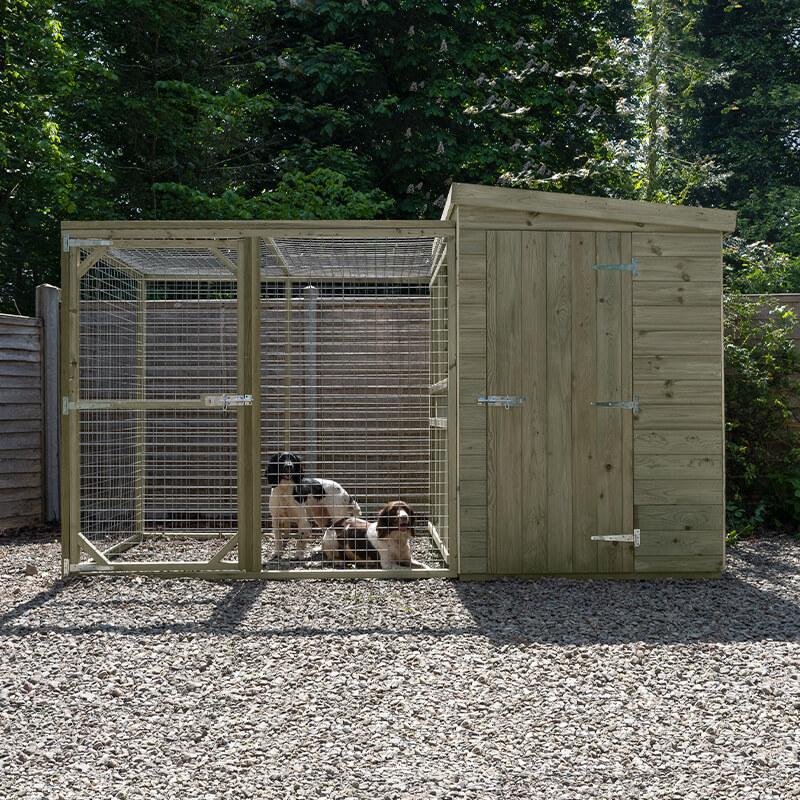
7% OFF: 10’1 x 4’6 Forest Hedgerow Wooden Dog Kennel with 6ft Run – Pet House (3.07m x 1.38m) £1,019.997%

-
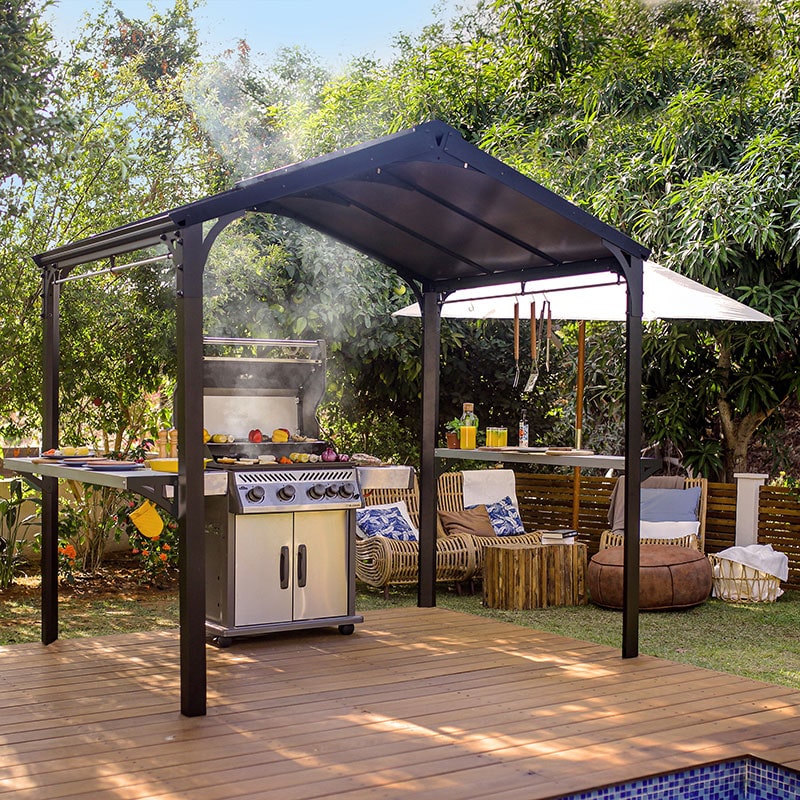
8′ x 6′ Palram Canopia Austin 2400 BBQ Shelter Gazebo – Black (2.84m x 1.8m) £917.99

Garden structures for 50 sq ft / 5 m² plots: arches, pergolas, mini gazebos, screens and frames that add shape, shade and structure to compact outdoor spaces.
Small Footprint, Clear Purpose
When space is limited to around 50 sq ft / 5 m², every line in the garden has to earn its place. That is where garden structures come in. They do not need a huge plot to make sense; in fact, compact spaces often benefit most from a defined shape. A well chosen structure gives the garden a point of focus, creates a sense of order, and helps separate one use from another without making the area feel cramped.
This size range is especially suited to pieces that do a job without taking over: an arch marking an entrance, a slim pergola lending height, a screen panel softening a boundary, or a small shelter that gives the space a more finished feel. The difference between a good fit and a frustrating one is often not about style alone, but about scale, proportions and shape. In a tight area, a bulky structure can swallow the garden, while a lighter frame can make the same plot feel more open and deliberate.
What Fits Well In 5 m²
For this category, the most practical structures are those with a compact footprint and a clear outline. They may be freestanding, wall-fixed, open-sided or partially enclosed. The key is that they add architecture without demanding much floor area. Some of the most useful options are:
Bestseller der Kategorie Garden Structures 50 sq ft / 5 m²
- Arches for marking a route, entrance or transition between two tiny zones.
- Arbours for a seat-like feel or a sheltered corner, often with a smaller base than a pergola.
- Mini pergolas for overhead definition, light shade and vertical interest.
- Screen structures for dividing a patio, hiding a bin area or making a narrow space feel more composed.
- Obelisks and plant supports for height where floor space is almost non-existent.
- Lean-to frames for building along a wall or fence, using the boundary rather than competing with it.
- Compact gazebos where a sheltered corner is wanted, though the square footage needs checking carefully.
Each type does something a little different. An arch is mostly about flow and invitation. A pergola is about overhead presence and a stronger sense of room. A screen is about privacy and zoning. An obelisk is more vertical and decorative, often used where the garden needs height but not width. For a 5 m² area, that difference matters a lot, because the wrong shape can make the space feel busier than it needs to be.
Arches: A Small Frame With A Clear Job
Garden arches work particularly well in compact plots because they use height instead of width. They can create a passage from one area to another, mark the start of a planting bed, or act as a simple feature at the edge of a path. In a small garden, this kind of visual punctuation is helpful. It gives the eye somewhere to pause.
There are a few forms worth noticing. A classic rounded arch feels softer and more traditional. A square-top arch looks cleaner and more architectural. A narrow decorative arch suits very slim access routes where bulk would be a problem. The main difference is not just appearance, but the effect on the space. Rounded arches tend to soften hard lines, while square forms can make a small area feel more structured and deliberate.
If the aim is to support climbing plants, the opening and the side spacing matter. A structure that is too narrow may look crowded once growth is added. A lightly framed arch often feels better in a 5 m² setting because it gives support without turning into a solid wall. It is also useful when the garden needs a subtle “start” or “end” point, especially if the rest of the layout is simple.
Pergolas: Shade Without Closing The Space
A pergola in a 50 sq ft / 5 m² area needs to be chosen with care, but when sized well it can change the whole feel of the space. It adds overhead rhythm, gives a sense of enclosure, and can make a patio or sitting spot feel more purposeful. Unlike a roofed structure, a pergola keeps light moving through, which is important in a small garden where heavy shading can make things feel enclosed.
There are different forms to consider. A single-bay pergola gives a compact overhead frame. A wall-mounted pergola is especially practical for narrow spots because it relies partly on the building line. A slatted pergola gives a lighter look, while a more closely spaced top can create a stronger visual ceiling. The difference is mainly in how much coverage and visual weight they add.
For buyers, the appeal is in how a pergola can make one square of outdoor space feel like a proper destination. It can define a seating area without needing walls, and it can help the garden feel finished rather than simply left over. In a small plot, that sense of arrangement matters quite a bit.
Screens And Panels: Shape, Privacy And A Cleaner Edge
Screen structures are often underrated in small gardens. They do not just hide things; they create shape. A well placed panel can break up a view, draw attention away from a less attractive boundary, or give a planting corner a stronger outline. In a 5 m² garden, that can be more useful than adding another decorative item that has no function.
Different types serve different needs. Solid screens offer more privacy and a firmer boundary. Lattice or slatted screens let light and air move through while still shaping the space. Half-height dividers are useful where you want a hint of separation without blocking the whole view. The main difference is visual density: solid panels give stronger screening, while open designs feel less heavy.
These are handy for zoning. A tiny garden often has to do several jobs at once: sitting, growing, storing, maybe even drying. A screen can help one part feel calmer and more intentional. It can also stop the eye from running straight to the fence, which is especially useful when the plot is short and narrow. It is not about hiding everything; it is about guiding what you see first.
Arbours And Corner Frames: A Softer Shape For Sitting Or Planting
Arbours and corner frames are useful when the aim is to create a small pause in the garden. They usually feel more enclosed than an arch, but less dominant than a full pergola. That makes them a good middle ground for 50 sq ft / 5 m² areas where space is tight but a little shelter or enclosure is still wanted.
An arbour often gives a more complete form, sometimes with side panels or partial seating. A corner frame is lighter and more open, which suits a garden that already feels full. If the space needs a place to lean a plant, a frame can do that without taking much ground. If the space needs a mini retreat, an arbour has more presence.
The distinction between these forms is practical as well as visual. An arbour can suggest a destination. A corner frame can simply support and define. For a shopper, that means the choice is not only about looks, but about how the structure will be read in the space. In a compact garden, a piece that feels slightly enclosed can be useful, but only if it still leaves breathing room around it.
Obelisks, Trellises And Vertical Details
In a garden with only 5 m² to work with, vertical structures often make more sense than broad ones. Obelisks and trellises add height without using much ground, which is a strong advantage in tighter layouts. They can stand in a border, sit by a wall, or act as a focal point in a pot or planter, depending on the form.
The difference between them is worth noting. An obelisk is usually a freestanding shape, tapering upwards and drawing the eye vertically. It feels sculptural and can soften a simple layout. A trellis is flatter and more directional, often used against a wall or fence. It works well when the garden needs to use the boundary as part of the design. A fan trellis spreads outward visually, while a panel trellis gives a cleaner grid or rectangle.
These pieces are not just decorative extras. They can help create layers in a garden that would otherwise read as one flat plane. That makes the area seem more thought through. If you want to add climbing plants, they also help lift the greenery upwards, leaving the floor clear for movement, seating or a small pot arrangement. In a 50 sq ft setting, that vertical use is often the difference between cluttered and composed.
Lean-To Frames: Making The Most Of A Wall
Lean-to structures are especially useful when one side of the garden is already taken by a wall, fence or building. Rather than standing as a separate object in the middle, they use the boundary line as part of their shape. In a small garden, this can save a surprising amount of space. It also helps the structure feel more integrated, which is useful when there is not much room for anything that seems detached or oversized.
They can take different forms: a simple overhead frame, a side-supported cover, or a planted support running along a wall. The advantage is mostly in efficiency. You get structure without losing the middle of the plot. The visual result is often calmer too, because the eye reads it as part of the garden’s edge rather than a stand-alone block.
These are a practical choice where the garden needs definition but also needs to stay open. They suit narrow patios, side return spaces and compact courtyards. In those spots, a lean-to can make the layout feel intentional without forcing another object into the centre of the space.
Forms, Materials And The Feel Of The Space
With structures of this size, the form often matters more than people expect. A rounded shape tends to soften the space, while a square or rectangular frame gives a more ordered feel. Open lattice creates a lighter touch. Solid or close-set panels give more visual weight. That difference can affect how wide or narrow the garden seems.
Material choice also changes the mood. Timber usually feels warmer and more relaxed. Metal can look slimmer and more defined, especially where a lighter outline is wanted. Mixed-material structures may combine the solidity of one element with the softness of another, although in a small area it is often better to keep the overall look simple. Too many competing textures can make the space feel fussy.
For shoppers comparing options, it helps to think about whether the structure should blend in or stand out. A darker frame can recede visually. A lighter or painted finish can read more openly. In a 5 m² space, those details are not minor. They affect whether the structure feels like part of the garden or like it has been dropped in from somewhere else.
Choosing By Use: Entrance, Shade, Screening Or Feature
The smartest way to choose a garden structure for 50 sq ft / 5 m² is to start with the job it needs to do. If the goal is to create a sense of entry, an arch works well. If the goal is to define a sitting area, a mini pergola or arbour may suit better. If the goal is privacy, a screen or lattice panel is usually the better answer. If the goal is to add height without blocking movement, an obelisk or trellis is often enough.
There are also differences in how permanent the structure feels. A freestanding piece can be repositioned more easily, while a wall-fixed or leaning design tends to look more settled. Open-sided forms keep the garden airy. More enclosed forms create a room-like effect. Neither is right for every garden, but in a small area the choice should be clear, because vague, halfway solutions usually waste space.
Buyers often prefer structures that do one thing cleanly rather than several things poorly. That is especially true in compact gardens, where clutter builds fast. A good structure gives the plot a reason to exist as a designed space, even if the footprint is modest.
Handy Buying Points For A Compact Garden
- Check the actual footprint, not just the headline size, so the structure does not crowd paths or edges.
- Think about the visual weight: open slats feel lighter, solid panels feel firmer.
- Match the shape to the garden: rounded for softness, straight-lined for a neater look.
- Choose vertical forms if floor space is very tight.
- Use wall-fixed or boundary-based designs where the garden is narrow.
- Pick a structure that supports the garden’s main purpose, whether that is seating, screening or framing a path.
- Keep the overall composition simple, because a small space can look busy quite quickly.
Why These Structures Make Sense In 50 Sq Ft / 5 m²
In a compact garden, structure is not just decoration. It is part of the layout. A good piece can make a small area feel planned, give the eye a stopping point, and help separate functions without requiring more ground. That is the main appeal of this category: it lets you create shape where there is little spare space to work with.
Whether you are looking at an arch, pergola, screen, arbour or trellis, the useful question is always the same: what does this do for the space? The best choice will usually be the one that adds definition, suits the scale, and leaves the garden feeling open enough to use. In a 5 m² setting, that balance matters a lot. Get it right and the whole area feels more settled, more usable, and a good deal more finished.
[Sassy_Social_Share]