
Garden Structures 250 sq ft / 20 m² - Best Deals in UK!
Showing the single result

Garden Structures 250 sq ft / 20 m² for compact outdoor spaces: discover gazebos, pergolas, arches, arbours and plant supports that shape a small garden with style, shade, and structure.
Small footprint, proper impact
A 250 sq ft / 20 m² garden asks for structure that earns its place. Every frame, post, and panel has to do more than just sit there; it needs to define space, give a sense of order, and add one or two practical uses without making the area feel cramped. That is where garden structures come in. In a smaller plot, the right piece can turn an empty corner into a seating nook, mark a path without blocking the view, or give climbing plants a place to do their thing. The appeal is not only visual. A well-chosen structure can make a garden feel organised, layered, and more usable, even if there is not much room to play with.
What suits this size best is usually something with a clear shape and a fairly modest footprint. Think open-sided frames, slim pergolas, compact gazebos, and vertical supports that work upwards rather than outwards. In this sort of space, solid walls can feel heavy, while open frameworks keep light moving and views intact. That balance matters. You want shelter and definition, but not a boxy feel that swallows the garden whole.
Shapes that change the feel of a garden
Different forms create very different moods. A square or rectangular structure feels tidy and practical, often fitting neatly against a boundary or over a small patio. It gives a clear sense of edge, which can be handy where the garden is narrow or a bit awkwardly shaped. A round gazebo or octagonal form, by contrast, softens the layout and can become a focal point in the middle of a lawn or gravel area. Even in a compact garden, that kind of shape can make the space feel more considered, less like everything was just fitted in at random.
Bestseller der Kategorie Garden Structures 250 sq ft / 20 m²
Arched forms and curved frames do something slightly different again. They draw the eye forward and can make a route through the garden feel like a small event rather than just a passage. If you have a path leading to a seating area or a rear gate, an arch or tunnel-style support can add height without eating the width. That is a neat trick in a 20 m² space, because vertical interest is often the easiest way to create depth.
Flat-top pergolas feel more architectural, while domed or pitched shelters suggest a softer, more decorative finish. The difference is not just cosmetic. Flat forms are usually better at echoing modern fencing, decking, or paving lines. More open or curved designs can sit nicely with planting-heavy spaces, especially where you want the structure to look like it belongs to the garden rather than standing apart from it.
Gazebos, pergolas and arbours: not the same thing
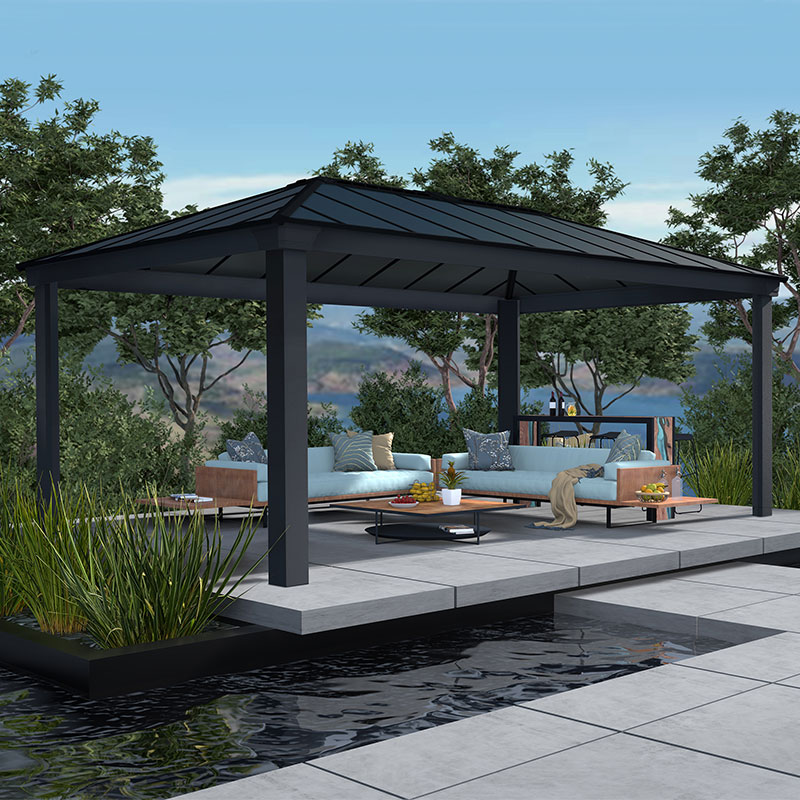
These names often get used loosely, but they do different jobs. A gazebo is generally a freestanding shelter with a roof and open sides. In a 250 sq ft / 20 m² garden, it can work as a small outdoor room for a bistro table, two chairs, or a quiet reading spot. Because it has a stronger presence, it suits spaces where you want one clear destination rather than several competing features. It also gives better visual weight if the garden is otherwise very plain.
A pergola is more open and less enclosed. It is defined by posts and crossbeams, sometimes with partial roofing or a slatted top. That makes it ideal for creating a gentle sense of enclosure over a path, bench, or patio edge. Pergolas can be used to divide a small garden into zones without shutting it off. In a compact layout, this matters a lot: you can create a sitting area at one end and still keep the rest of the space feeling open.
An arbour or arch is narrower and more decorative, often used as a transition point. It can frame an entrance, support climbing roses or clematis, or mark the shift from one part of the garden to another. In smaller gardens, arbours are useful because they add height and character with a fairly small ground footprint. They are not about shelter in the same way a gazebo is; they are more about shaping the journey through the space.
Vertical lines that make space feel taller
In a small garden, height can be your best mate. A structure that rises rather than spreads helps create the feeling of more room. This is why obelisks, trellis panels, wall-mounted supports, and freestanding screens are so useful in a 20 m² layout. They work with climbing plants, but they also act as visual markers. A tall support at the end of a bed can draw the eye upward, making the area feel less flat.
Trellis-style structures are especially handy where you need a balance of openness and screening. They can hide a less attractive boundary without closing the garden in entirely. Compared with solid panels, trellis lets light and air pass through, so it gives privacy in a lighter way. That distinction is important if the garden already feels tight or shaded. A full fence extension can feel a bit too much, whereas a trellis can give just enough cover.
Obelisks and slimmer plant supports are more sculptural. They suit pots, raised beds, or small border pockets where you want plants to climb upwards and create shape. Because they are narrow, they leave more floor area free, which is quite valuable in a garden of this size. They also make seasonal planting look more deliberate, rather than a bit scattered, which can really help the whole space come together.
Material feel: the difference you notice straight away
The material of a garden structure changes both its look and how it sits in the space. Natural wood gives a softer, warmer finish. It works well where the planting is loose and informal, or where the garden already has timber fencing, sleepers, or a rustic feel. Wood can make even a small structure seem less imposing, because it blends more easily with foliage and soil tones.
Metal structures bring a finer outline. They often read as lighter from a distance, even if the frame is sturdy. That is useful when you want a pergola or arch to be visible but not bulky. Black or dark-toned metal tends to look crisp against greenery, while paler finishes can feel more delicate. Metal also suits more upright, clean-lined designs, especially in gardens with modern paving or simple planting schemes.
Composite or mixed-material structures may combine the look of one material with the practical qualities of another, but the key point for a buyer is usually the visual effect. Do you want the structure to disappear into the planting, or stand out as a feature? In a 250 sq ft garden, that choice really changes the balance. A subtle frame can support plants and leave the garden feeling calm. A more defined structure can act as an anchor, useful if the rest of the layout is quite freeform.
Where each structure works best in 20 m²
Placement is a major part of the appeal. A gazebo often works best in a central or slightly off-centre position where it can create a focal point without blocking access. If the garden is square, a gazebo can break up the symmetry nicely. If the garden is long and narrow, it may be better tucked towards one end so it does not interrupt movement.
Pergolas are often most effective over a terrace, along a path, or attached visually to a seating zone. They define an area without fully separating it from the rest of the garden. That makes them especially suitable where you want the eye to move through the space rather than stop at one point. A pergola can also help a small patio feel like an outdoor room, which is a useful thing when the indoor-outdoor divide needs to be a bit clearer.
Arches and arbours are ideal at entrances, between planting zones, or near gates. They create a moment of pause. In a smaller garden, that can be enough to make the whole layout feel more intentional. A well-placed arch can also make a short path feel longer and more interesting, which is a neat little illusion and not hard to appreciate when space is tight.
Practical forms for real-life garden use
Garden structures in this category are not just decorative. Many are chosen because they give a place to sit, train plants, or section off a corner without major building work. A seating shelter gives a calm spot for a compact table and chairs. A climbing frame helps with vertical planting. A screen creates a bit of privacy from neighbours or nearby windows. The best pieces do one or two of these jobs at once.
- Freestanding gazebos for a sheltered focal point
- Open pergolas for defining dining or seating space
- Arbours and arches for entrances and transitions
- Trellis panels for light screening and climbing plants
- Obelisks for height in beds and pots
- Plant supports for controlled, upright growth
The best choice depends on whether you want a structure to feel like architecture, planting support, or a decorative frame. Some buyers prefer a strong focal point, while others want a quieter element that just helps the garden work better. In a 20 m² area, a quieter piece can often do more than a large feature because it leaves enough breathing room around it.
What makes a small-garden structure worth buying
There are a few things that make a structure especially suitable for this size of garden. First is the visual weight. A piece can be sturdy without looking heavy, and that is often the sweet spot. Second is the proportion; a structure should suit the size of the patio, path, or border where it sits. Third is the openness of the design. In a smaller plot, open frames usually feel better than large enclosed forms, unless the whole aim is to create a separate room-like area.
Another useful point is how the structure interacts with planting. A frame that looks nice on its own is one thing, but one that becomes better once roses, jasmine, sweet peas, or climbers are added tends to earn its place. Even before anything has grown through it, the outline should still feel attractive. That way, the garden does not look unfinished for half the year. It feels designed from the start, which is part of the reason people go for structures in the first place.
There is also the matter of flexibility. In a small garden, you may want the option to change the layout later. Freestanding structures offer more freedom than fixed ones, while narrow supports and light frames are easier to reposition if the scheme changes. If you are not completely sure how the space will be used, that flexibility can be quite reassuring.
Details buyers often spot first
People shopping for garden structures often notice the shape before anything else, but the details are what decide whether a piece feels right. The thickness of the posts, the spacing of the slats, the height of the roof line, and the openness of the sides all affect the overall look. Fine lines can seem airy and elegant, while chunkier framing can feel more grounded and solid. Neither is better in every case; it depends on the rest of the garden.
Roof style is another detail worth watching. A slatted top gives filtered shade and a lighter look. A solid roof suggests more shelter and a stronger outdoor-room feel. Open tops are better if the main aim is to support climbers and keep things visually open. In a 250 sq ft garden, these differences matter because they change how much light reaches the ground and how enclosed the area feels, even before any planting is added.
Colour also shapes the mood. Dark frames often recede into the background and make greenery stand out. Natural wood finishes can soften hard edges. Brighter or pale tones can make a structure appear more decorative, though they may also draw attention more strongly. If the garden is already busy with planting, a quieter finish usually helps. If the space is very plain, a more visible piece can give it some needed character.
Choosing with the whole garden in mind
A good structure should fit the garden as it is, but also leave room for how you want it to feel. In a 250 sq ft / 20 m² space, that usually means choosing one main structural idea and letting the rest support it. Too many competing forms can make the area feel chopped up. One pergola, one arch, or one compact gazebo is often enough to give the layout shape without overloading it.
It also helps to think about contrast. If the garden is full of straight lines, a gentle arch can soften things. If the planting is loose and natural, a more defined frame can add order. If the space is mostly hard landscaping, a timber arbour or trellis can bring warmth. Those little contrasts are what make a small garden feel layered rather than flat.
For buyers, the appeal is simple enough: a good garden structure changes how the space is used and how it looks, without asking for a lot of ground area in return. It gives a reason to step outside, a place for plants to climb, and a frame that makes the whole garden feel more pulled together. In a small plot, that is a pretty useful mix, and honestly, it can make all the difference between a garden that feels like a leftover bit of land and one that feels properly thought through.
[Sassy_Social_Share]