
Garden Storage with Pent Roof - Best Deals in UK!
Showing all 3 results
-
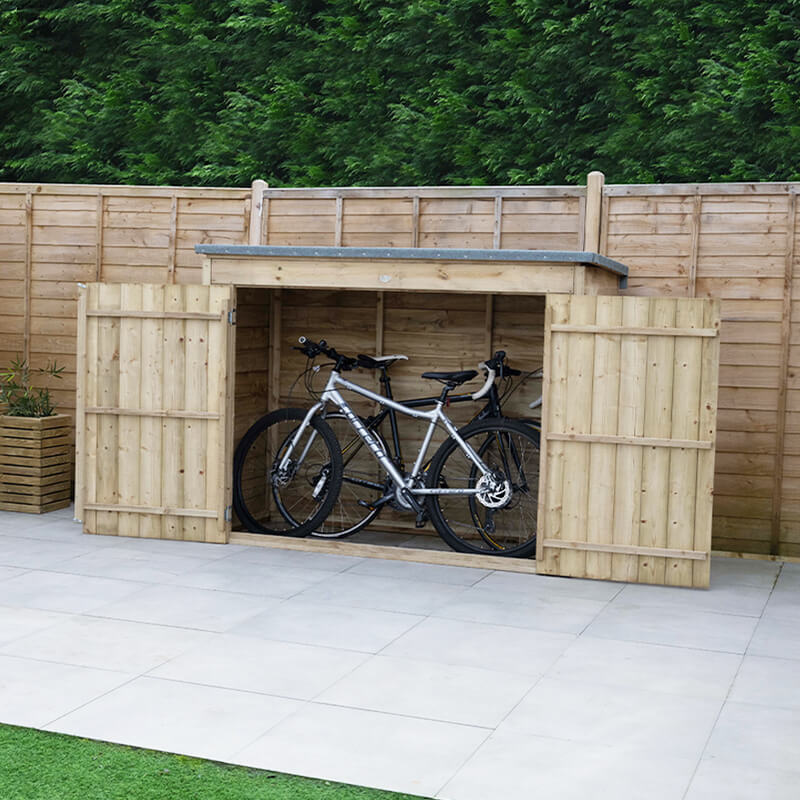
34% OFF: 6’5 x 2’10 Forest Overlap Large Double Door Pent Wooden Garden Storage – Bike / Mower Outdoor Store (1.9m x 0.86m) £244.9934%

-
26% OFF: 6’5 x 2’10 Forest Overlap Double Door Wooden Bike Shed / Pressure Treated (no floor) £199.9926%

-
15% OFF: 6’5 x 2’10 Forest Overlap Double Door Wooden Bike Shed / Pressure Treated (no floor) £229.9915%
Garden storage with pent roof brings neat, weather-ready space for tools, bikes, logs and garden kit, with a sloping roof that helps rain run off and suits tight plots.
Why a pent roof changes the whole feel
A pent roof is more than a shape detail. It gives garden storage a clean, directional look and a practical edge that many buyers notice straight away. Because the roof slopes away from the front or to one side, it helps water drain in a single direction rather than sitting on a flat top. That makes it a very sensible choice for exposed gardens, narrow paths, side returns and spots where a traditional apex shed would feel too bulky.
There is also a visual difference. A pent roof storage shed often looks lower and less imposing than a pitched design, which can matter if the unit sits close to a fence, a house wall, or a neighbour’s boundary. It can tuck under a run of trees, sit beside a garage, or line a boundary without stealing too much light. For many gardens, that slimmer profile is the reason it works so well.
Styles that fit different jobs
Not every pent roof storage unit does the same job, even if the basic shape is similar. The category usually includes a few distinct subtypes, and the best one depends on what you want to store and where it will stand.
Bestseller der Kategorie Garden Storage with Pent Roof


- Tool stores – compact units made for hand tools, compost, pots, watering gear and smaller accessories.
- Bike stores – longer, narrower storage with enough internal length for cycles, helmets and pumps.
- Log stores with enclosed sections – useful where you want stacked logs kept together while still having a tidy outer shell.
- General garden sheds – the familiar all-rounder for mowers, rakes, BBQ items and mixed storage.
- Corner pent storage – shaped to sit neatly into a corner, making use of awkward space that often gets wasted.
- Low-profile pent units – designed for places with height limits, such as under branches or close to a boundary line.
What links them all is the practical roofline. But the footprint, door layout and internal height can feel very different. A small tool store might be chosen for access and tidy organisation, while a wider pent shed is bought more for open storage space and easier movement inside. That difference matters more than people sometimes expect.
Roofline, height and the way it fits your plot
The pent roof shape creates a clear front-to-back or side-to-side fall, which influences how the store sits in the garden. If the higher wall is placed against a fence or wall, the lower side can face outward, keeping the structure visually modest. If the higher side faces the front, you may gain a bit more standing room near the entrance. It sounds simple, but the orientation can change how useful the shed feels day to day.
This is one of the main differences between pent roof garden storage and an apex roof unit. An apex roof gives a central peak and often a more symmetrical silhouette. A pent roof gives a cleaner one-direction slope and usually a more compact look from the front. If you need to place the unit near a building or under a boundary height restriction, pent is often the shape that makes the whole plan easier.
Another point is eaves height. A pent roof store can sometimes offer useful headroom at one side without making the entire structure too tall. That can be handy for hanging tools, leaning longer-handled items, or moving storage boxes in and out without awkward bending. For some buyers, that slight increase in usable space is a small thing; for others, it changes what they can actually store.
Materials that match the job, not just the look
In this category, the roof shape is only half the story. The material changes how the storage feels, how robust it is, and what sort of garden it suits. You will usually see a choice between timber, metal and resin-style units, each with clear differences.
- Timber pent storage – often chosen for a natural look and a more traditional garden feel, especially alongside fencing or planting.
- Metal pent storage – usually picked for a slimmer, modern appearance and a rigid shell that suits utility use.
- Resin or plastic pent storage – typically selected for a lighter-weight, clean-lined option with a less rustic look.
Timber can feel warmer and more in keeping with planted spaces, while metal may look sharper and more functional. Resin tends to appeal when the aim is straightforward storage that does not shout for attention. The important thing is not to choose the material in isolation. A small timber pent box and a large metal pent shed are both under the same roof style, yet they behave very differently in a real garden.
Door positions and access that make daily use easier
One advantage of pent roof storage is that the roof slope often works neatly with door placement. You will find models with a single door, double doors, side doors or wider front access. Each version has a different feel.
Single-door pent stores are often better for smaller spaces or for items you access in a tidy, one-at-a-time way. Double-door designs are more practical for larger objects such as mowers, wheelbarrows or bikes, because the opening feels less restrictive. A wide-front opening can be useful if the unit is meant for regular moving in and out of larger kit. Some compact pent units place the door on the longer side, which can suit a narrow side return or a path where front access is awkward.
When comparing options, think about the item you will bring in most often. If the answer is a barbecue, a mower or several stacked boxes, the doorway matters nearly as much as the internal volume. A storage unit can look right on paper and still feel fiddly if the access is wrong.
Where pent roof storage tends to work best
These stores suit gardens where space is a bit limited, or where a lower roofline is easier to live with. They are often chosen for side passages, boundary lines, courtyard gardens, urban plots, and places where a taller structure would feel too heavy visually. They can also work well next to a home, because the roof slope can be directed away from the building to help manage run-off in a tidier way.
In wider gardens, a pent store can still make sense if you want a more understated look. It may sit quietly under planting, beside an existing outbuilding, or near a patio without taking over the scene. That quieter presence is one of the understated advantages buyers appreciate once the unit is installed.
The practical benefits people buy for
There are a few reasons buyers keep coming back to this category:
- Efficient use of height – useful where full peak height is not needed, or not wanted.
- Simple rain shedding – the sloping roof gives water a clear route off the top.
- Flexible siting – easier to place near walls, fences and narrow borders.
- Less visual bulk – often a better fit where the garden should still feel open.
- Varied internal layouts – from compact tool storage to broader, mixed-use sheds.
These benefits are not abstract. They affect how the unit feels on day one and after that as well. If the roofline suits the space, the whole garden can look more settled. If the access matches what you store, you end up using the unit properly rather than just packing it full and hoping for the best. That is where pent roof storage often earns its place.
Differences that matter when comparing options
Two pent roof storage units can seem similar at first glance but still work very differently. A buyer may spot the roof shape and assume the rest is much the same, yet the differences are often in the details.
Wall height changes whether the store feels roomy or snug. Door width decides whether bulkier kit goes in smoothly. Internal depth affects whether long-handled tools or bicycles sit comfortably. Roof pitch can influence how compact the store looks and how much vertical space is available on one side. And floor footprint is often the factor that determines whether the unit genuinely fits the plot or only just scrapes in.
For example, a shallow pent store might be ideal for hand tools and smaller garden essentials, while a deeper unit can handle a mower, folding chairs and bags of compost with less compromise. A wider unit can make organisation easier, but it needs a bit more breathing room around it. None of these choices is right in every case; they simply suit different users.
Small details that make a big difference
Shoppers often focus on overall size first, but some of the most useful features are the smaller ones. Things like the slope direction, the frame style, the door opening clearance and the way the storage sits on the ground can all affect daily use. A pent roof store with the higher wall in the right place may feel noticeably easier to work in. A unit with a wider opening may save hassle every time you load it up.
It is also worth thinking about whether the shape supports what you actually keep inside. A tool storage shed benefits from wall space for hooks, shelves or grouped items. A bike store benefits from straight access and enough floor depth to avoid awkward turning. A mixed-use garden shed may need a little of both. The pent roof does the framing, but the layout inside is what makes it stay useful.
What to look at before choosing one
If you are comparing pent roof garden storage options, the useful checklist is fairly down to earth:
- Measure the site carefully – leave room for opening doors and walking round the unit.
- Check roof direction – decide where the slope should fall so it suits the setting.
- Match the size to the items – bikes, logs and lawn care kit need different proportions.
- Look at wall height and doorway width – these affect daily access more than many buyers expect.
- Choose the finish for the garden style – natural, clean, or more utilitarian.
It sounds obvious, but people do sometimes buy the right shape and the wrong size. A pent roof store that is a little too tight soon feels crowded. One that is far larger than needed can dominate a smaller plot. The sweet spot is the unit that answers the actual storage problem without asking the garden to give up too much space.
Why buyers keep coming back to this shape
There is something straightforward about garden storage with a pent roof. It is tidy, practical and easier to place than many other outdoor storage forms. It does not rely on decorative extras to make sense. The shape itself does the work: directing water, reducing visual bulk and fitting awkward spaces with a bit less fuss.
That is why this category appeals to people who want storage to feel integrated rather than added on. Whether the need is for a compact tool store, a bike shelter, a log store, or a more general garden shed, the pent roof gives you a clear starting point. From there, the differences in width, height, door style and material help narrow the choice to something that genuinely suits the garden, not just the listing.
If you are looking for practical outdoor storage that feels considered rather than oversized, the pent roof range is worth a close look. It is the sort of category where a small decision about shape can make a real difference to how the whole space works.
[Sassy_Social_Share]